

HBO’s Green Lantern series works best when it forgets it’s a comic book show. Let two mismatched space cops drive into a small town and start a fight, and something genuinely good happens.
I kept waiting for Lanterns to convince me it was a superhero show. It never quite did. Seven episodes in, I’ve decided that’s the whole point.
Strip away the ring, the aliens, and the occasional shimmering green dome. What Chris Mundy, Damon Lindelof, and Tom King have actually built is a grizzled-mentor-and-reluctant-apprentice procedural. A towering stranger rolls into a town nobody invited him to. He undermines the local sheriff. He refuses to leave until he’s unraveled whatever’s rotten underneath the barbecue smoke. It’s a genre I know well, from a hundred Westerns and at least one very popular series about a man named Reacher. Lanterns just happens to have set decoration from outer space.
That’s not a knock. It’s the smartest choice the show makes.

Aaron Pierre plays John Stewart, the apprentice, with a coiled physicality that turns every room he enters slightly smaller. And the show is sharp enough to notice what changes when the towering outsider striding into a Nebraska town is a Black man rather than a white one.
John doesn’t get to bed a stranger and pick a bar fight with the same easy impunity a certain airport-paperback hero enjoys. He clocks the rich rancher’s friendliness as a threat before it becomes one. He knows exactly what a badge-adjacent white militia sees when it looks at him, ring or no ring. That’s real subtext, not a diversity footnote bolted onto a familiar frame. It’s handled with more control than most shows manage with twice the runway.
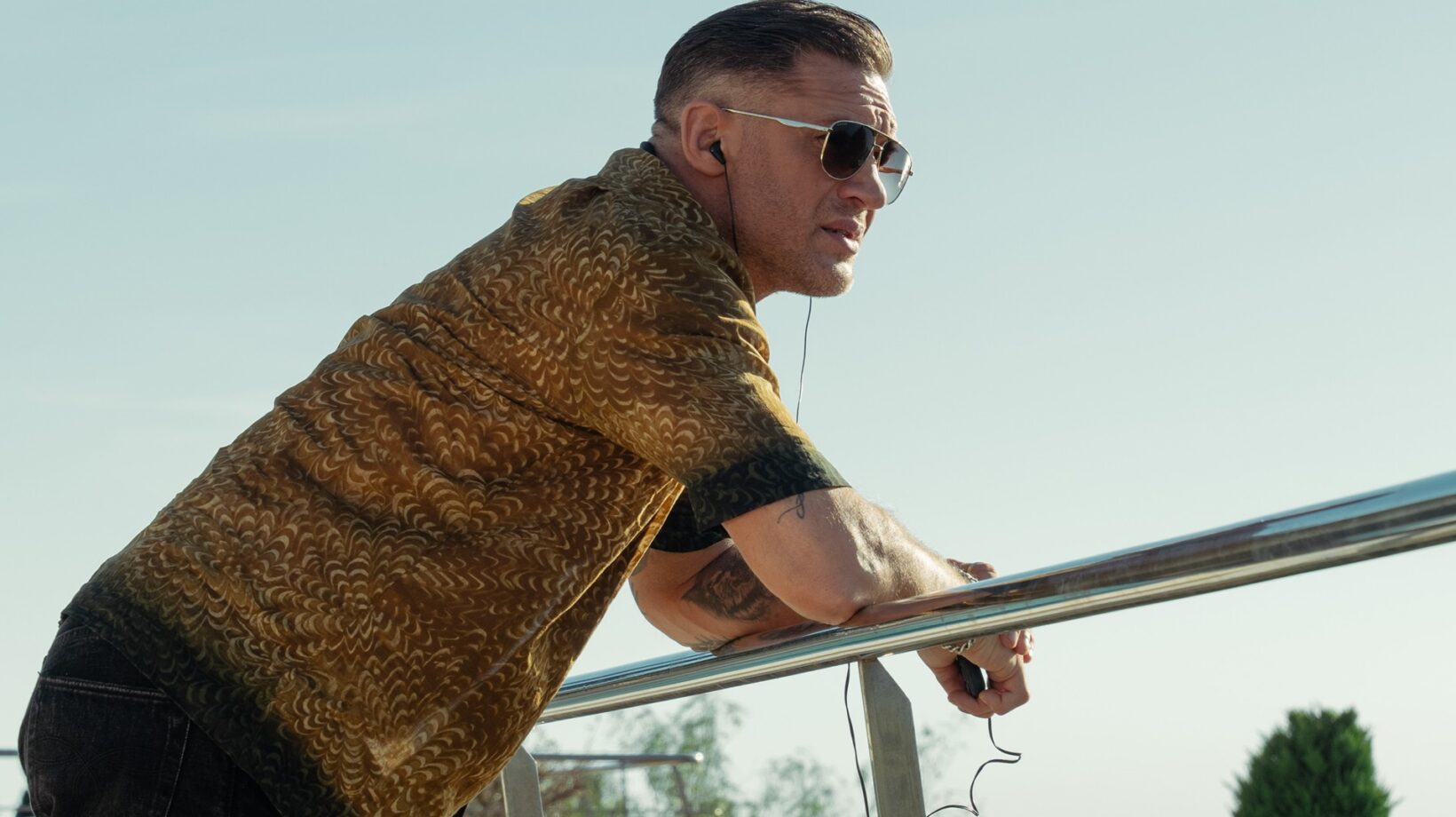
The series opens in 1996, with a faux-60 Minutes interview introducing Hal Jordan, the Green Lantern the public actually knows. Kyle Chandler plays him as a man held together by insecurity dressed up as swagger. Twenty years later, Hal is training John, badly, because mentoring a man who can only inherit your job by outliving you or watching you retire is not a job either of them wants to do well.
Chandler is genuinely terrific here. He’s angry and sad and heroic and cowardly, sometimes in the same scene.

There’s a very funny undercurrent, too, where John describes himself as a backup quarterback, and the show quietly lets Chandler play the world’s most reluctant Coach Taylor to him. The two of them investigating a mass shooting that turns out to be an alien incident in small-town Nebraska shouldn’t work as well as it does. It works because Pierre and Chandler have real chemistry — prickly, lived-in, the kind that makes you want to follow them into the next town over even when the plot doesn’t need you to.
Kelly Macdonald might be the best thing in the entire show, which is a genuinely surprising sentence to write about a series with two superheroes in it.

As the local sheriff trying to keep two intergalactic cops out of her jurisdiction, she’s instantly likable and quietly formidable. She uses her voice and her size against expectation rather than for laughs. A shift in her character in the back half of the season gives her some of the best, most wordless work in the whole run.
Garret Dillahunt, as the rancher whose hospitality curdles the longer you sit with it, is doing a masterclass in friendly-menacing. Poorna Jagannathan’s Zoe carries real bite in her handful of scenes, too.
There’s a line in there about white men having the privilege of being eccentric, and rich white men having the privilege of doing whatever they want, that lands like a thesis statement for the whole season.
Here’s where I have to be honest, because the show isn’t consistent. Pretending otherwise would be doing you a disservice.
The premiere is genuinely excellent. It’s sharp, confident, funny, and unafraid of its own subtext, and I loved it without reservation. Episodes two and four take their foot off the gas thematically and just aren’t as fun — closer to competent than exciting.
The fifth episode, the one big action set piece of the season, apparently ate most of the show’s budget. What it delivers is perfunctory rather than thrilling, the rare hour where the show’s low-key, grounded instincts actually work against it.
By episodes six and seven, my investment had fully shifted away from the galactic stakes and entirely onto the characters. That tells you plainly where this show’s actual strengths live. The other Lanterns barely register.

A very brief Nathan Fillion cameo comes and goes without leaving a mark. Laura Linney, playing the season’s mysterious cosmic entity, is pleasant but never quite necessary.
Lanterns wants a comparison to Watchmen, given Lindelof’s fingerprints, and it invites that comparison by trying to braid genre spectacle to something more socially conscious underneath.
It doesn’t weave text and subtext together with anywhere near that show’s precision. Anyone tuning in purely for comic-book bombast will likely walk away a little underwhelmed.
But judged as what it actually is — a strange, prickly, occasionally profound buddy show that happens to have space cops in it — Lanterns has more going for it than its uneven middle stretch would suggest.
I’d happily watch Pierre and Chandler drive into eight new towns next year with a ring stuck permanently at five percent charge. The rest of the universe, frankly, I could take or leave.
RATING: ★★★★☆
That’s A Wrap | Lanterns
“Kyle Chandler and Aaron Pierre have the kind of prickly, lived-in chemistry you can’t manufacture. When this show remembers it’s really about them, it’s one of the best two-hander performances on television this year.”
Jonathan P. Moustakas
CREDITS
Release Date: Sunday, August 16 | HBO
Cast: Kyle Chandler, Aaron Pierre, Kelly Macdonald, Garret Dillahunt, Poorna Jagannathan, Ulrich Thomsen, Laura Linney, Nathan Fillion
Creators: Chris Mundy, Damon Lindelof, Tom King
Streaming on: HBO Max
Rating: TV-MA
Watch The Trailer Below:







![Our Must-See Films at the 51st Toronto International Film Festival [Part I]](https://scontent-dfw5-1.cdninstagram.com/v/t51.82787-15/798567766_18133778770642683_8354331462990586978_n.jpg?stp=dst-jpg_e35_tt6&_nc_cat=105&ccb=7-5&_nc_sid=18de74&efg=eyJlZmdfdGFnIjoiQ0FST1VTRUxfSVRFTS5iZXN0X2ltYWdlX3VybGdlbi5DMyJ9&_nc_ohc=6ctc_ihmCtAQ7kNvwE1hgSe&_nc_oc=AdpS_T41es0vYI76ibCVIffhPhZgSKCNyviSyQJKEaJ0CuuHik_1Dv27xDOp1OEknM4&_nc_zt=23&_nc_ht=scontent-dfw5-1.cdninstagram.com&edm=ANo9K5cEAAAA&_nc_gid=fnWihxSy3Fyh4QTmKr36tw&_nc_tpa=Q5bMBQLlk5fcdDNZCTqaRNWId1USzSbY_7jMZIEZq9d-1CQgn9ixOqXmNfB-YOFNvCJ4LVjxlAb1IJqXbw&oh=00_AQKx016HMaV-sm6hx3NqstoZQd_gh-kZU6lI-mLnDqEUwA&oe=6AA5EC32)


