‘White Belt’ Premieres at Tribeca: When a Supermodel Chose to Begin Again
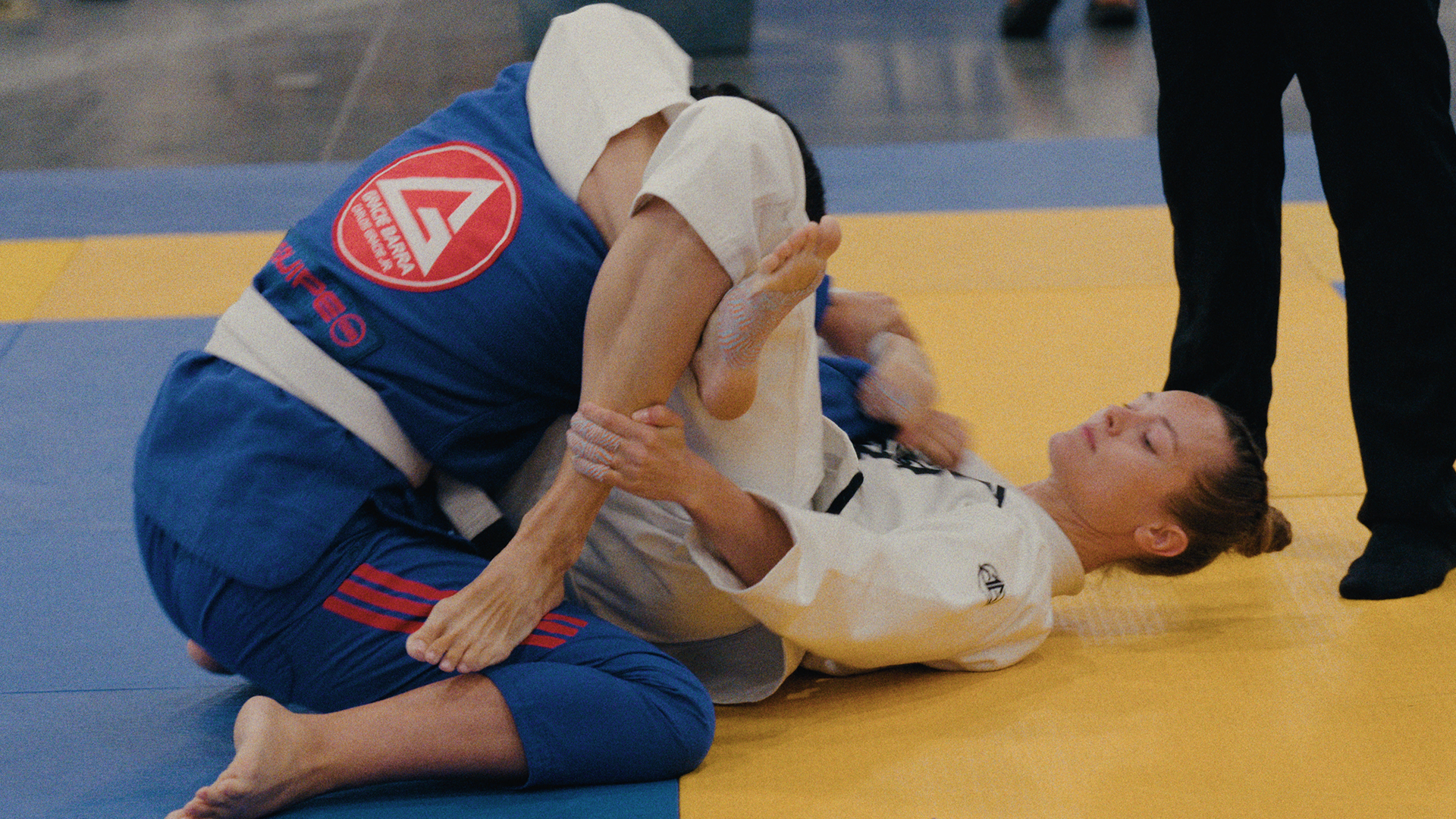
Jac Monika Jagaciak Jankic 1st BJJ Fight, Location: Las Vegas Convention Center, Las Vegas, photo by Brian Sowell.
Monika "Jac" Jagaciak and Branislav Jankic on fashion, displacement, and what it means to start from zero on a grappling mat
Monika "Jac" Jagaciak spent two decades in front of the camera. Not in front—embedded in front. She was the face brands wanted to own. Calvin Klein's face. Victoria's Secret's face. The embodiment of an industry built entirely on image control and carefully constructed personas.
Then she walked away from it. Not slowly. Not strategically. She stepped onto a grappling mat in a gi with no status, no reputation, and the same white belt everyone else starts with.
Her husband, filmmaker Branislav Jankic, documented eight months of training leading up to her first major Brazilian Jiu-Jitsu tournament. The result doesn't feel like a sports film or a fashion comeback narrative. White Belt, premiering at Tribeca this weekend, feels more like a reckoning—a document of what happens when someone decides that the person the world knows isn't the person they want to become.
I spoke with both of them a few days before their premiere screening which will take Place at Spring Studios on Sunday June 7, 2026 at 2:30 PM
Jankic arrived at the project with skepticism about the obvious narratives. "I didn't want to make a sport film," he said. "And I really didn't want to make another fashion story. That world I know too well. It looks perfect, but it hides everything."
What he wanted instead was to follow something he couldn't control. To rediscover his wife not as a husband but as a director approaching a subject with genuine uncertainty. "People think they already know Monika," Jankic explained. "The image is too clean. Finished. Closed. I was not interested in that version at all."
The vulnerability this required from Monika shifted the entire dynamic of their marriage. Being filmed by your spouse creates an unusual tension—access without escape, intimacy without privacy. "What made it easier for me is that I am married to Bran," Monika said. "The director was a very close person, which could be a little less professional and less guarded and more personal because it was him making the film. But it also made it harder."
The payoff, from her perspective, was immediate: "I'm very proud of this because it feels the most honest to me. I was always portraying another woman—with clothing I wouldn't wear, makeup I normally wouldn't wear myself. So this feels good. Being myself on screen."
The Symbolic Emptying
The white belt is the film's central metaphor, though it took Monika time to realize its power. In jiu-jitsu, the white belt doesn't represent humility—it represents erasure. Complete removal of status.
"The white belt means it's not about you anymore," Monika explained. "You're one of many. Everyone's wearing a gi. The only way to prove yourself and stand out is by being actually really good at this sport."
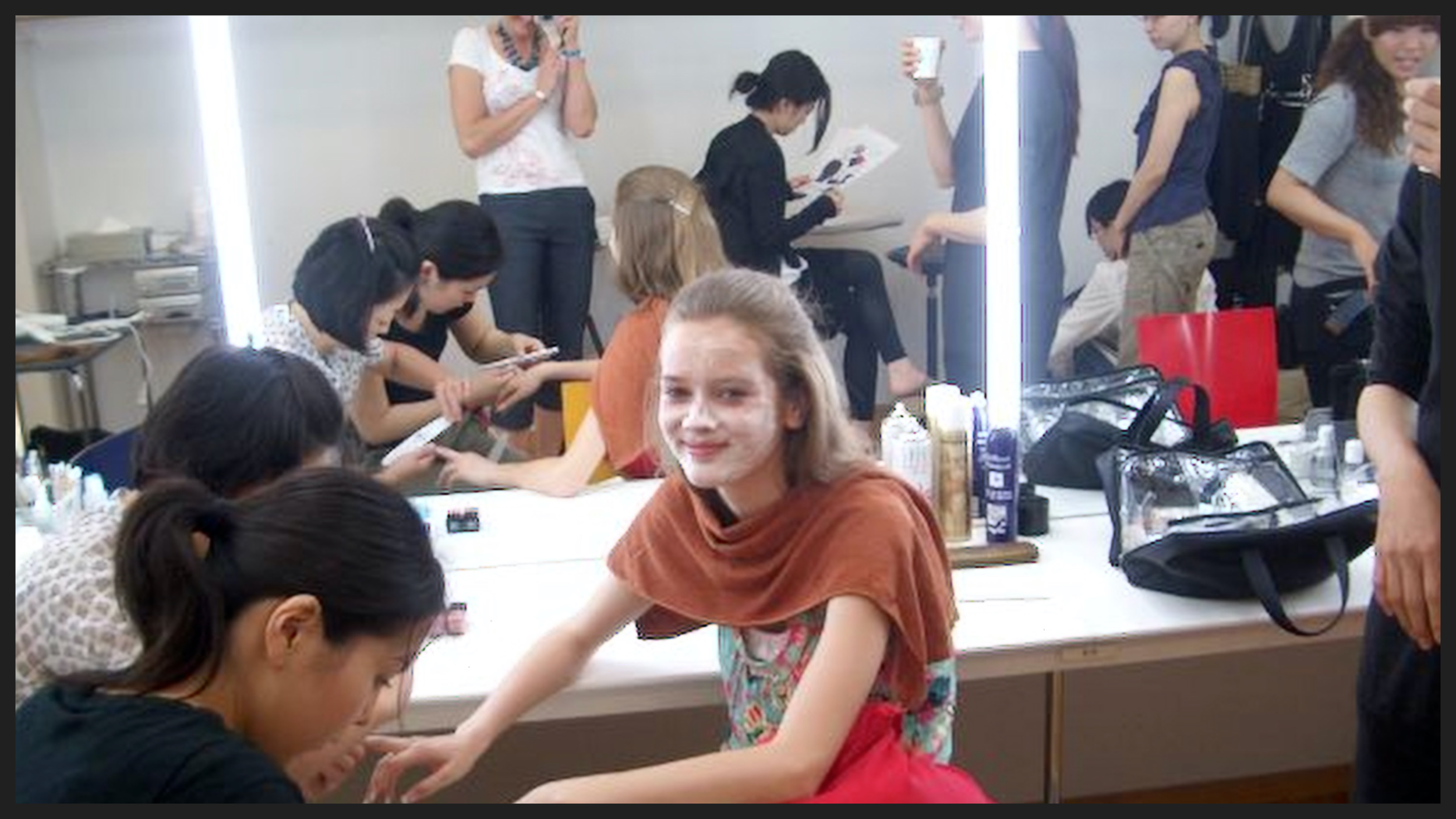
Jac Monika Jagaciak Jankic when she was 13 years old on her first fashion shoot, Location: Tokyo, Japa, photo by her mom Marlena Jagaciak.
This was the inverse of everything fashion had taught her. In that world, being good at the technical aspects of modeling—understanding light, posture, angles—mattered far less than the image itself. You were hired because of who you were perceived to be. On the mat, that perception becomes irrelevant.
"Having the success that I had and going back to zero and starting fresh—it was very good for me," she said. "There's a hierarchy in jiu-jitsu, but there's also equality. There are unspoken rules. You don't go up to a higher belt and ask for a training session. It goes the other way around."
For Monika, the appeal wasn't transformation narrative—a word she's clearly tired of hearing. It was permission to start over without explanation. "It's a new beginning. It's a place where I put myself and said: let's start over."
The Friction That Reveals
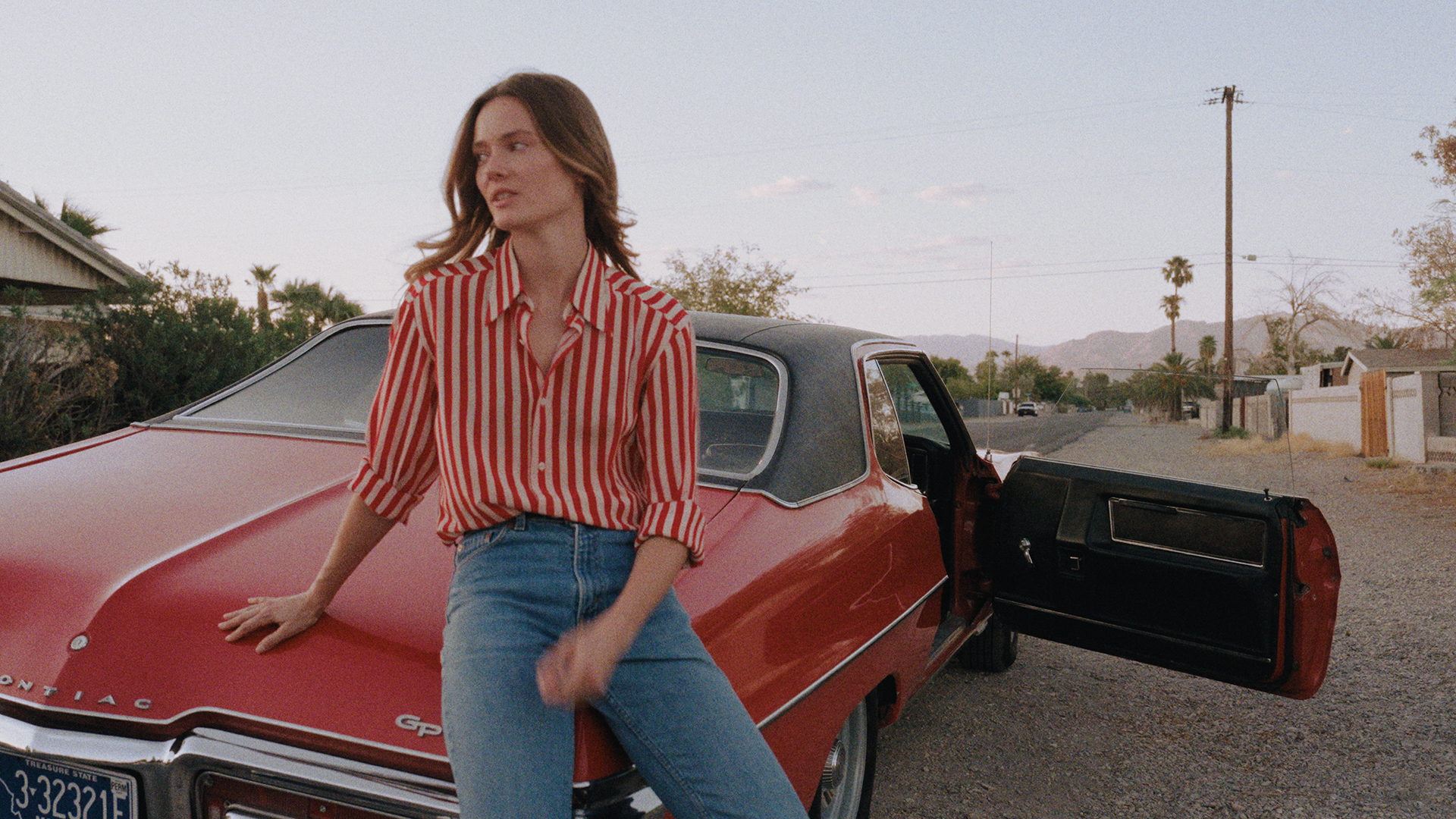
Jac Monika Jagaciak Jankic, Location: Street in Las Vegas, photo by Brian Sowell.
Jankic's method was unconventional in its intimacy. He didn't apply traditional documentary protocols. There were moments when the camera was rolling and Monika didn't know. Other moments when it was off and she thought it was recording. He asked questions he knew would make her uncomfortable, that weren't appropriate for a camera, that demanded raw responses rather than composed ones.
"I was asking questions I knew she would hate," Jankic noted in his director's statement. "Not appropriate, not comfortable, not in front of the camera. We would stop. Reset. Go again."
POPULAR ON THE CINEMA GROUP
But Jankic's interest wasn't actually in capturing her journey as an athlete. "I wasn't interested in transformation," he clarified. "I don't like that word. It was friction. Between who she was told to be and what she is trying to become."
This extended to his collaboration with cinematographer Brian Solo. The two had never worked together, but when Solo mentioned loving saint films—intimate portraits of spiritual subjects—Jankic recognized the alignment. "When you touch the same subjects and you both light up, you know you're on the same page," Jankic said. "Filmmaking is a collective process."
A broken car became the film's best scene. Jankic had envisioned Monika in an interview while driving. The car broke down mid-shoot. Rather than accept the failure, Solo suggested they push it a couple blocks and use the perfect natural lighting. "It ended up being perfect. Better than the driving scene would have been."
Displacement as Lens
Jankic's own history shaped his approach. Born in the former Yugoslavia, he spent his early life in war, displacement, and refugee camps before eventually settling in America. His films consistently turn toward the personal—family, memory, the emotional residue of conflict.
"Before things become universal, they have to pass through the filter of personal and be intimate," he explained. "That's when it becomes something special."
For White Belt, that personal anchor manifested in a specific moment. "We filmed literally in front of the American consulate in Warsaw," Jankic said. "After fifteen years in the US, we were finally getting our green card. It was a special, special moment. Deciding that America is our home. This is where our daughter was born."
The film essentially braids two reinvention narratives. Monika's public pivot from fashion to jiu-jitsu. And Jankic's private reckoning with what home means after a lifetime of displacement. "We wanted to bring it all around and say: this is Monika's story, but it is also a story of our family."
What Audiences Might Not Expect
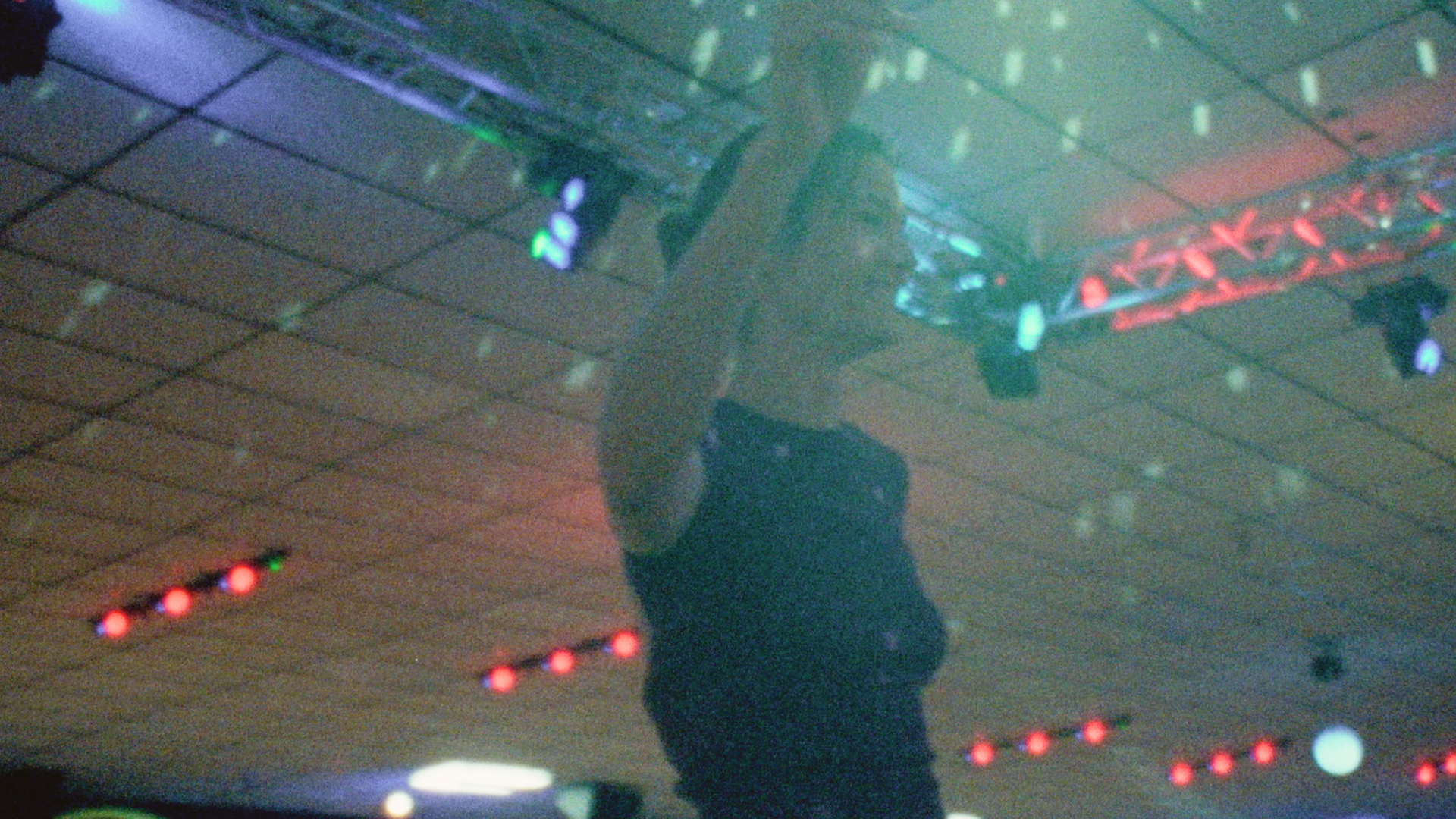
Jac Monika Jagaciak Jankic, Location: Crystal Palace Skating Center, Las Vegas, photo by Brian Sowell.
The documentary doesn't play like a sports film or a celebrity redemption narrative. It plays like a film made by people who understand that feeling-good movies have largely disappeared from cinema. Both filmmakers were explicit about this.
"I think people will be surprised that it doesn't feel heavy," Monika said. "I'm very proud that it's not one of those documentaries that leave you without answers and make you depressed. This is a hopeful film. I did it to empower myself, but I hope it ends up empowering more people."
Jankic added: "There's none of that public Monika in the film. It's truly just her doing her thing with her husband, with a whole new set of people. People will be surprised that she's actually pretty good at jiu-jitsu. I went in a little scared thinking the egos and the big masculine world of jiu-jitsu could be overwhelming. But she found the right people. Gregor Gracie and the whole team in his gym are extremely welcoming. It became a second home for eight months."
The film's final image has both of them walking toward something neither names explicitly. It's not resolution. It's not closure. It's continuation—two people moving together without the need for the world to understand what they are to each other.
White Belt | New York Premiere
Tribeca Premiere Screening: Sunday, June 7 at 2:30 P.M. @ Shorts Theater at Spring Studios
Second Screening: Sat June 13 - 5:30 P.M. @ Shorts Theater at Spring Studios
CREDITS
Writer & Directorr: Branislav Jankic
Cast: Monika "Jac" Jagaciak, Gregor Gracie
Editor: Daniel Mcdonald
Production Company: Laundromat Films
Run Time: 18 MINUTES
Interview Transcript
White Belt Interview | Jonathan P Moustakas Spoke with Monika "Jac" Jagaciak and Branislav Jankic on June 3, 2026
Jonathan: Hi, I'm Jonathan with The Cinema Group. I want to congratulate you both on Tribeca. I watched White Belt and really enjoyed it. What struck me most about the project was how it transcends the Brazilian Jiu-Jitsu sport itself and becomes a larger conversation about reinvention, identity, and starting over. So if you're ready, I'd love to dive in.
Monika: Perfect. Thank you.
Jonathan: Monika, most people know you as a model, being in front of the camera for decades. What was it like changing that dynamic and being more vulnerable in a documentary setting?
Monika: What made it easier for me is the fact that I am married to Bran. The director of the film was a very close person, which allowed me to show that side of myself—less professional, less guarded, more personal—because it was him making the film. It definitely made it harder in some ways too. But I'm very proud of this because it feels the most honest work I've ever done. I was always portraying another woman, wearing clothing I wouldn't wear and makeup I normally wouldn't wear myself. This feels good. Being myself on screen.
Jonathan: It's interesting because the film uses the white belt as this starting point, almost like an amateur status. But you were operating at some of the highest levels in fashion, wearing clothes that didn't suit you. Was there a change in your life—operating in different statuses—that allowed for a new break within your relationship and within your craft?
Monika: For sure. Being married to a creative who works in film, I got to live it for the past ten years. I have a pretty good understanding and I know how hard it is to make films. I'm very grateful that I live with a storyteller who saw the potential of this story because I myself would never think it could become a film. But Tribeca taking it proves this is a good story.
Jonathan: Right. Branislav, you said you weren't really interested in making a fashion documentary and you didn't want to make a sports documentary either. What was the story you were trying to tell while threading that needle through both?
Branislav: I wanted to tell my wife's story. I always thought she had a very unique and inspiring story. Especially now, where things in both our industries—film and fashion—have changed. People are much more aware, especially about young girls entering that world. There's more compassion now than when Monika started. Even though it looked glamorous, it was rough.
I always loved growing up in the nineties. I loved films, and I feel like we don't have enough of those films anymore. Good feel-good films. From love stories to sports films like Rocky—something where you watch it, get entertained, and feel like the world is still good. That was the thought behind this.
Jonathan: I definitely agree. We lost those feel-good stories and hangout films. You're talking about how industries and decades changed. Did your vision for this film change throughout the process?
Branislav: Definitely. I'm more of a slow-paced person in filmmaking. I like when the story develops gradually. Working with my editor, he had a very different approach. He came from sports documentaries. We had a bit of a dispute about pacing. I wanted it to develop slowly. He used faster cuts, which I wasn't used to. The film definitely changed throughout the making of it.
The bones were always there—the scenes were always intended to be where they are—but the pace and editing definitely shifted from the beginning.
Jonathan: So you wanted Before Sunrise and he wanted Rocky. That makes sense. Which I'm glad about. I like being proven wrong or learning. Filmmaking is always learning something.
Branislav: Exactly. I love those nineties films, but the editing process—I always wanted more arthouse. I like being proven wrong. It was a great choice to cut the way we did, constantly going back and forth. I essentially agreed to finish it that way.
Jonathan: A lot of our readers are aspiring filmmakers. Is there a process you had in developing your team, aside from obviously being married? Your editor or cinematographer—was there someone who played a key role or have you collaborated with them before?
Branislav: With some, I have collaborated previously. Every project is a fresh project. The one thing I always go back to is working with people I personally feel connected to. With cinematographer Brian Solo, for example, we never worked together before. But we had a really nice conversation on the phone. We talked about saint films—spiritual, intimate work—and you can see when you touch the same subjects and both light up. "Oh yeah, I love that too." That alignment was important.
Filmmaking is a collective process. When we filmed Monika's scene in front of the car, the whole thing was supposed to be an interview while she's driving. I was stuck on this idea. And then the car broke down in the middle of it. I was going nuts. Brian said, "How about we push the car a couple blocks down where the lighting is perfect? Let's just do it."
It happened to be perfect. Much better than the driving scene would have been. You need great people to get you there. Not everything goes wrong, but often things like that happen and they strike.
Jonathan: Monika, fashion is mainly about crafting an image, crafting an essence or persona. Jiu-Jitsu doesn't seem to care about that. Was that contrast appealing to you? Something you had to get used to, or something interesting about that change?
Monika: I love that, and that's where the name came from. White belt because it's not about you anymore. You have to climb the ladder to get better. You have to train. Everyone's wearing a gi. You're just one of many. The only way to prove yourself and stand out is by being actually really good at this sport.
I needed to be part of a group, part of training sessions where everybody's on the mats and there's equality but also different status. There are so many unspoken rules in jiu-jitsu. You don't go up to a higher belt and ask for a training session. It goes the other way around. You put yourself in a place and it's like a new beginning.
Having the success I had and going back to zero and starting fresh was very good for me.
Jonathan: There must be similarities with figuring out rules in fashion too—things that are rules that newcomers might not know. Competing with others on the mat seems similar to the audition process or trying out on a catwalk. I can definitely see that juxtaposition.
Branislav: Your own background includes displacement, war, and rebuilding your life in new places. Did your personal experience influence how you wanted to shape this film?
Branislav: Definitely. I like to always turn the camera toward my personal experience. Before things become universal, they have to pass through the filter of personal and intimate. That's when it becomes something special. I hope I do that with almost all my projects.
In this one, there's a moment where we filmed literally in front of the American consulate in Warsaw. After fifteen years in the US, we were finally getting our green card. It was a special moment. Deciding that America is our home. This is where our daughter was born. The displacement and trying to find home in different places around the world, and finally feeling this is home—that played a big role.
We wanted to bring it all together and say: this is Monika's story, but it's also a story of our family.
Jonathan: Each of those steps is another belt you're earning toward your new future or a higher degree in jiu-jitsu. I really enjoyed that. Is there anything audiences might assume about this story that they won't understand from the premise alone?
Monika: I think people will be surprised that it doesn't feel heavy. I'm very proud that it's not one of those documentaries that leaves you without answers and makes you depressed. This is a hopeful film. I did it to empower myself, but I hope it ends up empowering more people when they see it.
Branislav: I think people look at Monika from the outside as a public person. That's why this movie feels so good to me that it's being recognized by a big festival—because there's none of that in the film. It's truly just her doing her thing with her husband, with a whole new set of people.
There are flashbacks to where she came from, why she's doing this. It's self-explanatory within the movie. People will be surprised that she's actually pretty good at jiu-jitsu. I went in a little scared thinking the egos and the masculine world of jiu-jitsu could be overwhelming. But she found the right people. Gregor Gracie and the whole team in his gym are extremely welcoming. It became a second home for eight months.
Jonathan: What do you hope people are talking about when they walk out of the theater?
Monika: Feel-good films are missing these days. I think what I want with this film—even though it's a documentary—is that it doesn't feel heavy. It's supposed to empower people when they see it. That's what I hope they're left with.
Branislav: For me, I hope they walk out of the cinema and say, "What an amazing film. Let's go watch the Knicks win the game." That's really what I hope happens.
Jonathan: I really enjoyed it and I'm wishing you guys all the best. I think they'll be walking out saying just that. Thank you for spending time with me today.

| FEATURES | INTERVIEWS | REVIEWS | The Catalogue | TRENDING | TRAILERS | VIDEOS |



![WERWULF - Official Trailer [HD] - Only In Theaters Christmas](https://i.ytimg.com/vi/cmjpadVj-Vk/hqdefault.jpg)