‘The Last Day’ Review: Alicia Vikander and Victoria Pedretti Deliver a Devastating Portrait of Modern Womanhood
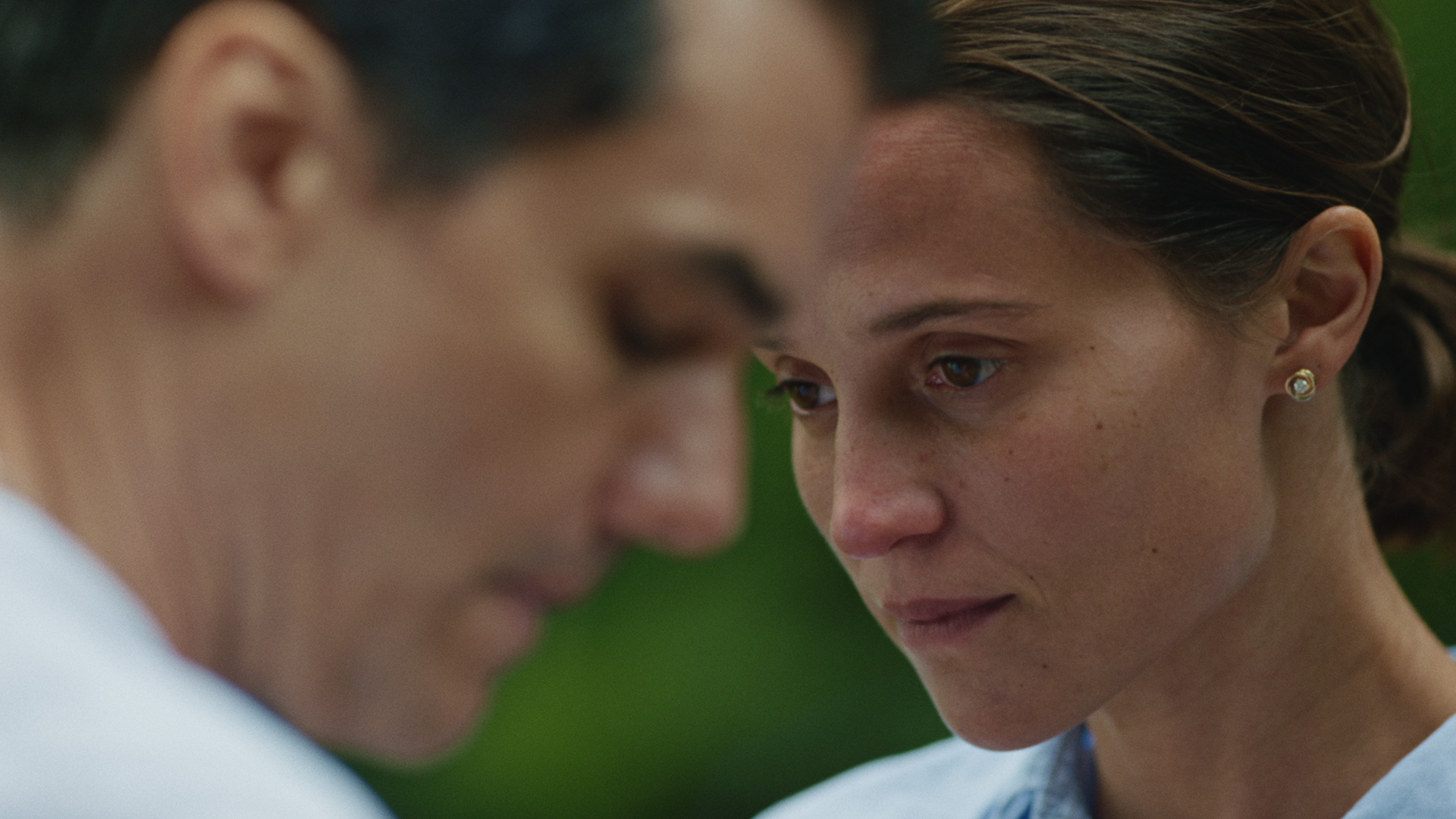
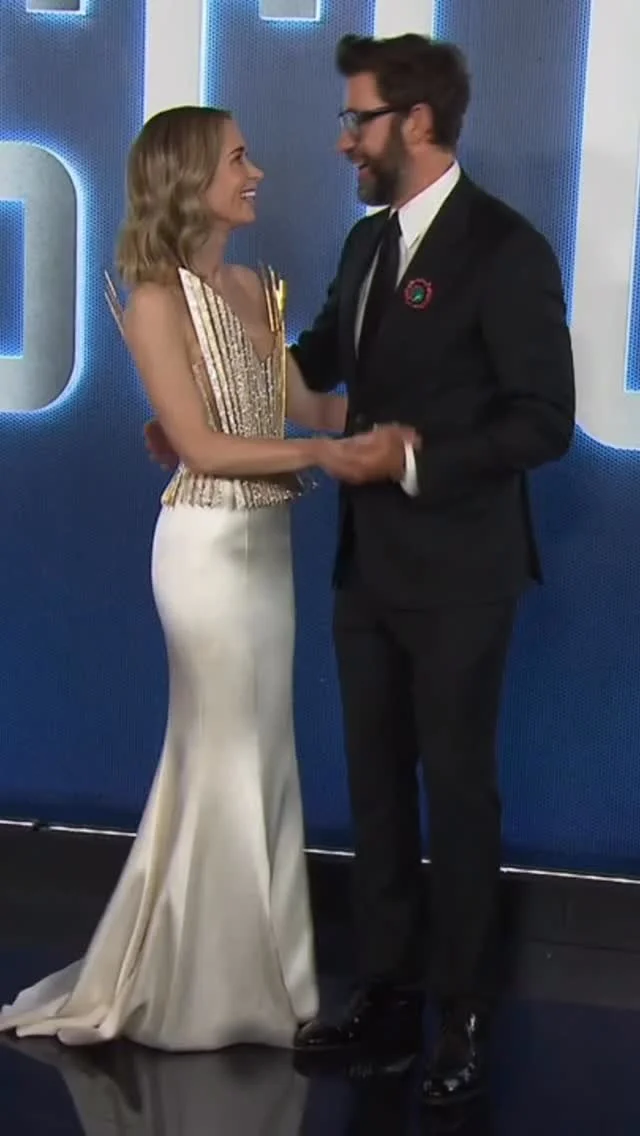
Alicia Vikander and Wagner Moura | Courtesy of Tribeca
Rachel Rose’s haunting reimagining of ‘Mrs. Dalloway’ transforms a single summer day into an emotionally devastating examination of grief, identity, motherhood, and the quiet desperation hiding beneath seemingly perfect lives.
Virginia Woolf’s Mrs. Dalloway has survived for more than a century because its central insight remains painfully relevant: some of life’s biggest battles are fought entirely within the mind.
Rachel Rose understands that.
Her feature directorial debut, The Last Day, isn’t interested in creating a strict adaptation of Woolf’s classic novel. Instead, it borrows the emotional architecture of the source material and uses it to explore something equally urgent for contemporary audiences. What emerges is a thoughtful, unsettling, and frequently heartbreaking drama about two women moving through a single summer day while quietly fighting to hold themselves together.
The film unfolds against the backdrop of the Fourth of July in suburban New York, where fireworks crack through the sky and emergency sirens punctuate the air with unnerving regularity. Rose uses those sounds almost like psychological intrusions, reminders that danger isn’t always visible and that anxiety often arrives without warning. The result is a film that feels perpetually unsettled, as though something catastrophic might happen at any moment.
That tension proves especially effective because so little of The Last Day is driven by traditional plot.
Instead, the film is powered by emotional accumulation.
Alicia Vikander stars as Julia, a former novelist attempting to navigate a seemingly ordinary day filled with errands, obligations, and preparations for a holiday gathering. On paper, her life appears enviable. She has a beautiful home, a successful family, financial security, and the kind of suburban stability that many people spend years chasing.
Yet almost immediately, Rose begins revealing the cracks beneath that carefully maintained surface.
Julia is grieving her father. She’s questioning her creative ambitions. She’s wrestling with professional disappointments she struggles to articulate. Encounters with old friends and former lovers force her to confront alternate versions of herself that never fully disappeared. Every stop throughout her day seems to trigger another memory, another regret, or another reminder of a life she imagined differently.
Vikander handles these emotional layers with remarkable restraint.
This is a performance built almost entirely from observation. Rather than delivering grand speeches or dramatic breakdowns, she allows Julia’s internal conflict to reveal itself gradually through expressions, pauses, and fleeting moments of vulnerability. The actress has always excelled at conveying intelligence and emotional complexity simultaneously, but The Last Day may feature some of her finest work in years.
If Vikander provides the film’s foundation, however, Victoria Pedretti provides its soul.
Pedretti plays Taylor, a young mother spiraling through a crisis that she can barely understand herself. Introduced in a state of visible disorientation, Taylor spends much of the film drifting between panic, exhaustion, fear, and profound loneliness. While Julia is struggling to reconcile competing versions of herself, Taylor appears to have lost sight of who she was entirely.
It’s a devastating performance.
Pedretti has consistently proven herself one of the most emotionally fearless actors of her generation, whether in The Haunting of Hill House, You, or Once Upon a Time in Hollywood. Here, she reaches another level entirely. Taylor’s suffering never feels performative or exaggerated. Instead, it feels frighteningly recognizable. Her anxiety manifests not through melodrama but through small moments of confusion, hesitation, and emotional withdrawal that become increasingly painful to watch.
The brilliance of the film lies in the way it positions Julia and Taylor as mirrors of one another.
On the surface, they occupy different stages of life. Julia appears more established, more accomplished, more secure. Taylor seems overwhelmed by responsibilities and trapped within circumstances she can no longer control. Yet Rose repeatedly finds subtle connections between them, revealing how both women are wrestling with many of the same questions.
Who are they outside of motherhood?
Who are they outside of their relationships?
What happened to the versions of themselves they once imagined becoming?
And perhaps most painfully, why does fulfillment often remain elusive even when life appears successful from the outside?
These questions have always existed within Mrs. Dalloway, but Rose adapts them for a modern world without sacrificing their universality.
The film is particularly effective in its exploration of isolation. Despite living in an age defined by constant communication, both women remain profoundly disconnected from the people around them. Their partners care about them. Their families care about them. Their friends care about them. Yet neither feels fully seen.
That emotional distance becomes one of the film’s most devastating observations.
The Last Day suggests that loneliness is not necessarily the absence of people. Sometimes it’s the inability to communicate what you’re experiencing to those who love you most.
Rose occasionally pushes her symbolism a bit too hard. The recurring sirens, dead animals, flashbacks, fireworks, and dreamlike interruptions sometimes feel eager to announce their significance rather than allowing viewers to discover it organically. There are moments when the filmmaking threatens to become more self-conscious than the material requires.
Fortunately, the performances continually pull the film back toward emotional truth.
Eric Yue’s cinematography deserves significant credit as well. His handheld camera remains intimately attached to the characters throughout much of the film, creating a feeling of proximity that is often uncomfortable in the best possible way. We aren’t simply observing Julia and Taylor. We are trapped inside their anxieties alongside them.
That intimacy extends to the screenplay’s treatment of mental health.
What makes Taylor’s storyline especially powerful is Rose’s refusal to reduce her struggles to a simple diagnosis or convenient narrative resolution. The film acknowledges the realities of postpartum depression, identity loss, and emotional burnout without ever allowing those issues to become simplistic plot devices. Taylor’s suffering feels messy, complicated, and frighteningly human.
POPULAR ON THE CINEMA GROUP
Similarly, Julia’s crisis is never portrayed as trivial simply because her life appears privileged from the outside. Grief, regret, creative frustration, and existential uncertainty do not disappear because someone has achieved material success.
The film understands that pain rarely conforms to external expectations.
As the day progresses toward its conclusion, The Last Day becomes increasingly moving without resorting to sentimentality. Rose trusts her audience enough to sit with discomfort rather than constantly offering reassurance. The result is a film that lingers long after it ends, not because of any shocking revelations but because of how honestly it captures emotional experiences that are often difficult to articulate.
Like Woolf’s novel, The Last Day is ultimately less interested in events than in consciousness itself. It examines the thoughts people hide, the fears they suppress, and the private struggles they carry through seemingly ordinary days.
That approach won’t appeal to everyone. Viewers looking for a more conventional narrative may find the film’s introspective rhythms challenging. But for those willing to engage with its quieter frequencies, Rose has created something remarkably affecting.
By the end, The Last Day becomes less a story about two women than a meditation on how many versions of ourselves we carry throughout life — the people we are, the people we once were, and the people we imagined becoming.
It’s a beautiful, devastating film that finds extraordinary emotional depth in the ordinary passage of a single day.
Rating: ★★★★½
That's A Wrap
|
The Last Day
|
That's A Wrap | The Last Day |
“Victoria Pedretti delivers career-best work in a poignant and deeply human drama that proves some of life’s loudest battles are fought in silence.”
CREDITS
Release Date: Tribeca Festival 2026
Cast: Alicia Vikander, Victoria Pedretti, Wagner Moura
Director-Screenwriter: Rachel Rose
Festival: Tribeca Festival 2026
Run Time: TBA
Rated: Not Yet Rated
| FEATURES | INTERVIEWS | REVIEWS | The Catalogue | TRENDING | TRAILERS | VIDEOS |







![WERWULF - Official Trailer [HD] - Only In Theaters Christmas](https://i.ytimg.com/vi/cmjpadVj-Vk/hqdefault.jpg)