From Sundance Ovation to Oscar Conversation, Olivia Wilde’s ‘The Invite’ Is Becoming A24’s Awards Season Sleeper

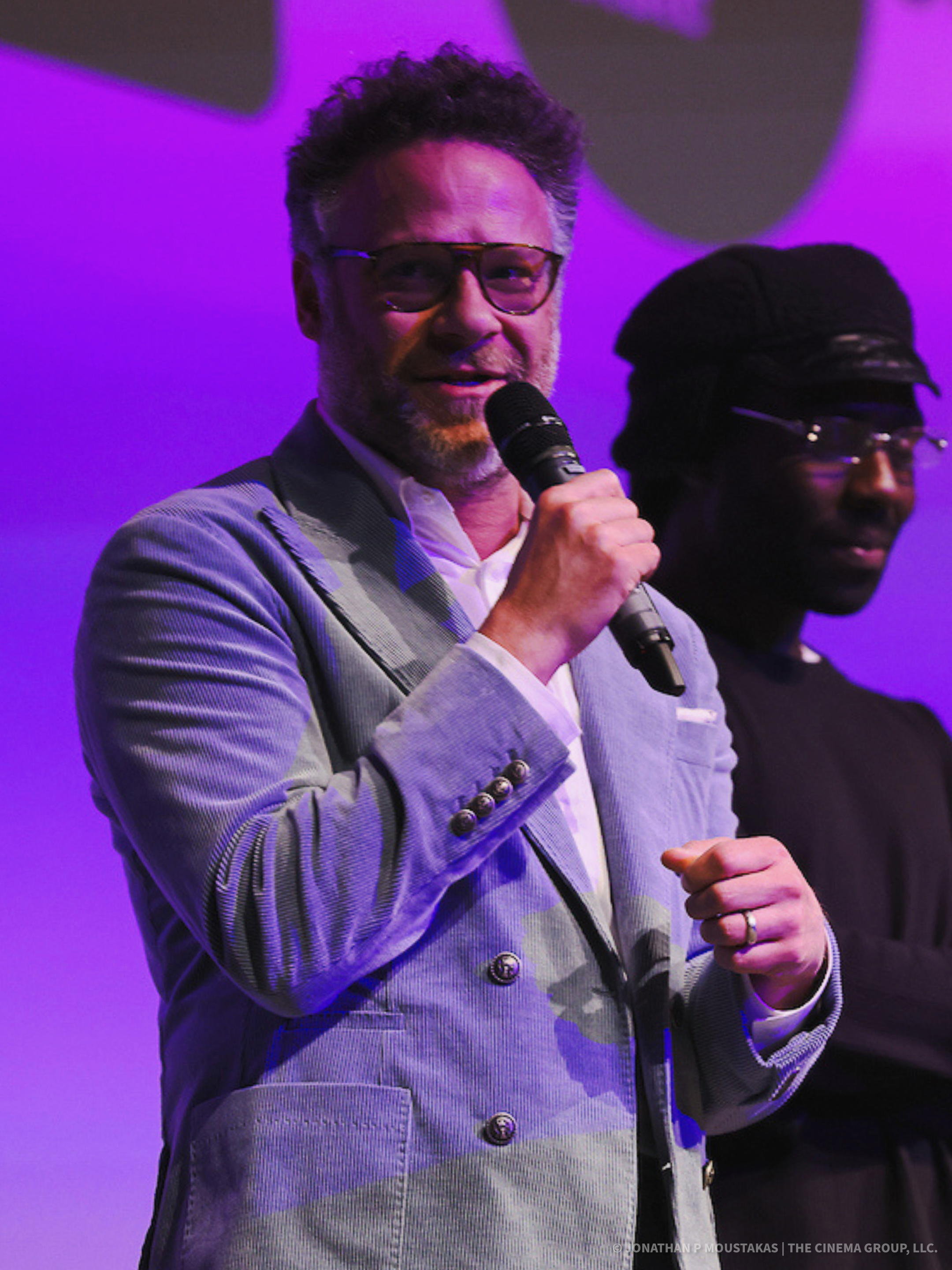
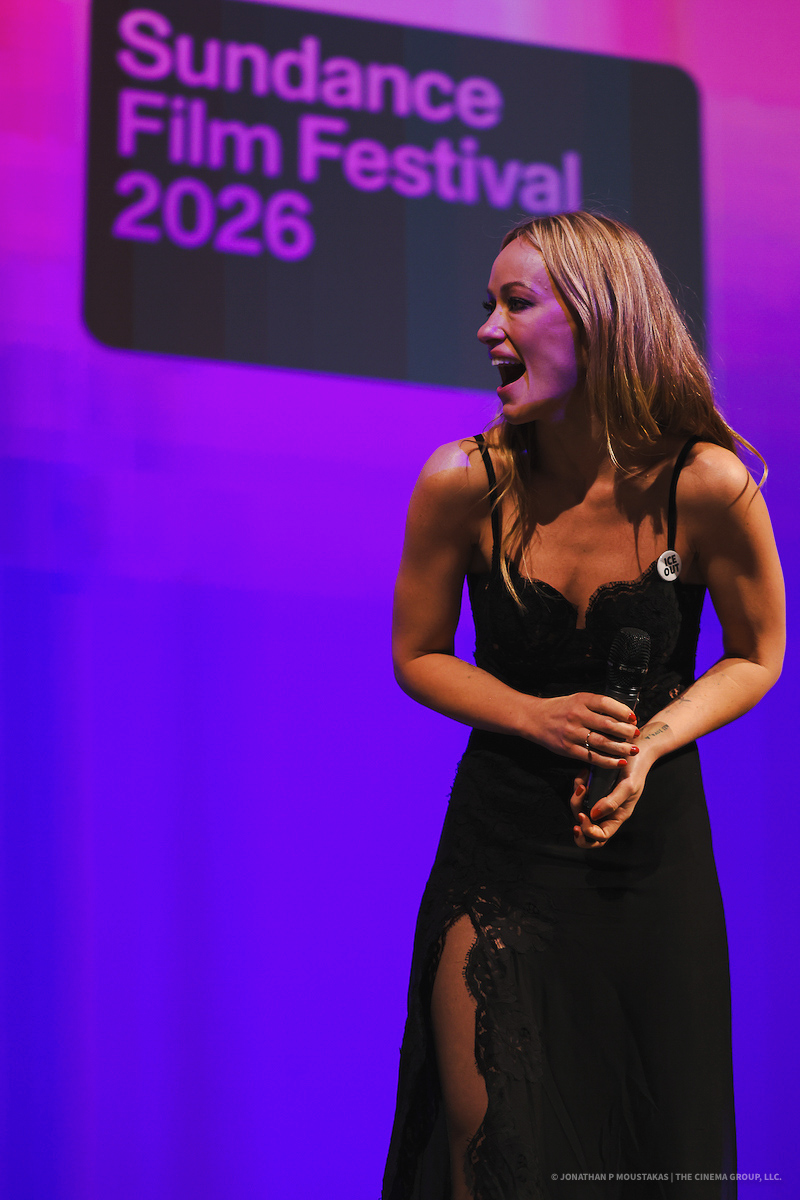
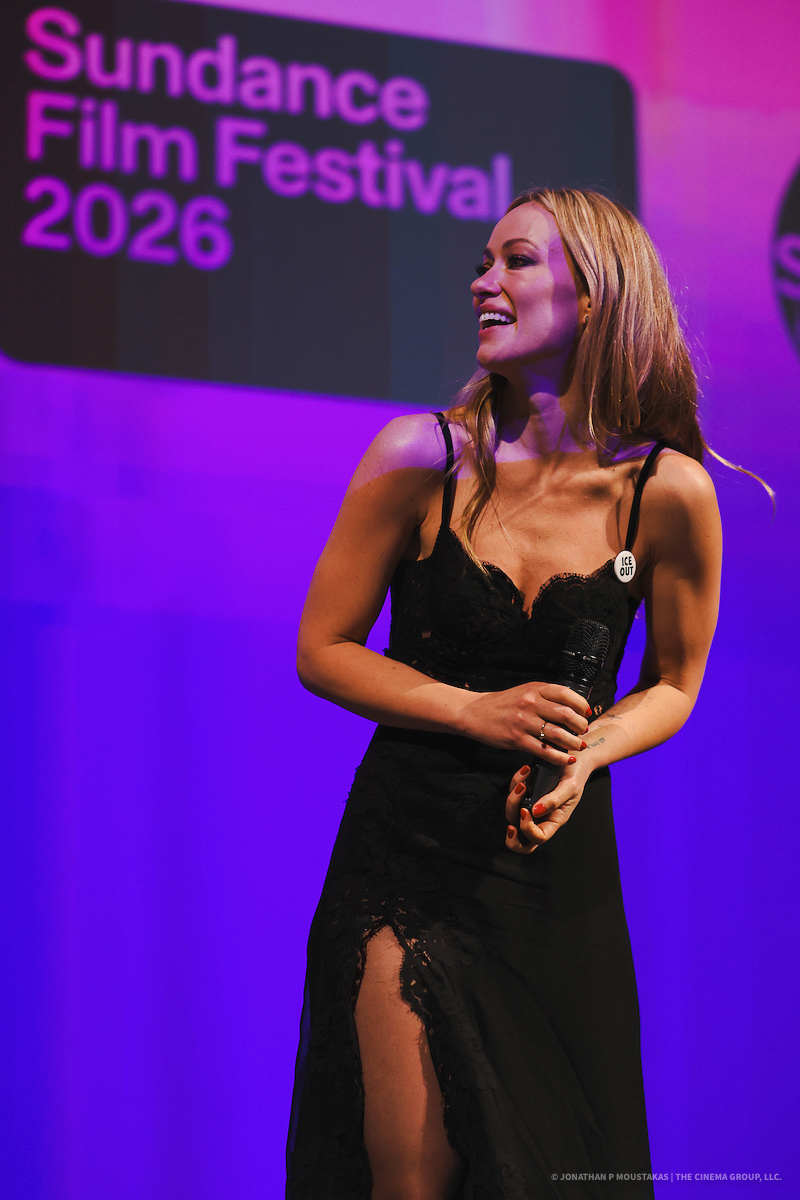
JONATHAN P MOUSTAKAS | THE CINEMA GROUP LLC © 2026
After seeing Olivia Wilde’s sharp chamber comedy at Sundance and revisiting it multiple times since, it is hard to shake the feeling that A24 has more than a summer indie on its hands. It has a real Oscar player.
I knew ‘The Invite’ had something the first time I saw it at Sundance.
There is a very specific kind of energy that happens in Park City when a movie starts working in the room. You can feel the audience adjust to it. The laughter gets sharper. The silence gets more attentive. People stop watching a film as a festival obligation and start leaning into it as a discovery. That was the feeling around Olivia Wilde’s ‘The Invite,’ a film that arrived as a smart A24-style chamber comedy and left feeling like something bigger: a summer movie with real awards-season legs.
Now, after seeing it more than three times, I feel even stronger about that first instinct. ‘The Invite’ is not just a clever Sundance acquisition or a well-cast adult comedy. It is one of the most impressive films of the year, and A24 should treat it accordingly.
Courtesy Of A24
Wilde did not write the film; the screenplay is by Rashida Jones and Will McCormack, adapting Cesc Gay’s 2020 Spanish film ‘The People Upstairs.’ But Wilde directs and stars with such control that the film feels intensely authored, not in the sense of one person doing everything, but in the sense of a filmmaker understanding the exact temperature of every room, glance and pause. The film is produced by Ben Browning, Megan Ellison and David Permut, with A24 distributing after acquiring it out of Sundance.
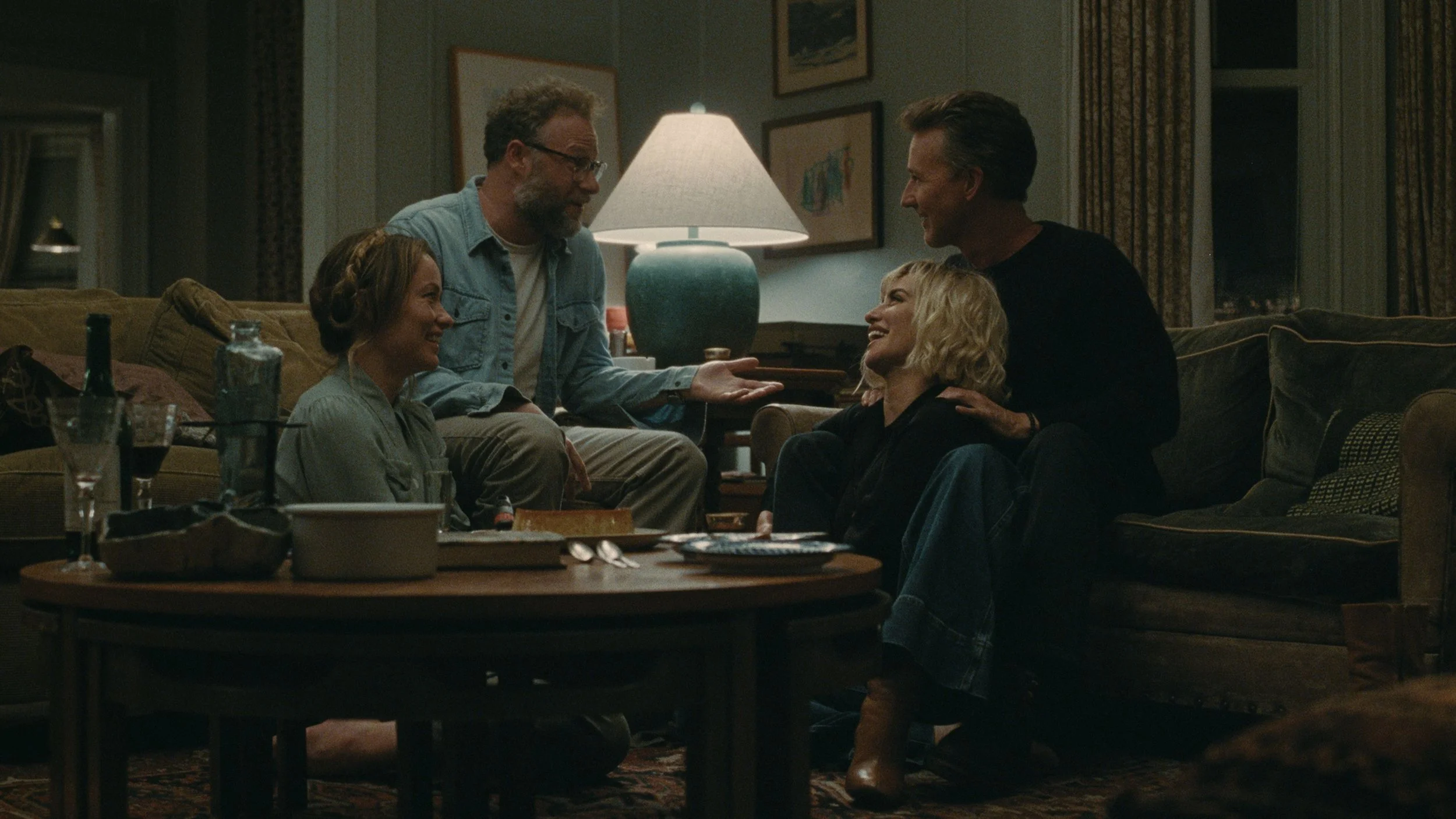
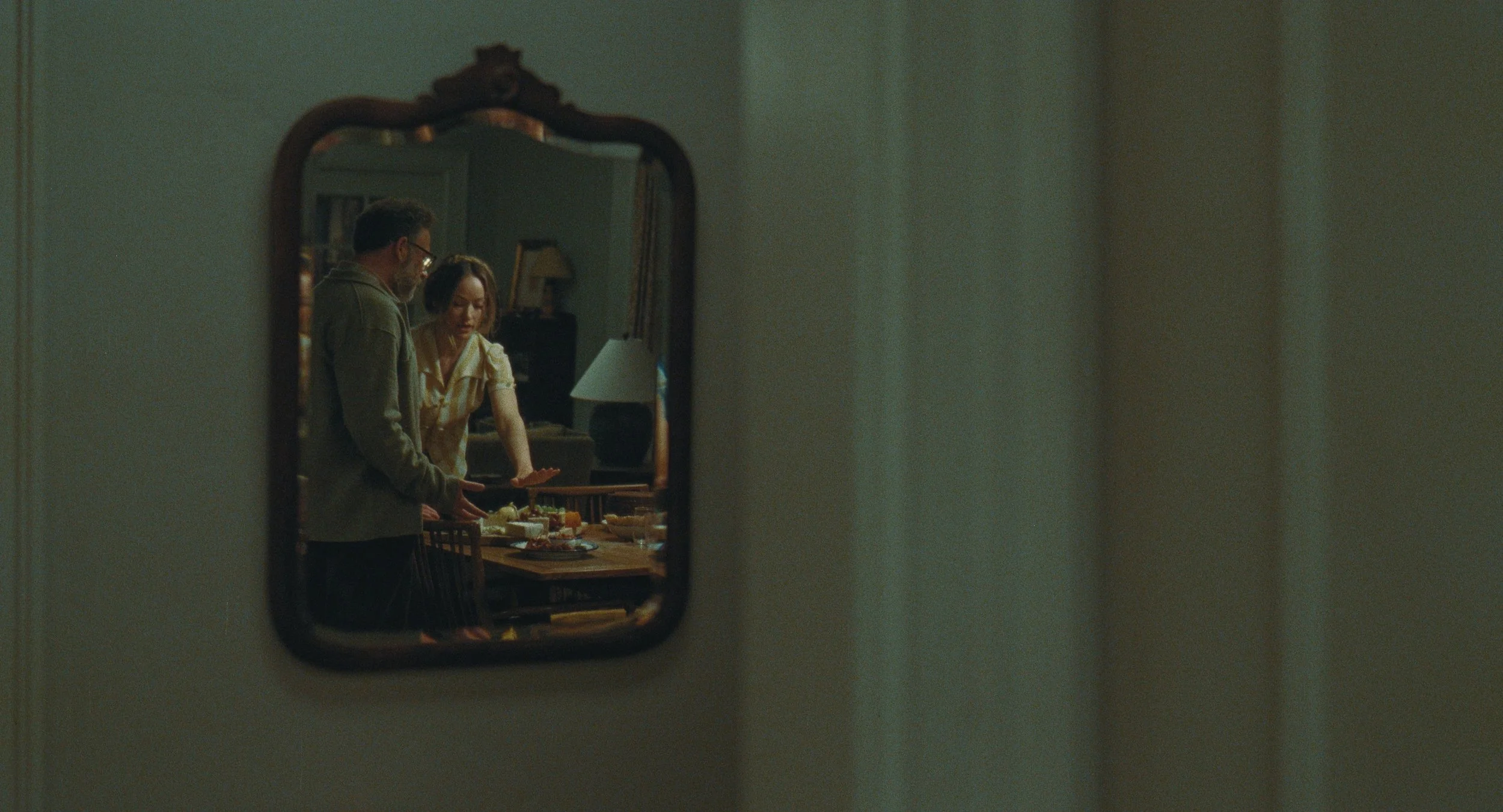
That distinction matters because ‘The Invite’ is a film where direction, performance and writing are completely intertwined. It takes place almost entirely in one apartment, across one increasingly combustible evening, yet it never feels visually or emotionally trapped. In fact, the opposite happens. The apartment starts to feel like a labyrinth, not because the characters are physically lost, but because every room, doorway, mirror and seating arrangement reveals another emotional corner they were trying not to enter.







That is what impressed me most on repeat viewings. A film this contained can easily feel like photographed theater. ‘The Invite’ does not. Wilde turns the single location into a pressure system. The walls matter. The distance between characters matters. The way someone crosses a room matters. Spectacle in a traditional film is usually about scale: explosions, movement, set pieces, external escalation. Here, the spectacle is emotional. A shift in someone’s face can have more force than a chase scene. A joke can land like a confession. A dinner-table silence can feel like the floor dropping out.
That is why the awards case is real.
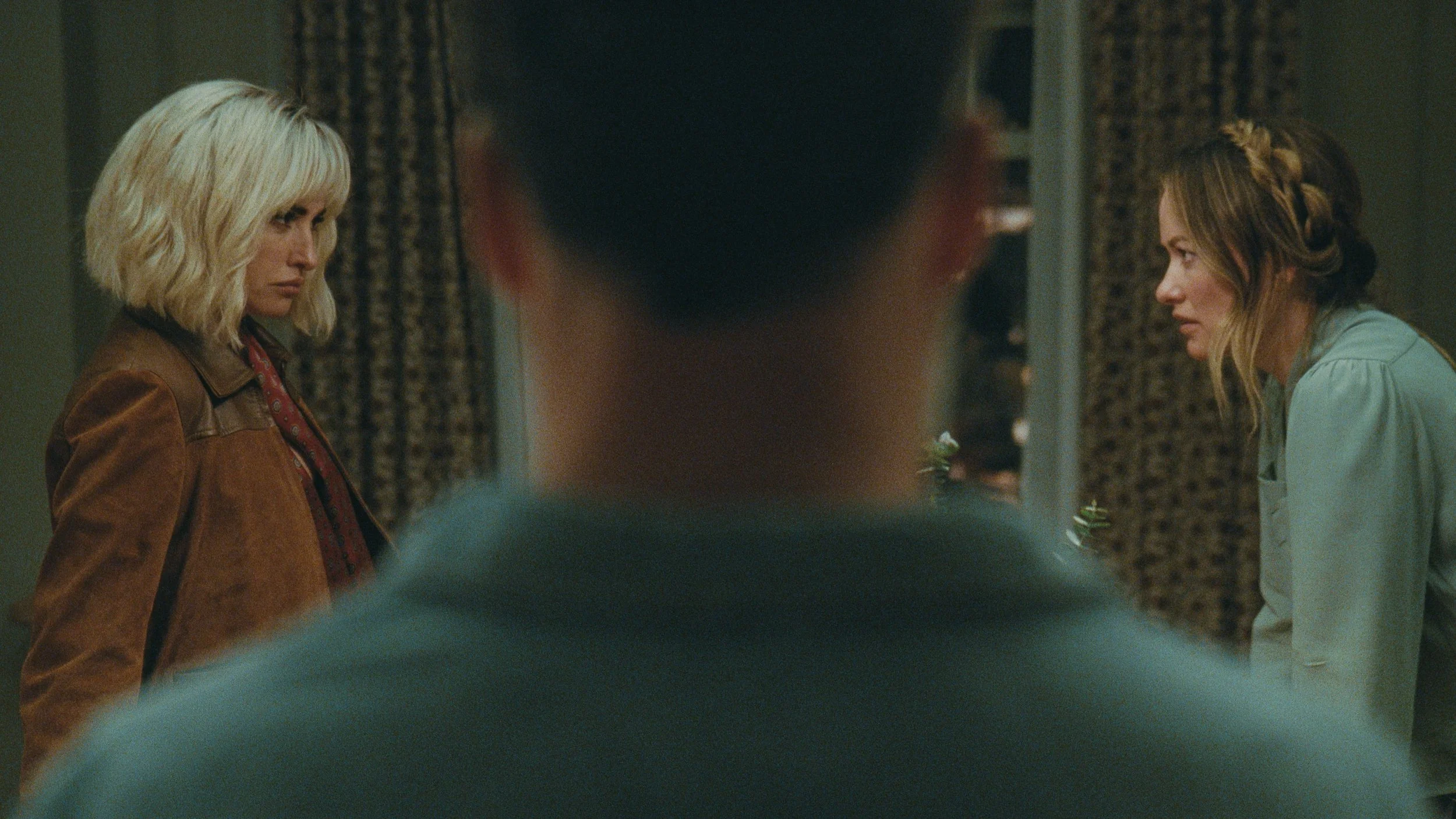
‘The Invite’ follows Joe and Angela, played by Seth Rogen and Wilde, a long-married couple whose relationship has settled into a rhythm of avoidance, resentment and half-performed stability. When they invite their upstairs neighbors Hawk and Pina, played by Edward Norton and Penélope Cruz, down for dinner, the evening begins as flirtation and provocation before becoming something closer to emotional surgery. The premise is simple, but the movie keeps finding new ways to turn that simplicity into tension.
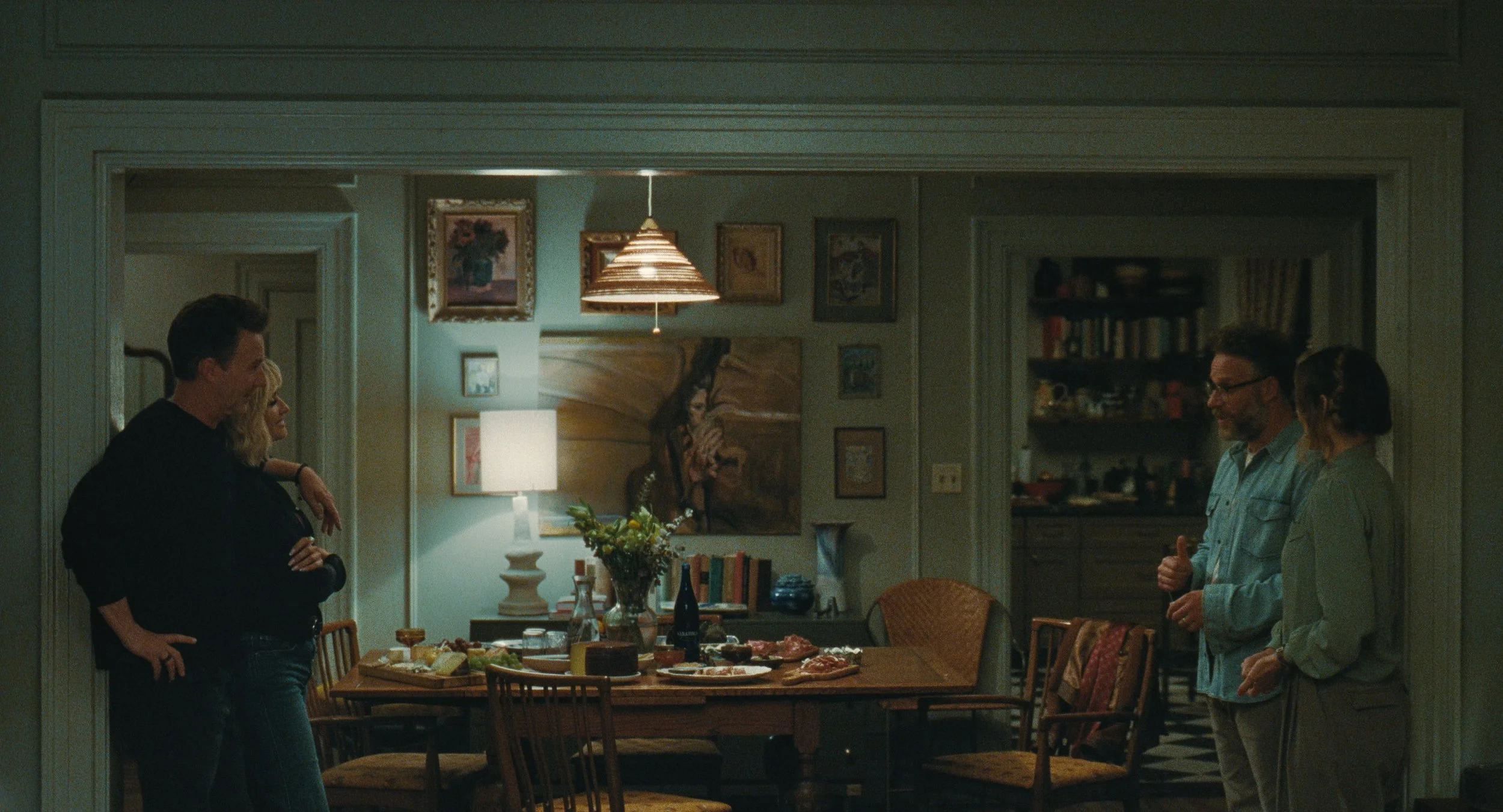
Courtesy Of A24
The obvious comparison is ‘Who’s Afraid of Virginia Woolf?,’ but what Wilde’s film does so well is keep the comedy alive while the damage accumulates. It is not a grim chamber drama pretending to be funny. It is genuinely funny. It is also uncomfortable, sexy, sad and surprisingly generous. The laughs do not soften the wounds. They reveal them.
Wilde’s performance is one of the reasons the film lingers. Angela is not some standard version of the character she is often typecast as. She is not simply glamorous, cool, unreachable or self-possessed. She is insecure, sharp, defensive, funny, embarrassed by her own longing and painfully aware of the person she may have become inside her marriage. Wilde does not play her as a symbol of marital dissatisfaction. She plays her as a woman who is trying to maintain control while realizing control may be the very thing suffocating her.
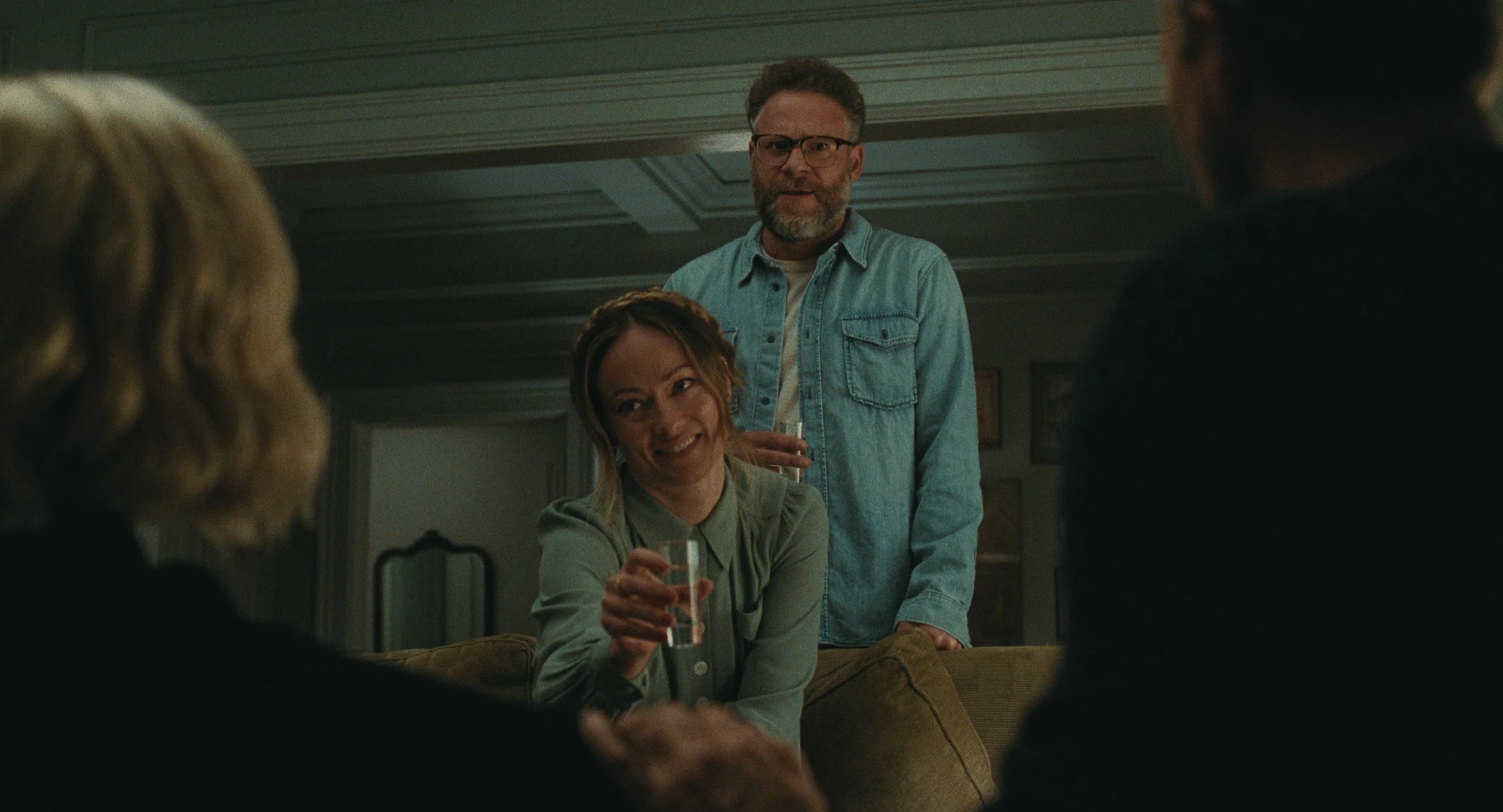
Courtesy Of A24
It is her strongest acting work in years because it feels unguarded without becoming showy. She lets Angela be messy in ways that do not flatter the character, and she understands that the film only works if Angela is allowed to be both wounded and complicit. That is a difficult balance, and Wilde finds it.
Seth Rogen is phenomenal here. His performance as Joe may be one of the best of his career because it uses everything audiences know about him and then complicates it. Rogen has always been able to make discomfort funny, but ‘The Invite’ asks him to dig beneath the familiar affability and find something more bruised. Joe is funny because he is avoiding pain. He is likable because he has built a whole personality around being easy to like. But the film slowly reveals what that ease has cost him, and Rogen plays that realization with real emotional intelligence.
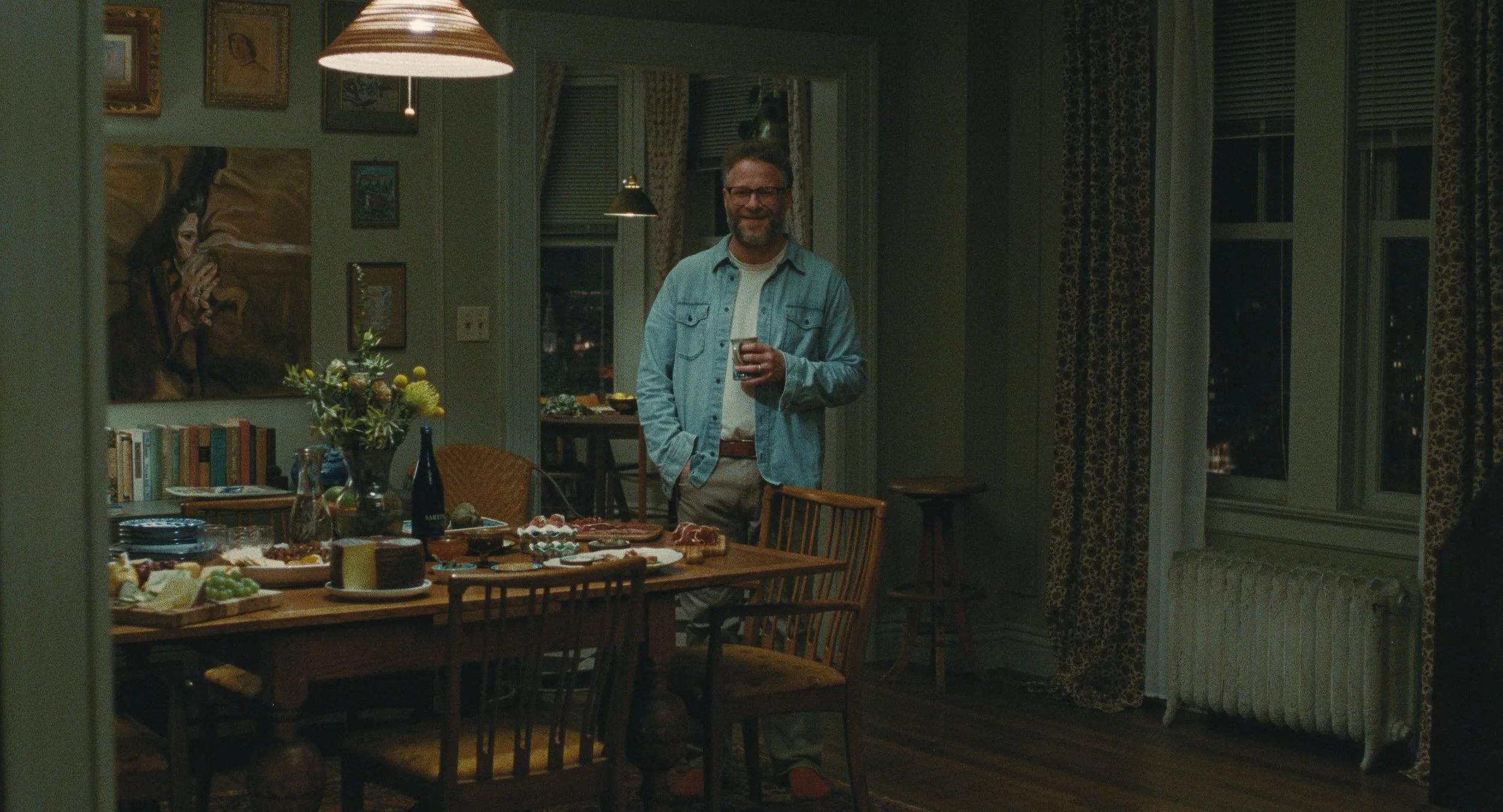
Courtesy Of A24
This is the kind of performance that can sneak up on awards voters if A24 keeps him in the conversation. It is not a transformation in the obvious sense. It is better than that. It is an actor revealing new depth inside a persona people thought they already understood.
Edward Norton is comically cringe in exactly the right way as Hawk. He is magnetic, obnoxious, smug, seductive, ridiculous and completely convinced of his own enlightenment. It is the kind of performance that could tip into caricature, but Norton is too smart for that. He knows Hawk is unbearable, but he also knows why people in the room keep listening to him. His confidence is part of the comedy, but it is also part of the threat. He is the dinner guest who turns provocation into a sport and makes everyone else reveal themselves while pretending he is just asking questions.
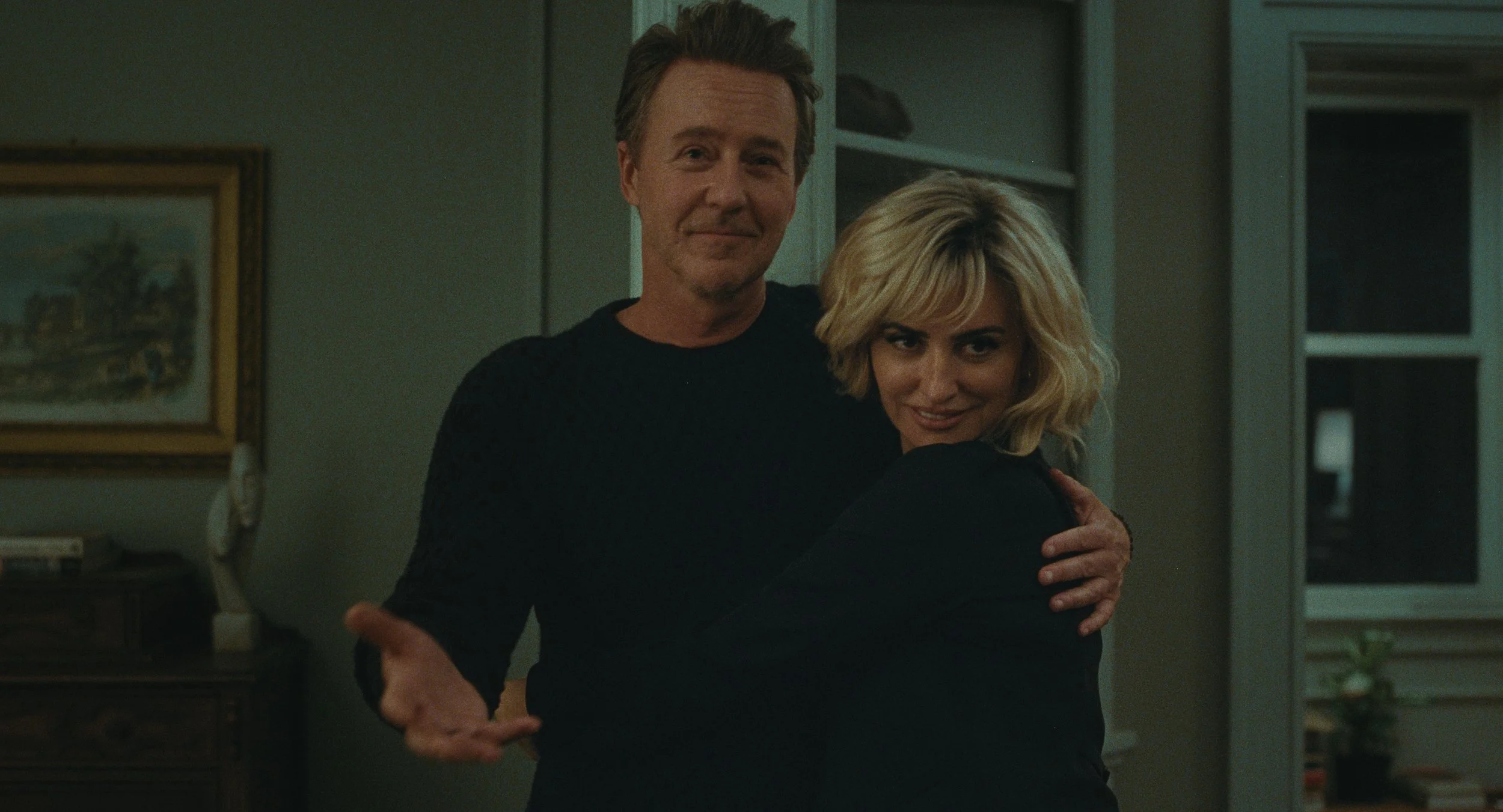
Courtesy Of A24
Then there is Penélope Cruz, who may be the film’s most quietly devastating weapon. Pina is funny, smart, sexy and almost unnervingly nonchalant, and Cruz makes that calm feel like power. She never pushes. She does not have to. She walks into the film with a kind of effortless control that makes everyone else seem like they are trying too hard. But what makes the performance work beautifully is that the nonchalance is not emptiness. There is intelligence under it, calculation under it, and eventually feeling under it. Cruz makes Pina seem both impossibly composed and fully alive.
All four performances are incredible, but the magic is in how they play together. This is an ensemble movie in the truest sense. No one is simply waiting for their showcase moment. Every line changes the room. Every reaction matters. Every laugh has an aftertaste. That is what makes the film so rewarding to revisit. Once you know where the night is going, the earlier scenes become even sharper, because you can see all the little evasions and power moves hiding in plain sight.
Jones and McCormack’s screenplay deserves major awards attention. The writing is sharp without feeling overly polished, theatrical without feeling artificial and funny without losing its emotional teeth. The script understands that adult relationships rarely collapse because of one revelation. They collapse because of a hundred tiny refusals to say the truth until someone else says it for you. That is what Hawk and Pina do to Joe and Angela. They do not simply disrupt a marriage. They expose the performance of one.
Courtesy Of A24
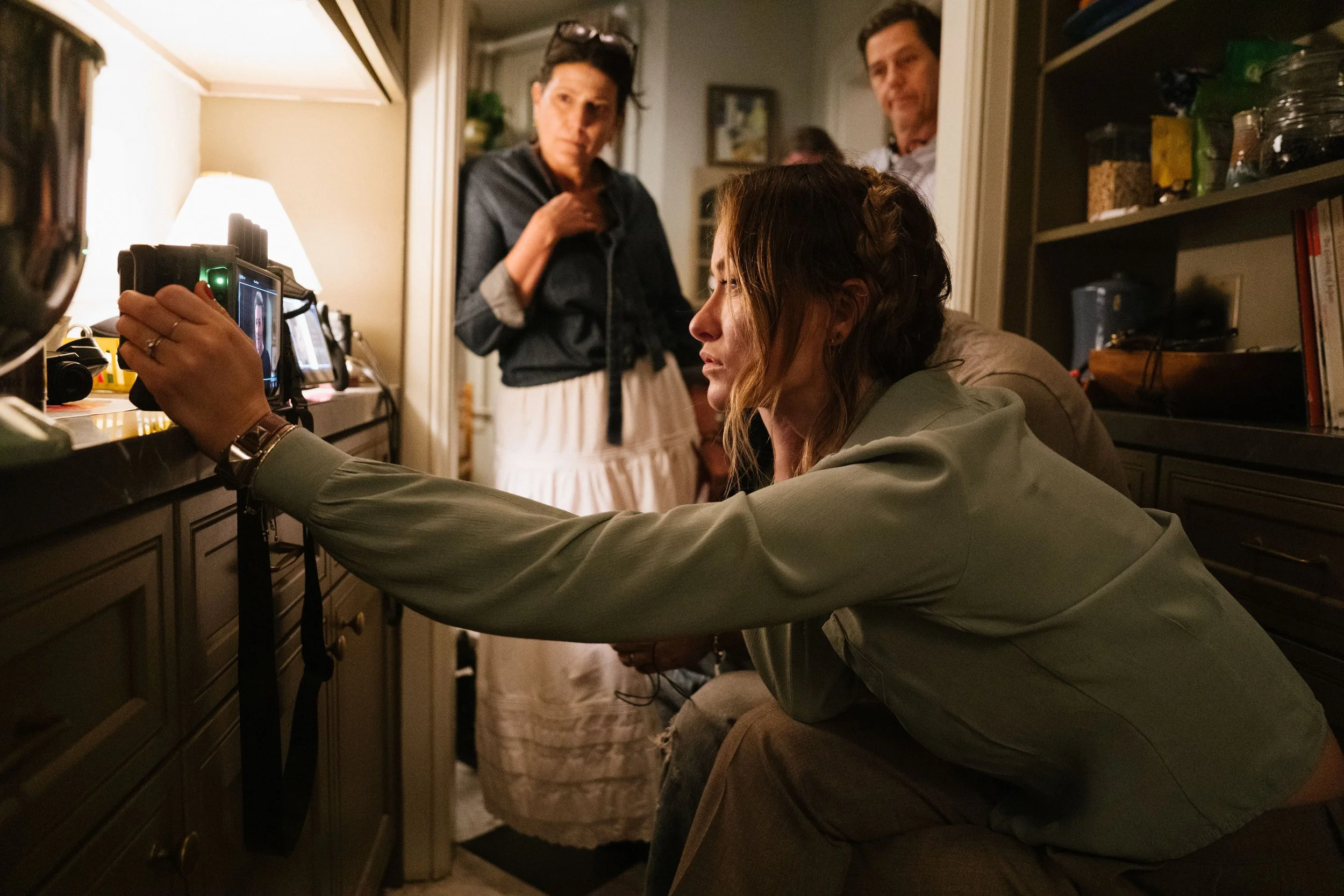
Wilde’s direction is just as crucial to that exposure. She keeps the film moving without ever making the movement feel forced. For a single-location movie, ‘The Invite’ has rhythm, shape and visual curiosity. It knows when to crowd the frame and when to let someone sit alone inside it. It knows when a close-up is funnier than a punchline. It knows when silence is more revealing than dialogue. That kind of control is easy to undervalue because the film looks effortless, but the more I think about it, the more impressive the construction becomes.
The craft categories should not be ignored either. Adam Newport-Berra’s cinematography gives the apartment texture and emotional dimension, making it feel elegant, intimate and increasingly dangerous. Yorgos Mavropsaridis and Anthony Boys’ editing gives the film its snap, shaping the comedy and the cruelty in the same breath. Devonté Hynes’ score moves through the film with the right mix of anxiety and seduction. And Jade Healy’s production design is essential. The apartment is not just where the film happens. It is what the film is about: taste, status, performance, intimacy and the illusions people build around themselves.
Courtesy Of A24
That is why ‘The Invite’ should—(Will**) be in the Oscar conversation. Not because it is loud. Not because it announces itself as prestige. Because it does the harder thing. It takes four people, one apartment and one night, and turns them into a complete emotional battlefield. It proves that a movie does not need spectacle if the characters are volatile enough, the writing is precise enough and the performances are alive enough.
A24 has a real opportunity here, and maybe even a necessary one. The studio knows how to build an awards campaign around a film that might look, at first glance, too weird, too funny or too genre-adjacent for traditional Oscar voters. ‘Everything Everywhere All at Once’ proved what happens when A24 commits fully to reframing what an awards movie can be. ‘The Invite’ is not that kind of maximalist swing, but the principle is the same. This is a film that can be underestimated if it is treated merely as a clever summer release. It needs to be positioned as what it is: one of the year’s sharpest films.
POPULAR ON THE CINEMA GROUP
That feels especially important for A24 right now. The studio’s recent push into an AI partnership with Google has complicated its public image, particularly among the filmmakers, artists and younger moviegoers who helped turn A24 into more than just a distributor. Whether that backlash ultimately sticks or fades, the perception problem is real: a brand built on human, filmmaker-first storytelling suddenly finds itself defending a move that many see as creatively uneasy at best. That makes a film like ‘The Invite’ even more valuable. It is actor-driven, writerly, intimate, funny, emotionally precise and built entirely around human behavior. In other words, it is exactly the kind of movie that reminds people why A24 earned that trust in the first place.
Courtesy Of A24
From the Sundance premiere to multiple viewings later, my feeling has not cooled. It has grown. ‘The Invite’ is funnier, richer and more emotionally precise than its surface suggests. Wilde has made her most assured film as a director. Rogen gives a performance that deserves serious consideration. Norton and Cruz are operating at a high comic and dramatic level. Jones and McCormack’s screenplay is one of the year’s strongest. The craft is elegant, controlled and meaningful.
This is how a Sundance breakout becomes an Oscar contender: not because the industry is told to take it seriously, but because the film keeps proving, scene by scene, that it should be taken seriously.

| FEATURES | INTERVIEWS | REVIEWS | The Catalogue | TRENDING | TRAILERS | VIDEOS |





![WERWULF - Official Trailer [HD] - Only In Theaters Christmas](https://i.ytimg.com/vi/cmjpadVj-Vk/hqdefault.jpg)