‘The Invite’ Review: Olivia Wilde and Seth Rogen Anchor a Razor-Sharp Marital Comedy That Isn’t Afraid to Get Uncomfortable
Courtesy Of Sundance Institute
Olivia Wilde’s The Invite is a smart, sharply acted chamber comedy that skewers modern marriage with wit and empathy, even when its darker turns momentarily strain the balance.
With The Invite, Olivia Wilde delivers her most assured and emotionally fluent work to date — a chamber comedy that weaponizes intimacy, discomfort, and self-awareness to probe the slow erosion of modern marriage. Returning to a scale that foregrounds actors and language over spectacle, Wilde crafts a film that feels rigorously controlled yet alive to the messiness of human behavior. Where Don’t Worry Darling buckled under the weight of its own allegory and cultural noise, The Invite thrives on precision, trust, and restraint.
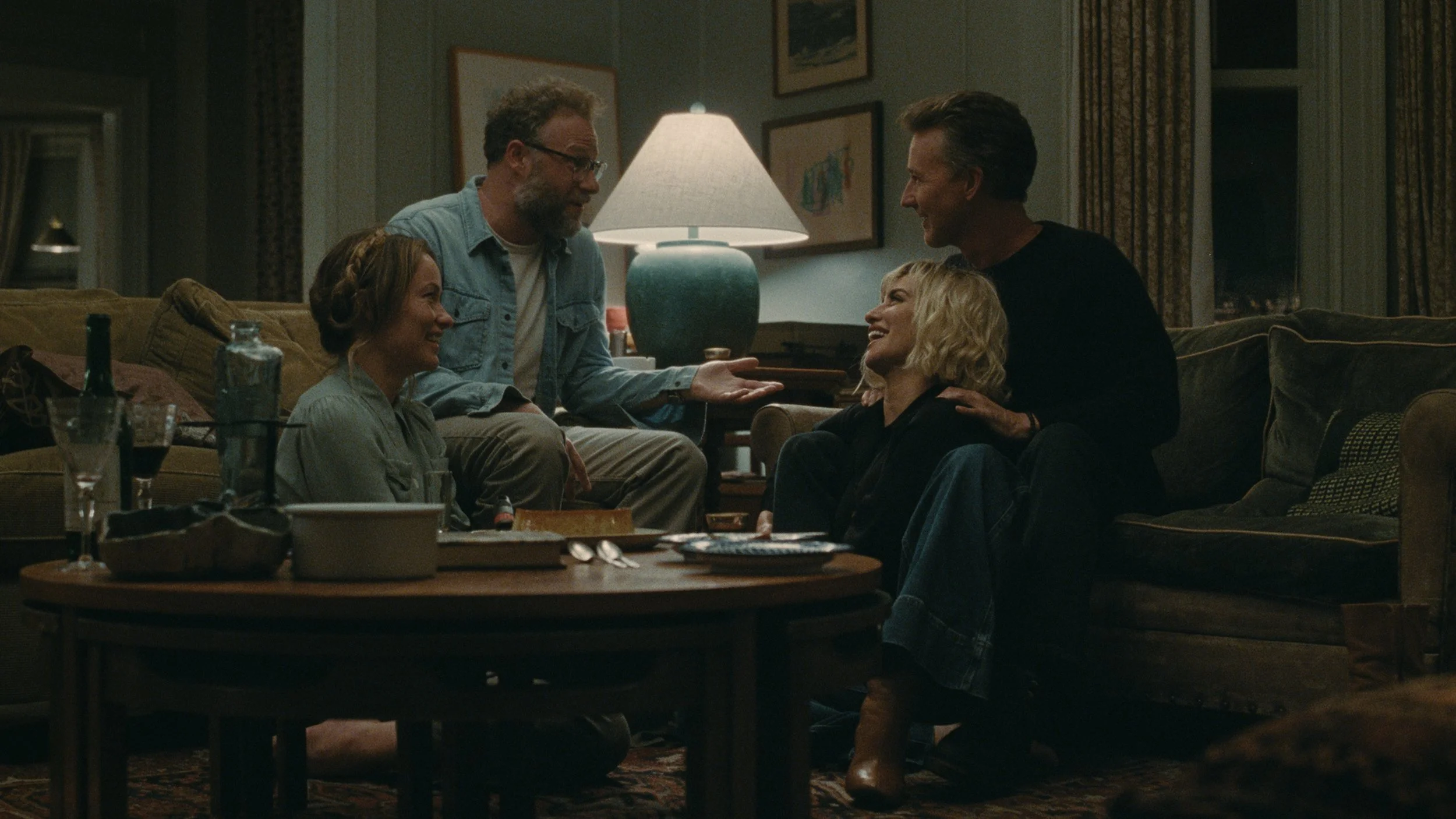
Adapted from Cesc Gay’s Spanish film Sentimental, the story unfolds almost entirely within the confines of a single San Francisco apartment over the course of one dinner party. Joe and Angela, a long-married couple barely holding themselves together, invite their upstairs neighbors over for an evening that quickly exposes the emotional landmines buried beneath polite conversation. It’s a setup that evokes classic theatrical confrontations — Who’s Afraid of Virginia Woolf? looms large — but Wilde resists grandstanding. Instead, she allows discomfort to accumulate gradually, letting silences, glances, and casual barbs do as much damage as outright confrontation.
Credit: Courtesy Of A24
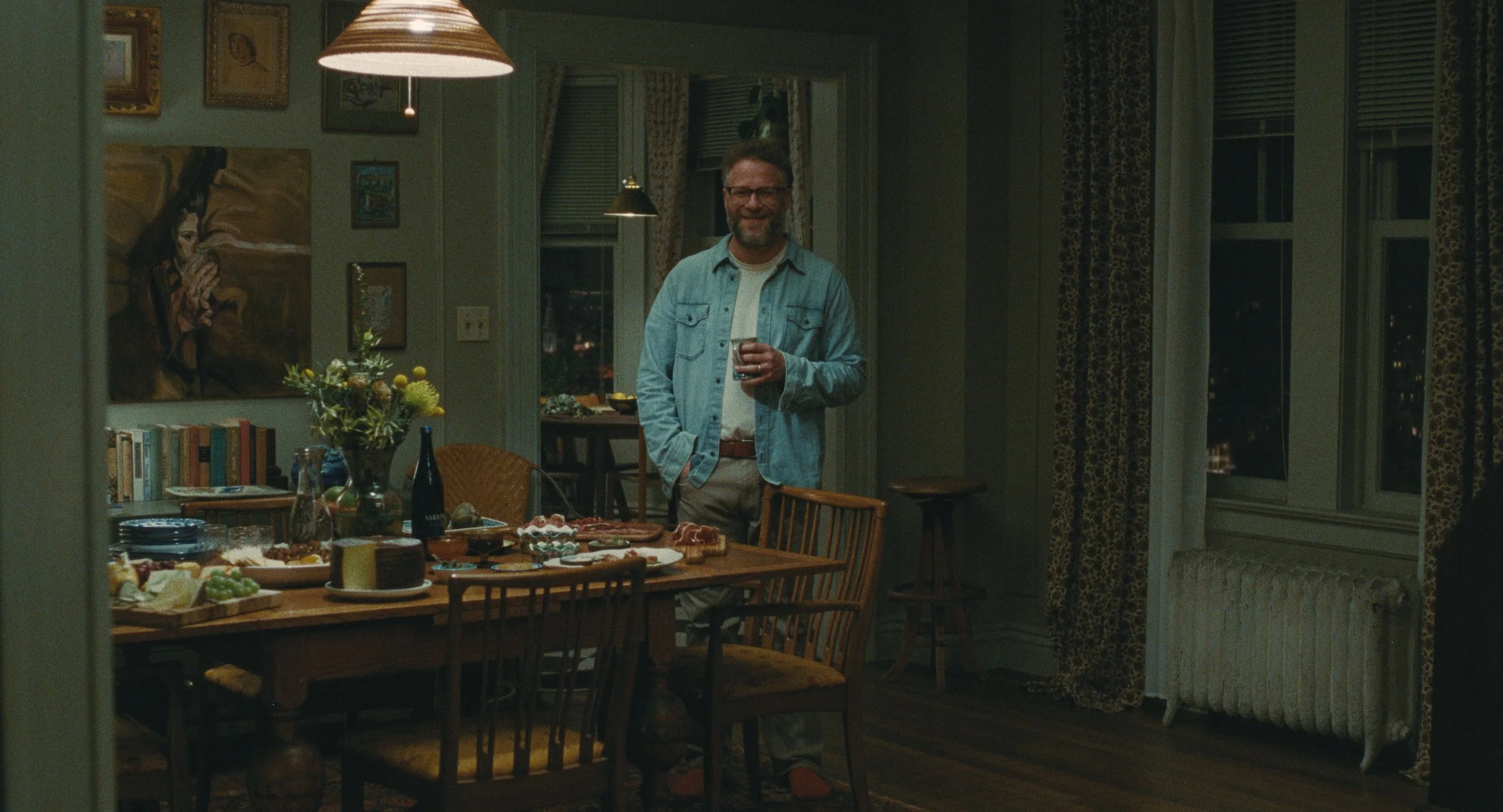
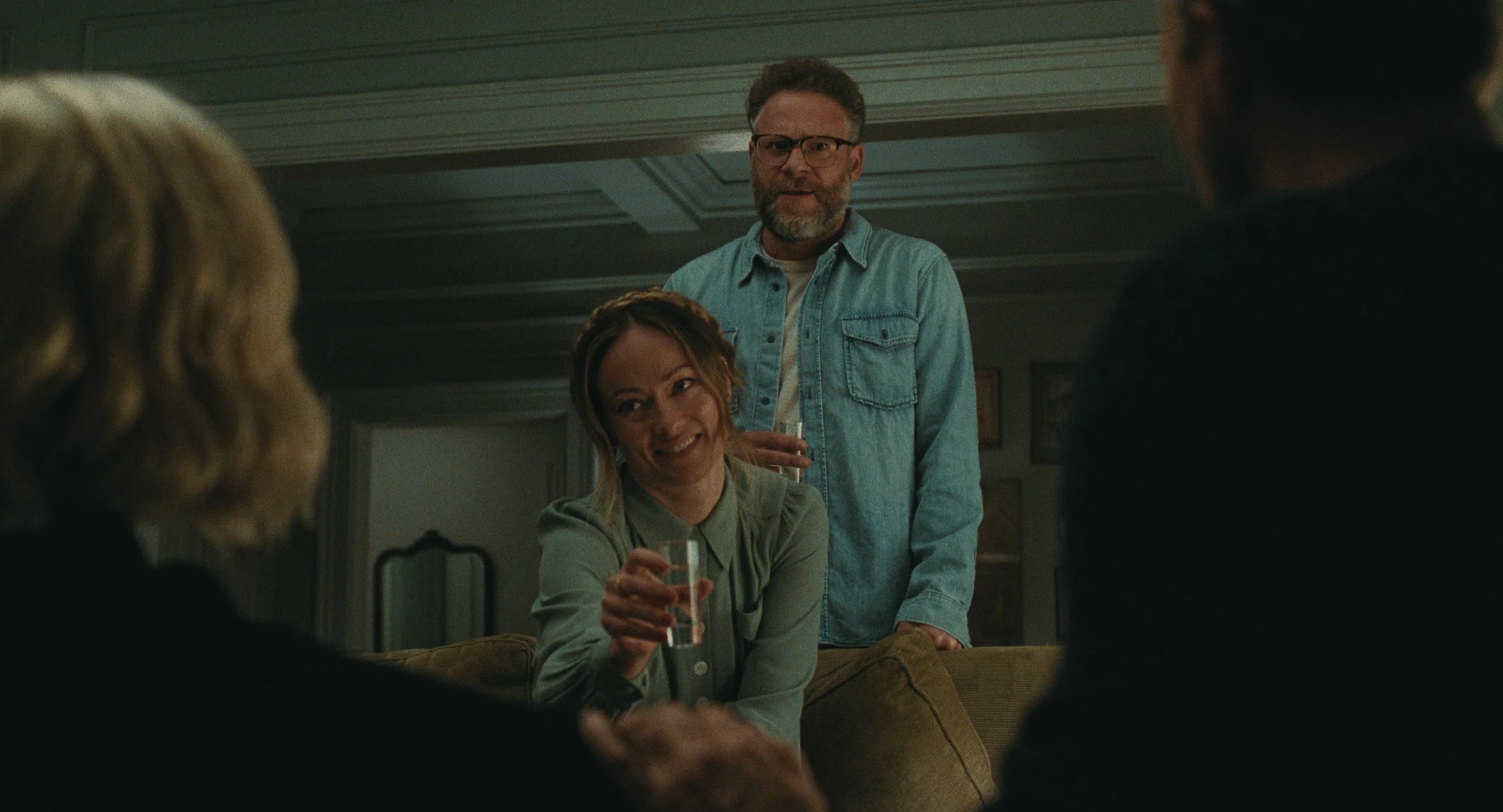
Seth Rogen gives the performance of his career as Joe, a man whose professional stagnation and physical ailments have fermented into resentment and bitterness. Rogen has long excelled at playing insecurity as comedy, but here he strips away the safety net of likability. Joe is petulant, defensive, occasionally cruel — and deeply recognizable. Rogen grounds the character in quiet despair, allowing humor to curdle into something more unsettling. It’s a performance that never asks for sympathy, only understanding, and it anchors the film with emotional gravity.
Olivia Wilde’s Angela is Joe’s counterweight: outwardly warm, socially attuned, and meticulously self-managed. Wilde plays her as a woman who has mastered the language of emotional intelligence while quietly suffocating beneath it. Angela’s relentless politeness and performative empathy mask a profound dissatisfaction — not just with her marriage, but with the version of herself she’s become within it. Wilde’s performance is subtle and devastating, capturing the exhaustion of someone who has learned to survive by smoothing over conflict rather than confronting it.
Credit: Courtesy Of A24
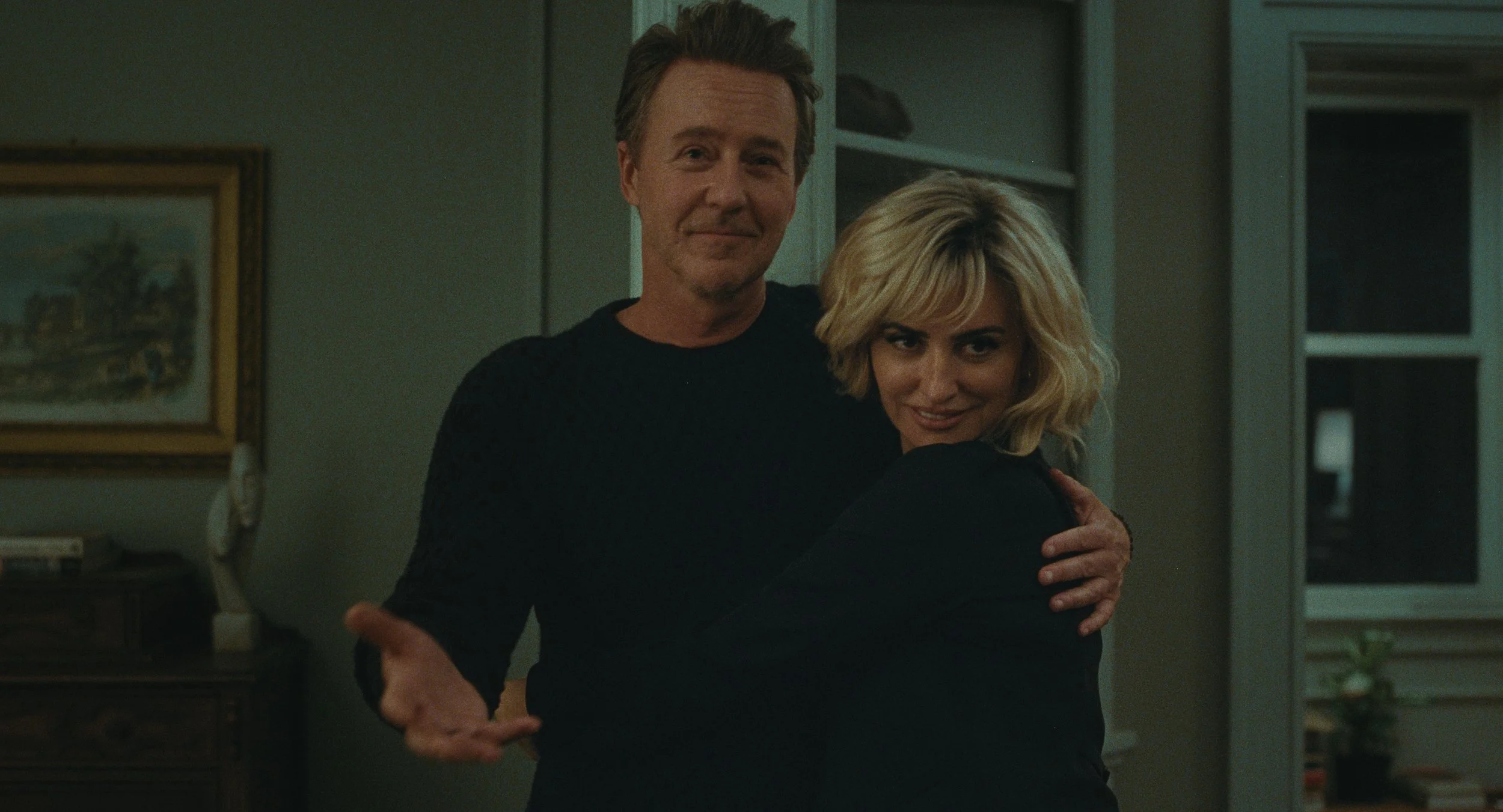
The arrival of Hawk and Piña — played with unnerving ease by Edward Norton and Penélope Cruz — destabilizes the couple’s fragile equilibrium. Norton’s Hawk radiates a disarming openness that reads as either enlightened or smug, depending on who’s looking. Cruz’s Piña, a psychotherapist and sexologist, carries herself with quiet authority and sensual confidence, instantly becoming both object of fascination and existential threat. Together, they function less as seducers than as mirrors, reflecting back the compromises Joe and Angela have made — and the lives they might have lived.
Will McCormack and Rashida Jones’ script is acutely attuned to the rhythms of modern communication. Characters speak in half-truths, deflections, and ironic self-awareness, weaponizing vulnerability as often as they seek connection. Conversations overlap and veer off course, oscillating between humor and hostility with unnerving fluidity. Wilde conducts these exchanges with a musician’s ear, allowing scenes to breathe while maintaining an undercurrent of tension that never fully dissipates.
Credit: Courtesy Of A24
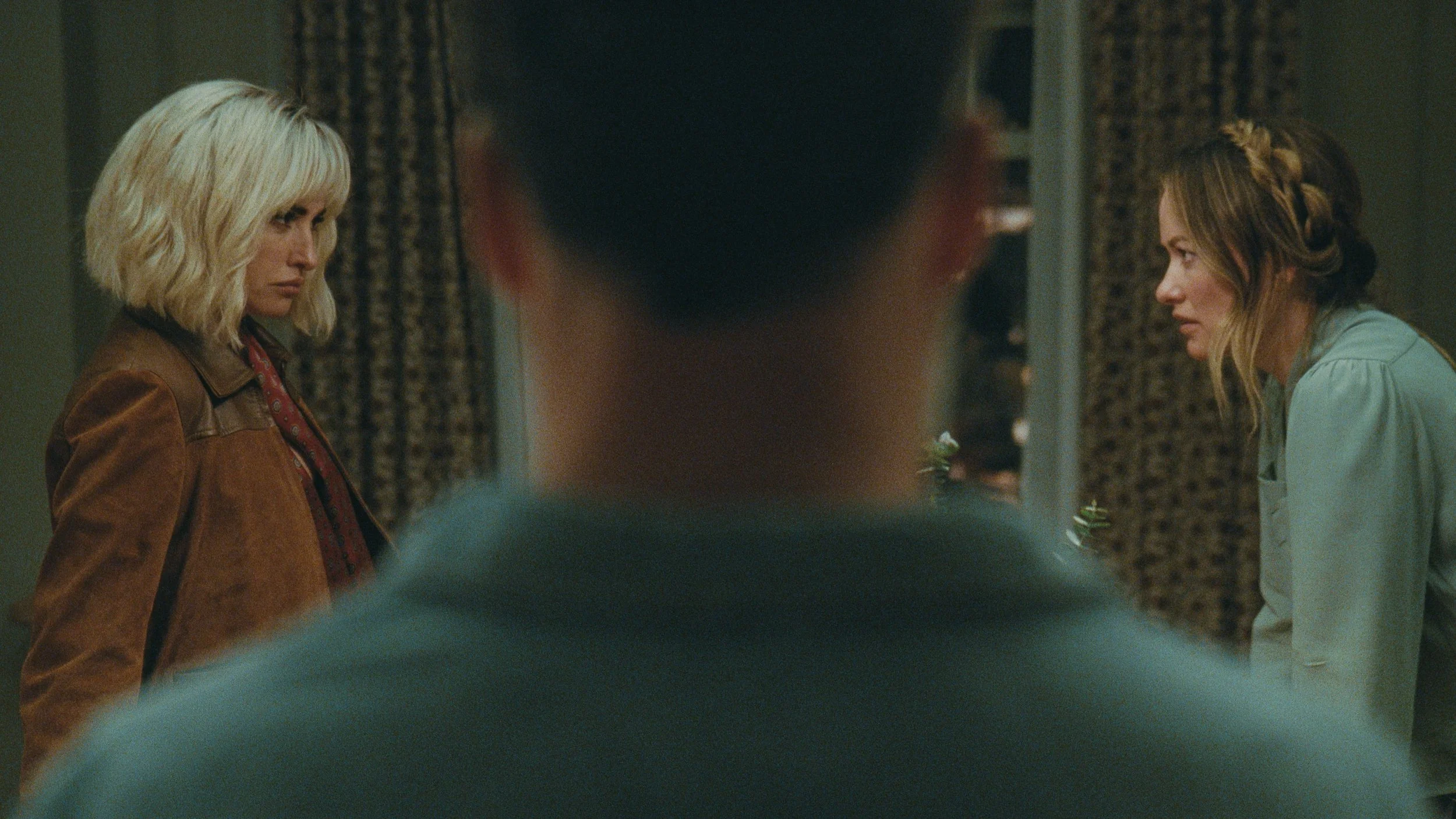
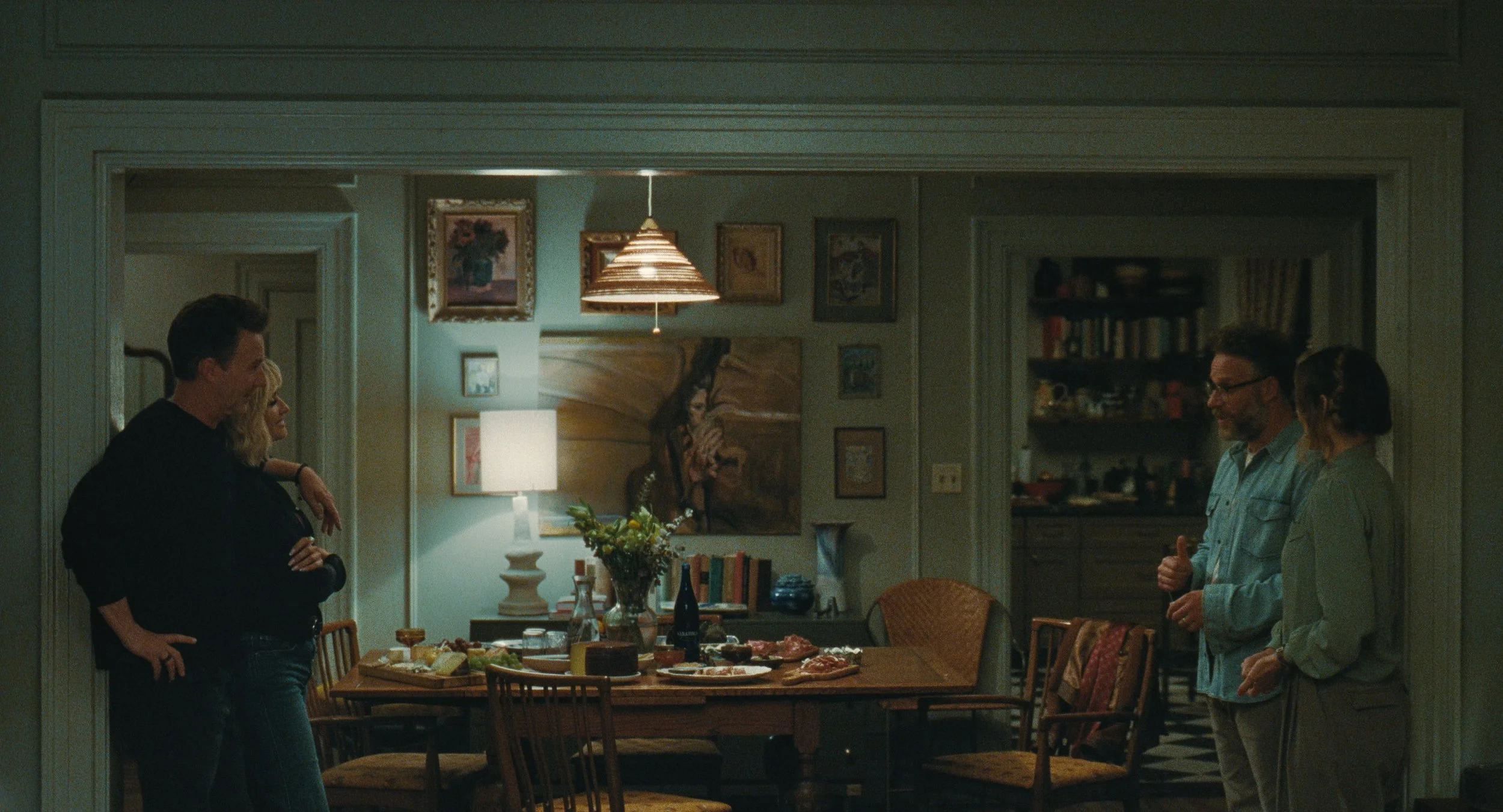
Wilde’s direction is most impressive in her use of space. The apartment becomes a psychological battleground, with shifting alliances signaled through blocking and movement. Who pours the wine, who retreats to another room, who dominates the couch — these choices register as emotional tells. Cinematographer Adam Newport-Berra reinforces this dynamic with frames that trap characters in doorways, mirrors, and reflections, emphasizing the performative nature of intimacy. Everyone is watching, and everyone knows it.
POPULAR ON THE CINEMA GROUP
As the evening progresses, the film pivots from social comedy into emotional excavation. Old wounds resurface, resentments sharpen, and the fantasy of sexual liberation gives way to harder truths about compromise and self-betrayal. The tonal shift is ambitious and largely successful, though not perfectly seamless. There are moments where the film pushes a beat too far, over-articulating psychological insight that the audience has already grasped. Still, the ensemble’s commitment — particularly Norton’s surprising emotional depth and Cruz’s quiet authority — carries the film through its darker passages.
Credit: Courtesy Of A24
If The Invite stumbles at all, it’s in its runtime. The material is at its sharpest when it trusts implication over explanation, and the film occasionally lingers where a cleaner cut might have preserved momentum. Yet even these indulgences feel rooted in generosity rather than excess — a desire to fully inhabit the emotional terrain rather than rush to resolution.
Wilde’s greatest achievement here is resisting cynicism. While the film is unsparing in its depiction of marital disillusionment, it ultimately suggests that honesty, however painful, can still be transformative. The closing movement lands with unexpected grace, offering neither false optimism nor despair, but something more elusive: emotional clarity.
With The Invite, Olivia Wilde reasserts herself as a director of formidable sensitivity and control. It’s an adult film in the best sense — uncomfortable, funny, observant, and deeply humane — and a reminder that the most volatile dramas often unfold not in grand gestures, but across a dinner table, one uncomfortable truth at a time.
Rating: ★★★★★
That's A Wrap
|
The Invite
|
That's A Wrap | The Invite |
“A razor-sharp, emotionally intelligent marital comedy, The Invite finds Olivia Wilde working at the height of her powers — pairing precise direction with Seth Rogen’s best and most vulnerable performance to date.”
CREDITS
Screened: January 25, 2026 | Sundance Film Festival
Director: Olivia Wilde
Cast: Seth Rogen, Olivia Wilde, Penélope Cruz, Edward Norton
Screenwriters: Will McCormack, Rashida Jones, based on the film Sentimental, by Cesc Gay
Out Now: Festival Circuit
Rating: R
Watch The Trailer Below:







![WERWULF - Official Trailer [HD] - Only In Theaters Christmas](https://i.ytimg.com/vi/cmjpadVj-Vk/hqdefault.jpg)