Amazon’s gorgeous, reverent series flips the franchise so replicants rule the world, but it never finds a soul of its own.
There is a moment early in Blade Runner 2099 that captures everything the series could have been. Michelle Yeoh‘s replicant cop, Olwen, and her new partner, Cora (Hunter Schafer), follow a lead into a place called Body Body, which looks from the outside like any seedy Los Angeles sex club. Inside, it is something far stranger and sadder: replicants strapping on pregnancy prosthetics, cradling mechanical infants, paying to simulate the one human experience they can never have. It is a haunting, original image, the kind of idea that made Ridley Scott‘s 1982 Blade Runner and Denis Villeneuve‘s Blade Runner 2049 feel so much richer than ordinary science fiction.
The rest of Amazon’s eight-episode series rarely reaches that height again. Blade Runner 2099 looks magnificent, sounds gorgeous and treats its source material with obvious reverence. But for a show about the question of what it means to have a soul, it is surprisingly hollow at its center, a beautifully rendered imitation that never quite comes alive.

The premise, at least, is bold. Created by Silka Luisa, the series is set 80 years after the original film and half a century after 2049, in a world that has flipped the franchise’s power dynamic on its head.
After a series of brutal wars, replicants now rule the planet, and humans are the oppressed underclass, forced into the menial jobs and dangerous off-world assignments they once outsourced to their synthetic creations.
It is a provocative reversal, one that invites all kinds of questions about power, revenge and whether the oppressed inevitably become the oppressors.
The premise, at least, is bold. Created by Silka Luisa, the series is set 80 years after the original film and half a century after 2049, in a world that has flipped the franchise’s power dynamic on its head. After a series of brutal wars, replicants now rule the planet, and humans are the oppressed underclass, forced into the menial jobs and dangerous off-world assignments they once outsourced to their synthetic creations. It is a provocative reversal, one that invites all kinds of questions about power, revenge and whether the oppressed inevitably become the oppressors.
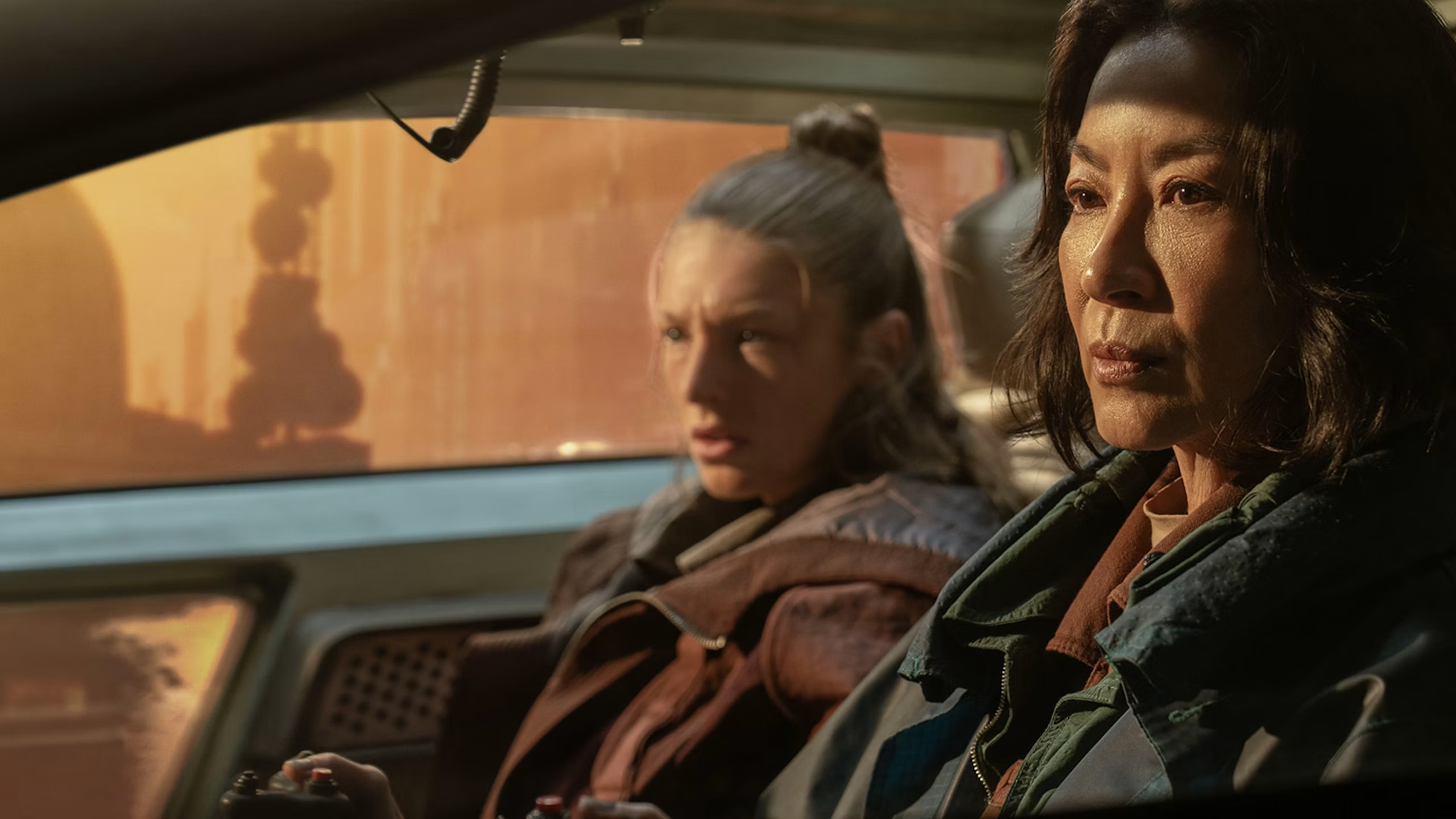
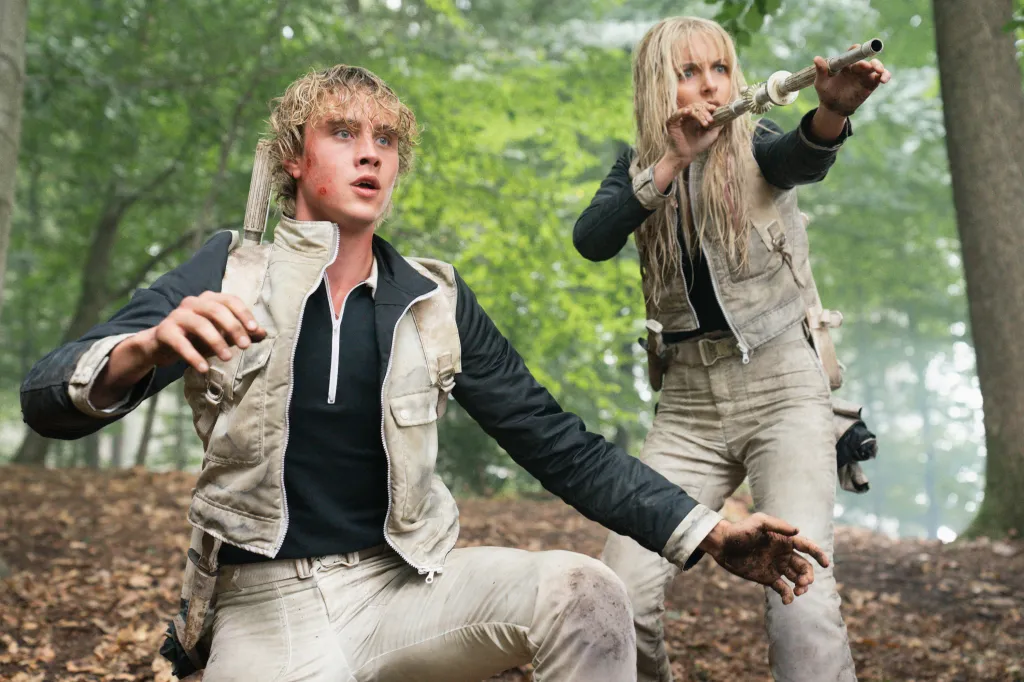
Unfortunately, the show is more interested in using that world as a backdrop than in exploring it. Olwen is a replicant blade runner with just eight days left in her predetermined life span, searching for Marek (Johnny Harris), a fellow blade runner and former lover who has vanished. Cora, posing as a replicant named Marian, is a human working an angle of her own: she is hunting for a mysterious artifact that she plans to trade to human rebels for safe passage to Mexico City, rumored to be the last human-run city on Earth. Naturally, their missions turn out to be connected, and the pair spend most of the season circling the same mystery from opposite directions.
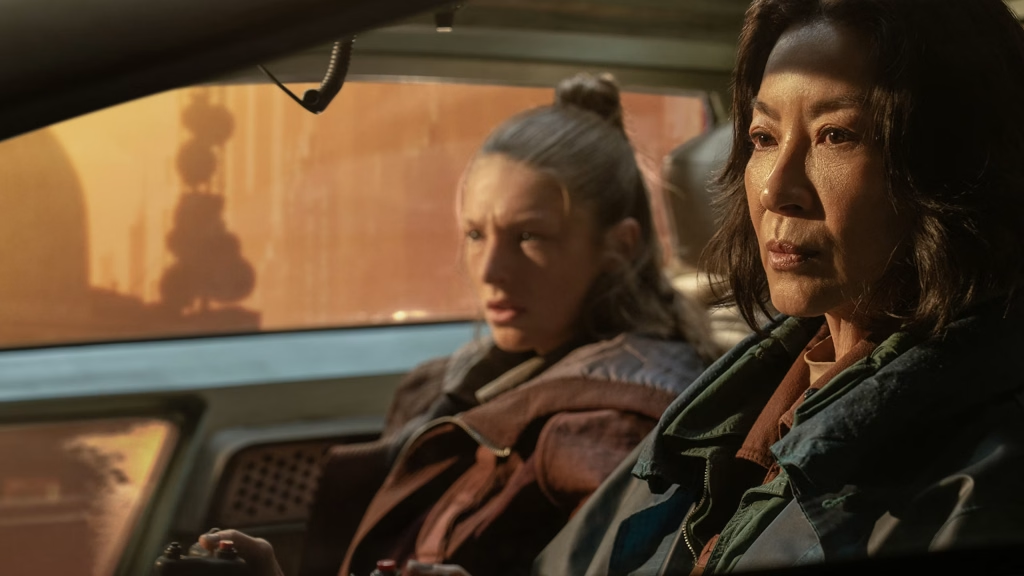
On a purely sensory level, it is often stunning. The production design faithfully preserves the look of Scott’s original, with Los Angeles still drowning in rain, smog and neon, its interiors cluttered with rusted, decades-old technology. Light cuts through windows in sharp, pale beams, and the city glows under a permanent haze. Leopold Ross’ mournful, jazz-inflected score is a worthy heir to Vangelis, giving the series a lonely, melancholy mood that is its greatest asset. Anyone who has ever wanted to simply live inside the world of Blade Runner for a few more hours will find plenty to savor.

But a mood is not a story, and 2099 too often mistakes one for the other. The pacing is glacial, with long stretches devoted to characters moving from one location to another or staring out at crumbling cityscapes. Villeneuve’s 2049 was also deliberately paced, but every lingering shot felt purposeful, building toward revelations about memory, identity and love. Here, the slowness feels less like a choice than a symptom of a story stretched too thin. The plot, essentially a missing-person case and a hunt for a MacGuffin, could comfortably fit in a two-hour movie, and the series often feels like exactly that, padded out to fill a streaming season.
That is a problem the streaming era has yet to solve. Netflix’s The Altruists, which I reviewed last week, had a far more complicated story to tell across its eight episodes, and it rarely felt this sluggish. 2099 has a fascinating world but not enough plot to justify the hours it asks of viewers, and it wastes the format’s greatest advantage. Television gives storytellers room to develop characters and build a world in depth. This series uses that room mostly for atmosphere.

The characters suffer most. Olwen is the most compelling figure in the show, largely because she is played by Yeoh, who can convey a lifetime of grief with a single glance. There is a lovely, quietly devastating moment when Olwen sees a goat for the first time, and Yeoh lets the wonder and sorrow of a dying woman encountering something new play across her face without a word. But the show’s attempts to deepen her through flashbacks and her history with Marek are too broad and familiar to land with real force. Her terror of death, the very thing that made Rutger Hauer’s Roy Batty so unforgettable, is mostly stated rather than felt.

Schafer has an even harder job. Cora spends nearly the entire season hiding her identity, her agenda and her past, which means the audience barely gets to know her either. Schafer, who brought such vivid energy to Euphoria and The Hunger Games: The Ballad of Songbirds & Snakes, captures Cora’s scrappy desperation well, and she and Yeoh develop a believable wariness that slowly softens into trust. But the relationship never deepens into something truly moving, because the show keeps both women at arm’s length.
The supporting cast fares worse. Lewis Gribben plays Cora’s brother, Elias, whose decisions seem to exist only to create problems for his sister. Katelyn Rose Downey’s Greta, a human girl sold into work for the LAPD, and Dimitri Abold’s Bebeto, one of Cora’s human allies, come with tragic backstories that tell us more about the world than about them. Tom Burke, Sheila Atim and Johnny Harris are all fine actors, but they are given little to work with.

The action does not help. Roughly once an episode, Olwen and Cora find themselves in a violent confrontation, but the fights are shot so darkly that it is often hard to tell what is happening. In a franchise defined by iconic set pieces, from Deckard’s rooftop showdown with Batty to K’s brutal fight in the flooding spinner, these sequences feel perfunctory.
What frustrates most is that the big ideas are all here. The series is preoccupied with the same questions that have always driven Blade Runner: the longing for more life, the fear of death, the blurry line between human and machine. Those questions feel more relevant than ever, as Hollywood itself wrestles with artificial intelligence onscreen and off, from Luca Guadagnino’s OpenAI drama Artificial to the industry’s ongoing anxiety about AI in production.
A Blade Runner series set in a world where the machines won should have had something urgent and unsettling to say about that moment. Instead, 2099 restates its themes without complicating them.

The Body Body sequence proves the show is capable of more. In that brief detour, it asks a genuinely provocative question: should replicants measure themselves against humanity at all, or should they become something entirely new? It is the kind of idea that could have defined the series, and it is a shame the show itself never takes that advice. Blade Runner 2099 is so committed to recreating the look and feel of its predecessors that it forgets to become something of its own.
It is also worth remembering how unusual this franchise is. Blade Runner was a box office disappointment in 1982 and became a classic only over time, through home video, cable and a series of director’s cuts. 2049 earned rapturous reviews and five Oscar nominations, winning two, but grossed less than $300 million worldwide, far short of what a film of its scale needed. In that light, Prime Video‘s decision to bring the world to television makes sense: it is a premium brand with a devoted audience that tends to discover it slowly, which suits a streamer better than a single opening weekend. The risk is that a series this cautious will not create new fans the way the films eventually did. It is built to satisfy people who already love Blade Runner, and it is unlikely to convert anyone who doesn’t.
Fans of the franchise will likely want to watch it anyway, and there is real pleasure in returning to this world, especially with Yeoh as a guide. But like the replicants at Body Body, the series is trying to simulate something it cannot quite reproduce. It has the look of Blade Runner. It just doesn’t have the soul.
RATING: ★★½☆☆
That’s A Wrap | Blade Runner 2099
A gorgeous, reverent and frustratingly hollow return to the franchise, anchored by Michelle Yeoh but stretched far too thin across eight episodes.
Jonathan P. Moustakas
Watch the Trailer Below
CREDITS
Creator: Silka Luisa
Cast: Michelle Yeoh, Hunter Schafer, Dimitri Abold, Lewis Gribben, Tom Burke, Johnny Harris, Matthew Needham, Sheila Atim, Katelyn Rose Downey, Amy Lennox
Music: Leopold Ross
Network: Prime Video
Episodes: 8
Premiere Date: November 25, 2026