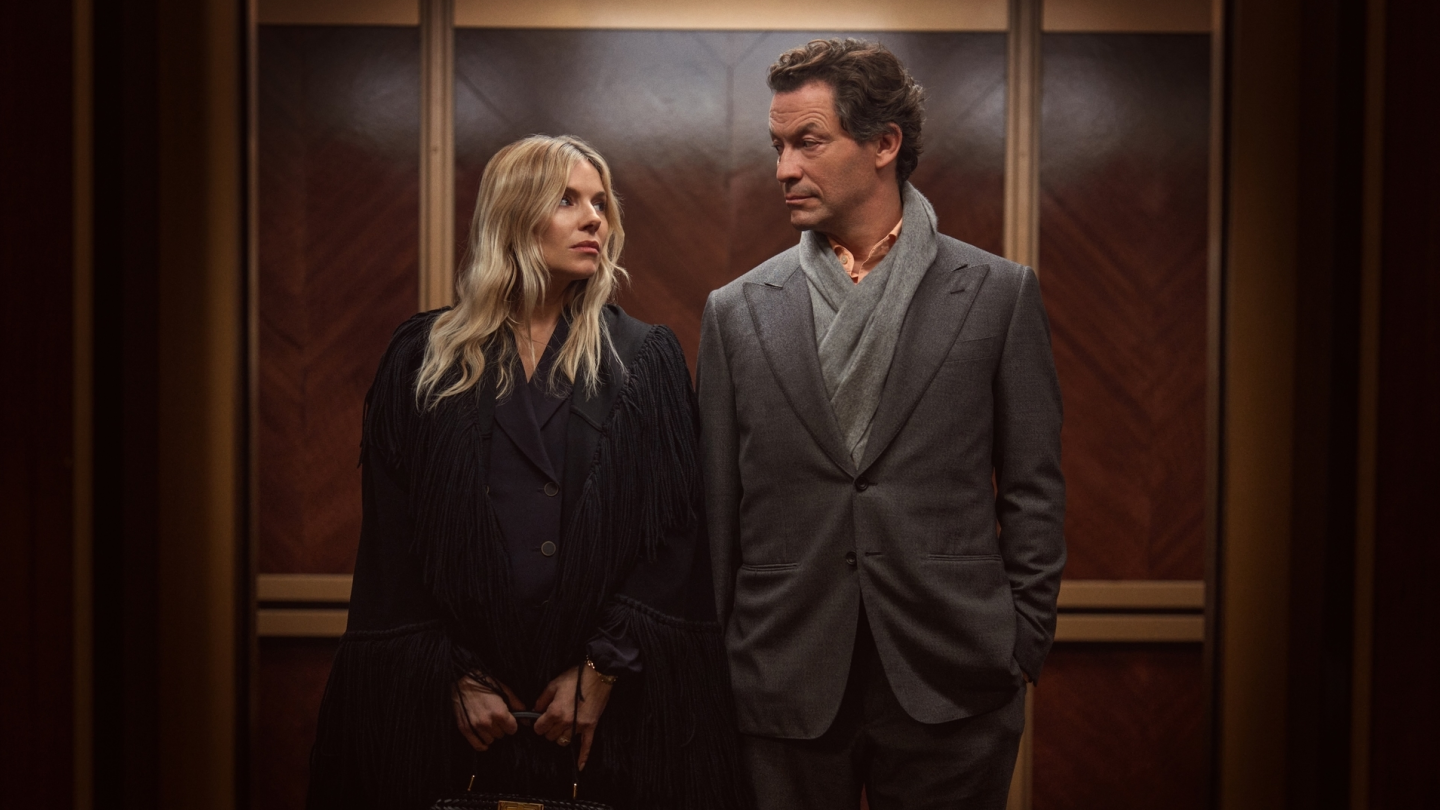
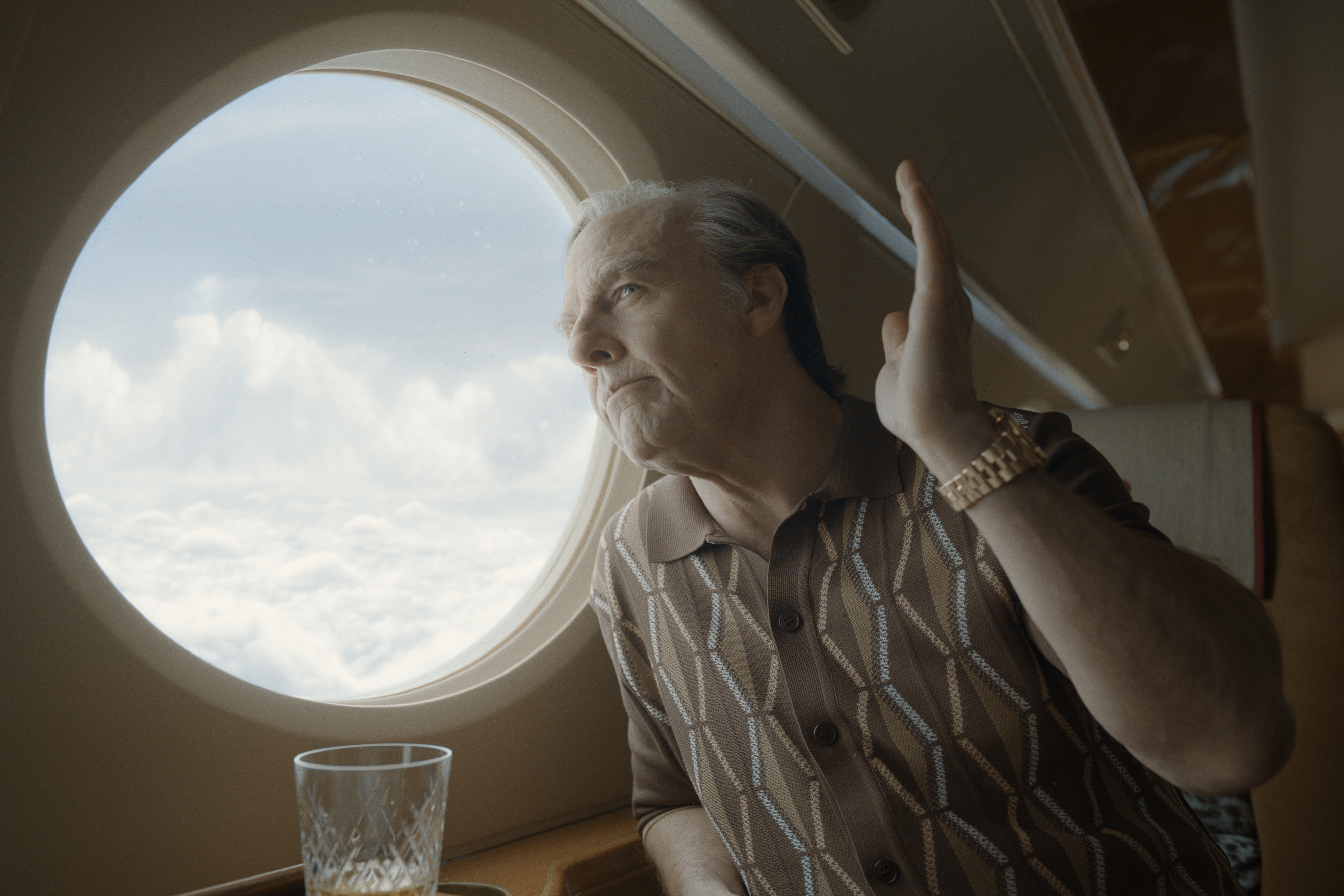
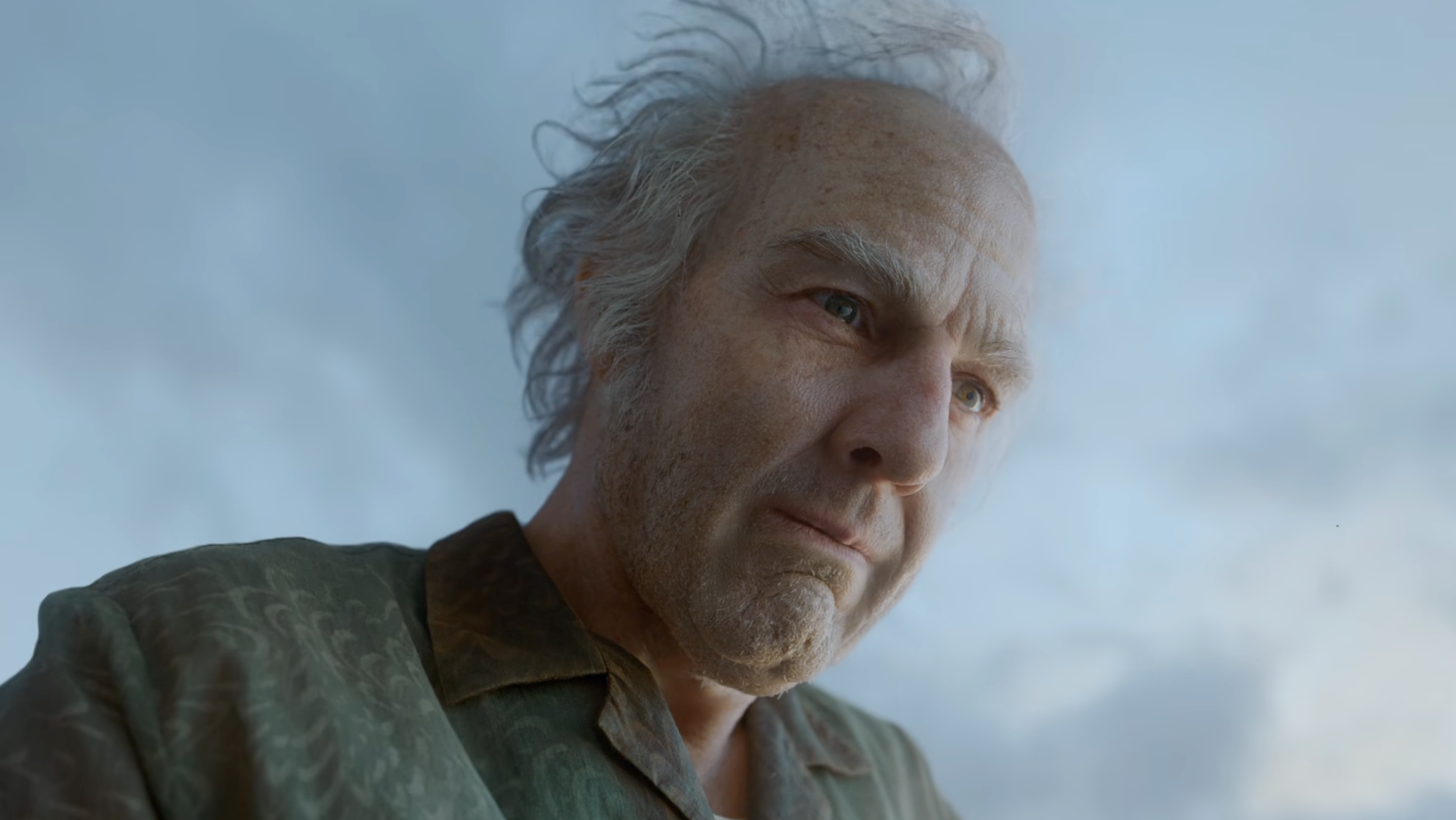
Nolan’s IMAX adaptation of Homer is a staggering technical achievement anchored by the best work Matt Damon has ever done, even when its episodic voyage drifts away from the current.
photo Credit Universal Pictures
Christopher Nolan has spent a career making movies about men trapped inside mazes they built themselves. They manipulate dreams, invert time, split themselves between public triumph and private ruin. In The Odyssey, he has finally found a protagonist who has been walking that maze for three thousand years — and who constructed it, brick by brick, out of a wooden horse and one very good idea.
The film opens on that horse. It sits half-buried on a dead shoreline, less a monument than a carcass, and Nolan holds on it long enough for the meaning to land: this is the object that ended a war and damned the man who thought of it. I found myself thinking about that image for the rest of the film’s 152 minutes, because everything that follows — ten years of monsters, gods, temptation, and drowning men — reads as the invoice coming due. Nolan understands something about Odysseus that most screen versions have soft-pedaled. His most celebrated act of genius was also a war crime, and he cannot outrun the method of his own victory.
This is the first feature ever shot entirely on IMAX film cameras, and I want to be precise about what that means in practice, because “shot on IMAX” has become marketing language that obscures more than it reveals. What it means here is weight. This is the most physically overwhelming film Nolan has ever made. Hoyte van Hoytema, in his fifth consecutive collaboration with Nolan, fills a frame roughly the size of a cathedral wall with handmade fleets, brutal coastline, fortified cities, and human bodies rendered small by all of it. The scale is overwhelming, but scale is the easy part; what’s remarkable is mass. The wind, water, stone, sand, and fire all appear to weigh something. Nolan doesn’t stage Odysseus against the natural world so much as make the elements themselves the antagonist, and he does it without asking a render farm for permission. During a mid-film storm the frame becomes a genuine struggle between human organization and elemental chaos — ropes straining, sails collapsing, bodies sliding across a deck, the horizon simply gone. I have not felt that particular kind of physical dread in a theater in years. It is breathtaking, brutal, and genuinely unnerving.
universal Pictures
Matt Damon plays Odysseus not as a legend but as a man being slowly hollowed out by his own mythology. It is the finest, most exposed work of his career. This is stern, physical, unusually interior acting — the authority of someone accustomed to being obeyed, with exhaustion and doubt accumulating behind it. Nolan repeatedly isolates Damon’s face inside that colossal frame, and the incongruity is the entire point: the grandeur of the story against the damaged person carrying it. What impressed me most is how little the performance asks to be liked. This Odysseus is clever enough to survive nearly anything and arrogant enough to be the reason survival was necessary. His wit saves him. His vanity kills his men. Damon plays both without flinching, and never once reaches for the audience’s sympathy. He is commanding, haunted, and quietly devastating.
Anne Hathaway matches him from a standstill. Her Penelope is not waiting by a window — she is running a siege of her own, delaying remarriage while studying the men occupying her house and calculating exactly how long the arithmetic holds. Hathaway rarely raises her voice, because Penelope knows composure is the last weapon she owns. Vulnerability surfaces in flashes, and her endurance registers as no less heroic than anything happening at sea. Hathaway is magnetic, coiled, and quietly formidable — a disciplined performance in a film full of people shouting over weather.
I should be honest about where the film loses me, because it does, and more than once. The structural problem is inherited from Homer and Nolan doesn’t fully solve it. The Odyssey is a collection of encounters — islands, monsters, temptations, catastrophic errors — strung along a hero’s determination to get home. That design is foundational to Western storytelling. Across two and a half hours, it also produces a rhythm that lurches rather than builds.
universal Pictures
The Calypso material is the worst of it. Charlize Theron has the necessary allure and command, but her thoroughly contemporary presence never dissolves into the mythological world around her, and the dreamlike sequences on that beach are gorgeous and dramatically inert. They are meant to deepen Odysseus’s psychological captivity. Instead they stop the film, twice, for long enough that I felt the runtime for the first time. Other episodes have the opposite problem. Scylla passes so quickly you could miss her entirely. The Laestrygonians arrive with tremendous ferocity and almost no context. If you don’t come in with a working memory of the poem, you will register striking images without understanding why any of them matter, and that’s a real failure of the screenplay rather than a demand on the audience.
universal Pictures
Tom Holland has the hardest assignment in the film and doesn’t quite clear it. Telemachus should evolve from sheltered prince into credible successor, but Holland’s familiar youthful cadence keeps pulling the character back toward the present tense. He’s sincere and enormously appealing; he isn’t yet weighty, and the film needs him to be. Nolan’s decision to skip ceremonious classical diction is defensible in principle— Homer’s audience heard contemporary speech, not archaic formality— but it produces a few lines that puncture the spell outright. Nobody in Bronze Age Ithaca needed to say “dad.”
And then, repeatedly, the film becomes extraordinary.
The escape from Polyphemus is a masterclass in sustained dread, and the most successful fusion of myth and horror Nolan has ever staged. The cave is shot less like a fantasy set than a slaughterhouse remembered from a bad dream, built entirely on darkness, enclosure, and the Cyclops’s sheer physical presence. Odysseus’s plan showcases his brilliance. The aftermath exposes his fatal need to be credited for it. Survival isn’t enough; the monster has to know who beat him. That single flash of vanity converts a victory into a decade-long curse, and it is the cleanest, cruelest character beat in the picture.
The Sirens sequence is quieter and just as haunting, an expression of desire with no object attached to it. Damon, lashed to the mast, plays ecstasy and agony as the same expression. He wants to go home. He is constitutionally incapable of not listening. That contradiction is the man in miniature.
universal Pictures
The Circe sequence is the film’s strangest and most uncomfortable stretch, and Samantha Morton plays her on a calm so complete it becomes threatening before she does anything at all. She welcomes starving men with apparent generosity and converts their appetite into humiliation. The danger on her island isn’t violence — it’s comfort, food, and the surrender of responsibility, a more sophisticated idea than most of what the film’s larger set pieces are working with. Morton makes Circe impossible to file. She’s not a villain and not a diversion. She recognizes Odysseus immediately as a fellow manipulator, and their confrontation plays less as a battle than as a negotiation between two people accustomed to controlling every room they enter. I found it genuinely hard to watch. I’ll also admit that once it ended, the film moved on and so did I — it’s a superb, self-contained piece of work that doesn’t quite reach forward into the rest of the picture the way the Polyphemus material does.
The homecoming justifies the voyage. Disguised as a beggar, Odysseus enters his own house as an observer, testing loyalties and measuring how far the rot has spread. The climactic confrontation is Nolan at full command — precision-built, viscerally staged, and thrillingly legible. It works precisely because he resists expansion: instead of opening onto another battlefield, the action compresses into a single crowded room, bodies and weapons and shifting sightlines, van Hoytema’s camera apparently everywhere at once without ever sacrificing legibility. The choreography is brutal and completely readable, which is rarer than it sounds.
What elevates the sequence is that Nolan refuses to serve it as catharsis. The suitors have it coming, and the slaughter still confirms what twenty years of war made of this man. Home does not restore the person who left. It simply relocates the instincts that kept him alive. That is where the film’s themes finally detonate — the disillusionment that follows war, the fragility of heroism, the impossibility of a clean return. One death haunts him above all others, that of his young cousin Sinon, played by Elliot Page in a handful of scenes that land harder than their length suggests. But the conscience of the film runs wider than private grief. Odysseus has to account for the sacred customs he broke, the men who drowned under his command, and the civilians erased by the trick that made him famous.
universal Pictures
The bench is deep and mostly well used. Robert Pattinson attacks Antinous with gleeful contempt, playing him as a predator whose cruelty is inseparable from cowardice — dangerous only when surrounded by men willing to back him, and transparent in his promises to preserve a bloodline he intends to end. He is venomous and enormously entertaining. Himesh Patel gives the film its most necessary emotional grounding as Eurylochus, second-in-command, his loyalty eroding by degrees until following his captain starts to look like collective suicide. John Leguizamo is quietly moving as Eumaeus, the blind swineherd who perceives what everyone with working eyes keeps missing. Lupita Nyong’o, doubling as Helen and Clytemnestra, has the most intriguing idea in the film and the least room to develop it, which is the screenplay’s most conspicuous waste. Jon Bernthal’s Menelaus is all volatile resentment. Benny Safdie’s Agamemnon is another powerful man mistaking domination for destiny.
On craft, this is the high-water mark of the year and it is not close. Purely as spectacle, it is one of the great technical achievements of modern filmmaking. Ruth De Jong’s Troy is monumental without lapsing into polish, and her Ithaca interiors tighten into claustrophobia as the occupation wears on. Ellen Mirojnick’s costumes look used rather than curated, drawn from history and myth without turning anyone into a museum exhibit. Ludwig Göransson’s score shifts between mournful, otherworldly texture and percussion that renders combat ritualistic and timeless, conscripting oars, wind, shields, and footsteps into the machinery. Judged purely as a technical object, The Odyssey is a five-star film, and I don’t think there’s a serious argument available against that.
universal Pictures
It lacks the cumulative precision of Oppenheimer, where competing timelines tightened around a single moral catastrophe. Here the source material’s episodic architecture keeps loosening the knot, and the film can be transfixing scene to scene without generating sustained propulsion between them. Its weakest stretches are conspicuous precisely because its peaks are so high.
None of that erases what Nolan has built. This is a mythological epic that feels simultaneously archaic and unmistakably modern, where gods and monsters share the frame with guilt, trauma, and the political wreckage of a twenty-year absence. It is spectacular without ever feeling weightless, and philosophical without dissolving into abstraction. Nolan has made something that feels genuinely unearthed. Damon holds the contradictions together: charismatic enough to inspire loyalty, reckless enough to squander it, weary enough to understand the difference only after the bill has come due. By the time he reaches Ithaca, homecoming no longer resembles triumph. It is an opportunity to find out whether anything remains beneath the legend.
The film wanders. It stalls. It occasionally gets lost inside its own enormous design. And its best passages have the grandeur of cinema straining to become myth, with the humility to admit that every myth is built on the back of someone the hero left behind. Go big or go home — Nolan did both, and the going is worth it.
Rating: ★★★★½
THAT’S A WRAP
“Monumental, mythic filmmaking on a scale almost no one else would attempt. A staggering technical achievement, anchored by the finest performance of Matt Damon’s career.”
Jonathan P. Moustakas
CREDITS
Release Date: July 17, 2026 Screened: July 2026 | IMAX 70mm Cast: Matt Damon, Tom Holland, Anne Hathaway, Robert Pattinson, Lupita Nyong’o, Samantha Morton, John Leguizamo, Zendaya, Charlize Theron, Jon Bernthal, Himesh Patel, Bill Irwin, Elliot Page, Benny Safdie, Corey Hawkins, Mia Goth Director and Screenwriter: Christopher Nolan, Based On: Homer’s The Odyssey Studio: Universal Pictures Runtime: 2 hours, 52 minutes Rating: R
Watch The Trailer Below:
Like this:
LikeLoading…
Joanthan P. Moustakas
Jonathan P. Moustakas founded The Cinema Group in 2020 during the challenges of the pandemic, after losing the vital ability to find community in theaters and escape through the captivating magic of cinema. Feeling profoundly cut off from the vibrant film community he cherished, he sought to create a welcoming home for dedicated cinema fans while providing engaging, daily curated content that resonates with their passions. Years later, The Cinema Group has blossomed from a small collective of loyal fans into a thriving brand that reaches millions of audiences every month across a diverse array of platforms and mediums.
Contains information about the traffic source or campaign that directed user to the website. The cookie is set when the GA.js javascript is loaded and updated when data is sent to the Google Anaytics server
6 months after last activity
__utmv
Contains custom information set by the web developer via the _setCustomVar method in Google Analytics. This cookie is updated every time new data is sent to the Google Analytics server.
2 years after last activity
__utmx
Used to determine whether a user is included in an A / B or Multivariate test.
18 months
_ga
ID used to identify users
2 years
_gali
Used by Google Analytics to determine which links on a page are being clicked
30 seconds
_ga_
ID used to identify users
2 years
_gid
ID used to identify users for 24 hours after last activity
24 hours
_gat
Used to monitor number of Google Analytics server requests when using Google Tag Manager
1 minute
_gac_
Contains information related to marketing campaigns of the user. These are shared with Google AdWords / Google Ads when the Google Ads and Google Analytics accounts are linked together.
90 days
__utma
ID used to identify users and sessions
2 years after last activity
__utmt
Used to monitor number of Google Analytics server requests
10 minutes
__utmb
Used to distinguish new sessions and visits. This cookie is set when the GA.js javascript library is loaded and there is no existing __utmb cookie. The cookie is updated every time data is sent to the Google Analytics server.
30 minutes after last activity
__utmc
Used only with old Urchin versions of Google Analytics and not with GA.js. Was used to distinguish between new sessions and visits at the end of a session.