Marvel Just Showed Its Hand on 'Avengers: Doomsday' — and the Numbers Underneath Are Stranger Than the Trailer
Scene from Marvel's "Avengers: Doomsday." | Marvel
Record presales, a proprietary theater format invented out of necessity, and a reported $400 million bet all landed in the same week. The film's biggest problem isn't demand.
For nearly a year, Avengers: Doomsday existed as an absence. There were character reveal videos, a chair announcement that became its own internet event, a one-minute teaser in January, and footage screened at CinemaCon in April that the general public never saw. Marvel let anticipation compound in the dark, skipping San Diego Comic-Con in 2025 to keep cameras rolling, then declining opportunity after opportunity to release the footage everyone assumed was coming. On Monday, July 20, the withholding ended. The first full trailer for Avengers: Doomsday arrived, and within hours the conversation split cleanly in two directions that have almost nothing to do with each other.
One direction is pure appetite. Disney reported roughly $16.5 million in premium-format presales within the first 24 hours — a figure made stranger by the fact that the campaign covered approximately 1,000 premium large-format locations and did not include IMAX at all. Most of those showtimes sold out almost immediately, with demand exceeding available slots and exhibitors scrambling to add more, and standard-format tickets have not even gone on sale yet. That is an enormous number for a restricted rollout five months out from release.
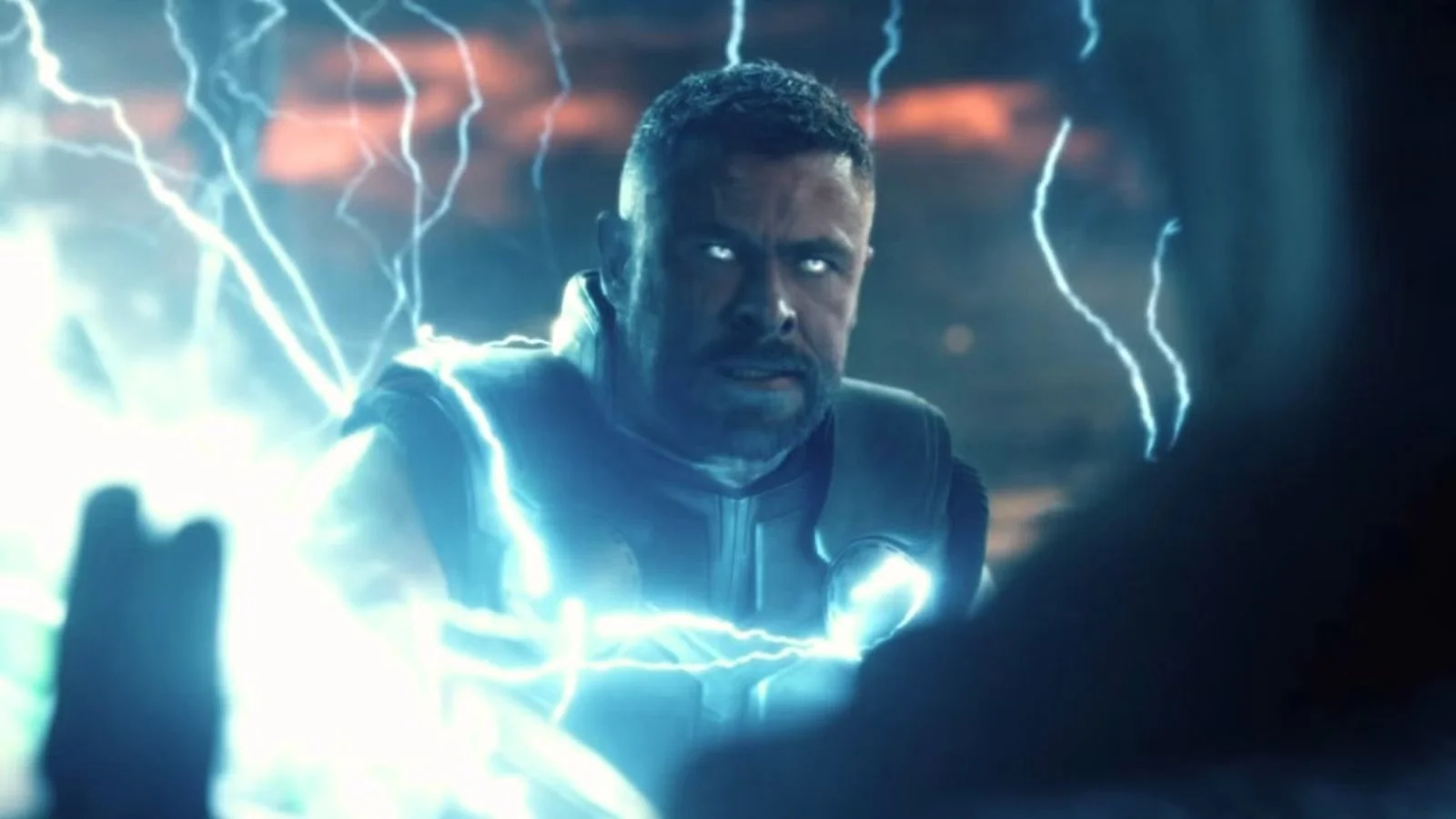
The other direction is where things get complicated. The same trailer that broke presale records also drew immediate complaints about unfinished visual effects, with viewers singling out a confrontation between Thor and Doctor Doom as visibly incomplete. Criticism of the CGI, the vagueness of the plot, and the familiarity of certain story beats circulated widely on X within hours. And beneath both reactions sits a set of industry realities — a lost IMAX window, a reported budget that would make this the most expensive film Marvel has ever produced, and a runtime still being argued about in an edit bay — that make December 18 less a coronation than a genuine stress test for how a studio this size operates in 2026.
The IMAX Problem Is the Real Story
Scene from Marvel's "Avengers: Doomsday." | Marvel
Here is the piece of this that deserves more attention than it's getting: Avengers: Doomsday will open without IMAX screens, and not by choice.
Warner Bros. secured a three-week exclusive IMAX window for Dune: Part Three, which opens the same day, effectively locking Marvel's biggest release since Endgame out of the premium format during its entire opening period. That's roughly 400 IMAX screens in North America tied up through the Avengers opening weekend and well beyond it — the exact auditoriums where a film like this earns a disproportionate share of its money. The technical justification is real: Dune: Part Three was shot largely on native IMAX film cameras, while Doomsday used IMAX-certified digital. Villeneuve builds for the format. Marvel shoots compatible with it. When only one film can occupy those screens, the format picks the one designed for it.
Disney's response was to invent a competitor. Infinity Vision, announced at CinemaCon 2026, is a certification program that stamps Disney's approval on premium large-format auditoriums already in operation — screen size, laser projection, immersive audio — rather than building anything new. Roughly 75 qualifying locations in the U.S. and around 300 globally, against IMAX's footprint of approximately 1,700 auditoriums worldwide.
POPULAR ON THE CINEMA GROUP
The rollout begins September 25 with a theatrical re-release of Avengers: Endgame, featuring new footage cut into the film by the Russo brothers that ties directly into Doomsday. That is a shrewd piece of sequencing — it introduces audiences to the certification months early and gives them a reason to seek it out that has nothing to do with the format itself. But it is fundamentally a defensive maneuver, and everyone in the industry recognizes it as one. IMAX has already publicly pushed back on the initiative. What Marvel is really asking is whether a logo can generate premium-ticket behavior on brand strength alone, without the purpose-built engineering underneath it. Nobody knows the answer, because nobody has had to ask the question before at this scale.
A $400 Million Question About Length
Scene from Marvel's "Avengers: Doomsday." | Marvel
The financial exposure here is difficult to overstate. Reports place the production budget at roughly $400 million, with an additional $300 million earmarked for marketing — figures that would make Avengers: Doomsday the most expensive film in Marvel and Disney history, though it's worth noting that Infinity War and Endgame also carried enormous budgets, with the latter estimated between $356 and $400 million before prints and advertising.
The runtime conversation is more revealing than it first appears. The Russos told Collider in 2025 that Doomsday would land around two and a half hours, with Secret Wars closer to three. By March, scoopers were reporting the current cut at three hours. A more recent report from The Hollywood Reporter now targets two hours and 45 minutes, which would make it the second-longest Marvel film behind Endgame, though the number is explicitly not final with post-production ongoing.
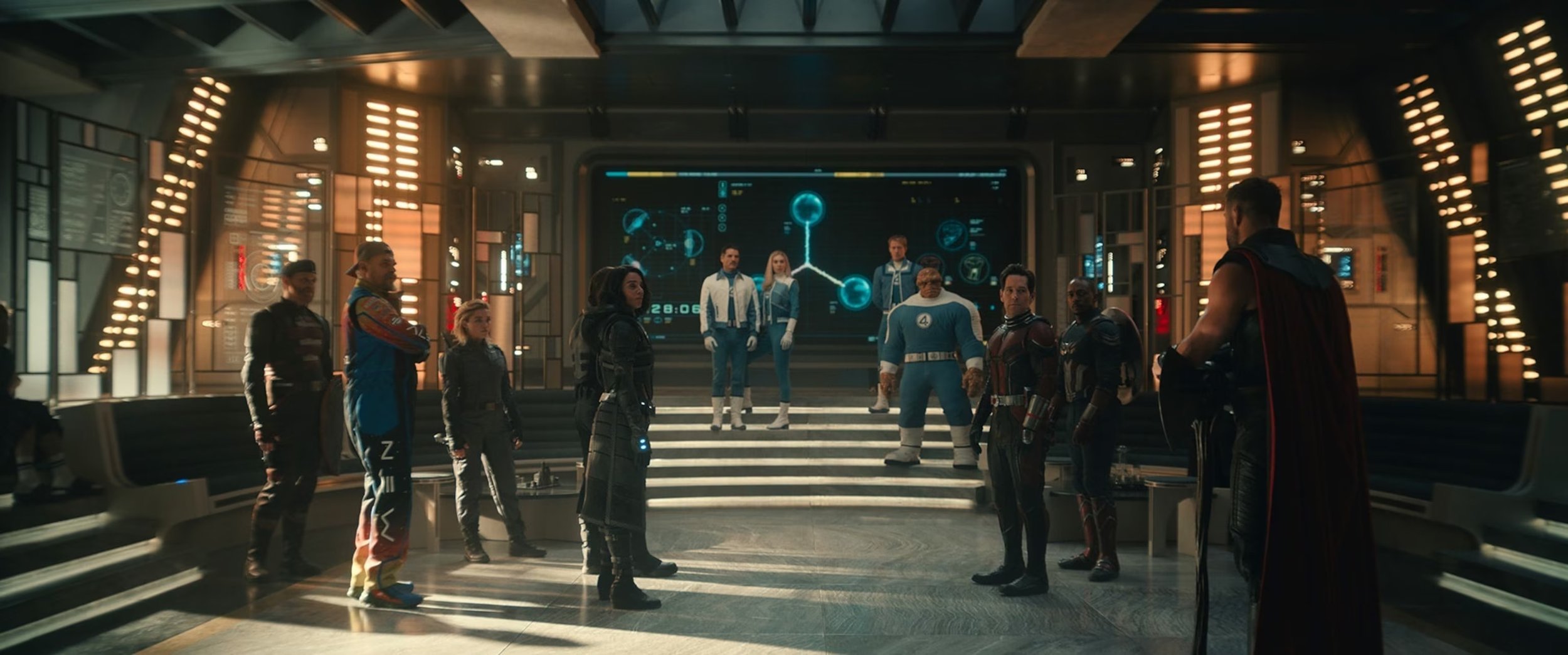
Those numbers wandering by half an hour over eighteen months tell you something honest about the film's central difficulty. The announced ensemble runs from Paul Rudd's Ant-Man to Chris Hemsworth's Thor to Chris Evans' Captain America to Pedro Pascal's Reed Richards, alongside an X-Men contingent including Patrick Stewart, Ian McKellen, Rebecca Romijn, Alan Cumming, James Marsden, and Kelsey Grammer. Every one of those actors arrives with an audience expecting them to matter. Every minute given to one is a minute taken from another. The reason cuts drift is that this problem does not have a clean solution — it has a series of painful trades, and the editing room is where those trades get made.
Why Critical Reception Is Genuinely Uncertain
The Russos have solved a version of this before. Infinity War and Endgame managed the multi-character balancing act about as well as anyone has, and both landed with critics. That track record is the strongest argument for optimism here, and it's not a small one.
But the conditions are different in ways that matter. Doomsday was originally slated for May 2026 before being pushed to December 18, with Secret Wars moving correspondingly to December 17, 2027. The project was conceived around Kang the Conqueror before a complete creative rethink relocated the entire architecture onto Doctor Doom. Reports during production described filming proceeding without a fully finished script for a stretch. And the delay itself, whatever prompted it, has been repurposed as an asset — the new trailer contains visible VFX corrections to shots that had already been shown publicly, confirming Marvel is actively using the expanded post-production window to refine material fans have already seen.
There's also the matter of what this film is being asked to carry. Disney is operating under a new CEO in Josh D'Amaro, following roughly 1,000 job cuts earlier this year that included members of Marvel's art team. The theatrical calendar was reorganized around these releases, with several untitled Marvel projects removed entirely and Doomsday and Sony's Spider-Man: Brand New Day left as the only MCU entries in 2026. A film does not become better or worse because a studio needs it to work. But the pressure surrounding it shapes decisions — about length, about how many characters get their moment, about which version goes out the door — and those decisions are exactly what critics respond to.
What the Market Sees
Live market data. Where do you think this lands on Rotten Tomatoes?
It's in that context that the forecasting on this film becomes worth reading rather than dismissing. The Rotten Tomatoes market on Avengers: Doomsday has held broadly steady in the high 70s while confidence in the upper thresholds — the mid-80s and above, the territory Infinity War and Endgame occupied — has softened in recent trading.
That divergence is the interesting part. It isn't a market predicting failure. A film clearing Certified Fresh remains the clear expectation. What's cooling is confidence that this specific film clears the bar its own predecessors set, which reads as traders pricing in the writing problem rather than the demand problem. Nobody is questioning whether people will show up. The presale numbers settled that. The open question is whether a film balancing three franchises, two generations of casting, a villain recast from the franchise's most beloved hero, and roughly 165 minutes of runtime holds together as a piece of filmmaking.
Five months is a long time, and this market has room to move in either direction. Reviews will land in December, the film is still being cut, and a second trailer will almost certainly reshape sentiment before then. But the shape of the uncertainty is instructive: the doubt sits precisely where the difficulty is.
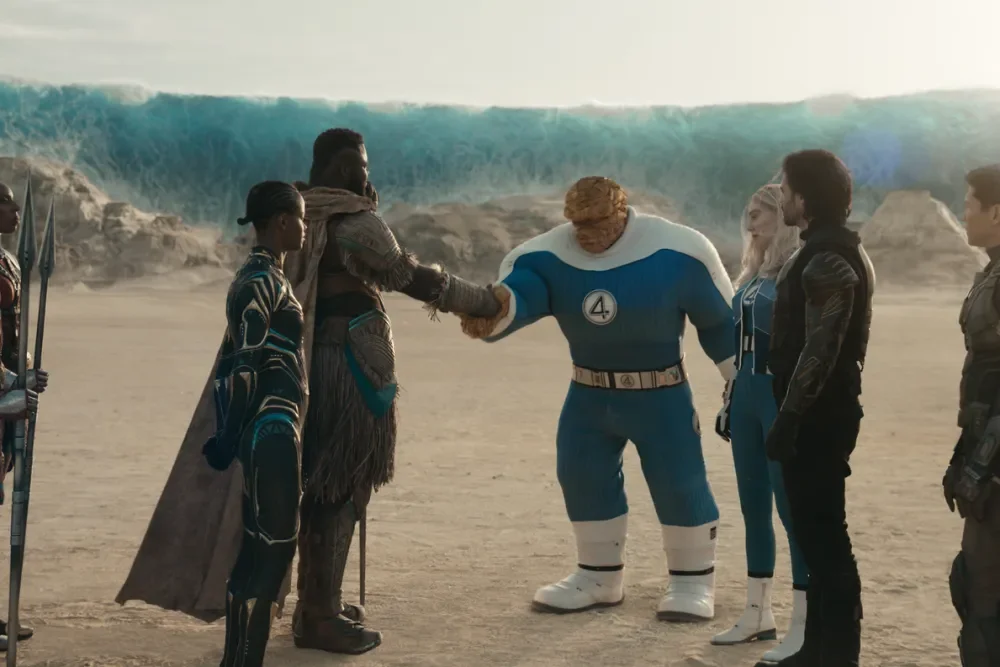
Scene from Marvel's "Avengers: Doomsday." | Marvel

SPONSORED CONTENT DISCLOSURE
This Article Is Sponsored By Kalshi, A CFTC-Regulated Prediction Market Platform. Kalshi Allows Users 18 And Older Across All 50 States To Trade On Event Outcomes Including Entertainment Markets. The Odds And Market Data Referenced In This Article Reflect Live Trading And Are Subject To Real-Time Changes. This Article Is Presented For Informational Purposes. Past Performance Of Prediction Markets Does Not Guarantee Future Results. Always Do Your Own Research Before Trading On Any Prediction Market
| FEATURES | INTERVIEWS | REVIEWS | The Catalogue | TRENDING | TRAILERS | VIDEOS |



![WERWULF - Official Trailer [HD] - Only In Theaters Christmas](https://i.ytimg.com/vi/cmjpadVj-Vk/hqdefault.jpg)