‘I Play Rocky’ Trailer Recreates Sylvester Stallone’s Fight to Become Rocky Balboa
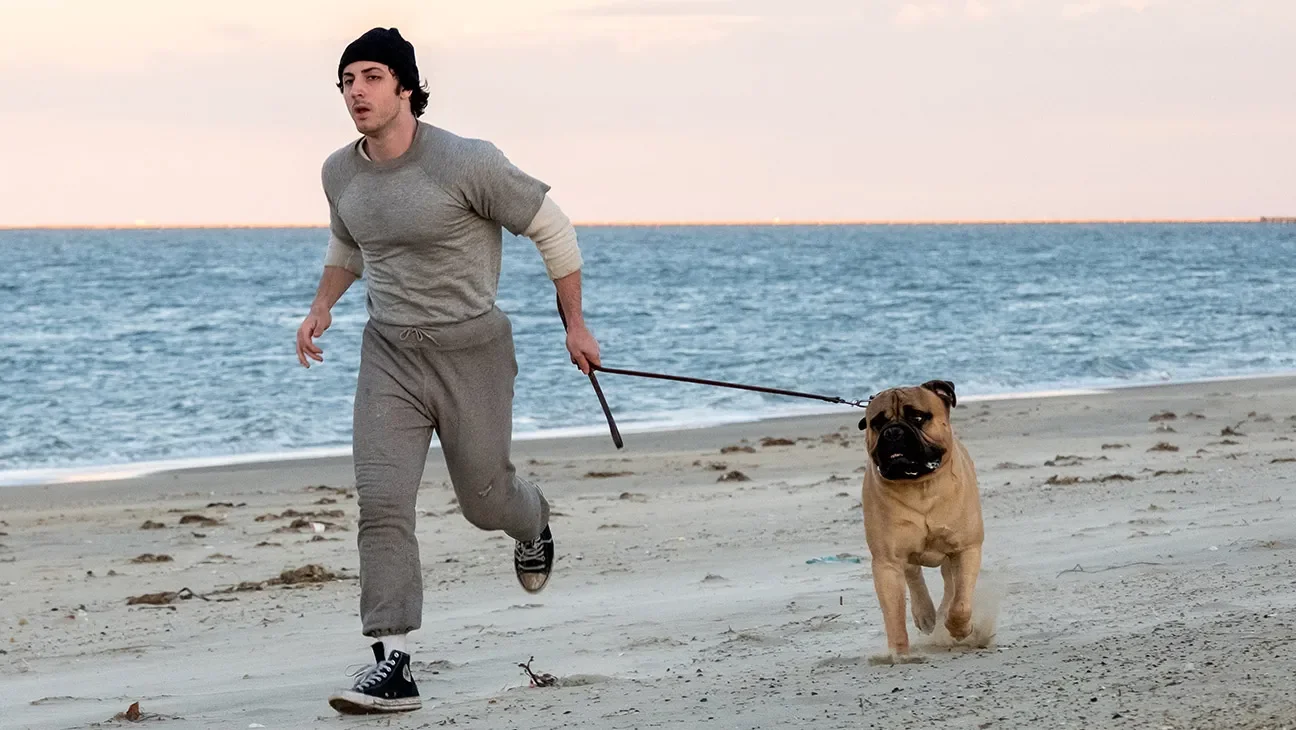
Anthony Ippolito stars as Sylvester Stallone in Amazon MGM Studios' 'I Play Rocky,' which filmed in New Jersey. Claire Folger/Amazon MGM Studio
Anthony Ippolito transforms into the young actor and screenwriter who refused to surrender the role that would change his life and Hollywood history.
Hollywood loves an underdog story, but few are as perfectly suited for the movies as the story behind Rocky itself.
The first trailer for Amazon MGM Studios’ I Play Rocky introduces Anthony Ippolito as a young Sylvester Stallone, still years away from becoming one of the most recognizable movie stars in the world and fighting to convince Hollywood that he should play the character he created. Directed by Peter Farrelly, the biographical drama follows Stallone as he writes the screenplay for Rocky, attracts interest from producers and then refuses to sell it unless he is allowed to step into the ring as Rocky Balboa.
It is the type of true story that would seem almost too neatly constructed had it not actually happened. Stallone was an unknown actor with little money, a distinctive voice that executives openly questioned and a screenplay that quickly became more valuable than his own perceived prospects as a leading man. The industry wanted the script. Stallone insisted that the script and the actor were inseparable.
That stubbornness anchors the trailer, which frames I Play Rocky as an underdog movie about the creation of the ultimate underdog movie. Executives repeatedly encourage Stallone to take the money and walk away from the role, while he continues betting on the possibility that audiences will see something in him that Hollywood cannot. The imagery intentionally echoes the original film’s most recognizable visual language, from the streets of Philadelphia to the punishing physical preparation required to transform an aspiring actor into a believable heavyweight boxer.
Ippolito appears to have understood that playing Stallone requires more than copying his famously gravelly speech. The voice is immediately recognizable, and the trailer even acknowledges it through a character who tells him that he sounds as though he has rocks in his mouth. But the performance also captures the determination, wounded pride and unpolished charisma that made Stallone’s early screen presence so difficult to manufacture.
The role continues an unusually specific run for Ippolito, who previously portrayed a young Al Pacino in Paramount+’s limited series The Offer. That series dramatized the turbulent production of The Godfather, placing Ippolito inside another story about a young Italian American actor whose unconventional appearance and emerging talent initially made Hollywood executives nervous. He has now gone from playing Pacino fighting to become Michael Corleone to Stallone fighting to become Rocky Balboa, effectively making himself the screen’s current specialist in recreating the breakthrough moments of 1970s movie stars.
There is always a risk in performances like this. The more culturally familiar the subject, the easier it becomes for impersonation to overwhelm interpretation. Stallone’s voice, posture and facial expressions have been imitated for decades, often reducing a complicated actor and filmmaker to a collection of recognizable mannerisms. Ippolito’s challenge will be convincing audiences that they are watching a hungry artist before the mythology hardened around him, not merely a technically accurate impression of the celebrity he later became.
The trailer suggests the film understands that distinction. Its most compelling moments are not the recreations of Rocky, although the attention to period detail is striking. They are the quieter glimpses of Stallone confronting the possibility that his conviction may be indistinguishable from delusion. Everyone around him appears to understand the logic of accepting a life-changing payment for the screenplay. Stallone understands something harder to explain: giving away the role would mean surrendering the reason he wrote it.
That tension gives I Play Rocky more substance than the average authorized Hollywood origin story. The film is not simply about whether Rocky will be made. Everyone watching already knows that it became the highest-profile breakthrough of Stallone’s career, won Best Picture and launched a franchise that has endured for half a century. The dramatic question is how long someone can continue believing in an outcome before evidence exists to justify that belief.
Peter Gamble wrote the screenplay, while Farrelly directs and produces alongside Christian Baha, Toby Emmerich, Paul Currie and Michele Weiss. Farrelly’s involvement gives the project an interesting tonal possibility. His career has moved between broad comedies and more sentimental prestige dramas, and Stallone’s story contains material for both. There is inherent humor in the blunt skepticism he encountered, the peculiarities of the film business and the sheer audacity of an unknown actor refusing offers that could have rescued him financially. There is also something genuinely moving about watching a person risk the little he has because accepting a safer version of success would feel like failure.
The supporting cast recreates several of the people central to Stallone’s early life and the production of Rocky. Stephan James plays Carl Weathers, whose Apollo Creed became both Rocky’s rival and one of the franchise’s defining characters. His physical resemblance in the trailer is striking without feeling overly polished, and the brief footage suggests the film will acknowledge how essential Weathers was to the chemistry and mythology of the original.
Anna Sophia Robb portrays Stallone’s first wife, Sasha Czack, while Matt Dillon plays his father, Frank Stallone Sr. P.J. Byrne and Toby Kebbell appear as producers Irwin Winkler and Robert Chartoff, and Jay Duplass plays director John G. Avildsen. Tracy Letts and Kiki Seto also feature in the ensemble. The film opens in select theaters on November 6 before expanding nationwide on November 20, aligning its theatrical rollout with the 50th anniversary of the original Rocky, which opened in November 1976.
POPULAR ON THE CINEMA GROUP
The original film’s legacy is difficult to overstate. Rocky transformed Stallone from an actor struggling to secure meaningful work into an Academy Award-nominated screenwriter and performer. The movie won Best Picture in a remarkable field that included Network, Taxi Driver, All the President’s Men and Bound for Glory, while John G. Avildsen won the Oscar for Best Director. Stallone received nominations for both his screenplay and his lead performance.
Its success also produced one of cinema’s most durable franchises. Stallone returned as Rocky across six primary films and later carried the character into the Creed series, where Balboa evolved from fighter to mentor. The franchise has survived changing eras, actors and approaches because its central idea remains emotionally direct: dignity does not always come from winning. Sometimes it comes from continuing after the world has already decided what you cannot become.
That message inevitably makes I Play Rocky vulnerable to becoming too self-congratulatory. Hollywood stories about Hollywood regularly sand away uncomfortable details and transform complicated careers into inspirational mythology. A film about Stallone refusing to compromise could easily become a two-hour monument to persistence without seriously considering the cost of that persistence, the people who supported it or the accidents of timing and opportunity that helped make Rocky possible.
The trailer occasionally leans into that familiar prestige-biopic machinery. There are declarations about believing in yourself, montages of rejection and carefully staged recreations designed to trigger recognition. Yet the material has one advantage most inspirational dramas lack: the finished film genuinely did become as important as its protagonist believed it could be.
Stallone was not simply insisting that he deserved a job. He was protecting an artistic instinct that the studio system had failed to recognize. His screenplay connected because it understood failure as something more complicated than defeat, and his performance worked because audiences could see the desperation beneath Rocky Balboa’s determination. Casting a more established star might have produced a more conventional movie. It almost certainly would not have produced the same one.
That is the promise at the center of I Play Rocky. It is less interested in dramatizing how Stallone became famous than in examining the moment before fame, when confidence looks irrational and conviction offers no guarantee of reward. The trailer sells the film as a celebration of perseverance, but its more compelling question is what separates the person who refuses to quit from the person who simply refuses to accept reality.
The answer, in this case, is history.
I Play Rocky opens in select theaters November 6 and expands nationwide November 20 through Amazon MGM Studios.
| FEATURES | INTERVIEWS | REVIEWS | The Catalogue | TRENDING | TRAILERS | VIDEOS |




![WERWULF - Official Trailer [HD] - Only In Theaters Christmas](https://i.ytimg.com/vi/cmjpadVj-Vk/hqdefault.jpg)