'Motor City' Review: Alan Ritchson Carries a Film That Runs Out of Things to Say Without Ever Saying Any of Them
IFC FILMS/ Black Bear Pictures
Potsy Ponciroli strips a revenge thriller down to gesture, violence and needle drops. For an hour it's exhilarating. Then the silence starts telling on the screenplay.
There is no shortage of confidence in 'Motor City'. From its grime-soaked Detroit streets and towering muscle cars to its bruising hand-to-hand combat and wall-to-wall 1970s needle drops, Potsy Ponciroli's crime thriller announces itself with the swagger of a filmmaker determined to make every frame look like it belongs on the side of a vinyl sleeve. For a while, that confidence is enough. The movie moves with aggression. It understands the appeal of a revenge story stripped to its most elemental form. It gives Alan Ritchson exactly the kind of role his physical presence can dominate without apology. The problem is that style this forceful eventually demands something equally substantial beneath it, and 'Motor City' keeps revving long after its narrative engine has revealed itself to be surprisingly small.
The central conceit is undeniably audacious: tell a full-blooded crime saga with almost no dialogue. In theory that choice should sharpen everything. Gesture becomes characterization, editing becomes exposition, physical space becomes language. Cinema began as a visual medium, and there is something refreshing about a movie willing to test how much can be communicated without burying every image beneath explanatory dialogue. Ponciroli is skilled enough to make the experiment work on a functional level. I never felt lost. The mechanics of betrayal, imprisonment, revenge and survival stay clear even when nobody is available to explain them. That is a real accomplishment. It is also, unfortunately, where the experiment begins and ends.
What gradually becomes apparent is that silence cannot create depth where the screenplay has not supplied it. Chad St. John's script offers archetypes rather than people: the wronged working-class bruiser, the treacherous criminal kingpin, the conflicted woman caught between two men, the crooked cop, the loyal friends willing to risk everything. Those figures can absolutely work in a pulp thriller, but they need either psychological specificity or mythic force. 'Motor City' has neither. Removing dialogue does not make these characters more mysterious. It makes them feel unfinished. I spent the film watching highly capable actors communicate broad emotional positions while waiting for something more complicated to surface underneath. It rarely does.
IFC FILMS/ Black Bear Pictures
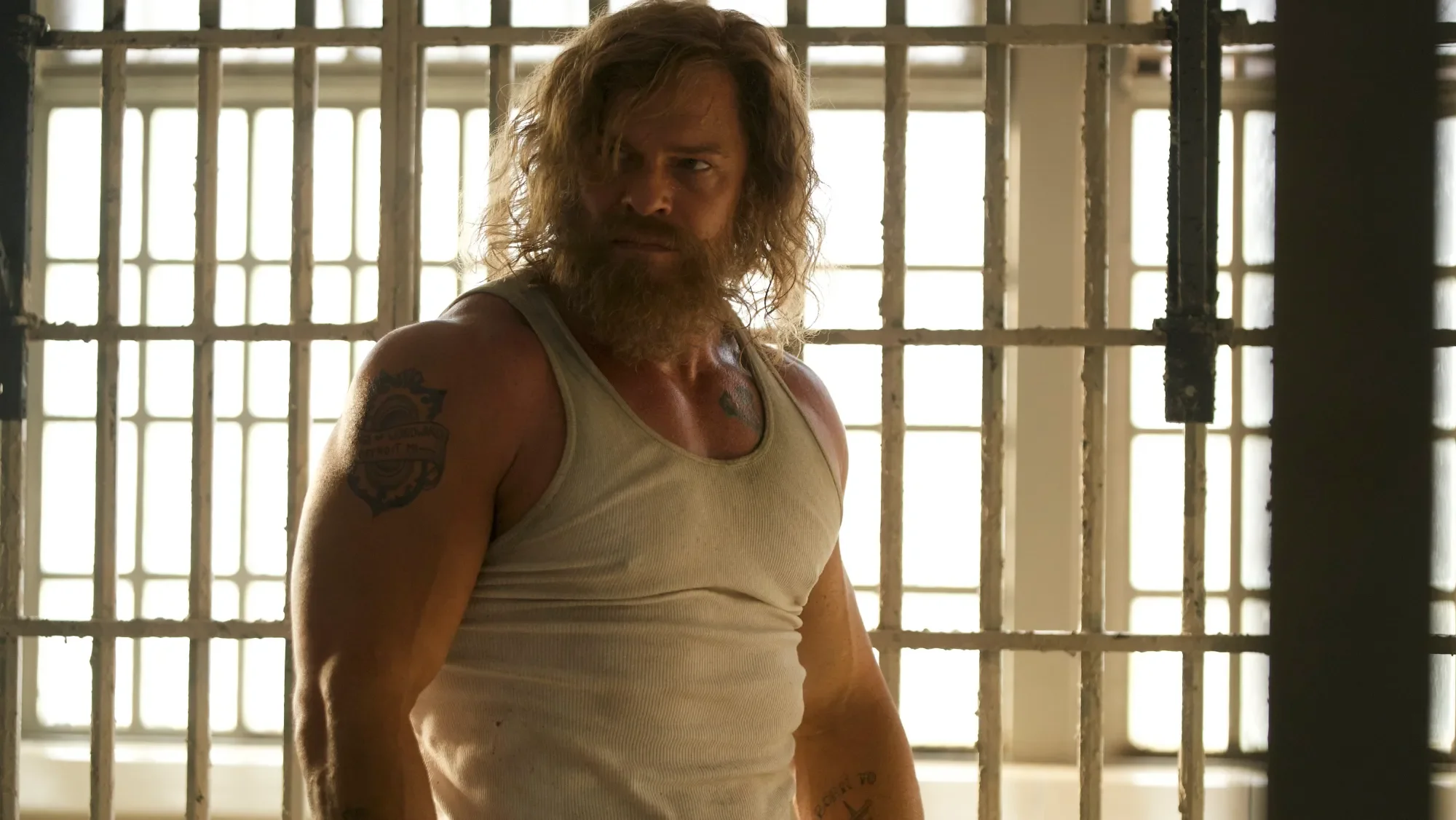
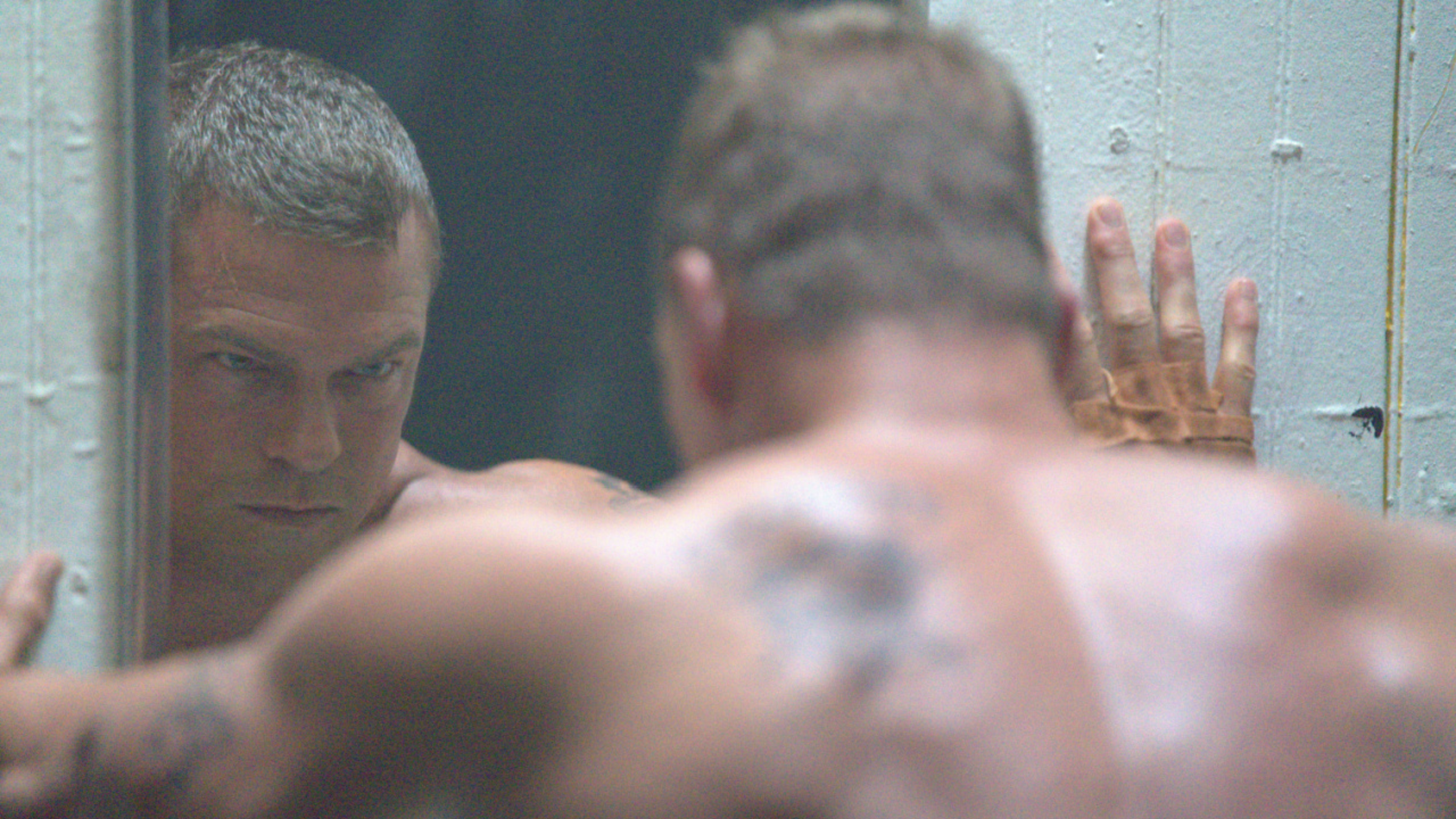
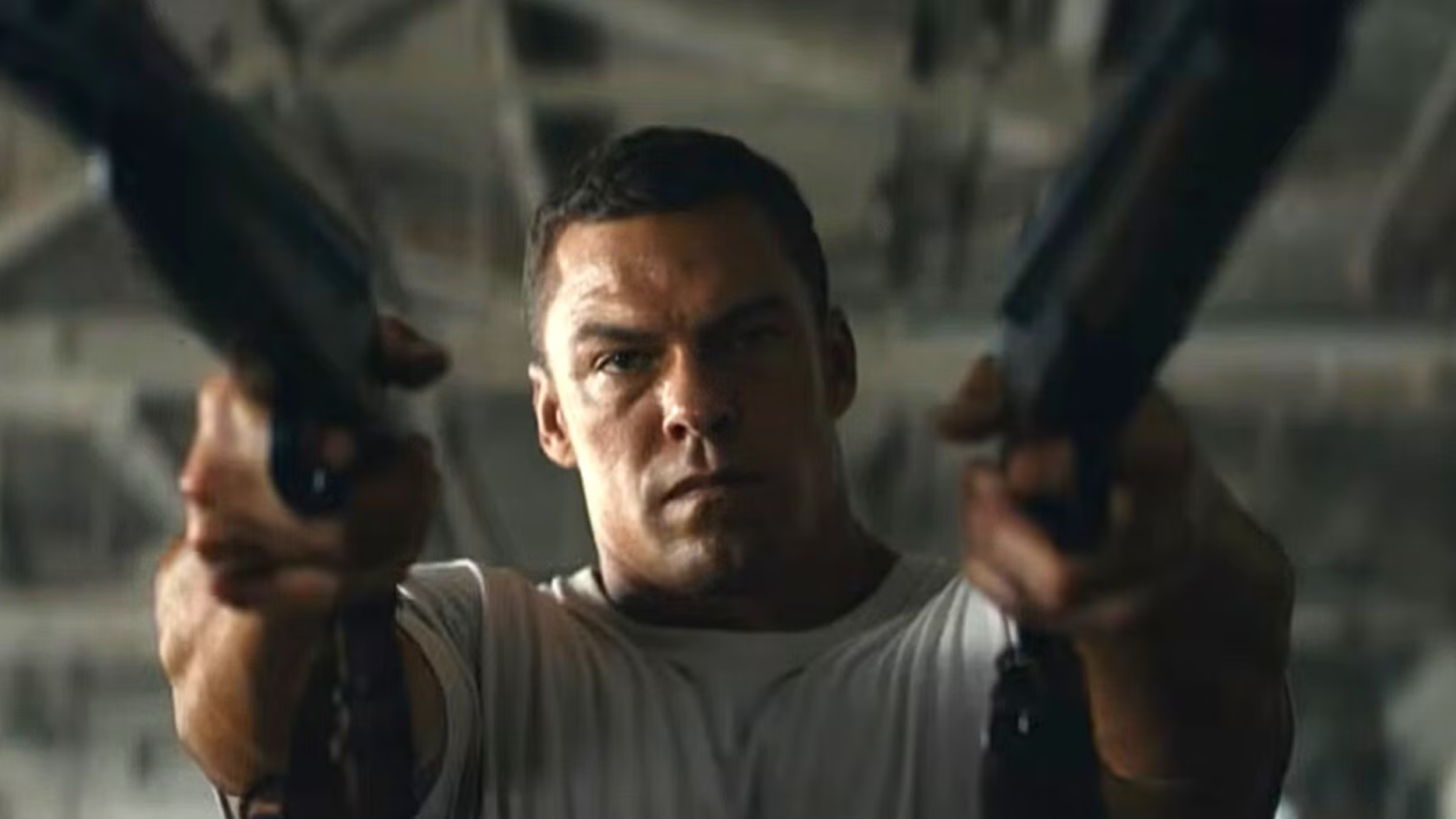
Ritchson is the reason the film stays watchable. He has the kind of screen presence that makes a doorway look smaller when he steps through it, and Ponciroli knows how to use that mass without reducing him to a blunt instrument. As John Miller, Ritchson carries himself like a man who has spent years absorbing disappointment until anger became the only emotion still useful to him. He is less vulnerable here than in 'Reacher', and the role gives him little room for tonal variation, but his physical authority supplies the movie a center of gravity it badly needs. When Miller enters a room, the composition changes. When he fights, the violence has weight. Ritchson may not be playing a layered man, but he makes the character's humiliation and rage immediate enough to sustain the first hour.
The frustration is how consistently the film mistakes physical intensity for emotional development. Miller's descent into vengeance is easy to follow and never especially revealing. The story establishes what has been taken from him, places him in increasingly brutal situations, then lets his body handle the rest. That works during the strongest action sequences, where Ritchson communicates pain, exhaustion and fury with impressive economy. It works far less well in the quieter passages, where the absence of dialogue leaves him trapped inside poses the screenplay never complicates. A man can stare into the middle distance only so many times before brooding stops being a character trait and starts being a production note.

IFC FILMS/ Black Bear Pictures
Shailene Woodley draws an even harder assignment as Sophia, a character the film wants positioned somewhere between romantic ideal, possible betrayer and classic femme fatale. Woodley brings intelligence to the role, but the screenplay withholds so much for so long that ambiguity curdles into evasion. I kept waiting for Sophia to emerge as a person with her own relationship to the violence surrounding her. She remains defined almost entirely by what Miller and Reynolds project onto her. The costuming, the hair, the carefully composed entrances all suggest a depth the story never provides. Woodley can communicate uncertainty and moral tension with very little, but even she cannot turn deliberate vagueness into meaningful complexity.
IFC FILMS/ Black Bear Pictures
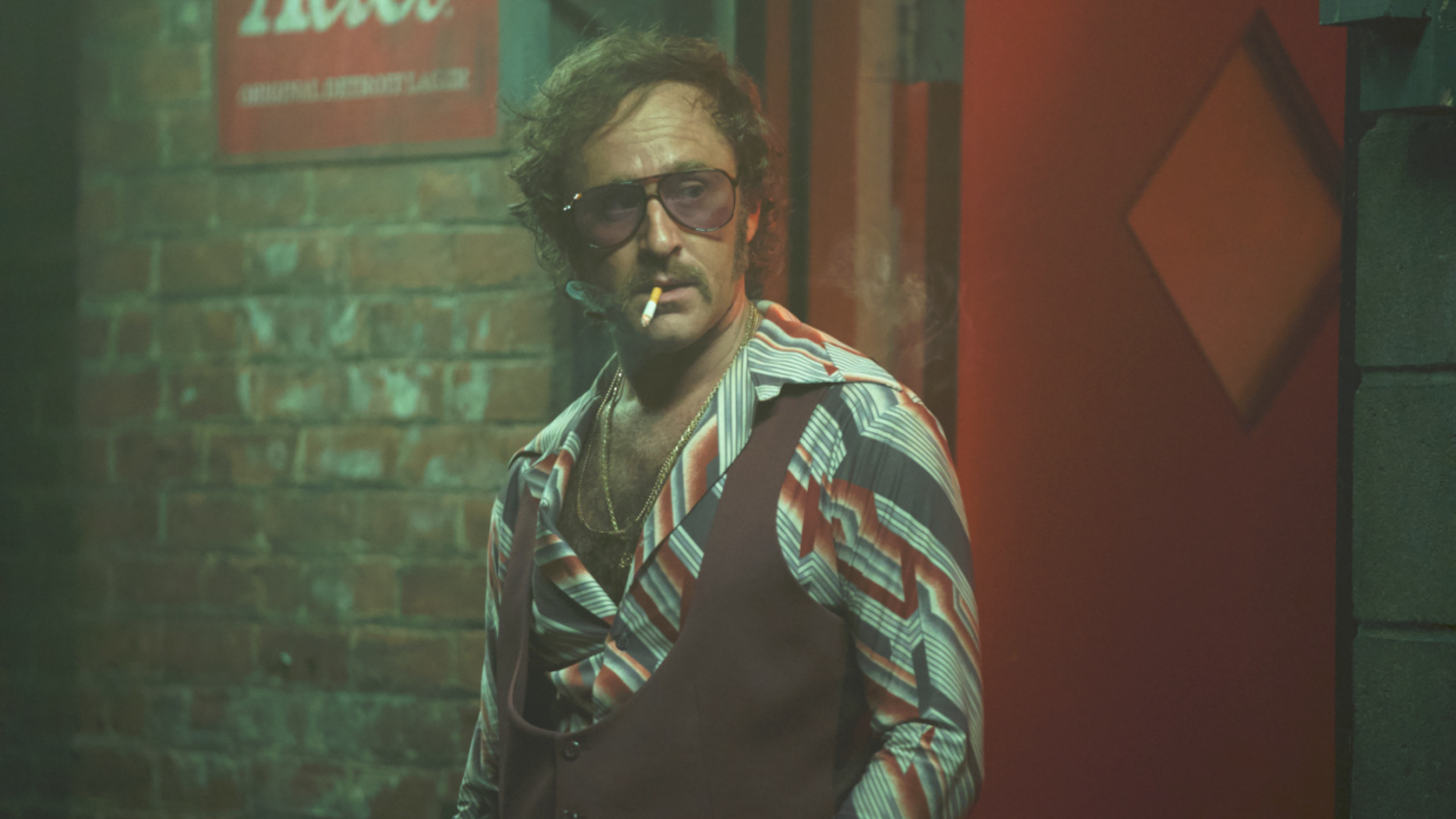
Ben Foster fares slightly better because he understands exactly what kind of film he has entered. His Reynolds is less a human being than a walking bad decision dressed in aggressively period-specific tailoring, and Foster responds by pushing toward grotesque theatricality. He does not attempt realism, because the movie abandoned it long before he arrived. The result is intermittently amusing and visually memorable, though the villainy stays so generic that the performance often feels like an actor supplying flavor to an empty recipe. Pablo Schreiber benefits from a role built around movement rather than motivation. He gives the violence a coiled, predatory energy and anchors the film's most effective confrontations, even if the character never grows past the familiar outline of a corrupt enforcer.
That familiarity would matter less if 'Motor City' possessed the kind of cinematic momentum that makes narrative simplicity irrelevant. At its best it nearly does. John Matysiak's cinematography turns Detroit into a nocturnal industrial purgatory — sodium light, wet pavement, fading grandeur, the uneasy beauty of a city being hollowed out from within. Production designer Mayne Berke builds environments that feel textured rather than fetishized, and the cars, clubs, apartments and institutional spaces carry the grime of a decade Hollywood usually polishes into nostalgic fantasy. The city is not retro decoration here. It is a place where economic decline, corruption and criminal opportunity have become nearly indistinguishable from one another.
The soundtrack gives those images a propulsive charge. David Bowie, Fleetwood Mac, Bill Withers, Donna Summer and the Moody Blues do not simply announce the period. They generate rhythm where dialogue would normally carry a scene. Ponciroli lets entire sequences move to a song's pulse, and when image, music and action align, 'Motor City' becomes the bracing exploitation movie it clearly wants to be. The problem is that the soundtrack is doing emotional work the characters cannot. When the film later leans on Steve Jablonsky's synth-driven score, the drop in personality is impossible to miss. Without a recognizable song supplying atmosphere, the thinness of the drama has nowhere left to hide.
Ponciroli is strongest when he stages violence as physical geography. A fight in a stairwell uses confined space, elevation and shifting momentum to make every strike legible. A later confrontation inside an elevator turns claustrophobia into a weapon. These scenes are brutal without becoming incoherent, and the choreography has a bone-crunching clarity absent from most contemporary action films. Ritchson and Schreiber both understand that convincing screen violence is not about speed but resistance. Bodies collide with walls, blades catch, balance is lost, and victory looks exhausting rather than graceful. I admired the craft even as the brutality began to feel disproportionate to the emotional stakes.
The reliance on slow motion is more divisive. Used sparingly it gives certain blows and reversals an operatic quality. Used repeatedly it starts to resemble a filmmaker insisting every moment deserves to become iconic. Not every gunshot needs to hang in the air. Not every body needs to fall with the solemnity of a dying emperor. Ponciroli has a strong visual instinct but sometimes lacks the restraint required to let one striking image remain striking. The aesthetic accumulates without deepening, and by the final act the stylistic confidence has hardened into repetition.
That is ultimately the central problem. The film is built around a formal limitation that initially feels liberating and eventually feels restrictive. Silence demands that images accumulate meaning, yet too many of these images restate the same handful of ideas. Miller is angry. Reynolds is corrupt. Sophia is unknowable. The city is rotten. Violence is inevitable. Once those positions are established the film does not deepen them. It increases the volume. A nearly dialogue-free revenge thriller should feel distilled. This one often just feels underwritten.
I also found myself questioning what the silence contributes beyond novelty. The best formal experiments alter how we perceive a story. Michel Hazanavicius used silence in 'The Artist' to examine performance and technological displacement. Jonathan Glazer used dislocation and sonic absence in 'Under the Skin' to make humanity feel alien. Even a straightforward action film like Walter Hill's 'The Driver' reduces language specifically to expose character through behavior. 'Motor City' uses silence primarily as a branding device. It distinguishes the film from other revenge thrillers without transforming the genre or the people inside it.
POPULAR ON THE CINEMA GROUP
The influences are visible everywhere. Walter Hill in the hard-edged urban minimalism. Michael Mann in the nocturnal industrial landscapes. Don Siegel in the clipped masculine aggression. John Woo in the appetite for operatic bloodshed. None of those references are unwelcome, but Ponciroli never quite converts them into a perspective of his own. The film often looks like a tribute to several better filmmakers simultaneously, and the more confidently it borrows their language, the more obvious its lack of a distinct argument becomes.
Still, I would rather watch an ambitious misfire than another anonymous streaming thriller assembled from algorithmic parts. 'Motor City' has a pulse, a look and a filmmaker willing to take a genuine formal risk. It understands that action should be staged rather than merely edited. It gives Ritchson another convincing showcase for the mixture of menace and wounded masculinity that has made him such an effective screen presence. The failures here come from overreach rather than indifference, which makes them easier to forgive even when they stay impossible to overlook.
By the time the final confrontation arrives, though, the film has spent so much energy proving it can sustain its gimmick that it forgets to make the payoff matter. The violence is accomplished. The images stay handsome. The performers keep committing to characters thinner than they deserve. But the cumulative effect is strangely hollow. 'Motor City' begins like a midnight-movie discovery and ends like an expensive demonstration reel — polished, bruising, technically impressive, and emotionally several exits short of its destination.
RATING: ★★★☆☆
Thast's A Wrap
|
Motor City
|
Thast's A Wrap | Motor City |
“A savage, neon-drenched burst of style and bone-crunching action, powered by a formidable screen presence that gives every frame its weight.”
CREDITS
Release Date: Friday, July 24
Cast: Alan Ritchson, Shailene Woodley, Ben Foster, Pablo Schreiber, Lionel Boyce, Amar Chadha-Patel, Ben McKenzie
Director: Potsy Ponciroli
Screenwriter: Chad St. John
Cinematographer: John Matysiak
Production Designer: Mayne Berke
Composer: Steve Jablonsky
Studio: Black Bear
Run Time: 1 hour 43 minutes
Rating: R
Watch The Trailer Below:

| FEATURES | INTERVIEWS | REVIEWS | The Catalogue | TRENDING | TRAILERS | VIDEOS |






![WERWULF - Official Trailer [HD] - Only In Theaters Christmas](https://i.ytimg.com/vi/cmjpadVj-Vk/hqdefault.jpg)