‘Rain Reign’ Review: A Gentle, Moving Family Film About Loss, Neurodivergence, and Letting Go
Courtesy of Tribeca
Felice Kakaletris gives a tender, emotionally grounded breakout performance in a modest but deeply sincere adaptation of Ann M. Martin’s beloved children’s novel.
There is a quiet confidence to Rain Reign that feels increasingly rare in family filmmaking. Erika Burke Rossa’s adaptation of Ann M. Martin’s 2014 novel does not try to overwhelm young audiences with spectacle, irony, or manufactured chaos. It tells a simple story with patience, sincerity, and emotional clarity, trusting that children are capable of understanding grief, fear, responsibility, and sacrifice without needing those ideas softened beyond recognition. The result is a modest but affecting family drama, one that may feel too restrained for viewers looking for bigger narrative swings but should resonate with patient audiences drawn to gentler stories about complicated feelings.
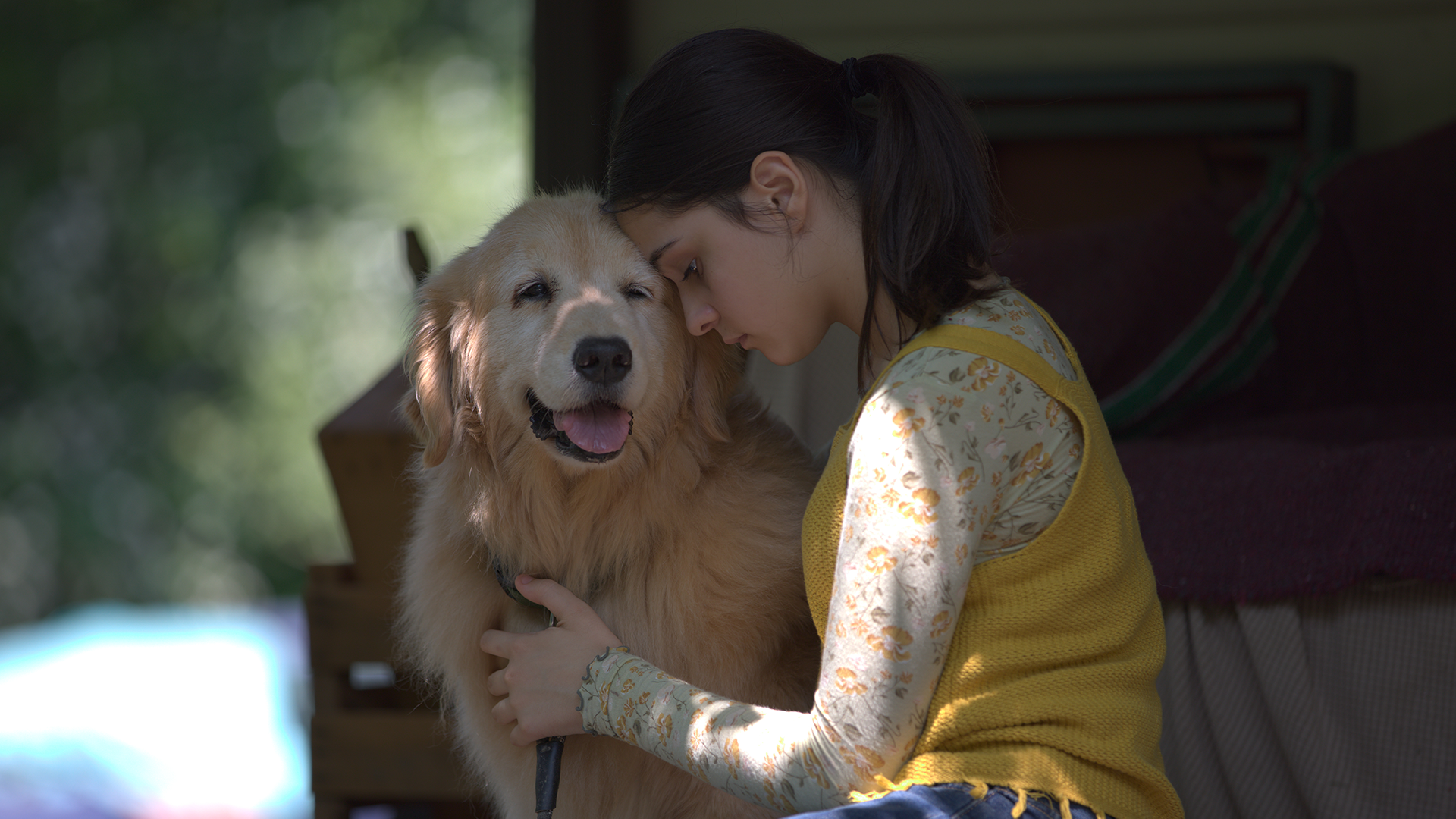
At the center is Rose, played with remarkable focus and sensitivity by Felice Kakaletris. Rose is a highly intelligent, neurodivergent 12-year-old who finds order in language, structure, and rules. She is particularly fascinated by homonyms, words that sound alike but carry different spellings and meanings, and that fascination gives the film both its title and one of its defining emotional threads. When Rose names her golden retriever Rain, the choice feels perfectly suited to her worldview: precise, meaningful, and governed by a logic that may seem unusual to others but makes complete sense to her.
Kakaletris is the reason the film works as well as it does. Her performance avoids the broadness that can sometimes flatten portrayals of neurodivergent children into a collection of traits. Rose is specific, principled, anxious, funny in her directness, and deeply empathetic even when she struggles to read the emotional needs of the people around her. The film’s voiceover occasionally spells out her perspective a little too neatly, but Kakaletris grounds those moments with enough naturalism that Rose never feels like a lesson being delivered to the audience. She feels like a child doing her best to understand a world that often refuses to meet her halfway.
Rose lives in rural upstate New York with her father Wes, played by Jeremy Sisto, a blue-collar single parent who loves his daughter but is not always equipped to give her the care, steadiness, or emotional patience she needs. Their home life is marked by tenderness, frustration, and instability, particularly when Wes drinks. The film is careful not to turn him into a villain, but it also does not pretend that love alone makes someone a good parent. Sisto’s performance gives Wes a jagged sadness that Rose cannot fully comprehend, allowing the film to suggest a larger adult history without forcing the story outside of her point of view.
Paul Rudd, taking top billing despite playing a supporting role, brings his familiar warmth to Waylon, Wes’ brother and Rose’s uncle. Waylon is the adult presence Rose can rely on when her father becomes too unpredictable, and Rudd’s natural kindness fits the role almost too well. There are moments when his presence nudges the film toward afterschool-special softness, but that is not necessarily a fatal flaw in a story this gentle. Waylon exists as a stabilizing force, someone who sees Rose clearly and offers her the kind of patience other adults sometimes lack. Rudd does not overplay the part, and his ease gives the film a necessary pocket of comfort.
Rain, the dog, becomes the emotional center of Rose’s life almost immediately after Wes finds her during a storm. For Rose, Rain is not simply a pet but a source of order, companionship, and emotional safety. Their bond gives the film its most accessible emotional throughline, especially for younger audiences, but Rain Reign is more thoughtful than a standard child-and-dog story. It understands that loving something also means accepting responsibility for it, and that responsibility can sometimes require choices that hurt.
That idea becomes central when Rain goes missing during a severe storm that devastates the surrounding area. Rose’s search for her dog forces her into a larger awareness of other people’s suffering, including those displaced and harmed by the storm. The film handles this material with unusual maturity, allowing Rose to confront the difference between what she wants and what might be right. It is not an especially loud conflict, but it is a meaningful one, especially in a family film willing to treat sacrifice as something more complicated than a clean moral lesson.
Burke Rossa’s direction is understated, sometimes to a fault. Rain Reign is deliberately paced and visually modest, which suits the material but occasionally limits its emotional reach. The film could have used a stronger sense of atmosphere, particularly in its depiction of the storm and the rural community surrounding Rose. Still, there is value in its restraint. Rather than forcing melodrama onto the story, Burke Rossa allows the emotional stakes to emerge from character, especially Rose’s growing understanding of love as something that cannot always be controlled by rules.
POPULAR ON THE CINEMA GROUP
The film is strongest when it stays close to Rose’s perspective. Her world is defined by patterns, language, routines, and deeply held principles, and Rain Reign respects that worldview without romanticizing it. It also acknowledges the difficulty of navigating a society that often mistakes difference for disruption. Rose’s school life, her relationship with adults, and her attempts to communicate her needs all reflect the ordinary challenges faced by children who are expected to adapt to systems that rarely adapt to them.
What makes Rain Reign quietly moving is its refusal to reduce Rose’s journey to a simple story of overcoming. She does not become “fixed,” nor does the film suggest that growth means abandoning the way she sees the world. Instead, her arc is about expanding her understanding of love, loss, and responsibility while remaining fully herself. That distinction matters, and it is one of the reasons the film feels more emotionally honest than many family dramas built around similar material.
Not every element lands with the same force. Some of the supporting characters are drawn broadly, and the film’s gentleness occasionally keeps it from exploring the darker edges of Rose’s home life as deeply as it might have. There are moments when the script seems hesitant to sit too long in discomfort, particularly around Wes’ drinking and the family history between the brothers. Yet that restraint also keeps the film accessible to its intended audience, and Burke Rossa generally finds a thoughtful balance between emotional seriousness and family-friendly warmth.
By the end, Rain Reign becomes less about losing a dog than learning what love asks of us when holding on is no longer the easiest or kindest choice. It is a small film, but its emotional lessons are not small. Anchored by a lovely breakout performance from Kakaletris and supported by sincere work from Rudd and Sisto, the film offers a gentle reminder that children’s stories can be simple without being shallow. Sometimes the quietest lessons are the ones that stay with us longest.
RATING: ★★★★☆
That’s a Wrap
|
Rain Reign
|
That’s a Wrap | Rain Reign |
“Felice Kakaletris carries Rain Reign with remarkable tenderness, turning a gentle family drama into a moving story about neurodivergence, responsibility, and the painful grace of letting go.”
CREDITS
Release Date: Tribeca Festival 2026
Cast: Felice Kakaletris, Paul Rudd, Jeremy Sisto
Director-screenwriter: Erika Burke Rossa
Based on: Rain Reign by Ann M. Martin
Festival: Tribeca Festival 2026 [Spotlight Narrative]
Run Time: 104m
| FEATURES | INTERVIEWS | REVIEWS | The Catalogue | TRENDING | TRAILERS | VIDEOS |





![WERWULF - Official Trailer [HD] - Only In Theaters Christmas](https://i.ytimg.com/vi/cmjpadVj-Vk/hqdefault.jpg)