‘Next Life’ Review: Emilia Clarke Shines in a Romantic Drama About Fate, Love, and Life’s Endless What-Ifs
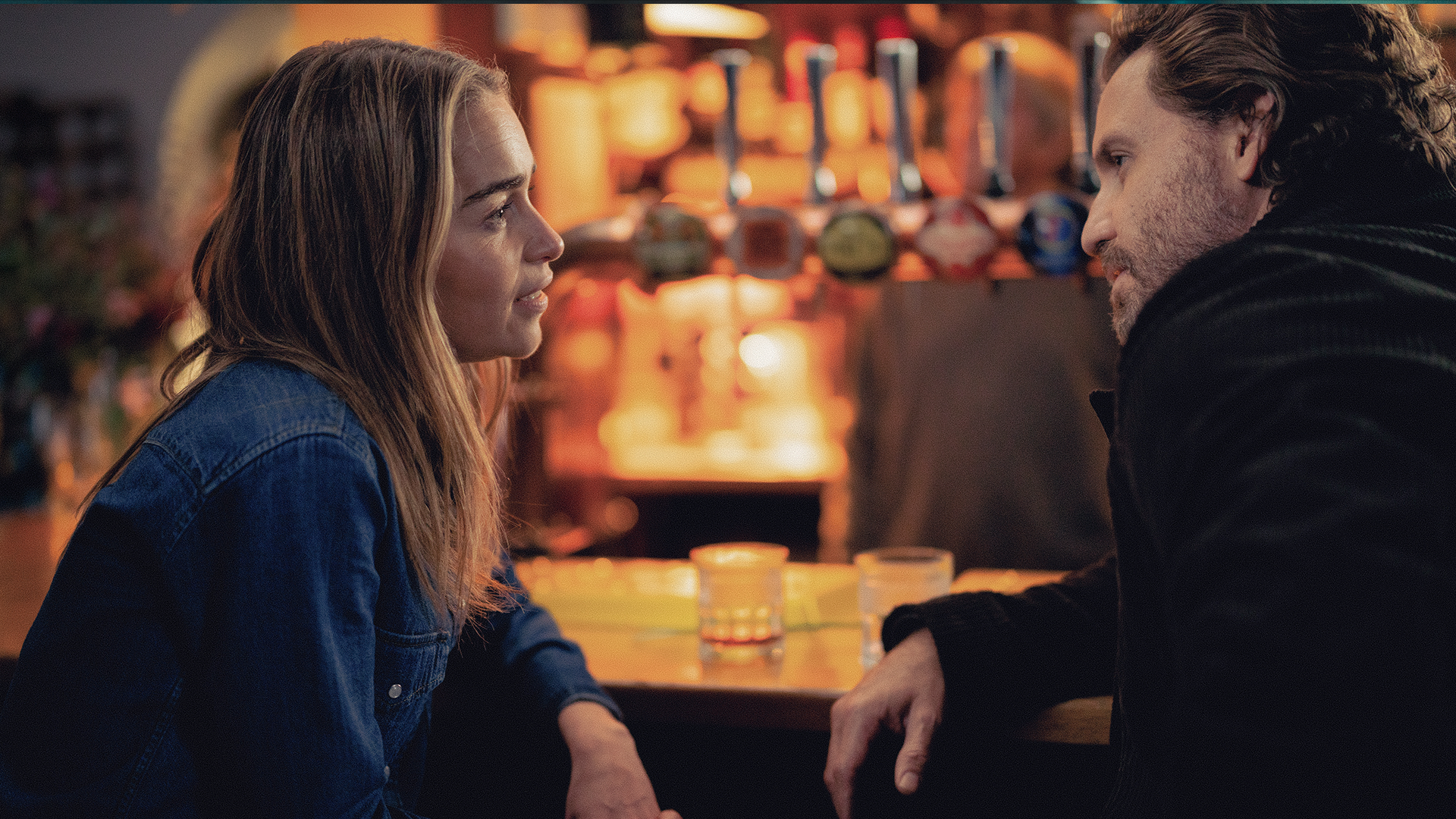
'NEXT LIFE' MARIOLA ZOLADZ / COURTESY OF TRIBECA
Drake Doremus crafts an ambitious dual-timeline romance that asks profound questions about destiny and fulfillment, even when its emotional answers remain frustratingly out of reach.
Ivy Bettencourt (Emilia Clarke), the uncertain heart at the center of Drake Doremus’ Next Life, spends much of the film searching for something she can’t quite define.
At first glance, it appears to be love. Then it seems like purpose. Eventually, it becomes clear that what Ivy is really chasing is certainty — the reassurance that she’s moving through life on the right path and that the choices she’s making are leading her toward the person she’s supposed to become.
Like many of Doremus’ previous films, Next Life is fascinated by the emotional space between desire and fulfillment. The writer-director has built much of his career exploring relationships that exist in states of longing, uncertainty, and vulnerability. Here, he expands those interests into something more overtly philosophical, imagining two parallel versions of a woman’s life unfolding simultaneously after a seemingly insignificant moment alters her future.
The result is a romantic drama that is often beautiful, occasionally moving, and ultimately more compelling as an intellectual exercise than as an emotional experience.
The story splits when Ivy narrowly catches a train during a chaotic morning commute. In one timeline, she accidentally spills coffee on Diego (Edgar Ramírez), a charismatic jazz musician whose life revolves around creativity, spontaneity, and artistic authenticity. In the other, the encounter never happens, leading Ivy back toward Noah (Jack Farthing), her former boyfriend and former employer, whose structured and successful life offers stability rather than adventure.
Both futures appear attractive for entirely different reasons.
With Diego, Ivy discovers a version of herself that feels freer. Their relationship develops quickly, fueled by mutual attraction, shared artistic interests, and the intoxicating possibility of reinventing herself. Diego encourages her to reconnect with music, a passion she abandoned years earlier in favor of a more conventional career. Their life together feels messy, impulsive, and alive, the kind of romance that exists almost entirely in the present tense.
Noah offers something different. Their rekindled relationship is built on familiarity, history, and a shared vision of adulthood. They pursue careers, build a home, discuss children, and move steadily toward the future. While Diego represents possibility, Noah represents permanence.
Doremus wisely avoids treating either path as inherently superior.
Many films built around alternate realities eventually reveal a preferred outcome, subtly guiding viewers toward the “correct” choice. Next Life is more interested in examining the appeal of both options. Each relationship contains genuine happiness. Each comes with sacrifice. Each asks Ivy to prioritize different aspects of herself.
That ambiguity gives the film much of its appeal. It also exposes some of its limitations.
For all its interest in human connection, Next Life often struggles to make its relationships feel fully lived-in. Doremus fills the film with intimate close-ups, lingering glances, romantic conversations, and beautifully photographed moments of affection. Couples dance together, cry together, celebrate together, and grieve together. Yet many of these scenes feel curated rather than observed, as though they’re illustrating the idea of a relationship rather than capturing the experience of one.
The film understands the milestones of romance better than the everyday details that make romance believable.
Missing are the mundane interactions that define long-term partnerships: the habits, routines, irritations, and compromises that gradually shape two lives into one. The result is that many of the film’s emotional high points arrive before the foundation beneath them has been fully established. We understand what these characters mean to each other because the screenplay tells us so, but we don’t always feel it.
That issue becomes particularly noticeable because the performances are doing so much heavy lifting.
Clarke brings an easy charm and warmth to Ivy that keeps the film engaging even during its weaker stretches. She has always been an immensely likable screen presence, but there’s a quiet maturity to her work here that suits the material well. Ivy isn’t experiencing a dramatic crisis. She’s simply confronting the realization that adulthood rarely provides the clarity we expect it to. Clarke captures that uncertainty with subtlety, making Ivy sympathetic even when the screenplay leaves her motivations frustratingly vague.
Ramírez proves equally appealing as Diego. The character occasionally borders on fantasy, embodying every romanticized notion of the struggling artist, but the actor grounds him with enough sincerity to make the relationship work. Diego’s passion for music and refusal to compromise could have felt performative in lesser hands. Instead, Ramírez makes his convictions feel genuine, even when they’re impractical.
POPULAR ON THE CINEMA GROUP
Farthing faces a more difficult task because Noah initially appears to be the safer and less exciting option. Yet he gradually reveals unexpected depth beneath the polished exterior. What could have been a stereotypical corporate boyfriend becomes something more nuanced, largely because Farthing understands that stability can be just as attractive as spontaneity.
As a showcase for its cast, Next Life succeeds more often than it fails. As a meditation on love, it becomes harder to fully embrace.
The film is at its most interesting when it shifts its attention away from romance and toward creativity. Ivy’s lingering attachment to music raises questions that feel more specific and emotionally resonant than the love triangle itself. Diego views artistic expression as a necessity, something inseparable from identity. Noah sees it as a worthwhile pursuit but not an essential one. Ivy finds herself caught between those perspectives, wondering whether abandoning her creative ambitions was an act of maturity or surrender.
There’s a compelling movie hidden inside that conflict. Unfortunately, Doremus never digs deeply enough into it.
The same criticism applies to many of the film’s larger themes. Next Life repeatedly invokes ideas about destiny, fulfillment, parenthood, ambition, and self-discovery, but it often approaches them in broad strokes. The film wants to explore what makes a life meaningful, yet it rarely provides enough specificity for those questions to land with their full emotional weight.
Perhaps that’s why the film remains engaging without ever becoming truly profound.
Visually, it’s lovely. Mariola Zoladz’s cinematography wraps both timelines in warm, dreamlike imagery that makes every scene feel touched by memory. Dan Romer’s score reinforces the film’s wistful atmosphere, sometimes effectively and sometimes a little too insistently. Doremus clearly knows how to create mood, and there are stretches where Next Lifefeels less like a narrative than a collection of emotions drifting through time.
Whether that’s enough will likely depend on what viewers bring into it.
Those looking for a sweeping romance may find themselves wishing for greater emotional depth. Those drawn to stories about possibility, regret, and the unknowable consequences of small decisions may be more forgiving of its shortcomings. Either way, Next Life remains an earnest and often thoughtful attempt to grapple with questions that rarely have satisfying answers.
The film never fully solves the mysteries it poses, but perhaps that’s part of its point. Most people never get to see the alternate versions of their lives. They simply move forward, wondering what might have happened if they’d taken a different train, called a different person, or made a different choice.
Next Life invites viewers to imagine those possibilities. It just doesn’t always make them feel real.
Rating:★★★☆☆
That's A Wrap
|
Next Life
|
That's A Wrap | Next Life |
“Emilia Clarke elevates Drake Doremus’ ambitious romantic drama, turning a thoughtful exploration of fate and possibility into something far more affecting than its familiar premise suggests.”
CREDITS
Release Date: Tribeca Festival 2026
Cast: Emilia Clarke, Edgar Ramírez, Jack Farthing
Director-screenwriter: Drake Doremus
Festival: Tribeca Festival (Spotlight Narrative)
Run Time: 1 Hour 52 Minutes
Reaing: Not Rated
| FEATURES | INTERVIEWS | REVIEWS | The Catalogue | TRENDING | TRAILERS | VIDEOS |







![WERWULF - Official Trailer [HD] - Only In Theaters Christmas](https://i.ytimg.com/vi/cmjpadVj-Vk/hqdefault.jpg)