‘Toy Story 5’ Review: Jessie Takes the Lead in a Sweet, Smart Pixar Sequel About Play in the Age of Screens
'Toy Story 5' DISNEY/PIXAR
Pixar’s fifth ‘Toy Story’ film finds fresh emotional ground by putting Joan Cusack’s Jessie at the center of a charming, gently urgent story about childhood, imagination and the toys losing ground to technology.
The ‘Toy Story’ franchise has no business still working this well. More than three decades after Pixar first turned the private lives of toys into one of modern animation’s most emotionally durable ideas, ‘Toy Story 5’ arrives with the kind of premise that could have easily felt cynical: the toys are back, childhood has changed and now they must compete with screens. It sounds like a corporate sequel designed to scold iPad kids while selling more plush dolls. Instead, under the direction of Andrew Stanton, the film becomes something warmer, stranger and more thoughtful — a sequel that understands the anxiety behind its premise without turning technology into a cartoon villain.
That distinction matters. ‘Toy Story 5’ is not simply about how tablets are bad and toys are good. It is about attention, loneliness and the fragile ways children learn how to connect with one another. The movie’s central conflict is not that Bonnie has a new device. It is that Bonnie, now eight years old, is struggling to find her place among other kids, and the toys can feel themselves slipping away from the role they once played in her life. The result is a film that speaks to parents worried about screen time, children growing up in a digital world and adults who still remember the specific ache of outgrowing the things that once made them feel safe.
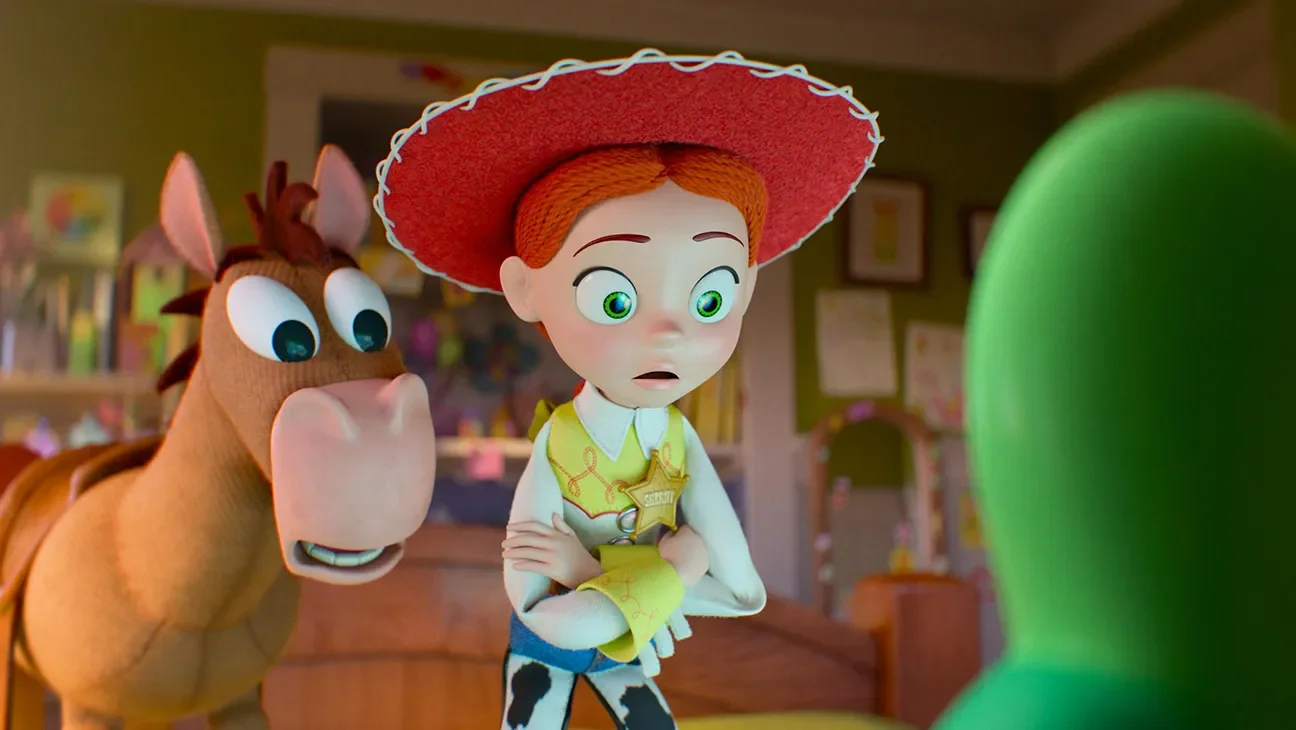
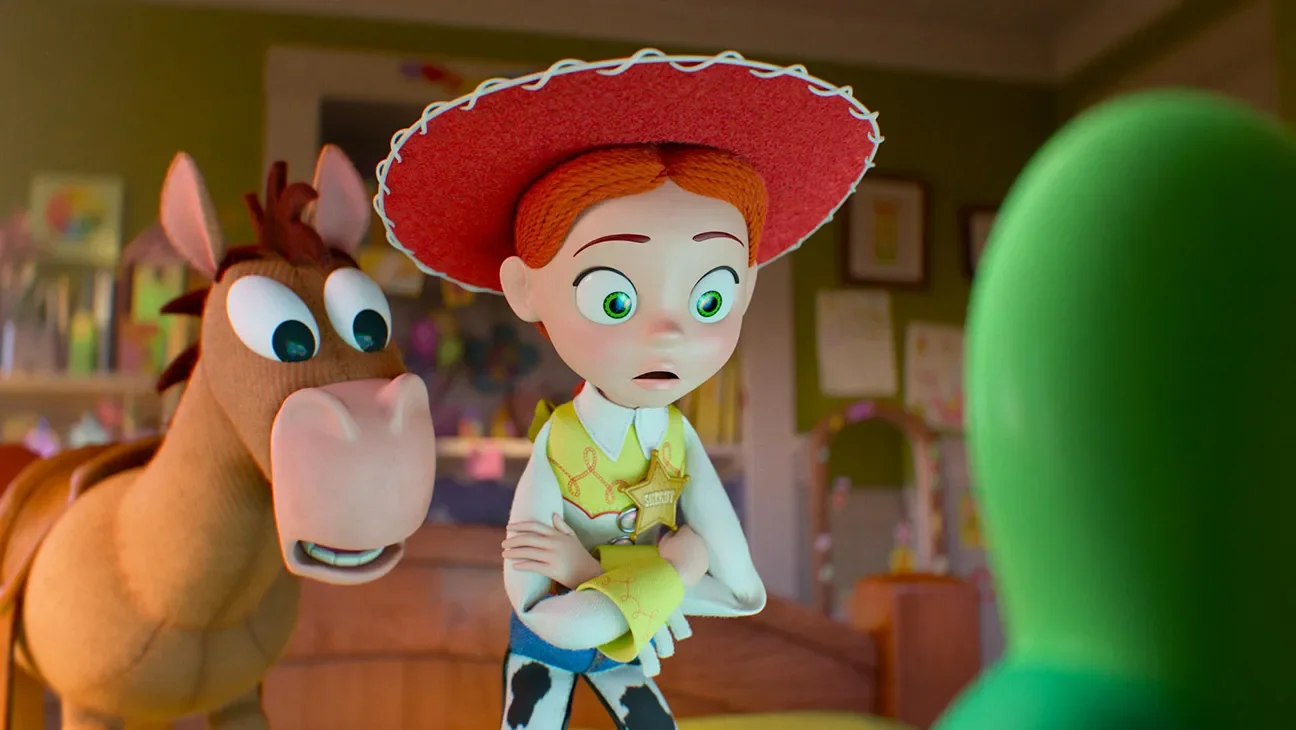
The smartest choice is putting Jessie at the center. Joan Cusack’s cowgirl has always been one of the franchise’s most emotionally expressive characters, carrying the abandonment trauma that made ‘Toy Story 2’ one of Pixar’s great heartbreak machines. Here, Jessie has become the leader of Bonnie’s room after Woody’s departure, and the film gives that responsibility real weight. She is not merely the loud, plucky cowgirl anymore. She is the toy trying hardest to hold the group together while quietly fearing that history is repeating itself. Cusack returns to the role with enormous feeling, giving Jessie a voice that still has comic snap but now carries the exhaustion of someone terrified of being left behind again.
'Toy Story 5' DISNEY/PIXAR
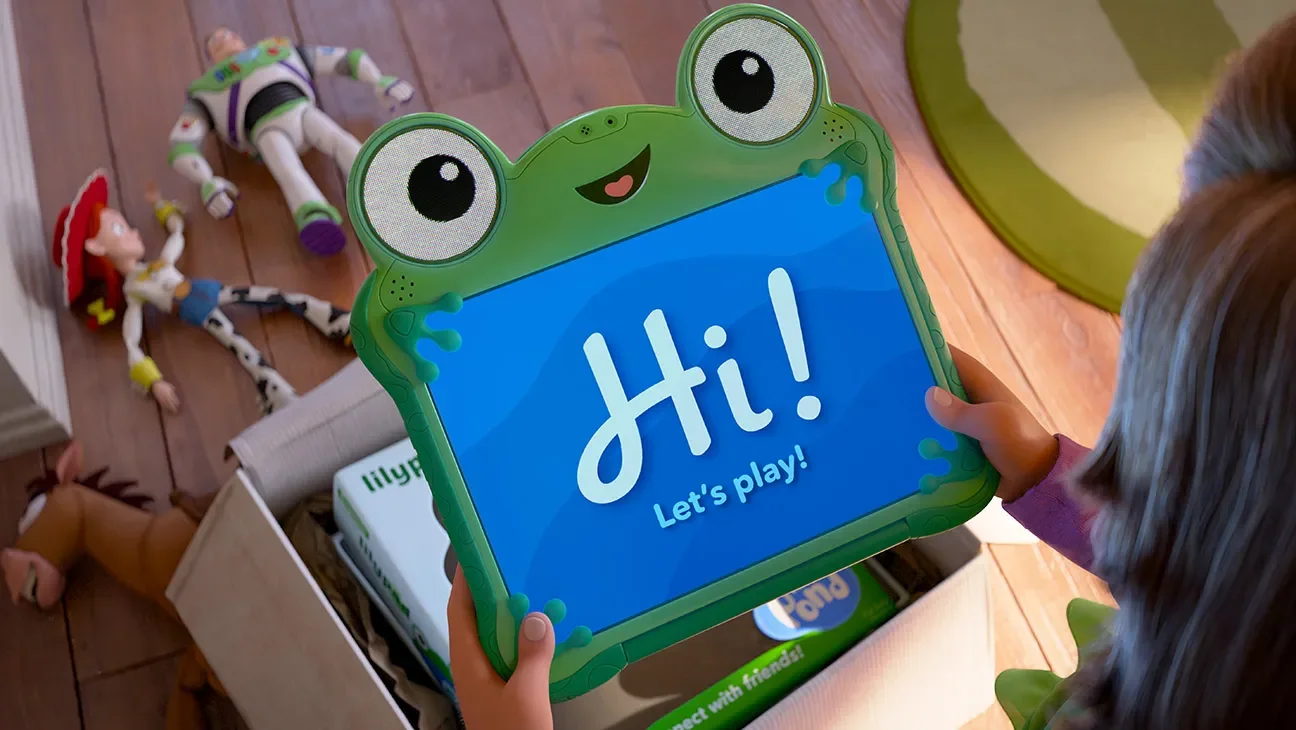
That fear is what gives ‘Toy Story 5’ its emotional spine. Bonnie still plays with Jessie, Bullseye and the others, but the world around them is changing. When Jessie tries to help Bonnie connect with the twin boys next door, she discovers children who barely notice the physical world around them, their attention swallowed by devices. Soon after, Bonnie’s parents introduce Lilypad, a child-friendly smart tablet in a frog-like casing voiced by Greta Lee with an almost weaponized cheerfulness. Lilypad is personalized, bright, responsive and instantly seductive. For Bonnie, who is lonely and unsure how to make friends, the tablet becomes not just entertainment but companionship.
That is where the movie finds its bite. The toys have faced replacement before, whether by newer toys, changing owners or the natural evolution of childhood. But this threat feels different because it is not another toy entering the room. It is a whole ecosystem of distraction. “Toys are for play. Tech is for everything,” Woody says at one point, and the sadness of that line lands because it feels true. A toy asks a child to imagine. A device supplies the world already lit, scored and interactive. Pixar does not need to exaggerate the concern; any parent who has watched a child melt down after screen time ends will recognize the emotional battlefield immediately.
Stanton, who co-wrote the first four ‘Toy Story’ films and directs this entry for the first time, has always been one of Pixar’s most effective filmmakers when it comes to turning simple objects into existential characters. ‘Finding Nemo’ turned parenthood into an oceanic panic attack. ‘WALL-E’ turned loneliness and environmental collapse into one of the studio’s great love stories. With ‘Toy Story 5,’ he brings that same clarity to a question the franchise was always destined to face: what happens when children stop needing toys? The film’s official premise centers on Bonnie becoming enamored with Lilypad, forcing Jessie and the toys to confront a world where traditional play may be fading.
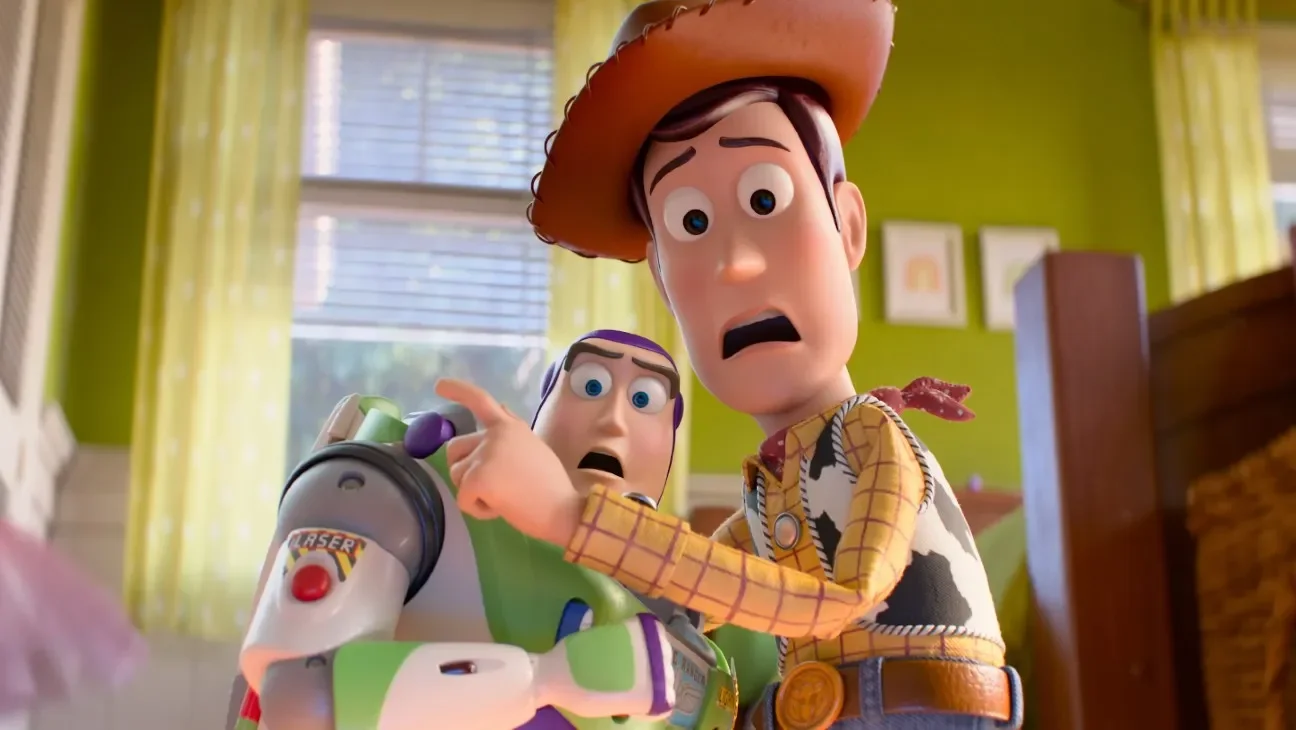
The story eventually sends Jessie across town to the farmhouse where Emily, her original owner, once lived. It is one of the film’s most affecting movements, because Jessie’s past has never stopped haunting her. Her abandonment in ‘Toy Story 2’ remains one of the franchise’s defining emotional wounds, and ‘Toy Story 5’ wisely refuses to treat it as resolved just because Jessie found new homes with Andy and Bonnie. When she sees signs of another childhood giving way to another generation of discarded toys, Jessie spirals into a fear that is devastatingly simple: what if every love she gives a child ends the same way?
That is classic Pixar territory, and the film handles it beautifully. The franchise has always been about impermanence, but each entry has approached it from a different angle. The first film was about jealousy and purpose. The second was about abandonment. The third was about growing up. The fourth was about identity beyond ownership. ‘Toy Story 5’ is about relevance — not in the commercial sense, but in the emotional sense. Do toys still matter when childhood itself has been reorganized by screens? Can imagination survive when distraction is easier? Can physical play still compete with the endless feedback loop of digital stimulation?
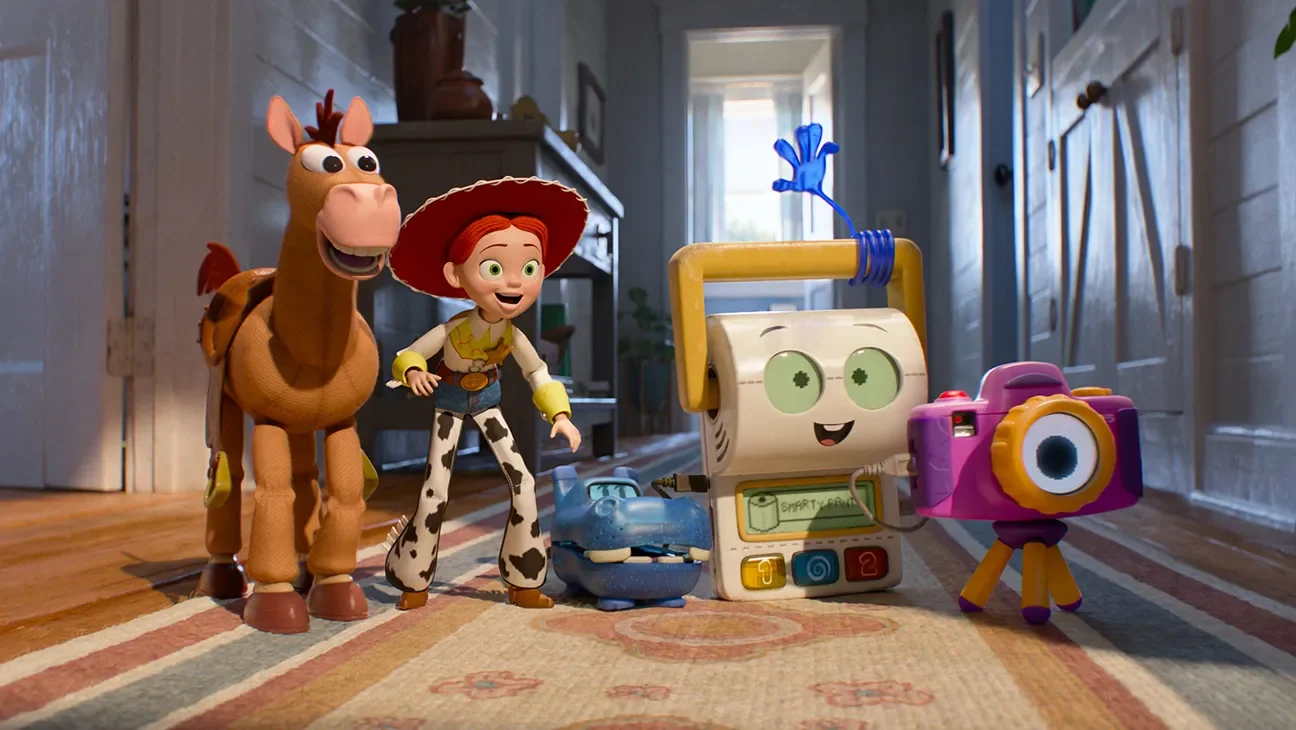
The answer, thankfully, is not delivered as a lecture. The film introduces a group of abandoned tech toys, including Smarty Pants, a toilet-training gadget voiced by Conan O’Brien with exactly the right amount of snarky resentment; Atlas, a GPS-equipped toy hippo voiced by Craig Robinson; and Snappy, a toy camera voiced by Shelby Rabara. These characters could have been one-note jokes, but the movie uses them to complicate the central argument. Tech is not inherently empty. Gadgets can bring joy, structure and connection. The danger comes when they replace imagination rather than extend it.
'Toy Story 5' DISNEY/PIXAR
Greta Lee’s Lilypad is especially effective because she is not played as evil so much as aggressively optimized. Her perkiness is funny because it feels familiar. She is every children’s app, learning device and algorithmic companion condensed into one bright little frog-shaped object that knows exactly how to keep Bonnie engaged. Lee gives the character a buoyant, self-satisfied rhythm that makes Lilypad both amusing and mildly terrifying. She does not need to be malicious. Her power comes from being frictionless.
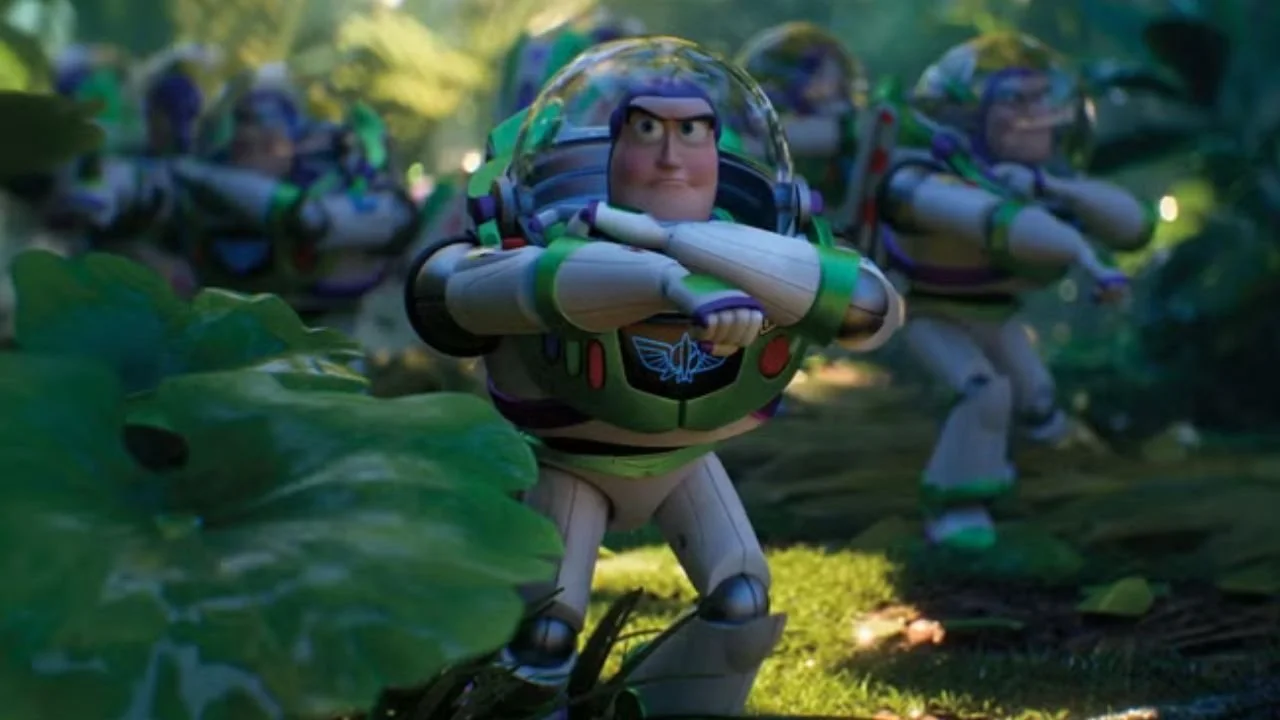
Tom Hanks and Tim Allen return as Woody and Buzz, and while the film belongs to Jessie, their presence still carries the emotional continuity of the franchise. Woody, now visibly changed by time and experience, is called back into the fold when Jessie needs help. Buzz gets a stranger and more action-driven subplot involving a squad of high-tech Buzz Lightyears, complete with hotspots and drone capabilities. That thread initially feels like it belongs to a different movie, and it takes longer than it should to merge with Jessie’s mission, but once the Buzz brigade becomes part of the larger rescue effort, the old ‘Toy Story’ pleasure of teamwork kicks in.
'Toy Story 5' DISNEY/PIXAR
The film’s funniest touches come from how naturally it updates the world without betraying the franchise’s spirit. A bendy pizza slice with sunglasses gets a voice cameo from Bad Bunny. Smarty Pants turns toilet-training technology into a tiny crank with a chip on his shoulder. The high-tech Buzz units are both ridiculous and weirdly useful. Pixar has always understood that the best toy characters are funny because their designs imply entire childhood stories, and ‘Toy Story 5’ adds new figures without overcrowding the heart of the movie.
The animation is, as expected, gorgeous, but what stands out most is not the polish. It is the softness. When the film moves from the suburbs to the rural outskirts near Emily’s old farmhouse, the colors shift into a woodsy, pastoral melancholy that gives Jessie’s memories room to breathe. Randy Newman’s score adds to that emotional texture, gently connecting the new film to the earlier entries without leaning too heavily on nostalgia. This is a sequel full of familiar faces, but it rarely feels trapped by reference.
POPULAR ON THE CINEMA GROUP
The emotional center is Bonnie’s loneliness. Scarlett Spears gives her a tender uncertainty that makes the character more than just the child who owns the toys. Bonnie is not being punished for loving a tablet. She is a kid trying to feel less alone, and Lilypad provides an easy solution before she knows how to build a harder, more meaningful one. The arrival of Blaze, voiced by Mykal-Michelle Harris, gives the movie its clearest human stakes. Jessie begins to see that Bonnie might not need saving from technology so much as she needs help finding someone who can meet her in the real world.
That is a more nuanced message than the film could have delivered. ‘Toy Story 5’ believes in physical play not because it is quaint, but because it forces children to negotiate, invent, argue, compromise and imagine together. Screens can entertain. Toys can invite. The film understands that distinction without pretending one must erase the other. Its most useful idea is that the goal is not to destroy technology, but to keep it from swallowing the messy, awkward, essential work of being present with other people.
'Toy Story 5' DISNEY/PIXAR
Not every element lands perfectly. The high-tech Buzz subplot takes too long to fully integrate, and some of the action sequences feel more busy than necessary. At 1 hour and 42 minutes, the movie is brisk, but it occasionally detours into adventure mechanics when its emotional story is already strong enough. Still, those issues are minor compared with how much the film gets right. It has jokes that land, new characters that earn their place and a genuinely moving reason to revisit this world.
Most importantly, ‘Toy Story 5’ justifies Jessie’s promotion from beloved supporting character to emotional lead. Cusack’s performance is the film’s great asset. She gives Jessie panic, stubbornness, tenderness and courage, making her fear of abandonment feel as immediate now as it did more than two decades ago. When Jessie worries that she cannot love another child just to learn she never mattered, the line cuts through the sequel machinery and finds the old Pixar ache again.

That ache has always been the franchise’s secret. The toys are funny because they behave like people. They are moving because they know they are temporary. Every ‘Toy Story’ movie has been about love given under the condition that it will end. ‘Toy Story 5’ extends that idea into a world where childhood itself feels more distracted and accelerated, where the things that once filled a room with imagination can be pushed aside by a glowing screen.
And yet the film is not despairing. It is sweet, funny and surprisingly hopeful. Its lesson is simple without being simplistic: children still need to play, not because toys deserve loyalty, but because play teaches them how to belong. That is a worthy message for a franchise that has spent 31 years proving that plastic, fabric and pull-string cowgirls can still break your heart.
‘Toy Story 5’ may not reach the staggering emotional heights of ‘Toy Story 2’ or ‘Toy Story 3,’ but it does something nearly as impressive. It finds a new reason to exist. For a fifth film in a franchise that already gave itself multiple perfect endings, that is no small miracle.
RATING: ★★★★☆
That’s a Wrap
|
Toy Story 5
|
That’s a Wrap | Toy Story 5 |
“‘Toy Story 5’ gives Jessie the spotlight she deserves, turning Pixar’s latest sequel into a funny, heartfelt and timely reminder that imagination still matters in a world full of screens.”
CREDITS
Release Date: Friday, June 19
Cast: Tom Hanks, Tim Allen, Joan Cusack, Conan O’Brien, Scarlett Spears, Greta Lee, Shelby Rabara, Mykal-Michelle Harris, Craig Robinson
Director: Andrew Stanton
Co-director: Kenna Harris
Screenwriters: Andrew Stanton, Kenna Harris
Studio: Disney / Pixar
Run Time: 1 hour 42 minutes
Rated PG
Watch The Trailer Below:
| FEATURES | INTERVIEWS | REVIEWS | The Catalogue | TRENDING | TRAILERS | VIDEOS |



![WERWULF - Official Trailer [HD] - Only In Theaters Christmas](https://i.ytimg.com/vi/cmjpadVj-Vk/hqdefault.jpg)