‘The Weight’ Review: Ethan Hawke Carries a Gritty Depression-Era Crime Drama That Never Fully Tightens Its Grip
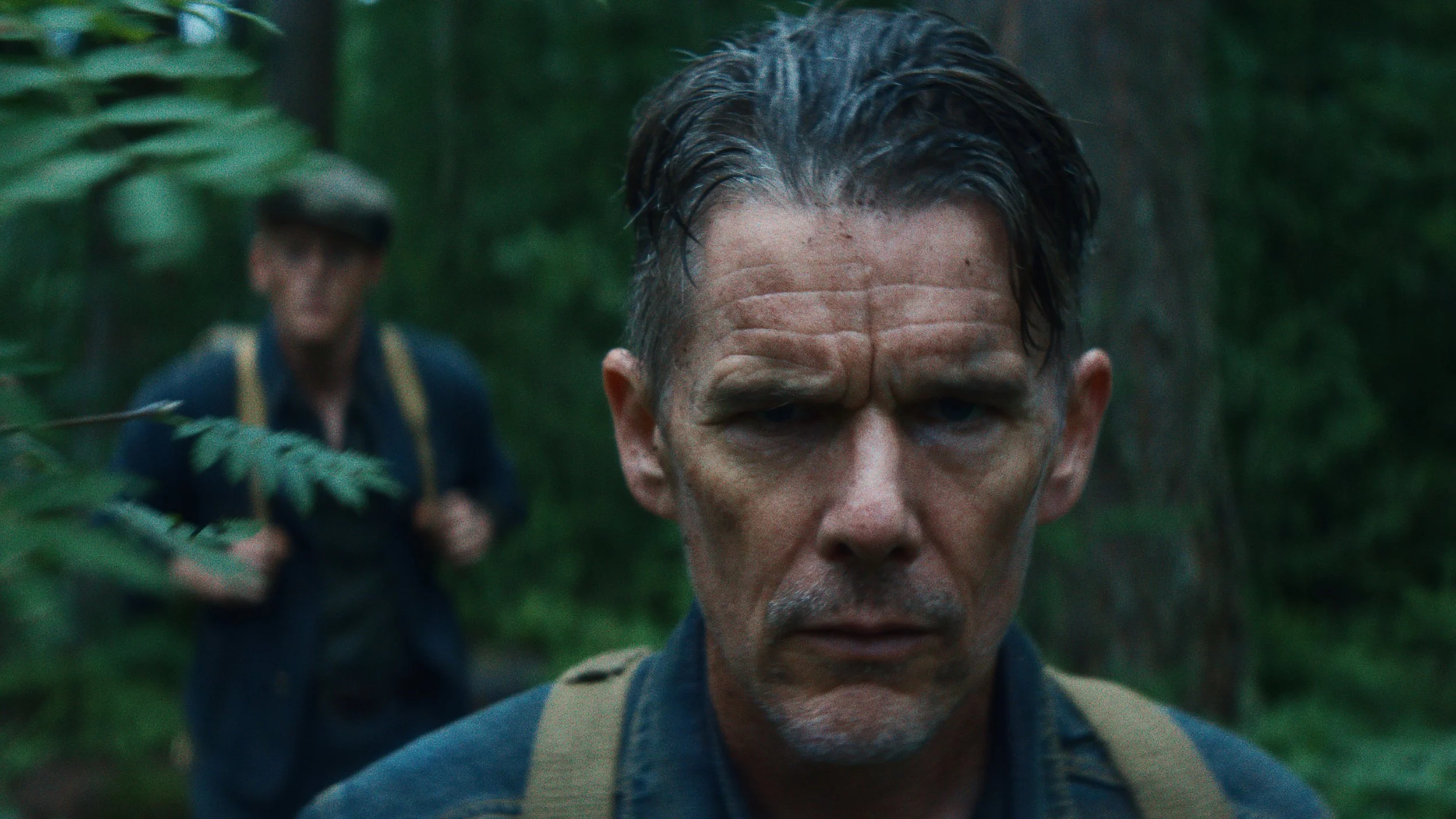
Ethan Hawke appears in The Weight by Padraic McKinley, an official selection of the 2026 Sundance Film Festival. | Courtesy of Sundance Institute | photo by M atteo Cocco.
Ethan Hawke delivers a quietly powerful performance in The Weight, a handsomely mounted Depression-era thriller whose ambition and atmosphere outpace its dramatic urgency.
There is something immediately classical about The Weight, Padraic McKinley’s debut feature set against the unforgiving landscape of 1933 Oregon. From its opening frames, the film announces its intentions clearly: this is a story about survival, moral compromise, and the crushing pressure of economic despair during the Great Depression. With gold at the center of its narrative and human endurance as its currency, the film reaches for the lineage of American frontier dramas and 1970s survival thrillers that once turned harsh landscapes into psychological battlegrounds.
In theory, the ingredients are formidable. Ethan Hawke stars as Samuel Murphy, a widowed father barely keeping his family afloat as eviction notices and institutional authority close in. Russell Crowe plays Clancy, a corrupt labor camp warden whose charm masks opportunism and cruelty. Julia Jones, Austin Amelio, Avi Nash, and an ensemble of volatile supporting players round out a group forced into a dangerous gold-smuggling expedition under threat of violence. It is a setup ripe with tension, betrayal, and ethical reckoning.
In execution, The Weight is often compelling, occasionally stirring, but rarely as gripping as it wants to be.
Hawke’s performance is the film’s emotional center and greatest strength. He plays Murphy not as a grand hero but as a man worn down by circumstance, carrying grief, responsibility, and quiet resolve in equal measure. Hawke’s restraint gives the character credibility; Murphy is not defined by speeches or bravado but by endurance. Every decision feels weighed against a single priority: protecting his daughter before she disappears into a system designed to erase people like him.
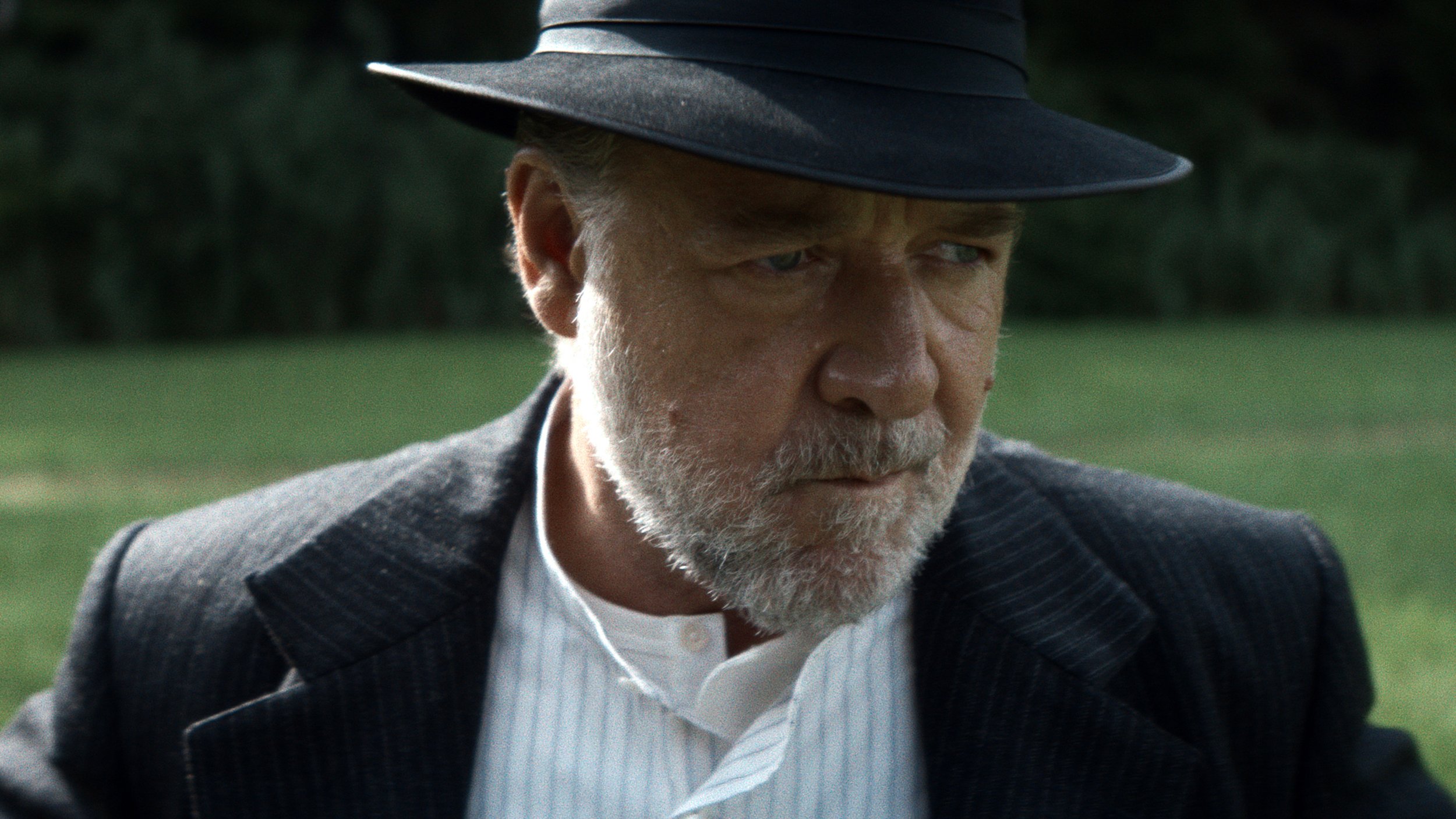
Russell Crowe appears in The Weight by Padraic McKinley, an official selection of the 2026 Sundance Film Festival. Courtesy of Sundance Institute | photo by M atteo Cocco.
Crowe’s Clancy is a more overt presence, all knowing glances and calculated generosity. There is a glint of amusement in his corruption, as if exploiting desperation is simply another administrative duty. The dynamic between Hawke and Crowe works best when the film allows it to simmer rather than forcing confrontations, and their scenes together suggest a richer psychological duel than the script ultimately explores.
Julia Jones brings needed gravity and perspective as Anna, an Indigenous woman fleeing institutional abuse who joins the expedition for safety. Her presence reframes the story in subtle but meaningful ways, grounding the film’s themes of displacement and power imbalance. Jones plays Anna with quiet intelligence and resolve, refusing sentimentality while asserting the character’s agency in a world that offers her very little.
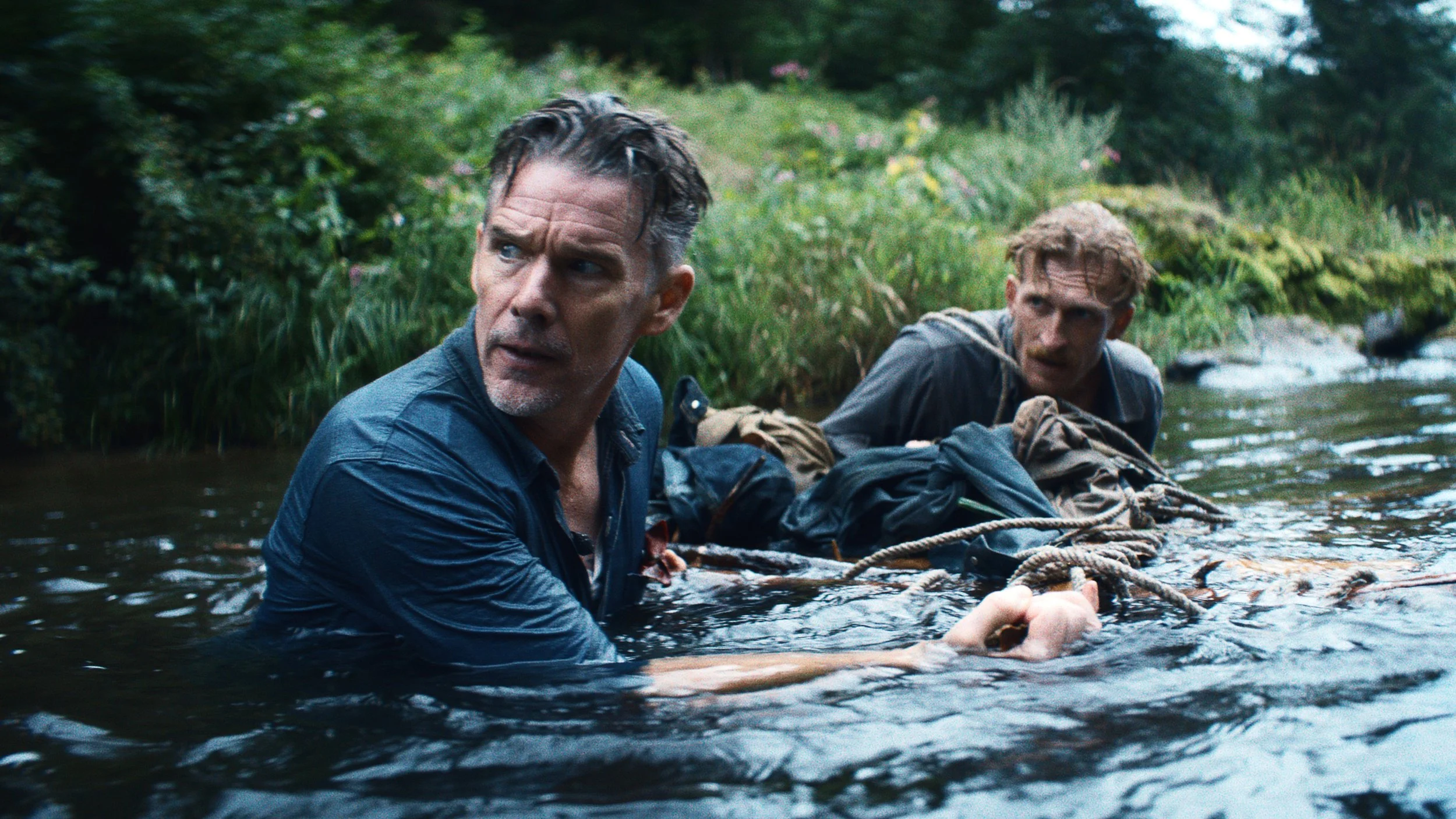
Ethan Hawke and Austin Amelio appear in The Weight by Padraic McKinley, Courtesy of Sundance Institute | photo by M atteo Cocco.
Visually, The Weight is richly textured. McKinley and his cinematography team capture the Oregon wilderness as both majestic and punishing, a place that offers beauty without mercy. The terrain is not simply a backdrop but an active participant in the narrative, constantly testing the men who cross it. The production design and costuming further reinforce the film’s commitment to period authenticity, giving the story a tactile, lived-in feel.
The score, composed by Shelby Gaines and Latham Gaines, leans into this sense of physicality. Its industrial rhythms and droning textures echo both the machinery of labor camps and the internal pressure bearing down on the characters. At its best, the music deepens the film’s mood and reinforces its themes of inevitability and strain.
Where The Weight falters is momentum. For a film built around the promise of constant danger, its pacing often feels measured rather than urgent. Key moments of betrayal and violence arrive without the cumulative tension needed to make them land with full force. Characters who seem positioned for complex arcs are sometimes left underdeveloped, their motivations sketched rather than excavated.
POPULAR ON THE CINEMA GROUP
Austin Amelio’s Rankin, Avi Nash’s Singh, and Lucas Lynggaard Tonnesen’s Olson each bring distinct energy to the ensemble, yet the film rarely pauses long enough to let their inner conflicts fully register. The result is a journey that feels emotionally credible but dramatically restrained, as though the film is hesitant to fully embrace the chaos and desperation its premise invites.
Still, The Weight is never careless. Its seriousness of intent is evident throughout, and its quieter moments — particularly those centered on Murphy’s longing to reunite with his daughter — carry genuine emotional weight. The film’s closing passages, more reflective than explosive, suggest a version of the story that might have resonated more deeply with sharper narrative focus and greater dramatic pressure.
As a debut, McKinley shows a clear command of tone and atmosphere, even if the storytelling occasionally lacks urgency. The Weight may not fully capitalize on its high-stakes premise, but it remains a thoughtful, well-acted period drama anchored by a performance from Ethan Hawke that lingers after the final frame.
Rating: ★★★★☆
That's A Wrap
|
The Weight
|
That's A Wrap | The Weight |
“A patient, handsomely mounted Depression-era drama, The Weight is carried by Ethan Hawke’s quietly commanding performance, delivering atmosphere, moral gravity, and emotional restraint even as its tension unfolds with deliberate reserve.”
CREDITS
Airdate: January 2026 | Sundance Film Festival
Cast: Ethan Hawke, Russell Crowe, Julia Jones, Austin Amelio, Avi Nash
Creators: Director Padraic McKinley; Writers Matthew Booi, Shelby Gaines
Out Now: Festival Circuit
Rating: Not Rated





![WERWULF - Official Trailer [HD] - Only In Theaters Christmas](https://i.ytimg.com/vi/cmjpadVj-Vk/hqdefault.jpg)