Andrew Garfield goes from Eduardo Saverin to Sam Altman in Luca Guadagnino’s darkly funny, deeply unsettling OpenAI drama.
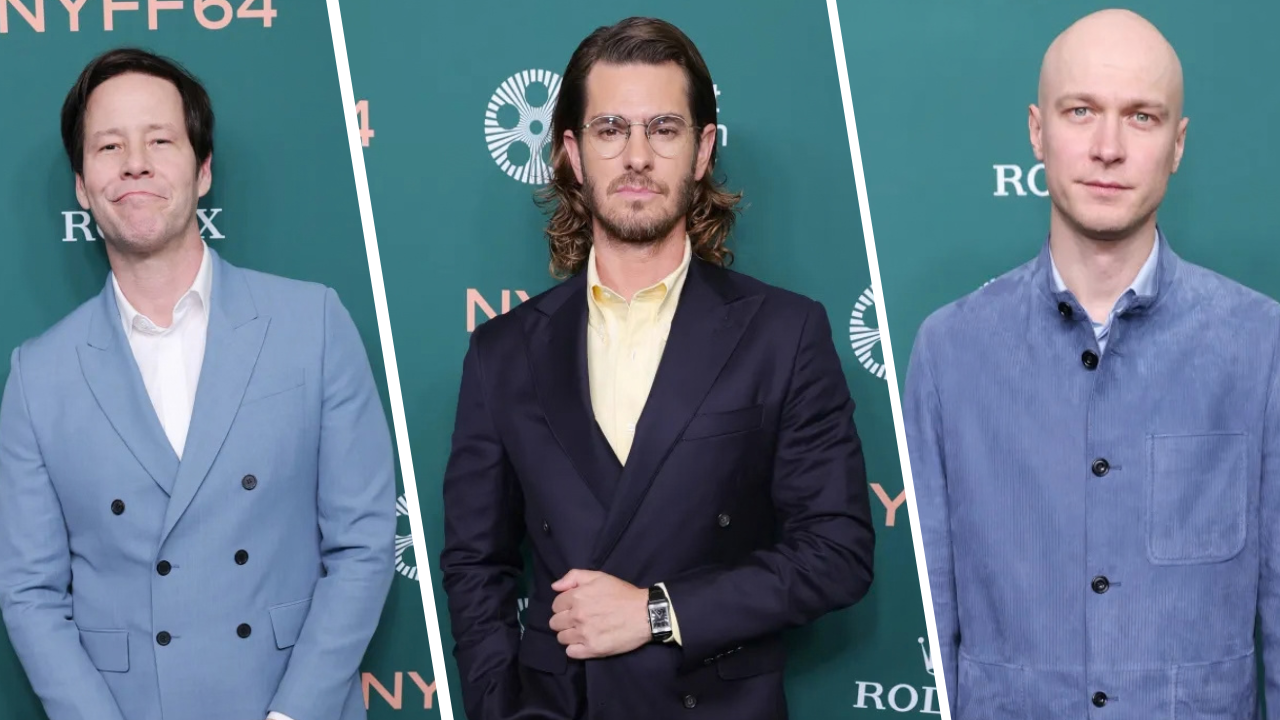
Sixteen years ago, Andrew Garfield played the friend who got cut out. As Eduardo Saverin in The Social Network, he was the betrayed co-founder, the conscience left holding a diluted share certificate while a tech empire rose without him. In Luca Guadagnino‘s Artificial, which had its world premiere at the New York Film Festival on Monday at Alice Tully Hall and opens from Neon on Christmas Day, Garfield finally switches sides. He plays Sam Altman, and he plays him as the man doing the cutting. That reversal is the key to this Artificial review, and to why Guadagnino’s OpenAI drama lands as the most unnerving portrait of a living tech figure any studio has dared to release.
Guadagnino has never made a film this topical, and he refuses to treat it like homework. Where most movies about tech moguls put their subjects on trial, his instinct is to watch them eat. The result is less a courtroom drama than a feast, and by the end you feel complicit for having pulled up a chair.
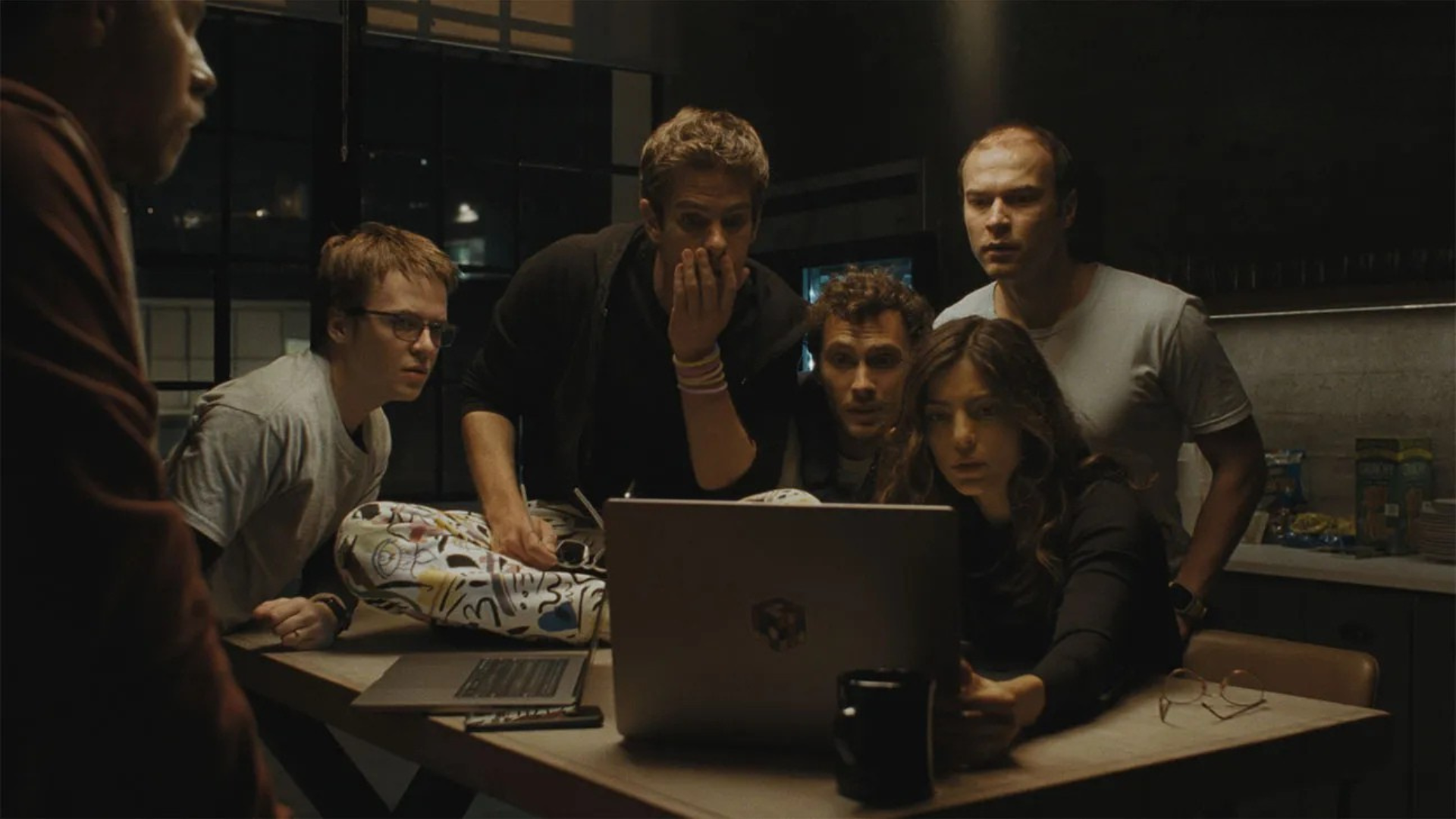
Simon Rich‘s screenplay begins in 2003 in Toronto, where a teenage Ilya Sutskever (Yura Borisov) falls under the wing of Geoffrey Hinton (Mark Rylance), the professor whose work on neural networks would eventually earn him a Nobel Prize. From there the film moves briskly, almost in chapters, through the founding of OpenAI with Altman and Elon Musk (Ike Barinholtz),
Musk’s exit, the arrival of Microsoft’s money, the launch of ChatGPT and, finally, the chaotic days of November 2023, when Sutskever and the board fired Altman and then watched him return within the week. Anyone who followed the story knows where it ends. The film’s achievement is making the ending feel like a trap closing rather than a news recap.
Rich, a longtime Saturday Night Live writer and the creator of Man Seeking Woman, is not the obvious choice to write this material, and that turns out to be the point. His script is genuinely funny for long stretches, built on the absurd confidence of very young, very rich men deciding the future of the species over dinner. The comedy is what makes the dread work. You laugh at a room full of people who sound ridiculous, and a beat later you remember they are not fictional.

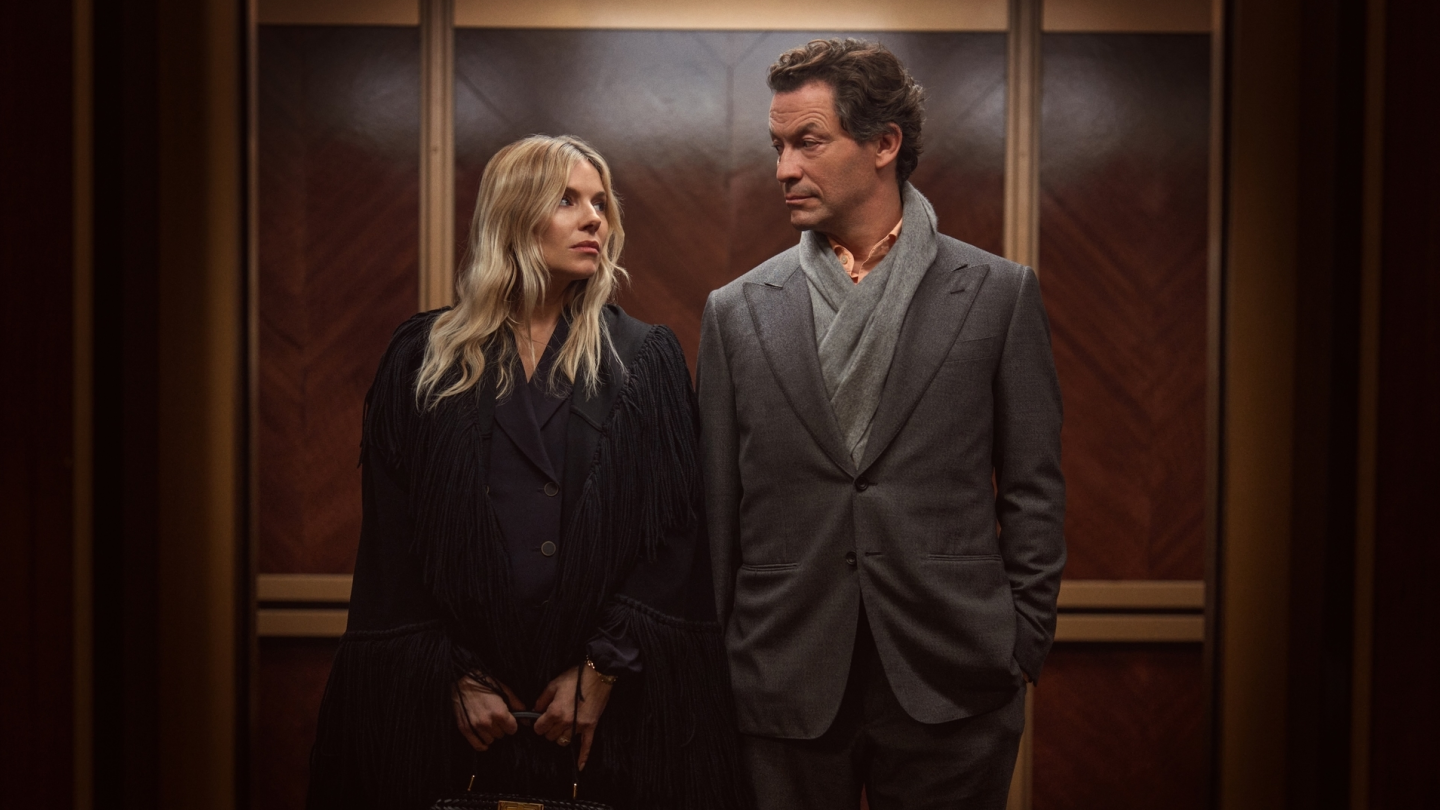
Garfield is extraordinary. His Altman never raises his voice and never stops smiling, and the performance is all about calibration: a slightly different version of himself for every person in the room, warm to the believer, flattering to the investor, wounded to the board.
Garfield lets you see the gears turn without ever showing you the machine, which is far scarier than a cartoon villain would have been. It is a performance about persuasion, delivered by an actor who understands that the most dangerous people in a boardroom are usually the most likable. After Oscar nominations for Hacksaw Ridge and tick, tick…BOOM!, this is the role that should finally win him the award.
If Garfield is the film’s menace, Borisov is its broken heart.

Best known to American audiences as the reluctant henchman Igor in Anora, which earned him an Oscar nomination, he plays Sutskever as a pure believer, a scientist so certain that his work can end disease and suffering that he cannot see the people steering it toward something else.
Borisov gives him a stillness that the rest of the film lacks, and his slow realization that he has built something he no longer controls is the story’s real tragedy. It is a quieter performance than Garfield’s, and in its own way more devastating. Neon, which carried Borisov to the Oscars once already with Anora, has every reason to try again.
The supporting cast is stacked with alot of heavy hitters.
Monica Barbaro, an Oscar nominee as Joan Baez in A Complete Unknown, brings intelligence and growing unease to chief technology officer Mira Murati, a woman who keeps noticing what the men around her refuse to see.

Cooper Hoffman, of Licorice Pizza, plays Greg Brockman as Altman’s loyal lieutenant, all eager energy and no brakes. Rylance is the film’s voice of caution, a scientist from another generation who keeps trying to slow everyone down. While Ike Barinholtz is a hysterical as Musk, playing him broad enough to be funny and pointed enough to sting. Jason Schwartzman makes a brief, unsettling impression in a role best left unspoiled.
What separates Artificial from a well-made docudrama is Guadagnino himself. The director of Call Me by Your Name, Challengers and Queer has always been a filmmaker of appetite, obsessed with bodies, food and desire, and he turns that sensibility on a world that claims to have transcended the body entirely.
These are men who talk about intelligence and the future while consuming everything in sight. Cinematographer Malik Hassan Sayeed, reuniting with Guadagnino after After the Hunt, shoots the tech world’s glass offices and private dinners with a voluptuous warmth that slowly turns queasy. Damon Albarn’s score, which mixes analog textures with original songs, is one of the year’s best, playful at the start and haunting by the end.

It is not quite a perfect film. At two hours and 20 minutes, Artificial is long, and its year-by-year structure occasionally feels like a timeline being checked off rather than a story being told.
The tonal swings that make the first half so lively become harder to manage once the stakes turn apocalyptic, and a few late scenes push the message harder than they need to. Guadagnino trusts his audience to feel the horror; he does not always trust them to arrive at it on their own.
But the flaws are the flaws of ambition, and they hardly matter next to what the film gets right.

Artificial is the rare movie about technology that is actually about people: their vanity, their loneliness, their hunger to be first and their extraordinary talent for convincing themselves that whatever they want is also what is best for everyone else.
It does not lecture about artificial intelligence so much as it studies the very human intelligence, and the very human weaknesses, of the people building it.
The film’s history is a story in itself. Developed at Amazon MGM Studios, it was dropped before release and picked up by Neon, which reportedly took it on with no upfront fee in exchange for a marketing commitment.
Whatever led Amazon to walk away, the decision now looks like a gift to Neon and to audiences. The studio that released Parasite and Anora knows exactly what it has, and Christmas Day suddenly looks like a very interesting place to open a movie about the end of the world.
Plenty of filmmakers have made tech moguls talk. Guadagnino makes them dangerous. In a season full of films about the men who run our lives, Artificial is the one that will stay with you, and Garfield’s smile is the thing you will not be able to shake.
RATING: ★★★★½
That’s a Wrap | Artificial
“A darkly funny, deeply unsettling portrait of ambition, anchored by the most frightening performance of the year.”
Jonathan P. Moustakas
CREDITS
Director: Luca Guadagnino
Screenwriter: Simon Rich
Cast: Andrew Garfield, Yura Borisov, Monica Barbaro, Cooper Hoffman, Mark Rylance, Ike Barinholtz, Jason Schwartzman, Chris O’Dowd, Cooper Koch, Billie Lourd
Cinematography: Malik Hassan Sayeed
Music: Damon Albarn
Producers: David Heyman, Jeffrey Clifford, Luca Guadagnino, Jennifer Fox
Distributor: Neon
Rating: PG-13
Runtime: 2 hours 20 minutes