Twelve States Sue to Block Paramount’s Warner Bros. Discovery Takeover

Graphic Via The Cinema Group
A coalition of Democratic attorneys general is challenging Paramount’s proposed Warner Bros. Discovery merger, arguing the deal would reduce competition, raise prices and shrink the number of movies and shows made each year.
Paramount’s planned takeover of Warner Bros. Discovery just hit a major legal obstacle.
Twelve states have filed an antitrust lawsuit seeking to block the media mega-merger, setting up a high-stakes court fight over one of the most consequential entertainment deals in years. The lawsuit was filed Monday in the Northern District of California and is being led by California Attorney General Rob Bonta.
Bonta announced the action at a press conference near the Hollywood sign, arguing that the proposed merger would harm both consumers and the entertainment industry.
“This merger would snuff out competition, drive up prices, diminish content quality, and produce fewer movies and shows each year,” Bonta said.
The states are also asking the court for a temporary restraining order and a preliminary injunction to stop Paramount from completing the deal while the litigation plays out. If granted, the order would pause the merger for the time being, though Paramount would almost certainly appeal.
Paramount pushed back strongly on Monday, calling the lawsuit “wrong on both the facts and the law.” The company argued that the states are misreading the current entertainment landscape and said the merger would strengthen competition rather than weaken it.
"ONE COMPANY SHOULD NOT CONTROL THIS MUCH OF WHAT AMERICA WATCHES — AND READS."
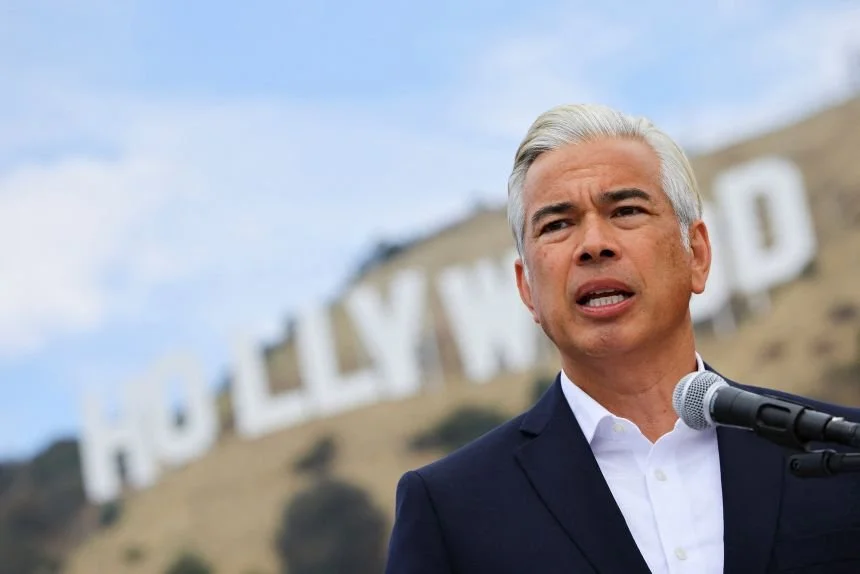
California Attorney General Rob Bonta. California is among the twelve states seeking to block the takeover. GETTY IMAGES
The studio also noted that regulators in several markets have already approved the deal, including the U.S. Department of Justice.
That approval has become part of the controversy. Critics have questioned whether the federal review was influenced by Paramount’s ties to President Trump and members of his administration. Sen. Elizabeth Warren previously criticized the DOJ’s approval, saying, “This reeks of corruption.”
The new lawsuit now creates an unusual state-level challenge to a merger that has already received federal clearance. California is joined by Arizona, Colorado, Connecticut, Massachusetts, Minnesota, Nevada, New Jersey, New Mexico, New York, Oregon and Washington. All twelve states have Democratic attorneys general.
According to officials involved in the filing, the case reflects a broader belief that the Trump administration has pulled back from aggressive antitrust enforcement. One official told CNN, “Someone’s gotta do it.”
The lawsuit focuses primarily on the entertainment side of the deal rather than the news implications, even though Warner Bros. Discovery owns CNN and Paramount owns CBS News. Critics have raised concerns about one company controlling both news operations, but the states’ legal argument centers on competition in three areas: wide-release film distribution, anticipated blockbuster film distribution and cable channel licensing.
The attorneys general argue that combining Paramount and Warner Bros. Discovery would reduce competition in those spaces, potentially leading to higher prices, fewer theatrical releases and less variety in the content available to consumers.
Paramount says the real competitive pressure in Hollywood is coming from dominant streaming and technology companies. In a statement, the company argued that a combined Paramount and Warner Bros. Discovery would create a stronger, better-capitalized media company capable of competing with Netflix and other major platforms for audiences, creative talent and premium content.
The political dimension of the fight is impossible to ignore. Paramount’s allies have suggested the lawsuit is politically motivated, pointing to the Democratic attorneys general involved and noting that some are up for reelection this year.
POPULAR ON THE CINEMA GROUP
Opponents of the deal argue the politics run in the other direction, saying the merger would place CNN, Warner Bros., HBO, DC, CBS, Paramount Pictures and other major assets under the control of a Trump-aligned family. Paramount CEO David Ellison is the son of billionaire Oracle co-founder Larry Ellison, whose fortune is helping support the bid. Larry Ellison has donated heavily to pro-Trump causes and has worked with the president on business matters, while David Ellison has cultivated ties with Trump and administration officials.
Paramount has denied reports of backdoor arrangements and has said its goal with CNN would be to support “truth-based journalism.”
Bonta directly addressed the political concerns during Monday’s announcement, framing antitrust enforcement as a check on billionaire influence and presidential favoritism.
The lawsuit also drew support from Reporters Without Borders, which warned that the merger could damage media pluralism by putting several influential news organizations under one corporate owner. The group argued that past media consolidation has often led to newsroom cuts and reduced access to independent reporting.
Paramount, however, insists that blocking the deal would hurt the very competition antitrust law is meant to protect. The company says the merger would create more choice for consumers and more opportunities for creators and workers.
The stakes are enormous. Paramount has said it remains committed to completing the merger this summer, and the agreement includes a ticking fee that would require the company to pay more for Warner Bros. Discovery if the process is not finished by the end of September.
For now, the deal moves from corporate strategy to courtroom drama. A judge could decide whether the merger can proceed while the case is litigated, but either way, the lawsuit ensures that Paramount’s takeover of Warner Bros. Discovery will face far more scrutiny before it can become reality.

| FEATURES | INTERVIEWS | REVIEWS | The Catalogue | TRENDING | TRAILERS | VIDEOS |







![WERWULF - Official Trailer [HD] - Only In Theaters Christmas](https://i.ytimg.com/vi/cmjpadVj-Vk/hqdefault.jpg)