Letterboxd’s $250 Million Question: Can Hollywood Buy Movie Fandom Without Breaking It?
Graphic via The Cinema Group
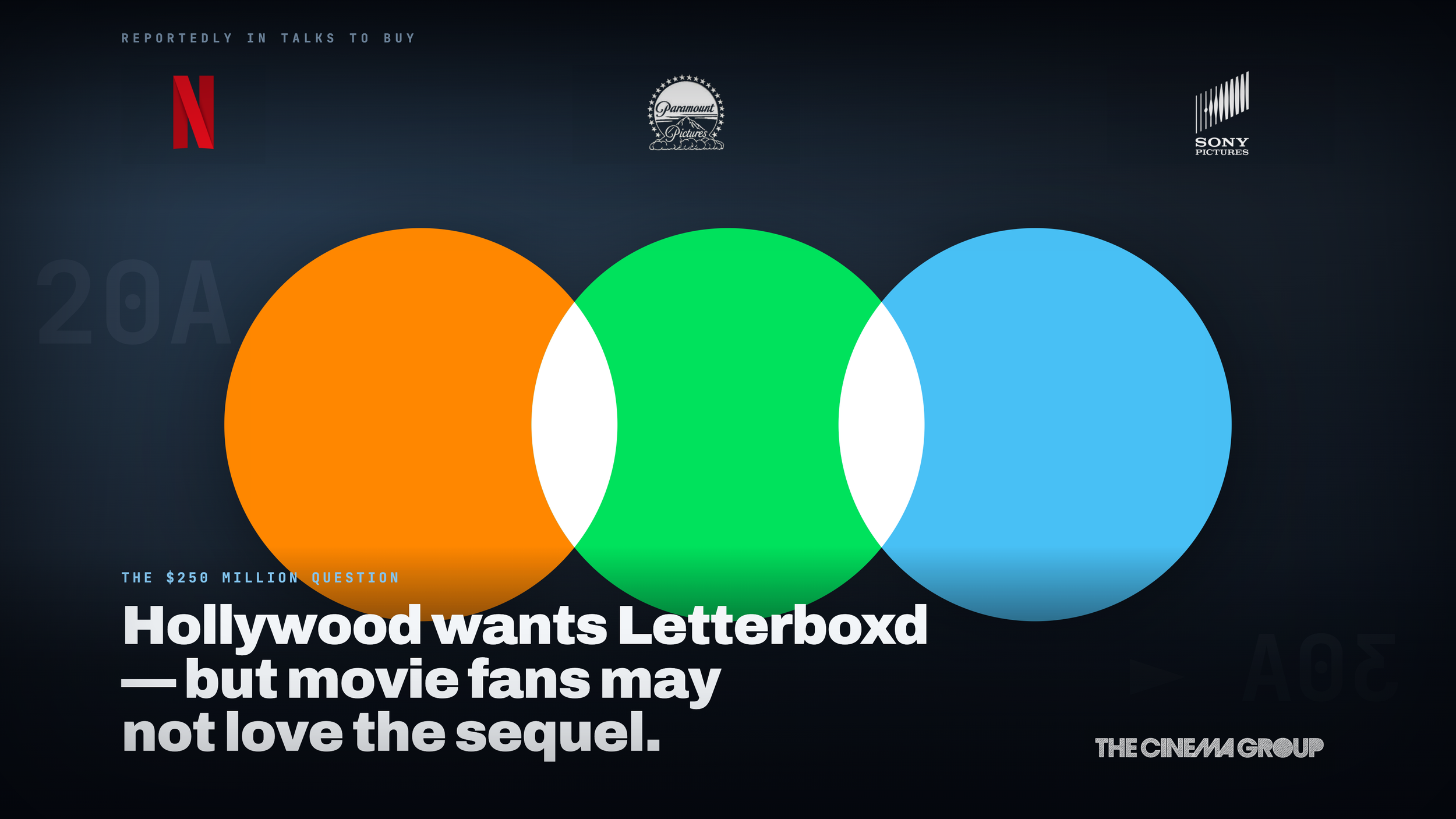
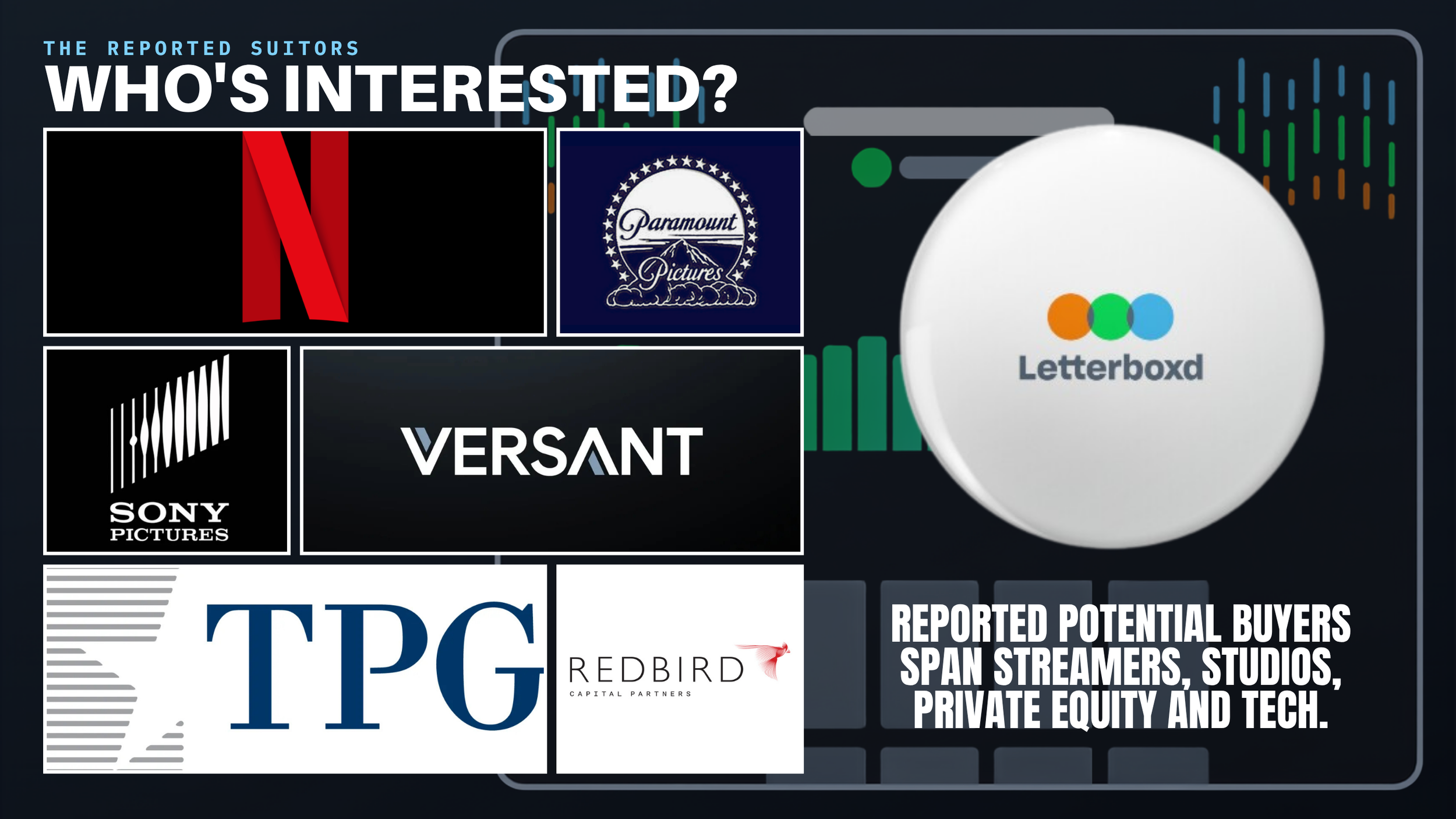
Netflix, Sony, Paramount, TPG and Reddit co-founder Alexis Ohanian are reportedly among potential buyers for Letterboxd, raising obvious questions about what happens if a studio owns the internet’s favorite place to roast movies.
Letterboxd may be getting ready for its biggest plot twist yet.
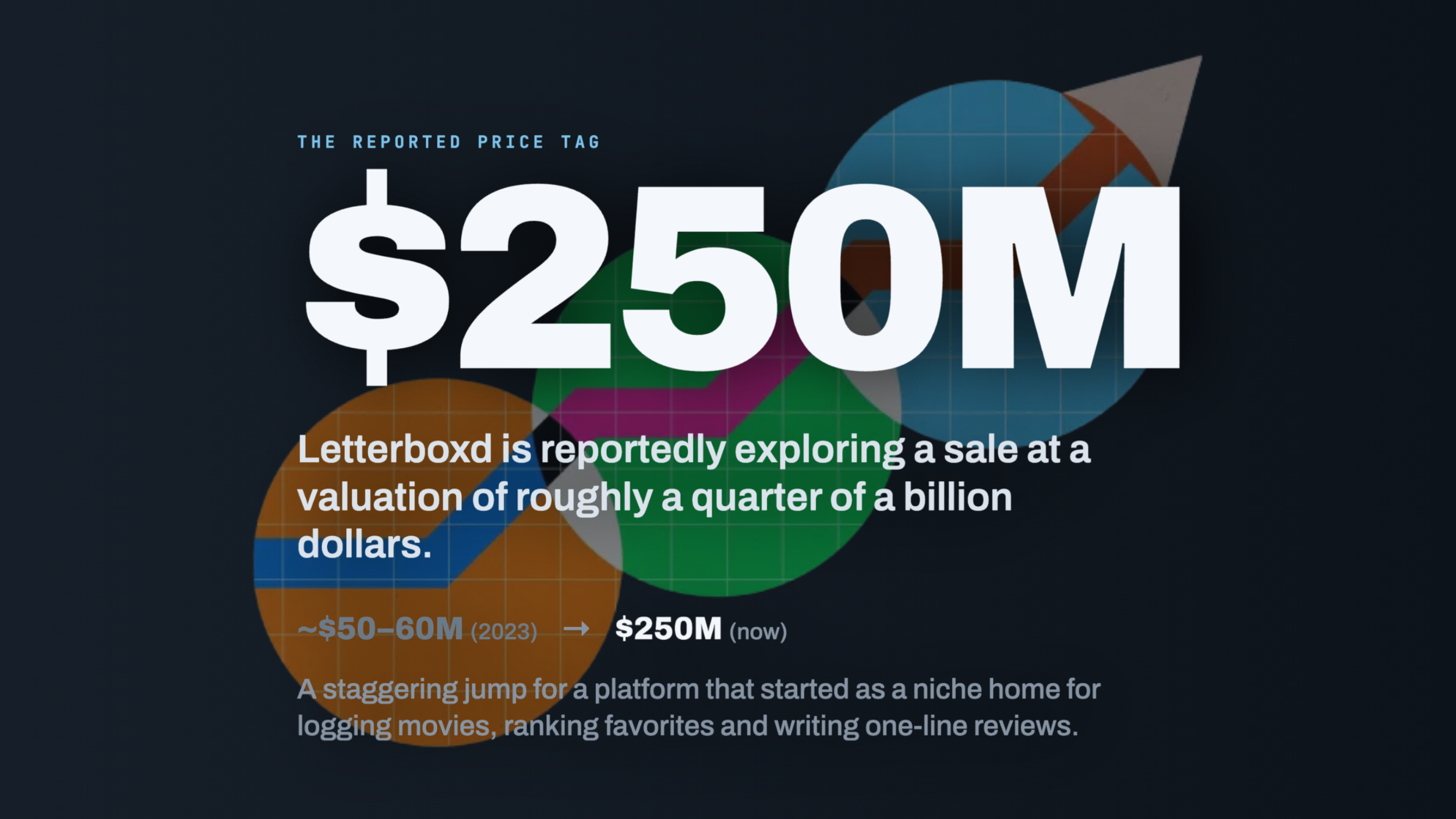
The movie-focused social platform is reportedly exploring a sale, with Netflix, Sony Pictures, Paramount, private equity firms TPG and RedBird, Comcast spinoff Versant and Reddit co-founder Alexis Ohanian among the names circling the company. Letterboxd’s owners are reportedly floating a valuation of roughly $250 million, an enormous jump from the $50 million to $60 million valuation attached to Tiny’s majority-stake purchase in 2023.
Letterboxd is currently majority-owned by Canadian holding company Tiny, which acquired a 60 percent stake in 2023. Co-founders Matthew Buchanan and Karl von Randow still own the remaining 40 percent and continue to lead the company. No formal sale has been announced, and the talks are still described as preliminary.
Still, the buyer list says a lot about what Letterboxd has become. What started as a cinephile-friendly place to log movies, rank favorites and write one-line jokes that somehow get more engagement than full criticism has evolved into a valuable cultural data machine. The platform now has more than 26 million users worldwide, according to recent reports, with a particularly strong presence among younger movie fans.
Graphic via The Cinema Group
In other words, ranking ‘Shrek 2’ above ‘The Godfather’ may finally be a viable business model.
The obvious appeal is not hard to understand. Letterboxd knows what movie obsessives are watching, what they are rewatching, what they are pretending to have watched, what they hate, what they ironically love and what they are willing to turn into a personality. For a streamer or studio, that is not just a social platform. That is taste data, discovery behavior, fandom sentiment and marketing intelligence wrapped in a clean black-and-orange interface.
That is also the problem.
Letterboxd works because it feels independent, or at least independent enough. Users do not go there because a studio told them to. They go there because it still feels like one of the few online movie spaces where the community sets the tone. A filmmaker can be celebrated, dragged, rediscovered or meme’d into temporary canon depending on the mood of the user base. That unpredictability is part of the appeal.
So yes, there is something immediately funny — and slightly terrifying — about Netflix potentially buying the platform where users publicly roast Netflix movies. Nothing says “independent film criticism” like random technical difficulties appearing every time someone tries to post a one-star review of the latest $200 million Netflix rom-com action thriller. To be clear, we are joking. They would never do that. Right?
Graphic via The Cinema Group
Sony and Paramount would raise similar concerns. A studio-owned Letterboxd would immediately have to convince users that ratings, reviews, lists, trending pages and editorial features would remain untouched. Even if a buyer never interfered, the perception of interference could be damaging. For a platform built on trust, tone and user culture, the appearance of studio influence might be almost as risky as actual meddling.
That may be why private equity or a tech-oriented buyer could be more palatable to some users, though that comes with its own anxieties. Private equity ownership could mean aggressive monetization, more ads, subscription changes or a push to turn Letterboxd into something broader and less weirdly specific. Ohanian, given his Reddit background, might understand community dynamics better than a traditional studio buyer, but even that would not erase the central question: how do you grow Letterboxd without sanding off the exact personality that made it valuable?
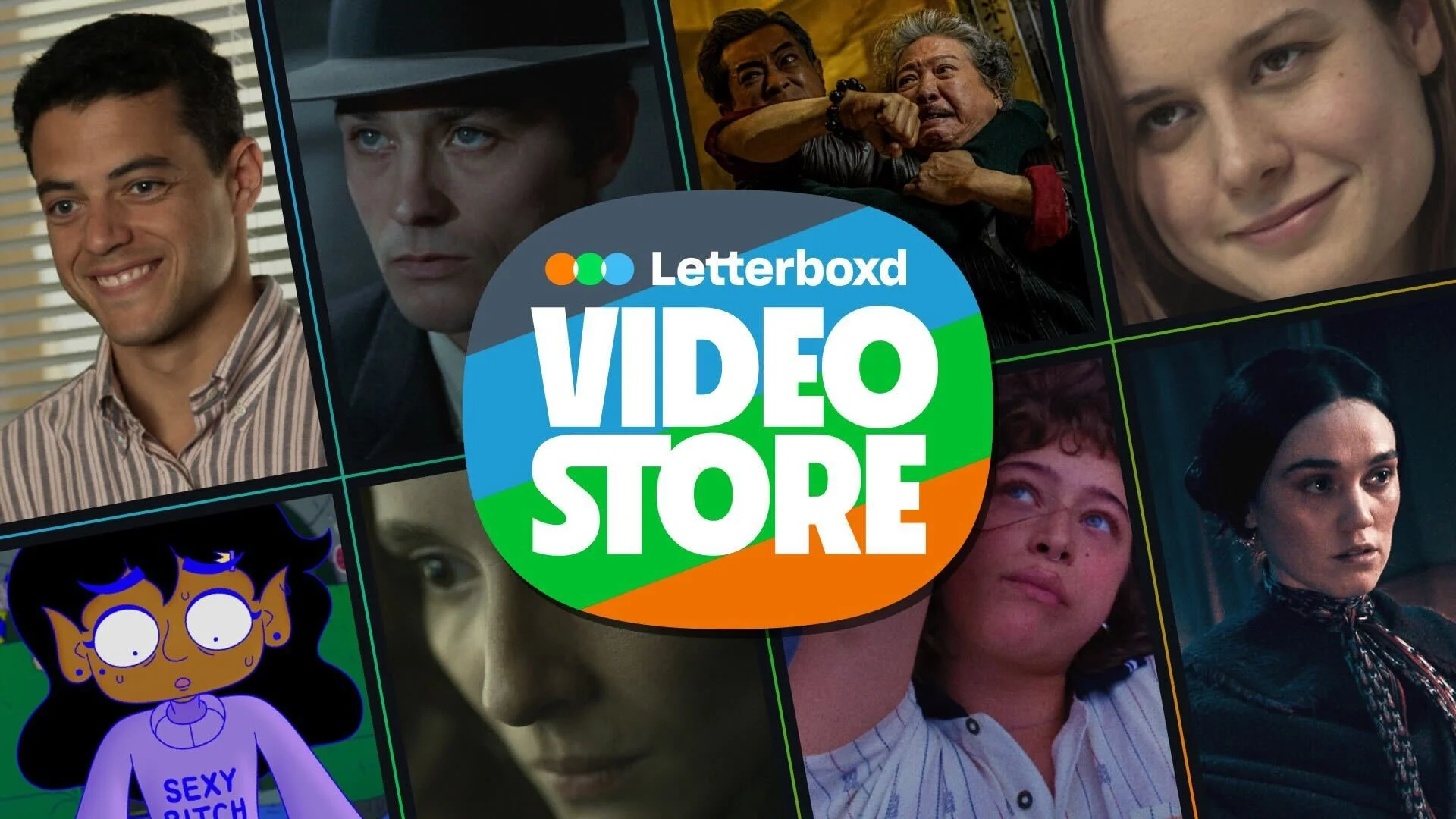
Letterboxd has already been moving beyond its original form. The company has discussed expansion into television, and the platform’s influence on movie marketing has only grown as filmmakers, actors, studios, festivals and distributors have embraced it. Recent reports also note that Letterboxd launched a curated in-app video rental store focused on niche arthouse films in late 2025, another sign that the platform’s future may involve more direct commerce and distribution.
Letterboxd
That makes the sale talk feel less like a random acquisition rumor and more like the next stage of a company trying to decide what it wants to be. Is Letterboxd a social network? A recommendation engine? A film diary? A marketing tool? A storefront? A future streaming layer? The answer may depend on who buys it.
For Netflix, the dream version is obvious: a direct line into highly engaged film fandom, with data that could inform acquisitions, recommendations, awards campaigns and library strategy. For Sony or Paramount, Letterboxd could become a consumer-facing film culture hub at a time when theatrical marketing is harder and more expensive than ever. For investors, the pitch is simpler: millions of loyal users, strong brand identity and room to monetize.
POPULAR ON THE CINEMA GROUP
For users, the pitch is more complicated. Letterboxd is valuable because it is still fun. It has not fully collapsed into the same engagement sludge that has swallowed so much of social media. It still feels oddly personal, whether someone is logging a silent film at 2 a.m., making a list called “Movies Where Men Are Wet and Sad,” or writing “this happened to my buddy Eric” under a Palme d’Or winner.
That culture is delicate. It cannot be reverse-engineered by a studio marketing department, and it probably should not be over-managed by anyone who sees the platform primarily as a funnel. The worst version of a Letterboxd sale would be one that turns the site into another polished content ecosystem where every sharp edge gets smoothed out in the name of brand safety.
The best version would preserve the chaos, protect the independence of user reviews and give the platform more resources without making it feel like homework from a media conglomerate. That is the needle any buyer would have to thread.
For now, Letterboxd has not announced a deal. But the fact that Netflix, major studios, private equity and tech investors are reportedly circling says everything about how powerful fan-driven film culture has become. The platform that once felt like a niche clubhouse for movie obsessives is now valuable enough for Hollywood to want the keys.
Which means the next great Letterboxd review may be of Letterboxd itself.
| FEATURES | INTERVIEWS | REVIEWS | The Catalogue | TRENDING | TRAILERS | VIDEOS |



![WERWULF - Official Trailer [HD] - Only In Theaters Christmas](https://i.ytimg.com/vi/cmjpadVj-Vk/hqdefault.jpg)