House of the Dragon’ Season 3 Review: HBO’s ‘Game of Thrones’ Prequel Finally Finds Fire Beneath the Ash
HBO MAX
After two uneven seasons of delayed momentum, ‘House of the Dragon’ Season 3 begins to sharpen its focus, delivering bigger spectacle, richer political tension and a few of the show’s strongest episodes yet.
For two seasons, ‘House of the Dragon’ has often felt like a show forever preparing to become the show it was meant to be. HBO’s ‘Game of Thrones’ prequel has never lacked scale, money, production value, violence, family dysfunction or dragons, but it has frequently struggled with the rhythm of its own storytelling. Season 1 had to survive time jumps and character resets. Season 2 built toward war so patiently that its finale felt less like a climax than a trailer for the season viewers thought they were already watching. Now, after another long gap between seasons, Season 3 arrives with the same central question hanging over it: is this finally where the Dance of the Dragons becomes dramatically satisfying television?
Based on the first four episodes sent to critics, the answer is mostly yes, though with familiar qualifications. ‘House of the Dragon’ remains overstuffed, frequently unwieldy and occasionally too convinced that sheer scale can substitute for emotional impact. There are still too many characters with similar names circling similar claims to power, and the show continues to ask viewers to remain invested in dynastic chess moves that sometimes feel more diagrammed than dramatized. But Season 3 also contains some of the sharpest, funniest and most politically interesting material the series has produced so far. For the first time in a while, the show does not merely look expensive. It feels alive.
HBO MAX
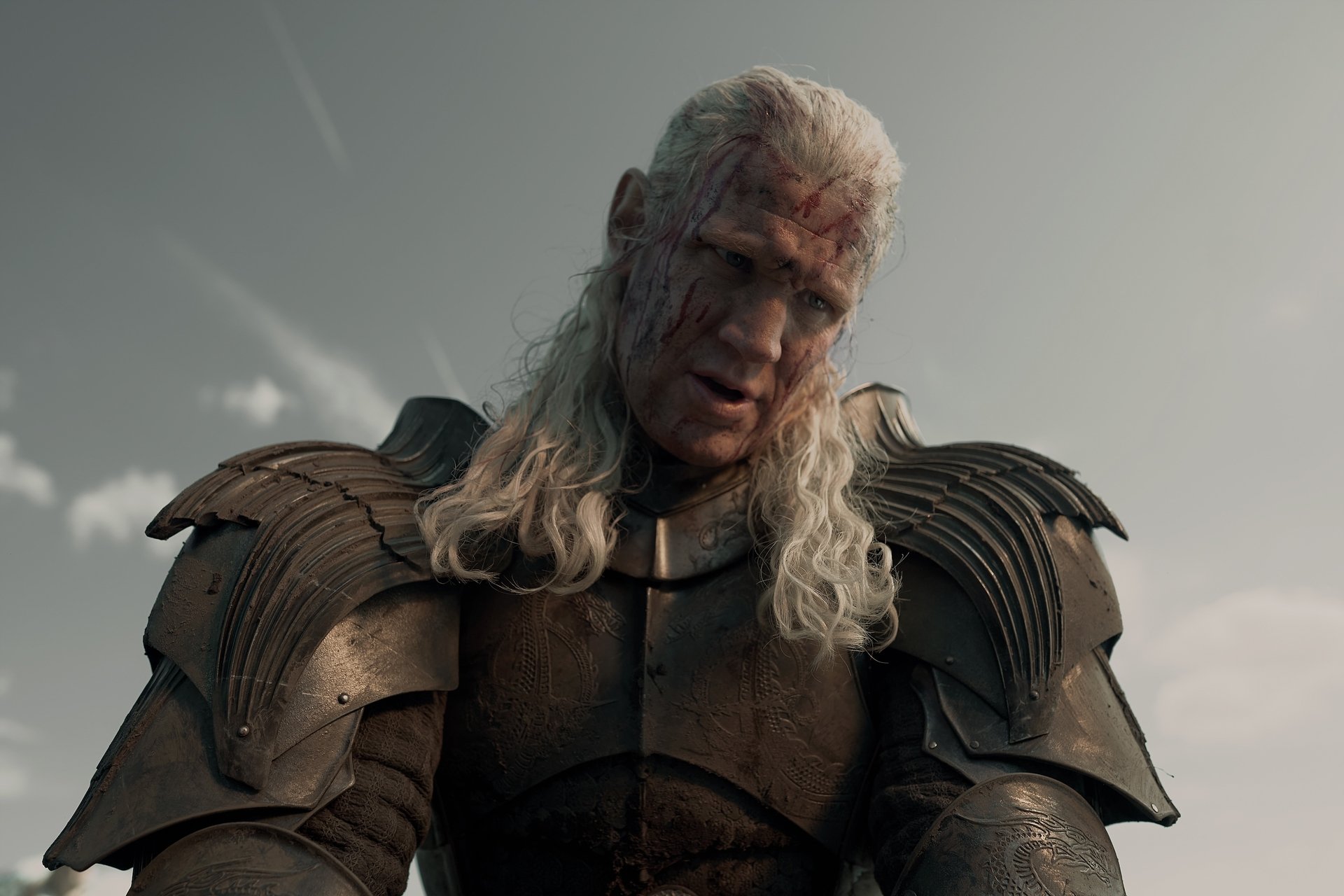
The season begins with Westeros on the edge of open war. Rhaenyra Targaryen, played by Emma D’Arcy, is more determined than ever to claim the Iron Throne, backed by Daemon, Corlys Velaryon’s naval power and the new dragonriders who shifted the balance of power at the end of Season 2. Alicent Hightower, played by Olivia Cooke, remains caught between self-preservation, maternal fear and the consequences of political choices she can no longer fully control. Her sons, Aegon and Aemond, continue to represent two different forms of instability: one physically ruined and resentful, the other increasingly monstrous and empowered by the biggest weapon in the realm. That combustible setup gives the season a more immediate sense of direction than Season 2 had, even if the show still cannot resist scattering attention across half of Westeros.
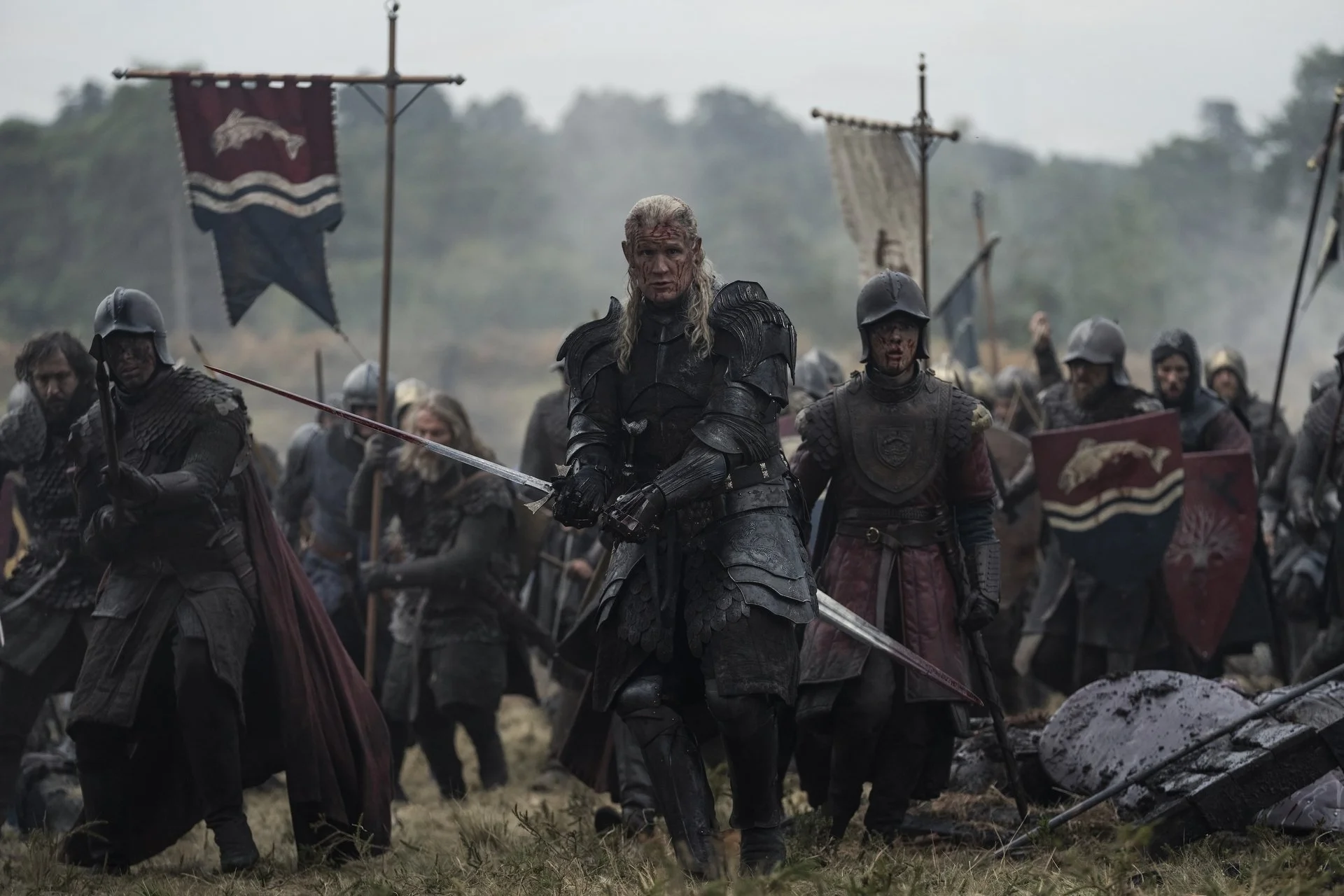
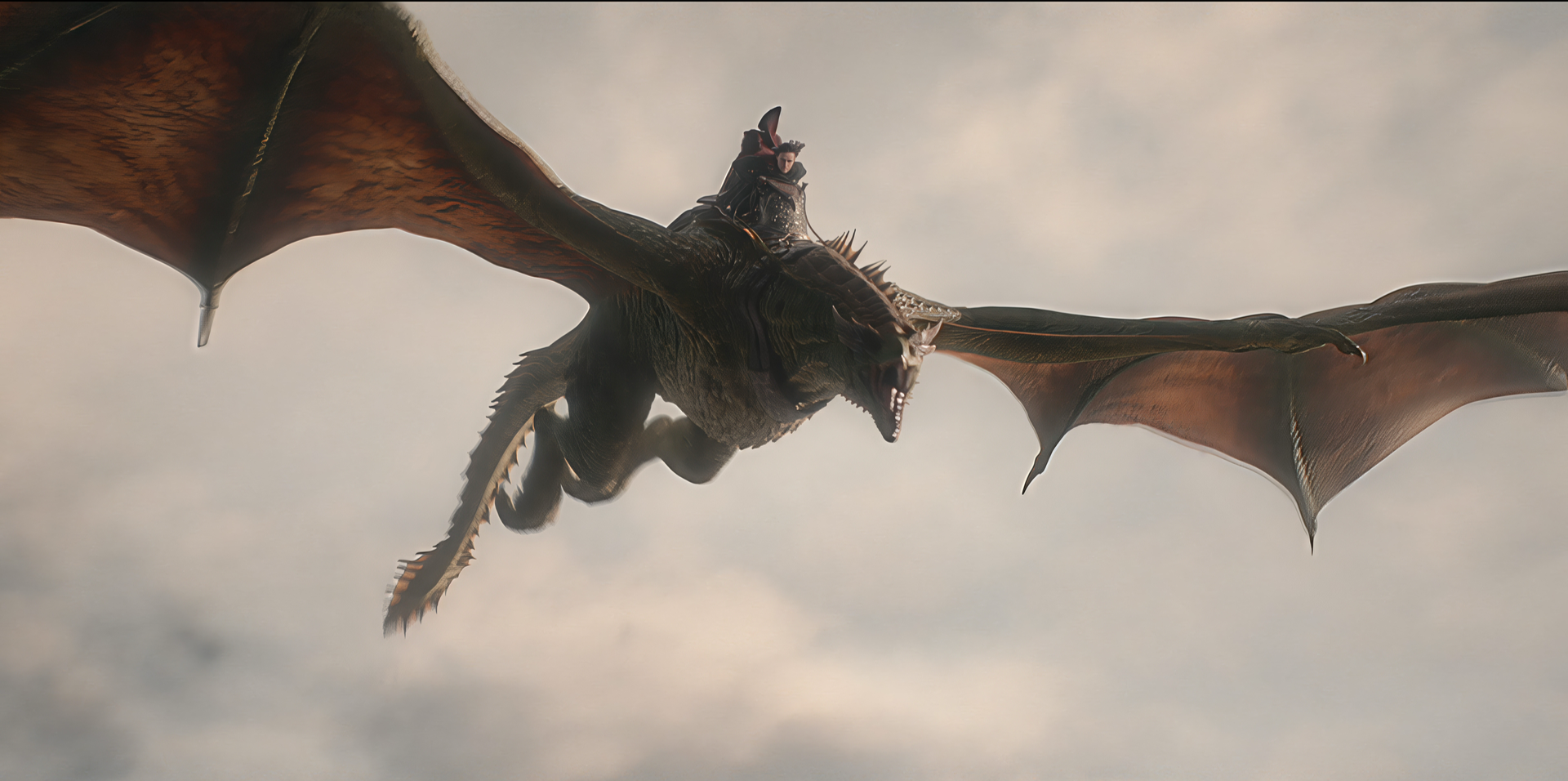
The opening episodes lean heavily into spectacle, including a major naval battle that gives the show exactly the kind of dragon-heavy, blood-soaked set piece many fans have been waiting for. It is massive, chaotic and undeniably impressive in the way only HBO’s most expensive fantasy productions can be. Yet it also reveals one of the show’s recurring weaknesses. When everything is rendered at such a digital, apocalyptic scale, the human stakes can start to feel strangely distant. ‘Game of Thrones’ was at its best when violence had consequence because viewers understood precisely who was trapped inside it. ‘House of the Dragon’ sometimes assumes that size alone will create meaning. Season 3 is better when it remembers that war is more interesting as a pressure system than as a screensaver of fire.
HBO MAX
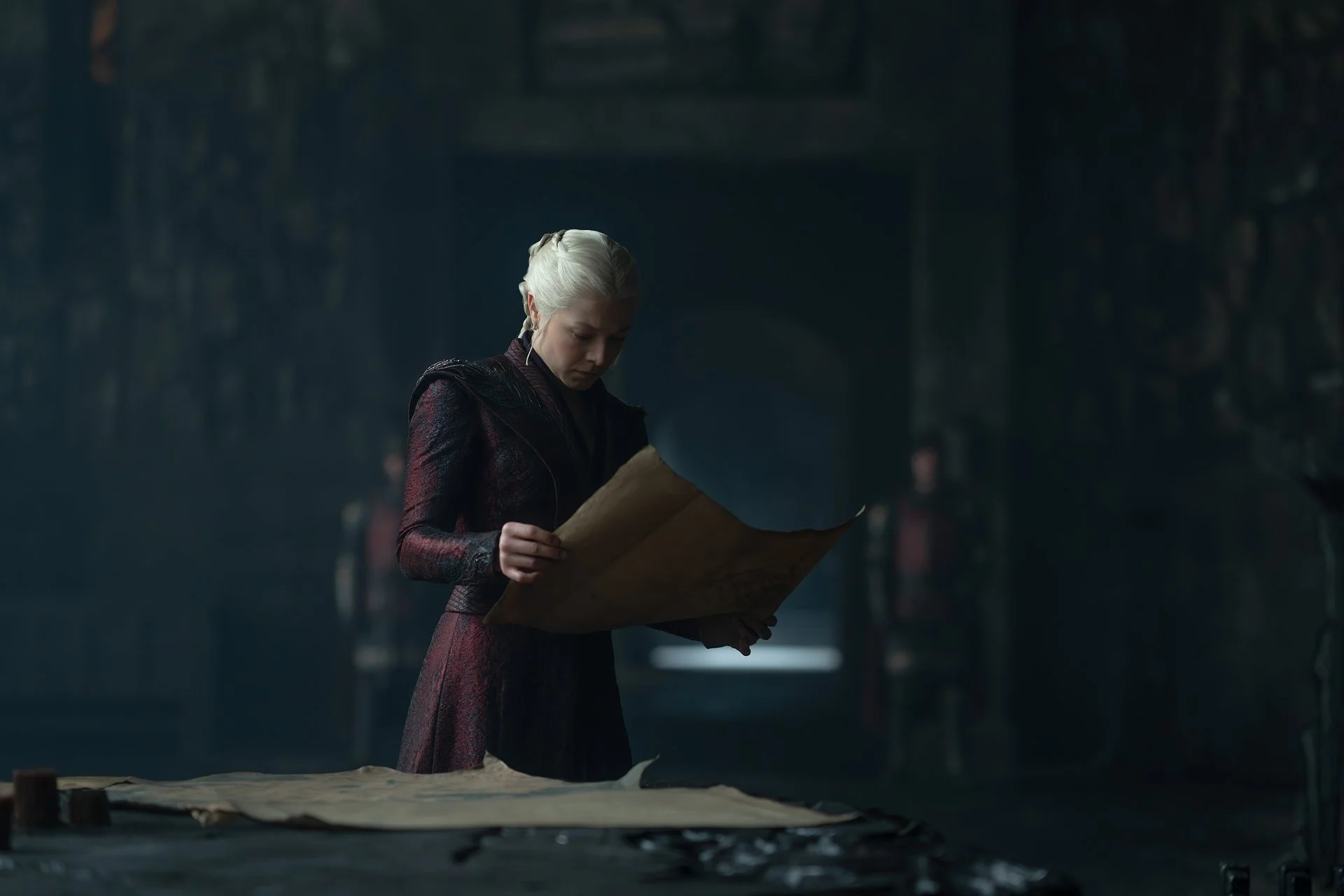
That is why the third episode stands out so strongly. Without spoiling the specific circumstances, the hour shifts the season into more intimate and unexpectedly comic territory, allowing the show to examine power not only as birthright or battlefield strategy, but as daily governance. Rhaenyra has spent much of the series insisting that the throne belongs to her, but Season 3 begins to ask whether she has any real idea what ruling would require. That question gives D’Arcy their best material yet. Their Rhaenyra has always been defined by grief, entitlement, restraint and wounded fury, but here the performance becomes more elastic. There is frustration, absurdity, dry humor and a flicker of panic in watching a claimant to absolute power discover that ruling is not the same as being right.

Those episodes also bring ‘House of the Dragon’ closer to the spirit of what made the strongest corners of this franchise work in the first place. The best Westeros stories are rarely only about who gets the crown. They are about what power does to everyone forced to live under it. Season 3 becomes far more compelling when it widens its focus from royal grievance to the broken institutions beneath the throne. Budgets collapse. Bureaucracies fail. Public order becomes harder to maintain. Speech, faith, law and survival all become tools in a larger struggle among elites who speak constantly about destiny while ordinary people pay the cost of their ambition. That political texture gives the season a resonance the show has not always managed to find.
HBO MAX
Emma D’Arcy is the clear standout of the season’s first half. Rhaenyra has often been written as a symbol before a person, a figure onto whom history, prophecy, gender and grievance are projected. This season finally lets D’Arcy complicate her. The performance becomes more brittle, more unpredictable and more revealing as Rhaenyra inches closer to the reality of the power she has demanded. Matt Smith remains wonderfully slippery as Daemon, continuing to play him as a man whose theatrical arrogance conceals both genuine danger and emotional immaturity. Olivia Cooke’s Alicent is also stronger when the show allows her to be more than a regretful mother or a political casualty, and Season 3 gives her moments of calculation that feel sharper than the moral handwringing that sometimes trapped her last season.
POPULAR ON THE CINEMA GROUP
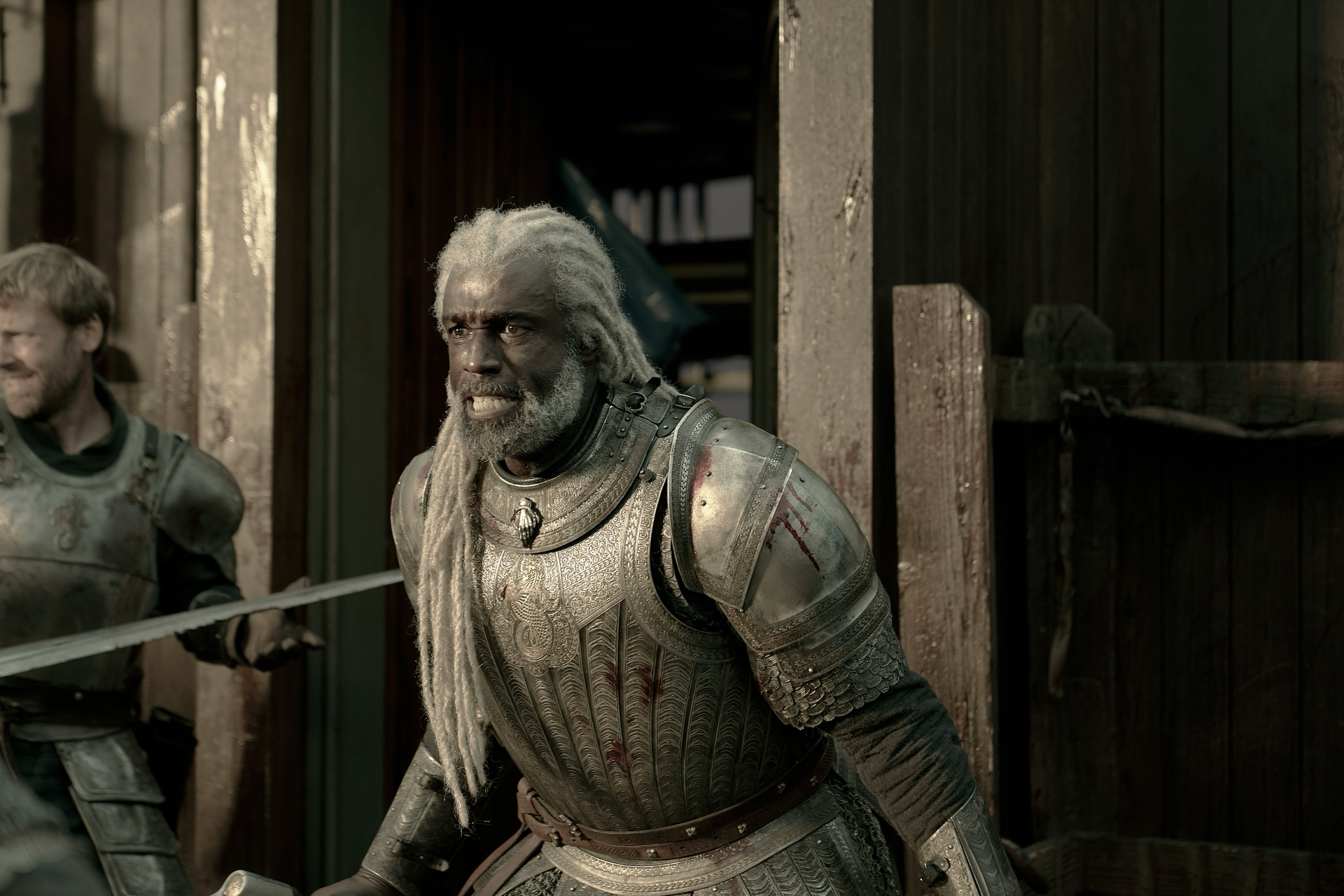
The supporting cast remains uneven largely because there is simply too much show to distribute among them. Steve Toussaint gives Corlys Velaryon the gravitas of a man who understands both grief and strategy, while Sonoya Mizuno’s Mysaria continues to function as one of the series’ more intriguing political operators, even when the character’s whispery affectations threaten to overwhelm the performance. Gayle Rankin’s Alys Rivers remains one of the more unsettling presences in the series, capable of shifting the energy of a scene simply by appearing in it. Phoebe Campbell’s Rhaena benefits from increased attention after her encounter with a wild dragon, suggesting a more haunted and emotionally textured path forward. Among the newcomers, James Norton makes the strongest impression as Ormund Hightower, giving the season another player whose motives are not immediately reducible to family loyalty or obvious ambition.
Still, the show’s greatest obstacle remains its structure. Eight episodes is a difficult container for a story this sprawling, especially when the series insists on treating nearly every corner of the conflict as essential. There are stretches where characters appear just long enough to remind viewers of their strategic position before the story moves on. Deaths occur, sometimes major ones, but the emotional effect is inconsistent because ‘House of the Dragon’ has not always done the hard work of making its casualties feel fully lived-in. The original ‘Game of Thrones’ became infamous for killing characters, but the deaths mattered because the characters had been allowed to occupy space, contradiction and intimacy. This prequel too often treats death as a function of plot machinery.
HBO MAX
And yet, Season 3 represents real progress. It is still not as clean, contained or emotionally focused as ‘A Knight of the Seven Kingdoms,’ whose simplicity only made ‘House of the Dragon’ seem more excessive by comparison. But not every Westeros story needs to be small, and this season begins to make a better argument for the value of scale. The dragons matter more when they are treated as institutions, weapons, symbols and liabilities rather than merely visual attractions. The battles matter more when they expose the incompetence of rulers rather than simply proving who has the bigger fire-breathing creature. The throne matters more when the show remembers that ruling is not the prize at the end of the story. It is the disaster waiting after victory.
Through four episodes, ‘House of the Dragon’ Season 3 is not a full reinvention. It is still messy, crowded and occasionally too enamored with its own spectacle. But it is also funnier, smarter and more politically alive than the show has been before. The third episode in particular suggests a version of the series that could become genuinely great if it trusted character and consequence as much as dragons and dynastic mythology. Whether that shift is a permanent evolution or merely a promising detour remains to be seen.
For now, the fire is finally spreading in the right direction.
RATING: ★★★★☆
That’s a Wrap
|
House of the Dragon S3
|
That’s a Wrap | House of the Dragon S3 |
“‘House of the Dragon’ Season 3 is still crowded and uneven, but its strongest episodes finally give HBO’s prequel the political bite, character tension and narrative fire it has been chasing from the start.”
CREDITS
Airdate: Sunday, June 21 | HBO
Cast: Emma D’Arcy, Matt Smith, Olivia Cooke, Steve Toussaint, Ewan Mitchell, Tom Glynn-Carney, Sonoya Mizuno, Gayle Rankin, Phoebe Campbell, James Norton
Creators: Ryan Condal and George R.R. Martin
Streaming on: HBO and Max
Rating: TV-MA
Watch The Trailer Below:

| FEATURES | INTERVIEWS | REVIEWS | The Catalogue | TRENDING | TRAILERS | VIDEOS |





![WERWULF - Official Trailer [HD] - Only In Theaters Christmas](https://i.ytimg.com/vi/cmjpadVj-Vk/hqdefault.jpg)