‘Pressure’ Review: Andrew Scott and Brendan Fraser Deliver a Tense, Superb D-Day Drama Anchored by Precision, Performance, and Escalating Historical Stakes
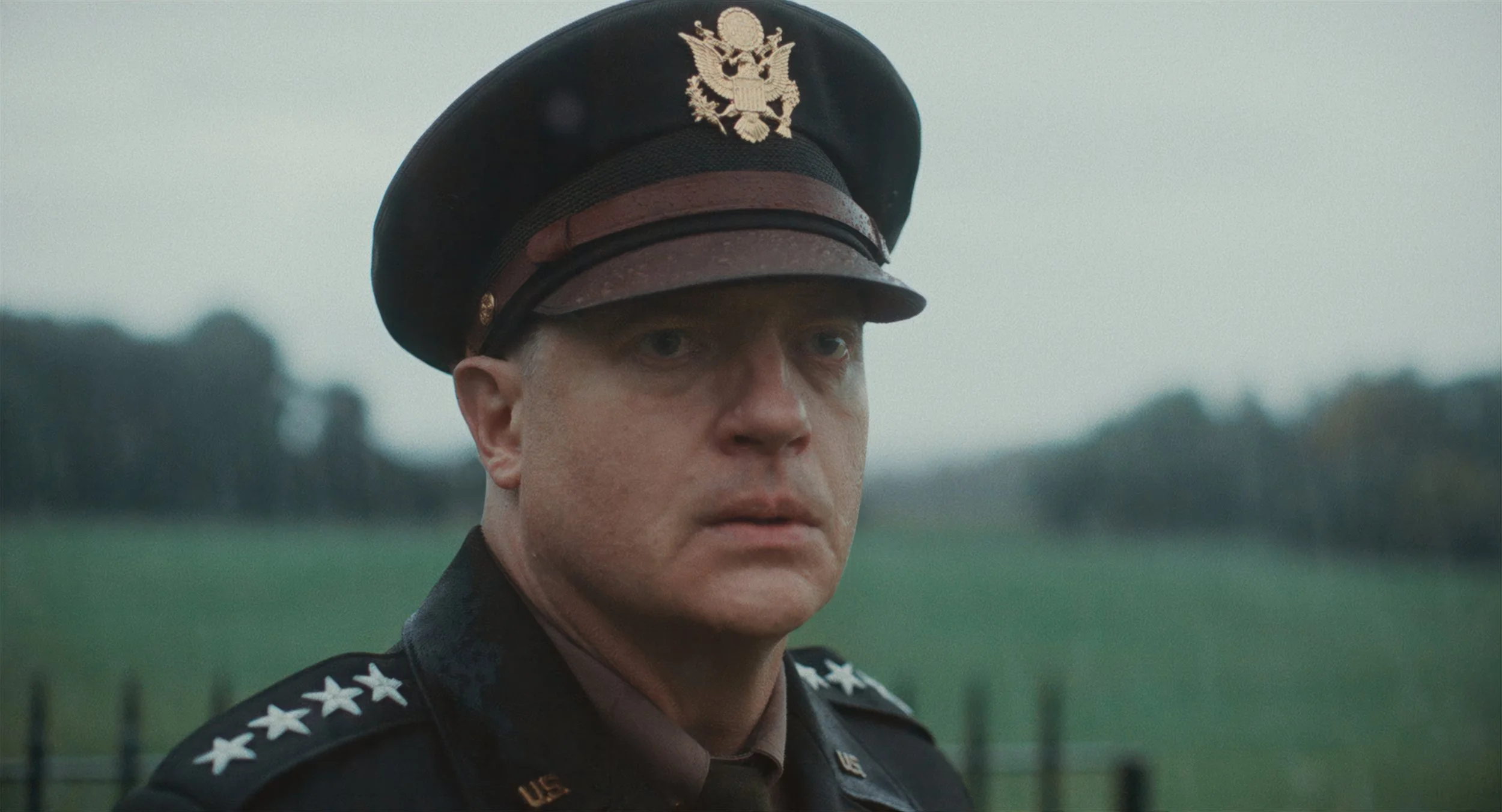
Brendan Fraser stars as "Dwight D. Eisenhower" in director Anthony Maras’ PRESSURE, a Focus Features release.
Andrew Scott delivers a career-level performance opposite Brendan Fraser in Anthony Maras’ tightly controlled, nerve-shredding WWII drama about the forecast that shaped D-Day.
There’s a tendency with World War II cinema to assume the terrain has already been fully mapped — that every decisive battle, political calculation, and human sacrifice has been dramatized from every possible angle. Pressure proves otherwise by zeroing in on a chapter of the D-Day preparations that feels both astonishingly specific and dramatically rich: the meteorological battle that helped determine the fate of the Allied invasion of Europe.
Anthony Maras builds the film around an unusual kind of war story — one fought not with weapons or strategy maps alone, but with data, prediction, and competing interpretations of the natural world itself. Set in the 72 hours leading up to June 6, 1944, the film transforms forecasting into a matter of life and death, where every decimal point carries the weight of thousands of soldiers.
At the center of this pressure cooker is Dr. James Stagg (Andrew Scott), a Scottish meteorologist brought into the Allied command structure to provide critical weather analysis for Operation Overlord. From the moment he arrives at Southwick House, he is positioned as both essential and inconvenient — a scientist whose findings could alter the most consequential military decision of the 20th century, but whose certainty immediately destabilizes an already fragile chain of command.

(L to R) Brendan Fraser as "General Dwight D. Eisenhower", Andrew Scott as "Captain James Stagg" and Kerry Condon as "Captain Kay Summersby" in director Anthony Maras’ PRESSURE, a Focus Features release. Credit: Alex Bailey/Focus Features/STUDIOCANAL
Opposing him, at least in methodology, is Irving Krick (Chris Messina), a meteorologist whose forecasting approach relies on historical pattern analysis and long-range projection. Krick’s confidence in his models has already earned the trust of General Eisenhower (Brendan Fraser), whose command of the invasion depends heavily on stable consensus among his advisors. The conflict between Stagg and Krick is not simply professional disagreement — it becomes a philosophical divide between empirical caution and predictive certainty, with the fate of the invasion hanging in the balance.
Maras stages this intellectual clash with surprising intensity. What might have been an overly procedural drama instead becomes a sustained exercise in controlled escalation, where dialogue carries as much tension as any battlefield sequence. The film understands that indecision at this level of command is its own form of violence, one that reverberates outward far beyond the walls of the planning room.
SPOILER WARNING: The following section discusses key plot developments from the film’s final act.

Credit: Alex Bailey/Focus Features/STUDIOCANAL
As Eisenhower faces mounting uncertainty about the planned June 5 invasion date, Stagg’s warnings become increasingly urgent. His data suggests severe weather conditions that would compromise landing operations and endanger thousands of lives. Yet postponement is not a simple option — secrecy, logistics, and morale all become competing pressures within an already unstable decision-making framework.
The film’s most compelling stretch emerges as Eisenhower is forced to reconcile these conflicting expert opinions while also carrying the psychological weight of previous military failures, including the devastating results of Exercise Tiger. Fraser plays Eisenhower not as a distant icon but as a man visibly strained by responsibility, constantly absorbing and processing the emotional consequences of every possible outcome.
POPULAR ON THE CINEMA GROUP
Andrew Scott’s performance as Stagg is the film’s defining achievement. He refuses conventional heroism, instead constructing a character defined by restraint, precision, and internalized urgency. Even in moments of extreme pressure, Scott resists theatricality; his power lies in what is withheld as much as what is expressed. A sequence in which Stagg receives critical personal news while maintaining professional composure becomes one of the most quietly devastating moments in the film.

(L to R) Brendan Fraser as "Dwight D. Eisenhower" and Andrew Scott as "James Stagg" in director Anthony Maras’ PRESSURE, a Focus Features release.
Brendan Fraser, meanwhile, brings a grounded humanity to Eisenhower that occasionally bends toward emotional openness rather than rigid command authority. While this interpretation may deviate from historical perception, it adds dramatic texture to a figure whose burden is often treated as purely strategic. Fraser’s performance ultimately functions less as imitation and more as emotional translation — a man trying to hold together an operation that could collapse under its own uncertainty.
Kerry Condon’s Kay Summersby provides the film with its most consistent emotional counterbalance, offering stability within a narrative defined by competing pressures. Chris Messina, as Krick, effectively embodies intellectual certainty pushed to its breaking point, his confidence gradually eroding under the weight of contradictory evidence.

Damian Lewis stars as "Marshall Bernard Montgomery" in director Anthony Maras’ PRESSURE, a Focus Features release. Credit: Courtesy of Focus Features/STUDIOCANAL
Damian Lewis, as Montgomery, injects volatility into the command dynamic, underscoring the multinational tensions embedded within Allied coordination. His performance amplifies the film’s central theme: that consensus during crisis is never clean, and rarely calm.
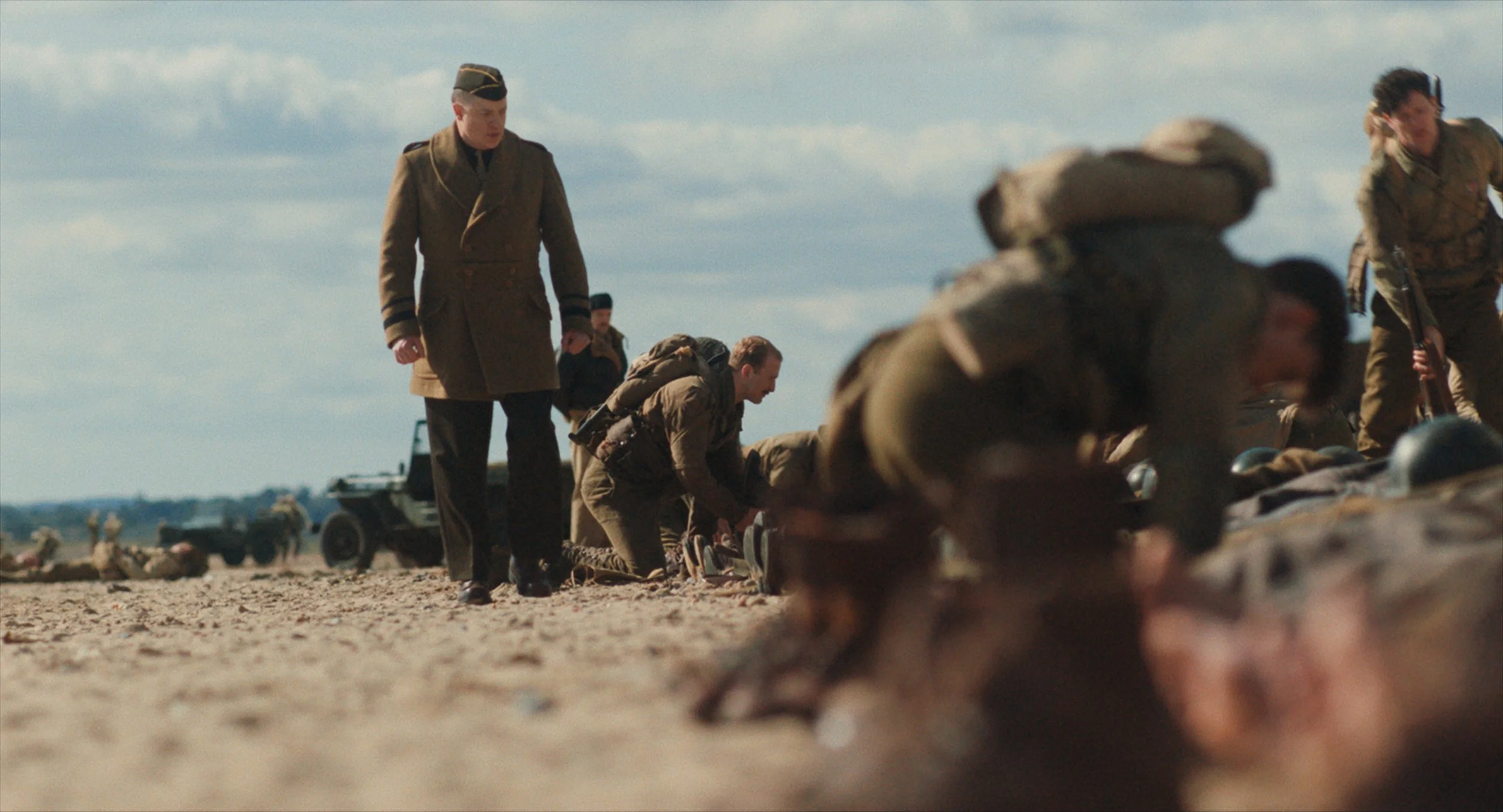
What makes Pressure especially effective is how seamlessly it translates its stage origins into cinematic form. Adapted from David Haig’s play, the film could easily have remained static or overly dialogue-bound, yet Maras expands its scope through controlled visual pacing, restrained use of archival footage, and a strong sense of spatial geography. The result is a film that feels intimate without ever becoming confined.
At just under two hours, the film maintains a remarkably tight rhythm. There are no extraneous subplots, no unnecessary digressions — only the gradual tightening of a narrative vice around a single decision. This discipline enhances the tension rather than limiting it, reinforcing the idea that history often turns not on spectacle, but on quiet, concentrated moments of judgment.
Rating: ★★★★★
THAT’S A WRAP
|
Pressure
|
THAT’S A WRAP | Pressure |
“Pressure is a sharply constructed historical drama that transforms a little-known D-Day decision into a gripping, performance-driven thriller. Anchored by a superb, deeply controlled performance from Andrew Scott and strong supporting work from Brendan Fraser, Kerry Condon, and Chris Messina, the film succeeds by treating scientific forecasting as high-stakes drama. With its precision storytelling and sustained tension, it stands as one of the most compelling historical films of the year.”
Watch The Trailer Below:
CREDITS
Release date: Friday, May 29
Cast: Andrew Scott, Brendan Fraser, Kerry Condon, Chris Messina, Damian Lewis
Director: Anthony Maras
Screenwriters: David Haig, Anthony Maras
Rated:PG-13,
Run Time: 1 hour 40 minutes

| FEATURES | INTERVIEWS | REVIEWS | The Catalogue | TRENDING | TRAILERS | VIDEOS |










![WERWULF - Official Trailer [HD] - Only In Theaters Christmas](https://i.ytimg.com/vi/cmjpadVj-Vk/hqdefault.jpg)