‘Half Man’ Episode 4 Proves Richard Gadd Is Delivering One of the Best Shows Nobody Is Watching as Shock Ending Changes Everything
Photograph by Anne Binckebanck/HBO
Half Man continues its rise as one of the standout series of the year, with Episode 4 pushing Richard Gadd’s HBO Max drama into its darkest and most defining territory yet through a shocking late twist that reshapes everything ahead of the final episodes.
Episode 4 of Half Man cements the series as one of the year’s best through a devastating hospital reconciliation between Ruben and Niall, where 14 years of prison, fear, and emotional inversion finally collapse into honesty — only to be followed by a shocking final twist that redefines everything.
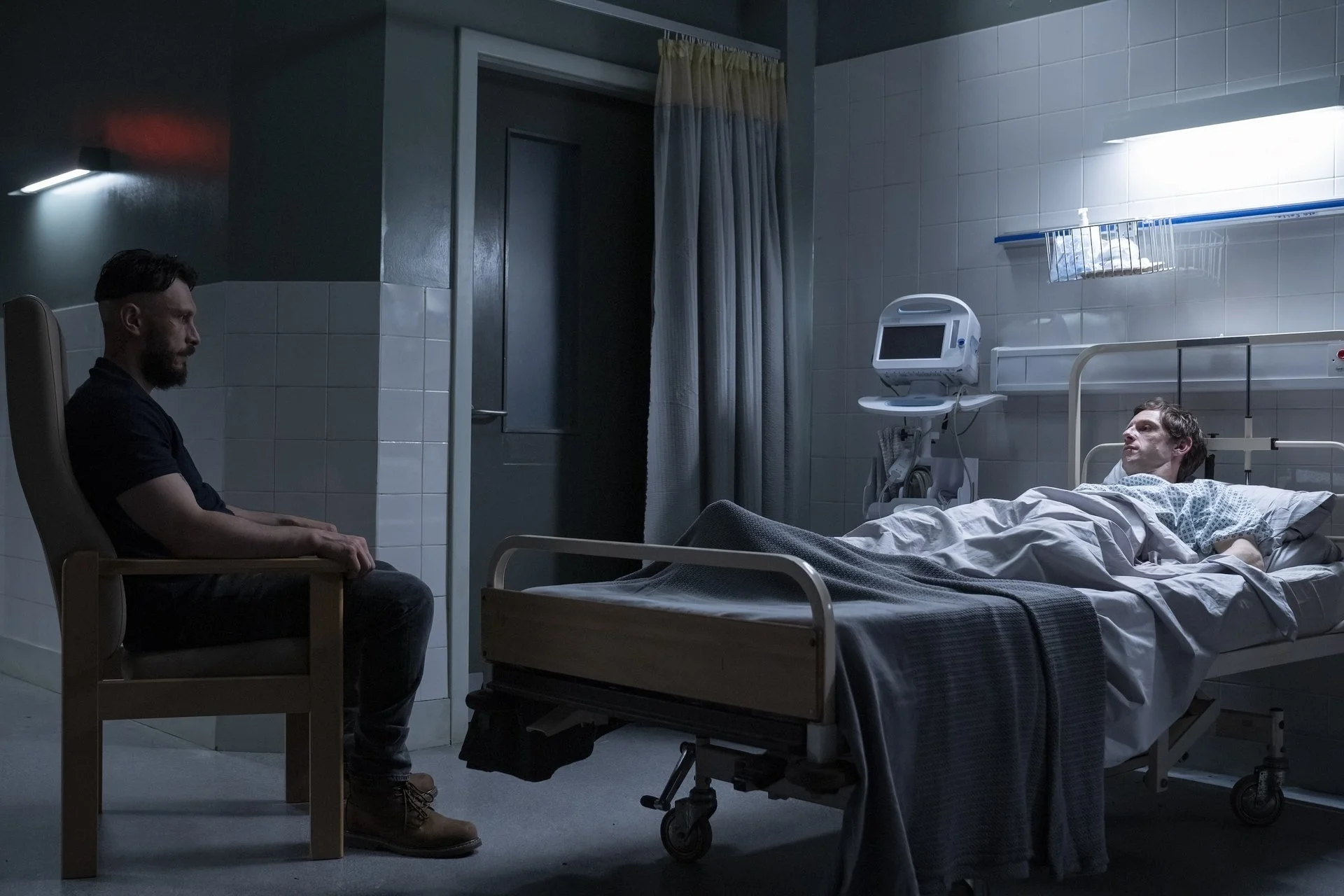
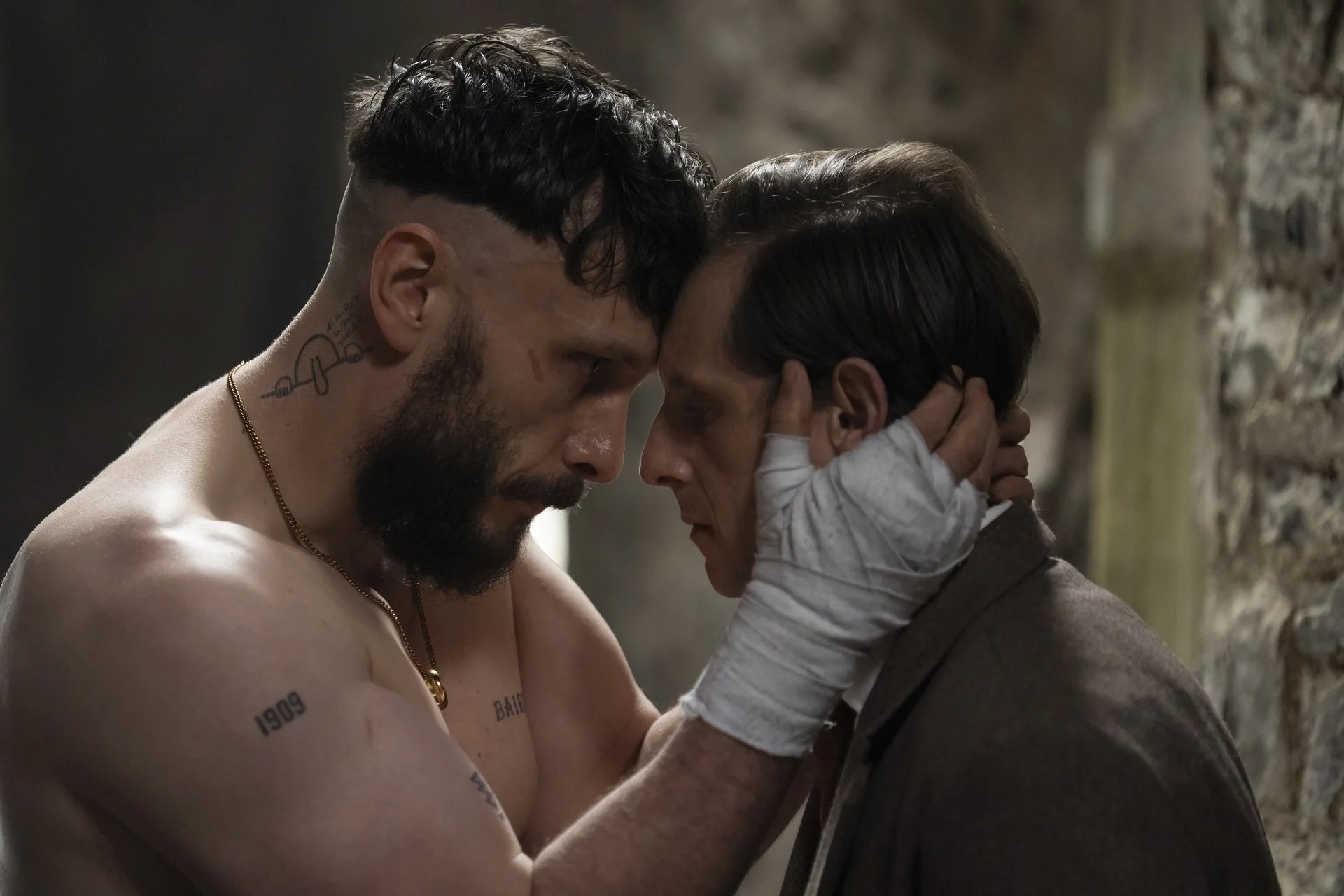
Violence is a constant throughout Half Man, but what makes the series so effective is that it rarely announces itself. It lingers instead — in pauses, in expressions, in the unbearable tension between Ruben (Richard Gadd) and Niall (Jamie Bell) whenever they are in the same space. Episode 4 sharpens that tension into something almost unsustainable, but the real emotional weight of the hour is not found in violence at all. It is found in a hospital room.
Before anything else, the episode strips everything back to its most vulnerable point: Ruben and Niall alone, forced into a long, uninterrupted conversation that becomes the emotional core of the series so far. There is no immediate aggression, no external chaos, no narrative distraction — just two men confronting years of damage, misunderstanding, and unresolved emotional debt.
What unfolds in that hospital sequence is one of the most striking stretches of television in the series to date.
Photograph by Anne Binckebanck/HBO
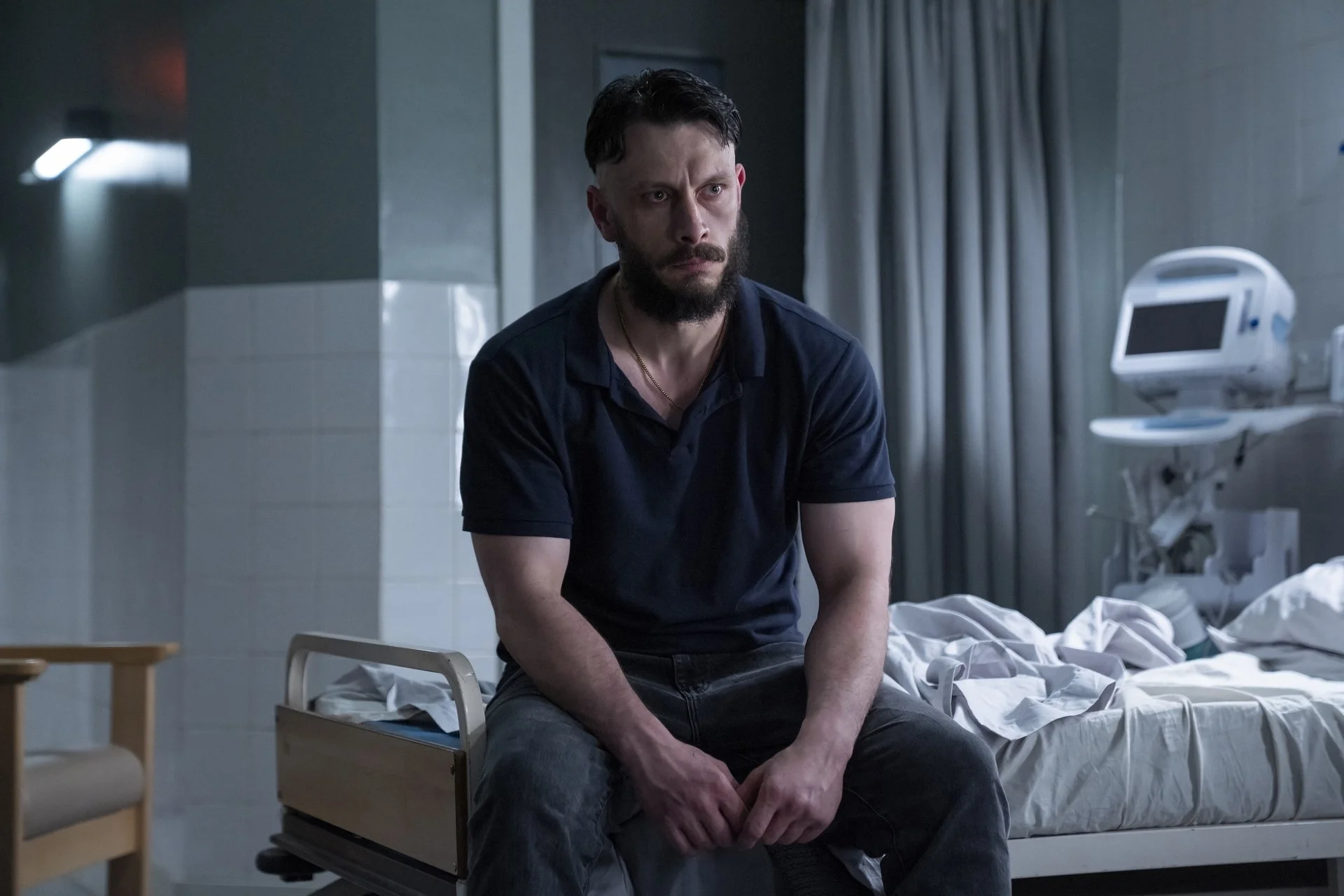
Ruben has been in prison for 14 years, serving time for a crime that Niall has always — directly or indirectly — carried emotional responsibility for. In that time, both brothers have effectively lived inside inverted versions of each other’s lives. Ruben has come out of incarceration transformed: educated, composed, and structured, someone who spent years reading, reflecting, and rebuilding himself into what looks like a stable life on the outside. Niall, meanwhile, the once-promising Oxford graduate, has fallen into an entirely different kind of imprisonment — living in his mother’s house, unable to maintain financial independence, cycling through therapy and instability while quietly living in fear of what Ruben might do upon release.
That reversal sits underneath every word in the hospital scene.
The sequence unfolds as a long, unbroken confrontation that becomes less about accusation and more about excavation. For the first time in the series, Ruben and Niall are forced into a space where neither of them can perform strength, avoidance, or dominance in the way they normally do. What emerges is not resolution in a traditional sense, but something closer to emotional exhaustion — a stripping away of everything they have used to survive each other.
Photograph by Anne Binckebanck/HBO
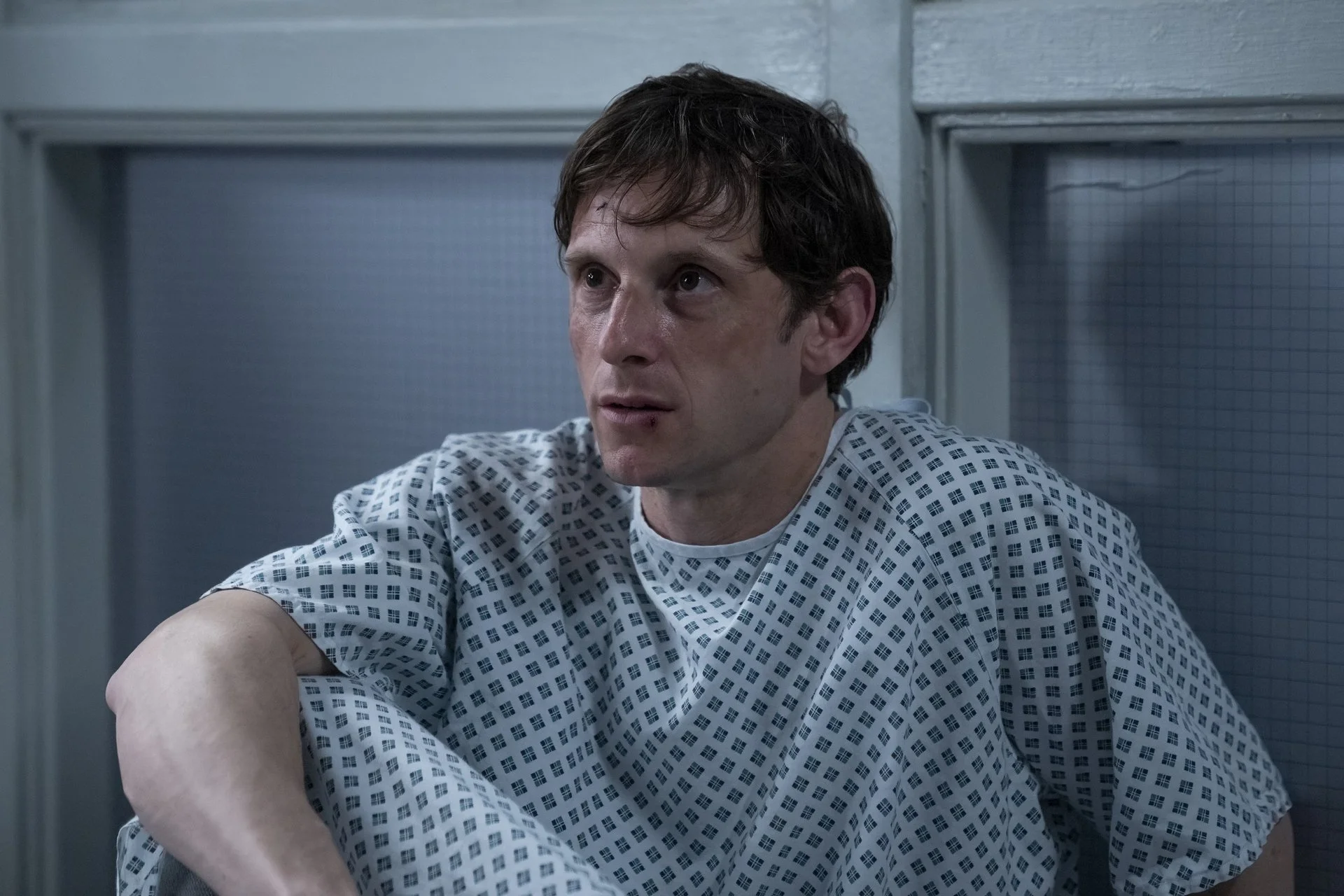
Both brothers finally speak with a level of honesty that has been withheld for nearly 20 years of shared history. What makes the scene so powerful is not that it resolves their relationship, but that it exposes the full architecture of it. The manipulation, the dependency, the resentment, the guilt — all of it is acknowledged without being neatly repaired.
There is a strange inversion at the heart of the scene. Ruben, hardened by prison but intellectually and emotionally sharpened by it, carries himself with a controlled clarity that contrasts sharply with Niall’s fractured, anxious instability. Niall, despite his academic background and early promise, feels emotionally stranded — unable to reconcile who he was supposed to become with who he has actually become in Ruben’s absence.
The writing here is deliberately restrained, letting silence do as much work as dialogue. Conversations stretch longer than expected, not because they are stalled, but because neither man is capable of fully articulating what they mean. Every sentence feels like it is carrying the weight of everything that came before it. There is frustration, but also something rarer in the series: recognition.
Photograph by Anne Binckebanck/HBO
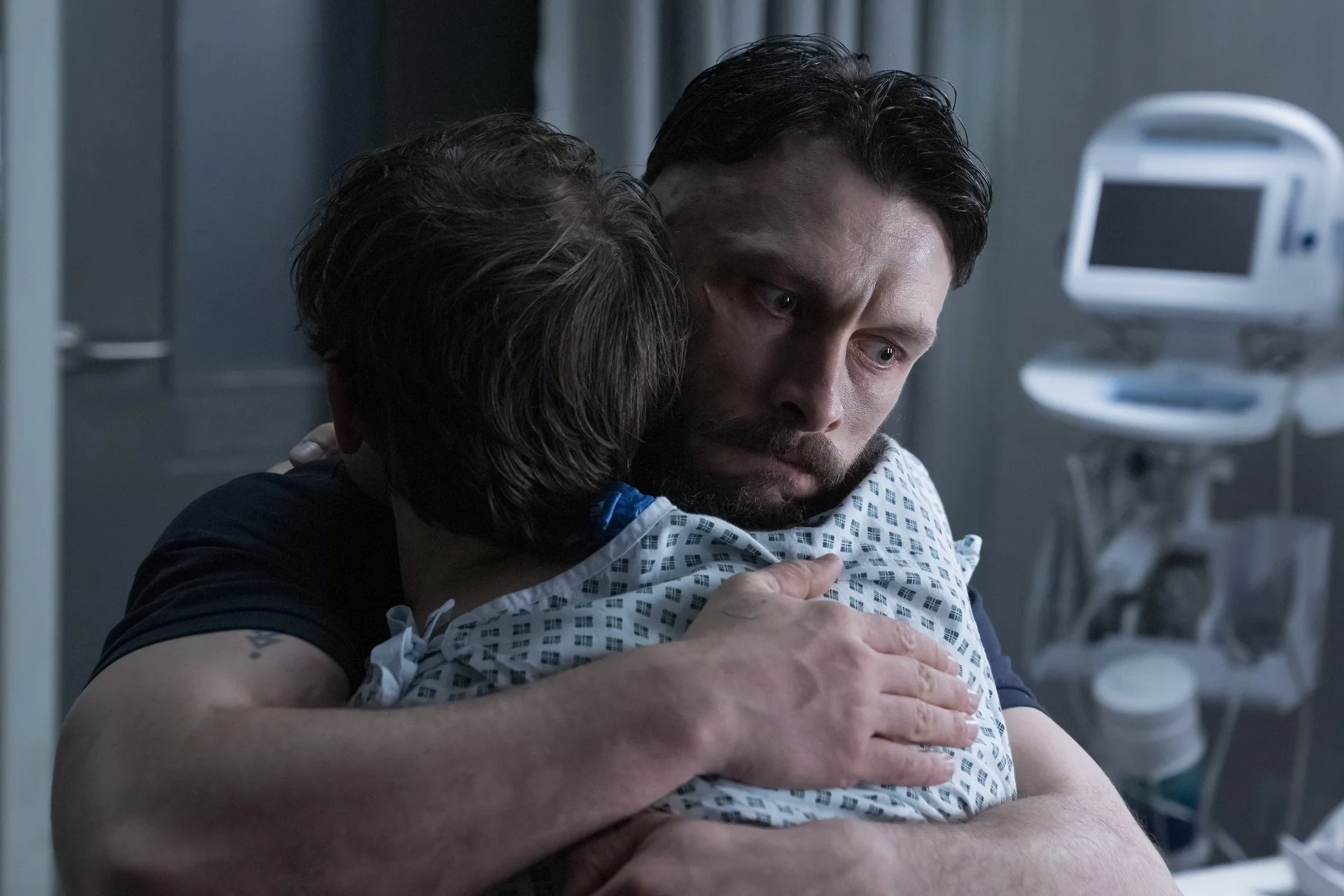
Richard Gadd’s performance as Ruben in this scene is particularly controlled. He resists the urge to push emotion outward, instead letting it sit just beneath the surface. Jamie Bell’s Niall meets that energy with equal restraint, creating a dynamic that feels less like confrontation and more like two people finally exhausting their ability to avoid each other emotionally. It is not reconciliation in a traditional sense, but it is the closest the series has come to understanding.
And that is what makes what follows so devastating.
SPOILER WARNING: MAJOR PLOT DETAILS FROM THE END OF EPISODE 4 FOLLOW BELOW.
After the emotional clarity of the hospital scene, the episode cuts back to the wedding timeline, where guests gather outside a barn already surrounded by police presence and unease. What has been building beneath the surface finally breaks into view, not through explanation, but through aftermath.
A body is eventually removed from the barn.
And in one of the most quietly devastating choices of the series so far, it is revealed that Ruben is the one being taken away.
The moment is not handled with spectacle. There is no extended reaction shot, no dramatic musical cue, no attempt to guide the audience toward a single emotional response. Instead, Half Man allows the image to exist in silence, letting it overwrite everything that came before it — including the hospital scene that briefly suggested something else might be possible.
That contrast is what gives Episode 4 its force. The series places emotional reconciliation and irreversible consequence back-to-back, not to contradict itself, but to show how fragile understanding can be when set against the weight of everything that has not been resolved.
POPULAR ON THE CINEMA GROUP
In hindsight, the hospital scene takes on a different meaning. It is no longer just a moment of connection, but a final articulation — two men saying what they are capable of saying before the story moves beyond their control entirely. The tragedy is not that they fail to fix things. It is that even their most honest conversation is still not enough to change what is already in motion.
Richard Gadd’s authorship across Half Man becomes even more pronounced in this structure. As writer and performer, he constructs a narrative that refuses clean emotional release. Every moment of clarity is temporary, every breakthrough sits beside instability, and every attempt at understanding is positioned within a larger system that does not allow it to hold.
Photograph by Anne Binckebanck/HBO
Jamie Bell’s performance complements that approach by grounding Niall in contradiction. He is neither fully victim nor antagonist, but something more complicated — a character shaped by proximity, history, and damage that cannot be neatly assigned or resolved. The series continues to resist simplifying either man, even at the point of maximum narrative consequence.
With two episodes remaining, Episode 4 does not function as a conclusion or midpoint in any traditional sense. It functions as a rupture — the point at which the series stops asking what these characters might become and begins confronting what has already been lost between them.
What makes Half Man increasingly compelling is not just its willingness to escalate, but its commitment to emotional structure over narrative convenience. The hospital scene and the barn sequence exist in direct tension with each other, not as opposites, but as two parts of the same collapse.
And in that space between connection and consequence, Half Man quietly cements itself as one of the most assured and emotionally controlled series of the year.

| FEATURES | INTERVIEWS | REVIEWS | The Catalogue | TRENDING | TRAILERS | VIDEOS |








![WERWULF - Official Trailer [HD] - Only In Theaters Christmas](https://i.ytimg.com/vi/cmjpadVj-Vk/hqdefault.jpg)