‘The Devil Wears Prada 2’ Review: Meryl Streep, Anne Hathaway and Emily Blunt Return for a Glossy Sequel That Worships Fashion While Wrestling With Its Own Message
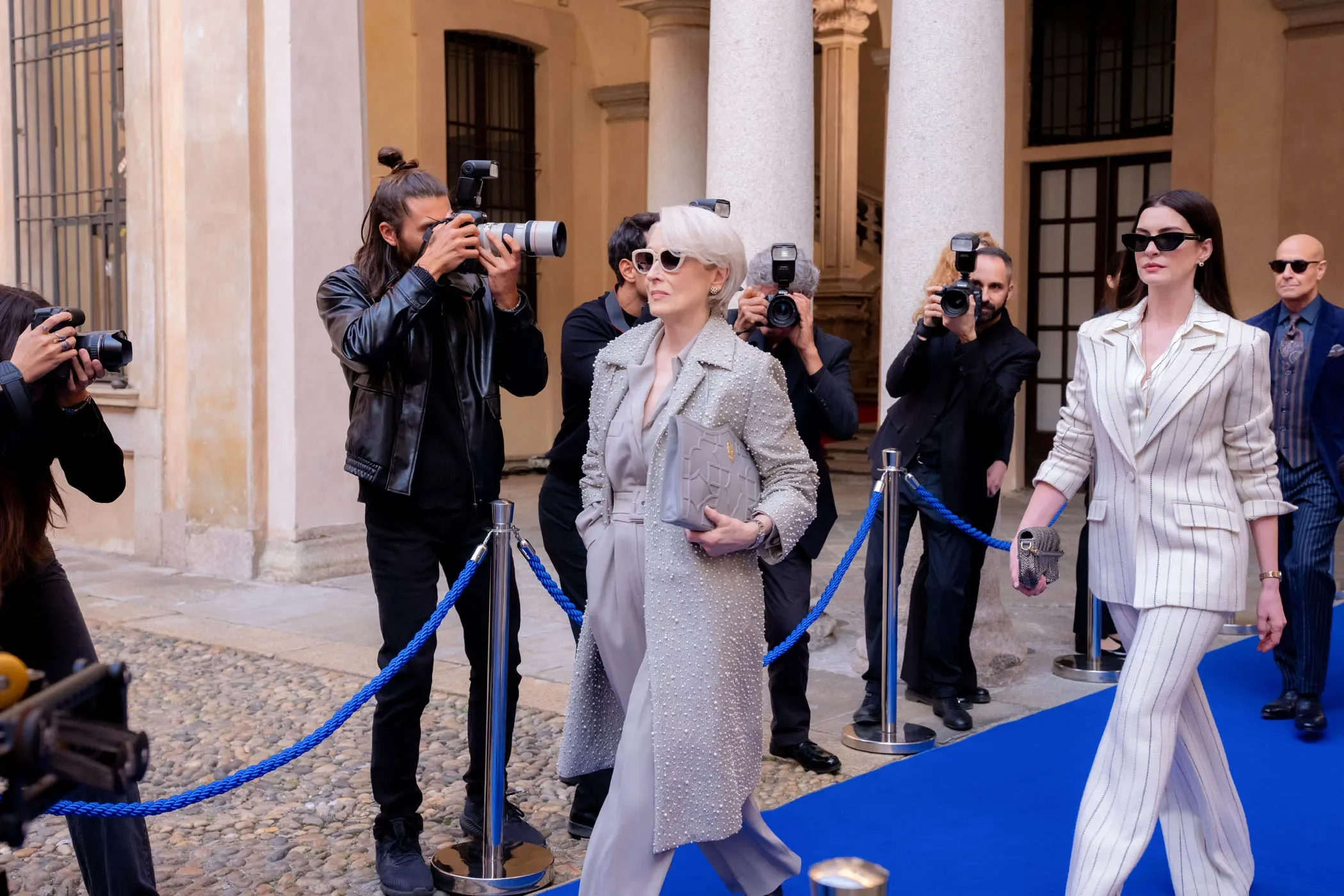
Anne Hathaway and Meryl Streep in 'The Devil Wears Prada 2.' COURTESY 20TH CENTURY STUDIOS
The long-awaited sequel to The Devil Wears Prada reunites Meryl Streep, Anne Hathaway, and Emily Blunt for a return to Runway that blends fashion spectacle, corporate satire, and media commentary — though its ambitions often outpace its execution.
The Devil Wears Prada 2 arrives with the confidence of a sequel that understands its own cultural gravity, even if it is less certain about how to evolve it. Two decades after the original became a defining intersection of fashion fantasy and workplace satire, David Frankel’s return to Runway is less a reinvention than a controlled reactivation of a known ecosystem. The result is a film that is polished, frequently entertaining, and structurally familiar to the point of predictability — but also more internally conflicted than it initially appears.
At its center, Meryl Streep’s Miranda Priestly remains an immovable cultural object. She is not simply a character at this point, but a shorthand for institutional authority filtered through aesthetic perfection. Streep’s performance is as controlled as ever, but what stands out this time is how little Miranda has been asked to evolve. Instead, she has been preserved. Every scene reinforces her myth rather than interrogating it, and the film seems aware that altering her too much would destabilize the entire franchise logic.
If Miranda represents preservation, Stanley Tucci’s Nigel Kipling represents something closer to erosion with dignity. Tucci is one of the sequel’s most important stabilizing forces, and arguably the character who most clearly understands what this world has become. Nigel is no longer simply the witty, stylish confidant of the original film; he now feels like someone who has outlasted several iterations of the industry he once helped define. There is a quiet weariness beneath his charm, a sense that he has learned to survive fashion’s constant reinvention without ever being fully convinced by it.
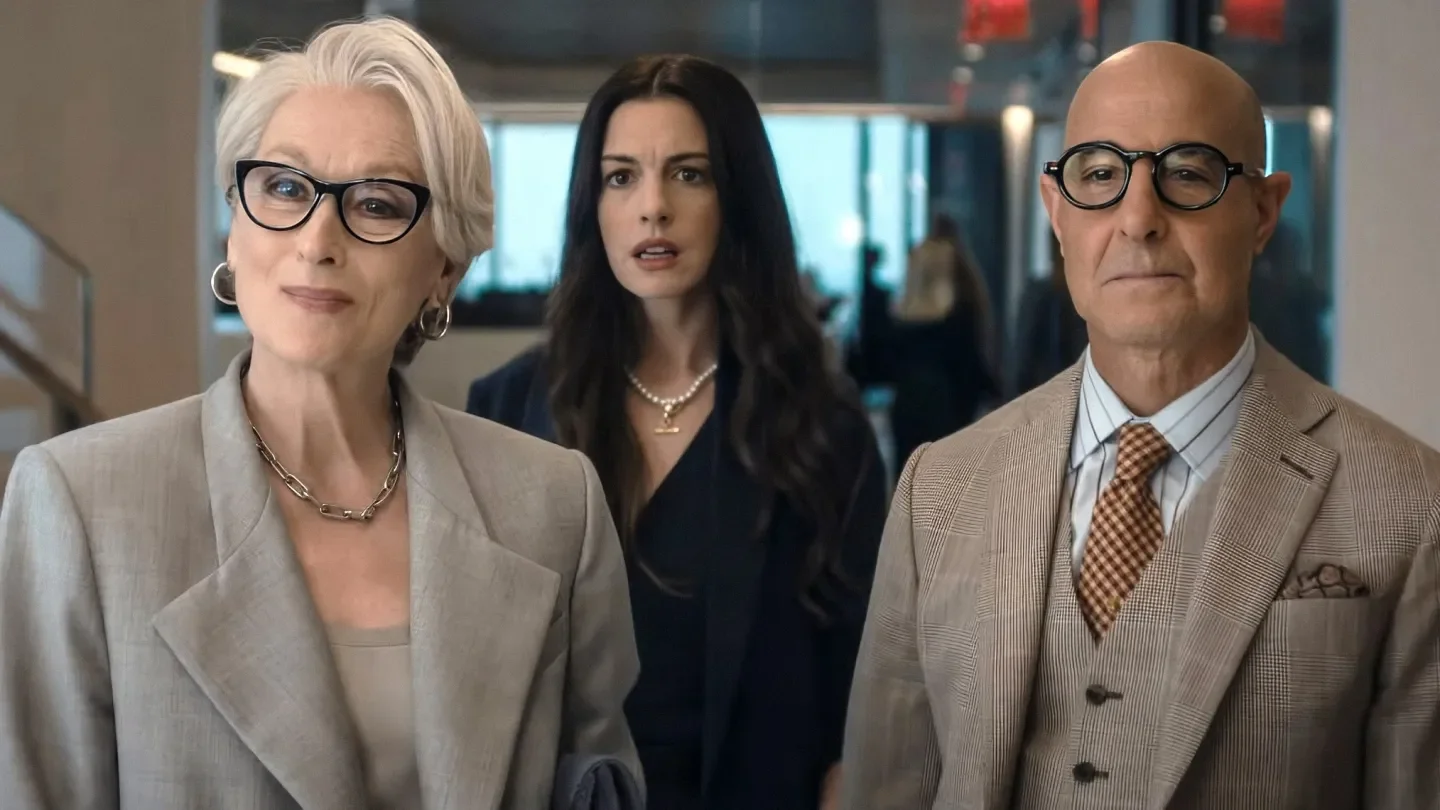
Meryl Streep, Anne Hathaway and Stanley Tucci in 'The Devil Wears Prada 2.' COURTESY 20TH CENTURY STUDIOS
Tucci’s presence recalibrates the film’s tone in a way few other elements manage. He is one of the only characters who consistently acknowledges the gap between fashion as spectacle and fashion as labor, between image and cost. His interactions with Andy Sachs carry an unspoken recognition that both of them are now embedded within a system they cannot fully step outside of, only navigate more carefully. Where the film often leans toward gloss, Nigel introduces friction — subtle, verbal, and emotionally precise.
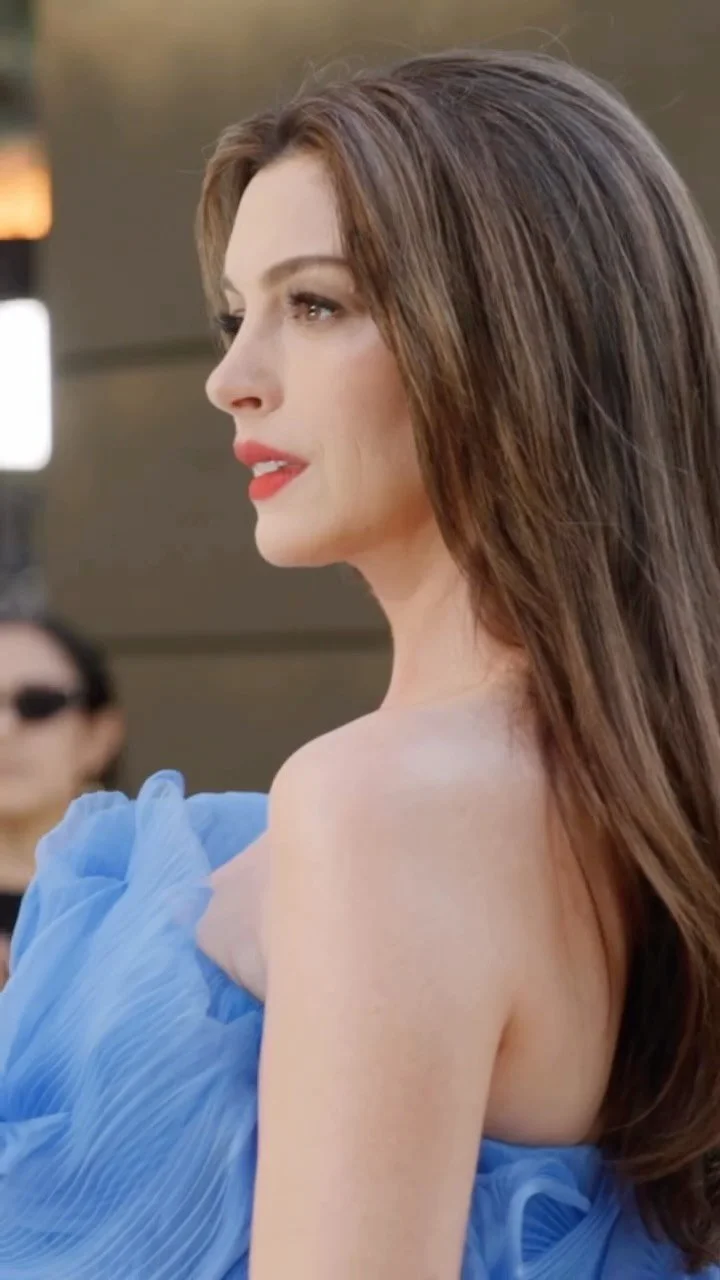
Anne Hathaway’s Andy Sachs is written into a space of controlled contradiction. She is no longer the outsider looking in, but neither has she fully surrendered to the world she critiques. Instead, she occupies a professional limbo shaped by journalism’s decline and luxury media’s increasing entanglement with corporate power. The film repeatedly positions her at the intersection of ethics and access, but it rarely pushes that tension into genuine instability. Instead, her conflicts are softened into narrative beats that resolve too cleanly to fully register as ideological struggle.
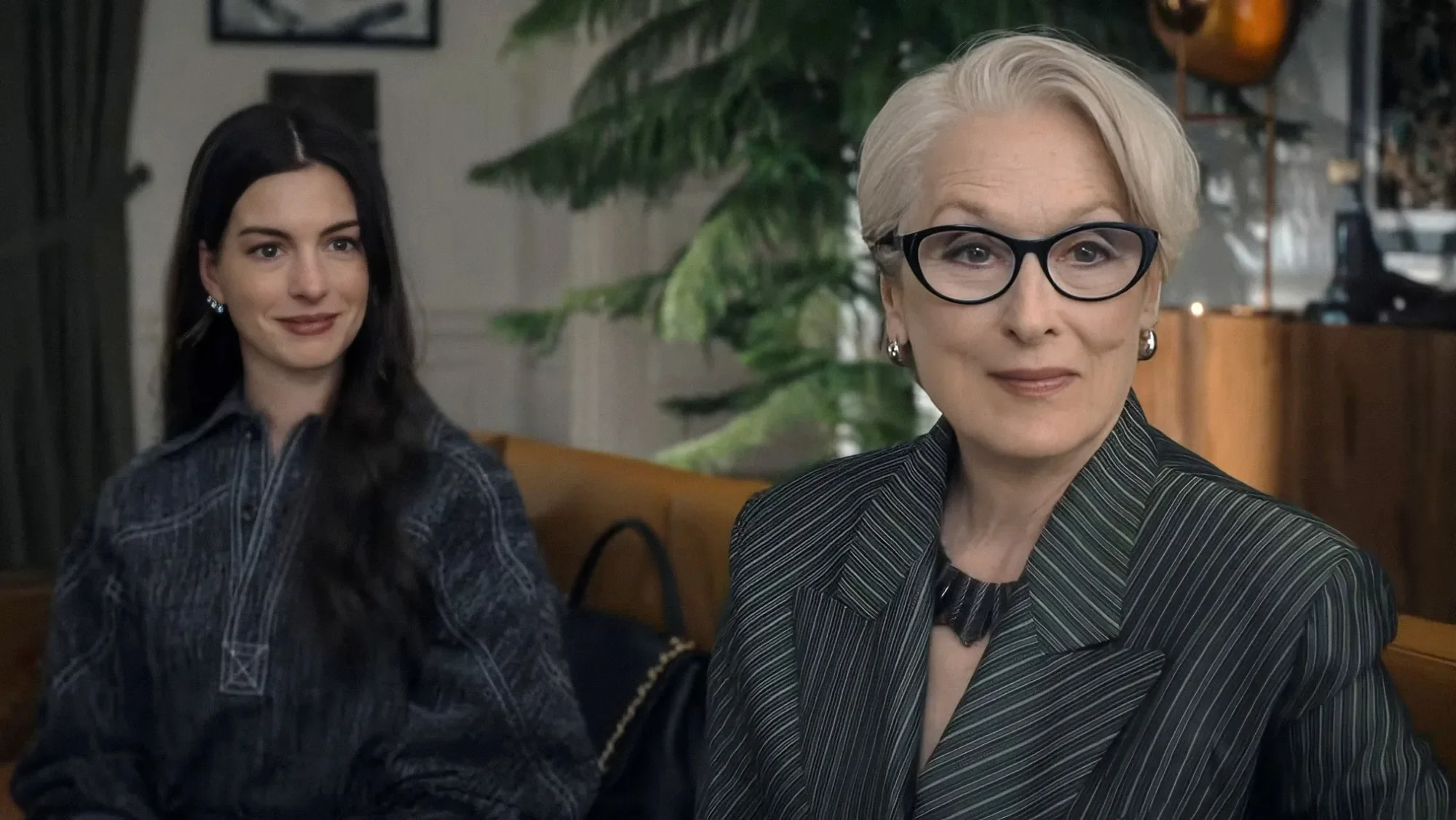
Anne Hathaway and Meryl Streep in 'The Devil Wears Prada 2.' COURTESY 20TH CENTURY STUDIOS
The broader media landscape the film gestures toward — collapsing publications, corporate restructuring, and algorithm-driven content ecosystems — is introduced with clear intent but inconsistent follow-through. Andy’s newsroom environment briefly captures the volatility of modern journalism, particularly in sequences that reference layoffs and institutional consolidation, but these ideas are quickly absorbed into personal arcs rather than developed as systemic critique. The film understands that the media world has changed, but it remains more interested in how that change affects its characters than in what is driving it.
Emily Blunt’s Emily Charlton, by contrast, emerges as the sequel’s most structurally modern figure. Her transformation into a fully embedded luxury executive gives her scenes a sharper, more contemporary edge. Unlike Miranda, who remains almost frozen in iconography, Emily has adapted to the system around her. She no longer reacts to fashion’s hierarchy — she helps define it. This makes her one of the few characters who feels actively shaped by the world the film is attempting to portray rather than simply positioned within it.
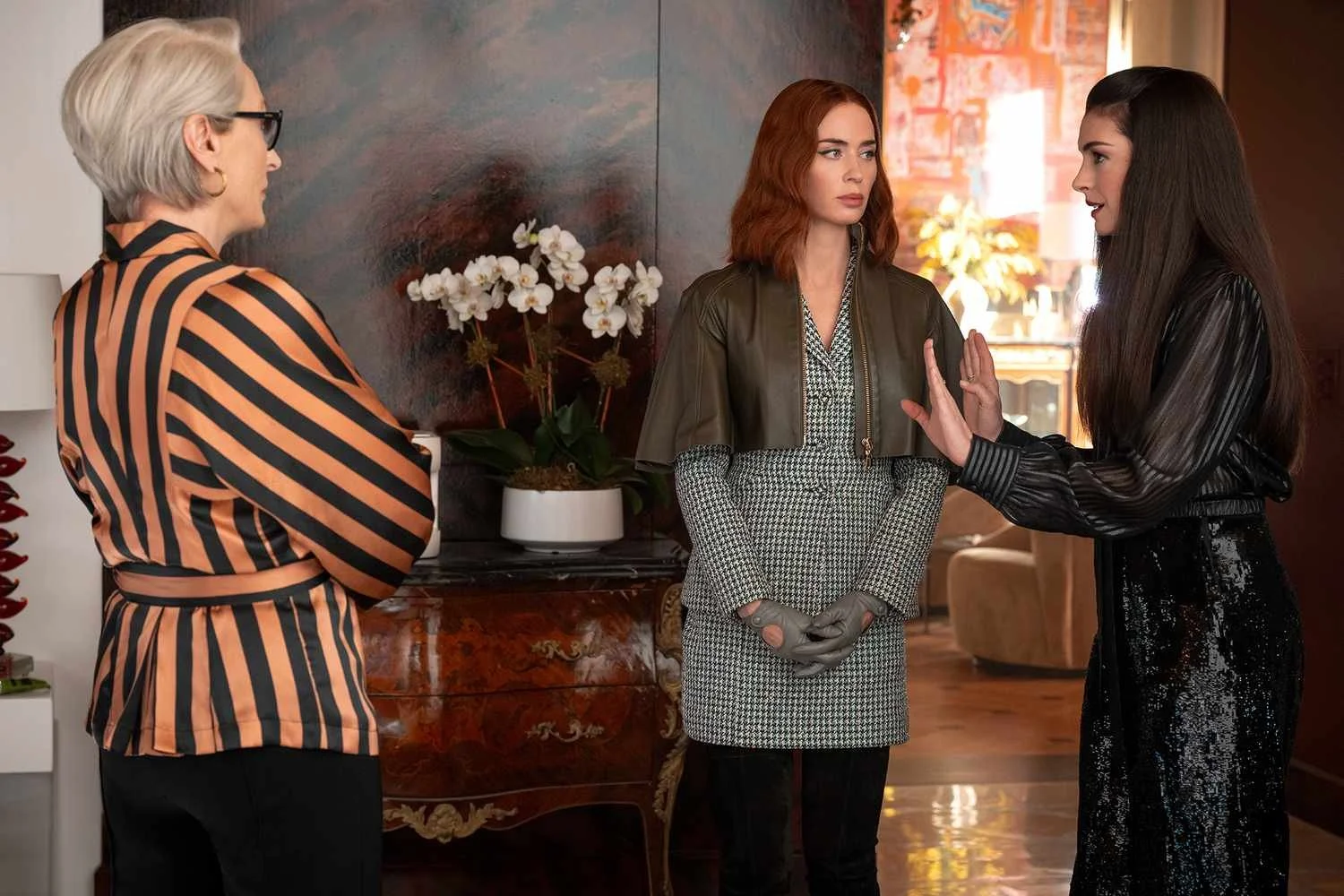
Meryl Streep, Emily Blunt, and Anne Hathaway in 'The Devil Wears Prada 2.' COURTESY 20TH CENTURY STUDIOS
The film’s attempt to widen its scope through tech billionaires, corporate acquisitions, and media conglomerates introduces additional thematic layers, but these elements rarely evolve beyond symbolic function. The introduction of a Bezos-like media buyer figure, for instance, gestures toward commentary on ownership and influence, but never fully engages with the mechanics of either. Instead, he exists as shorthand for capital intrusion rather than as a fully realized force within the narrative.
Where the film is most confident — and most consistent — is in its construction of spectacle. Fashion remains its primary language, and the Milan sequences, editorial shoots, and runway presentations are staged with meticulous attention to visual rhythm. These moments are not just decorative; they function as emotional punctuation. When the narrative falters in focus, the film reasserts itself through texture, silhouette, and movement. Clothing becomes argument, and aesthetic becomes shorthand for power.
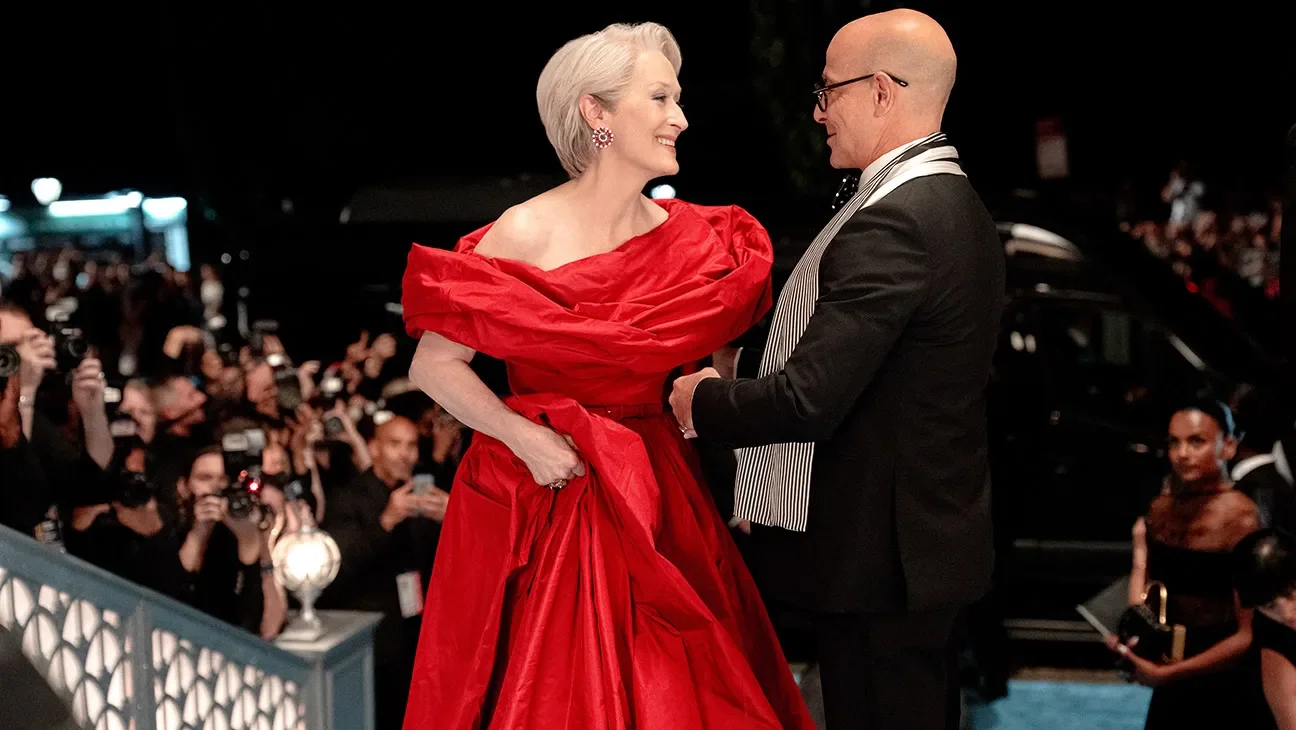
Meryl Streep and Stanley Tucci in 'The Devil Wears Prada 2.' COURTESY 20TH CENTURY STUDIOS
But this is also where the film’s central contradiction becomes unavoidable. The Devil Wears Prada 2 repeatedly acknowledges, at least thematically, the tensions within luxury culture — exclusivity, performative ethics, and institutional opacity — while simultaneously indulging in those same systems with full visual commitment. The cinematography lingers on precisely the surfaces it occasionally questions. The result is not hypocrisy, but unresolved duality: critique and celebration operating in parallel without ever fully converging.
That duality extends into its handling of journalism. Andy’s professional arc touches on media instability and corporate downsizing, but these ideas are consistently reframed through individual stakes rather than structural critique. A newsroom closure functions as emotional disruption rather than systemic collapse. The film is aware of journalism’s fragility, but it filters that awareness through character rather than consequence.
Even the film’s more overtly satirical elements — corporate executives, tech investors, and fashion gatekeepers — are rendered with a softened edge. They are recognizable but not destabilizing, exaggerated but not threatening. This maintains tonal accessibility but limits the film’s capacity to interrogate its own subject matter with any real force. The satire remains decorative rather than disruptive.
By the final act, the narrative settles into familiar patterns of reconciliation and rebalancing. Professional hierarchies are reasserted, relationships are softened, and the system of Runway continues in an updated but fundamentally intact form. The film allows for evolution in tone and texture, but not in structure. Nothing is dismantled — only adjusted.
What ultimately defines The Devil Wears Prada 2 is not its plot or even its thematic ambition, but its control of aesthetic identity. It is a film deeply aware of its legacy, carefully constructed to meet expectation while acknowledging, but not fully engaging with, the changes that have occurred around it. It exists in a space between satire and preservation, critique and admiration, nostalgia and modernization.
That space is where its appeal lives — and also where its limitations become most visible.
Rating: ★★★★☆
That’s a Wrap
|
The Devil Wears Prada 2
|
That’s a Wrap | The Devil Wears Prada 2 |
“What makes The Devil Wears Prada 2 compelling is not its message, but its contradiction. It wants to critique the machinery of fashion, media, and corporate influence — yet it remains most alive when it is actively inside those systems, not observing them from a distance. The film understands the allure of luxury too well to ever fully reject it, which leaves it suspended between satire and celebration. In the end, it doesn’t redefine the world of Runway — it simply restores it, more polished and self-aware, but still running on the same fantasy that made it iconic in the first place.”
CREDITS
Release Date: May 1, 2026
Cast: Meryl Streep, Anne Hathaway, Emily Blunt, Stanley Tucci, Justin Theroux, Kenneth Branagh, B.J. Novak
Director: David Frankel
Writer: Aline Brosh McKenna
Studio: 20th Century Studios
Run Time: 1h 52m
Rated: PG-13
Watch The Trailer Below:
| FEATURES | INTERVIEWS | REVIEWS | The Catalogue | TRENDING | TRAILERS | VIDEOS |



![WERWULF - Official Trailer [HD] - Only In Theaters Christmas](https://i.ytimg.com/vi/cmjpadVj-Vk/hqdefault.jpg)