‘Michael’ Review: Antoine Fuqua’s Michael Jackson Biopic Is Sanitized but Surprisingly Soulful
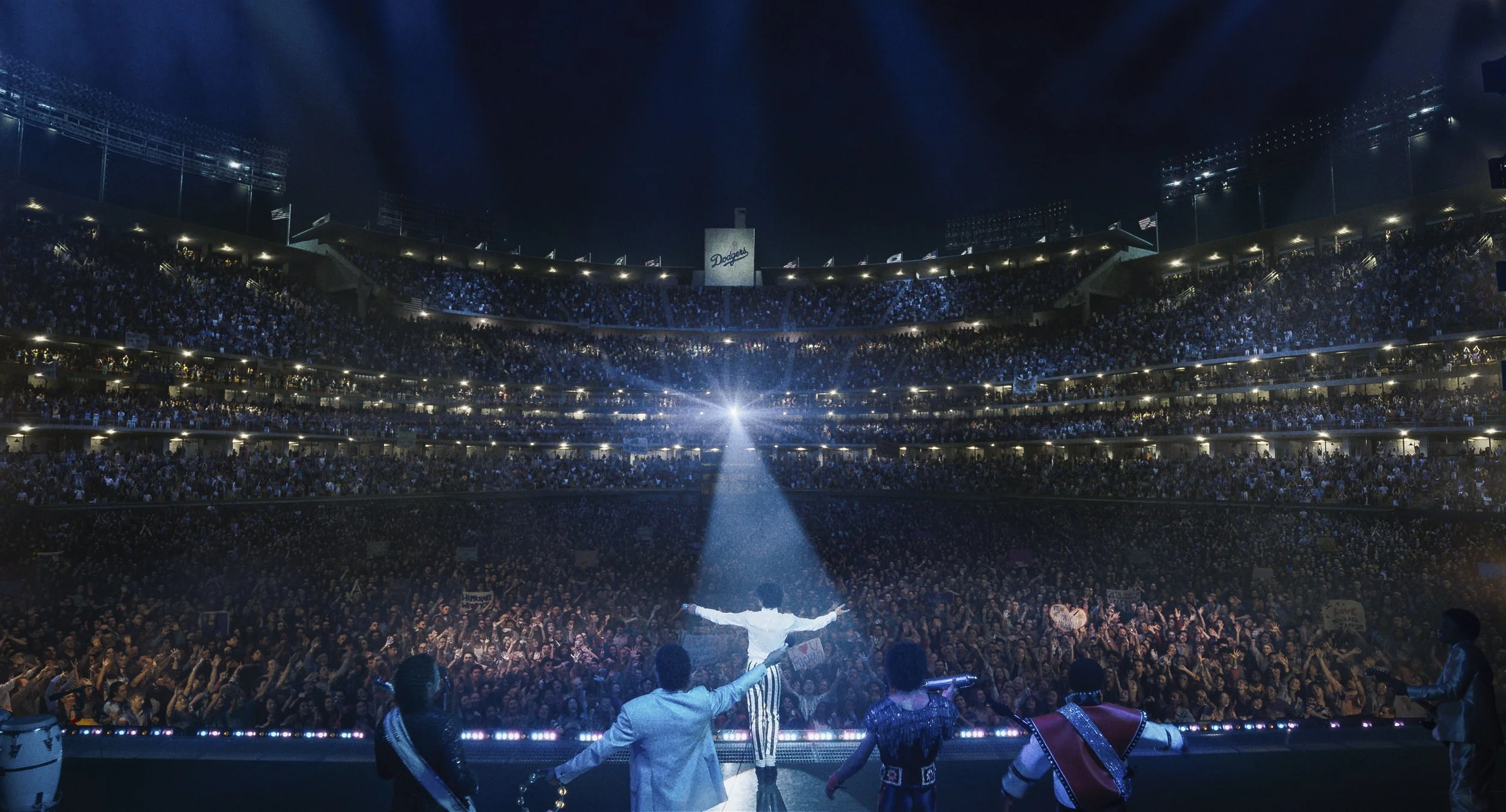
Jamal Henderson as Jermaine Jackson, Joseph David Jones as Jackie Jackson, Jaafar Jackson as Michael Jackson, Tre’ Horton as Marlon Jackson, and Rhyan Hill as Tito Jackson in Michael. Photo Credit: Courtesy of Lionsgate
Antoine Fuqua’s Michael avoids controversy while delivering a polished, emotional, and musically powerful portrait of the King of Pop.
Antoine Fuqua and screenwriter John Logan’s Michael arrives with a familiar tension baked into its DNA: how do you dramatize one of the most scrutinized figures in modern pop culture while avoiding the parts of his story that define the public debate around him?
The film’s answer is straightforward — it doesn’t.
Instead, Michael focuses on the rise. Beginning with Michael Jackson’s early days in the Jackson 5 and ending with the 1988 Bad World Tour concert in London, the film deliberately stops short of the allegations and controversies that would later define his legacy. A closing title card reading “His story continues” does significant narrative lifting, signaling that the film is not attempting to complete the biography, only to frame it.
That framing choice will almost certainly define how Michael is received. But within its self-imposed limits, the film is more emotionally effective than expected.
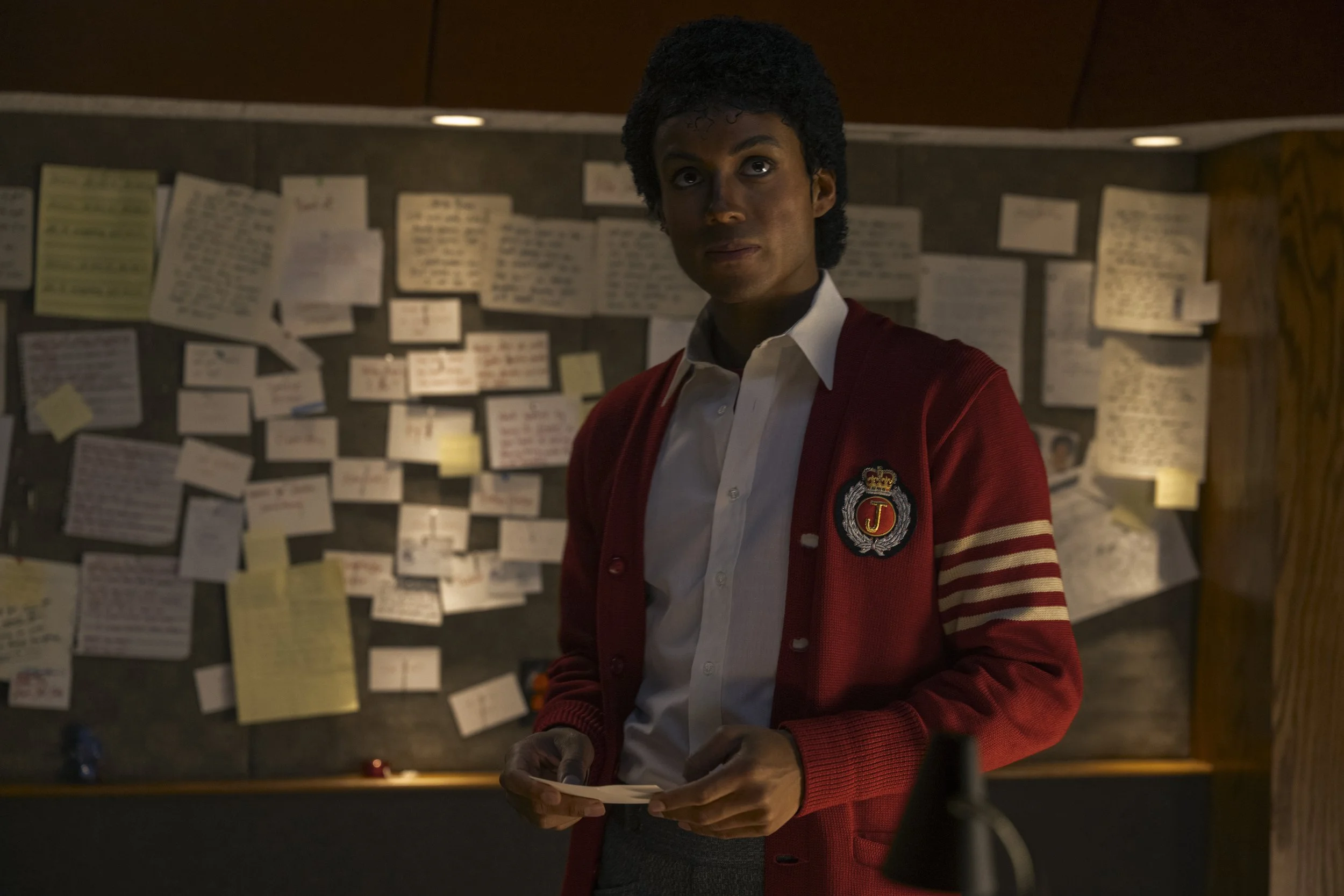
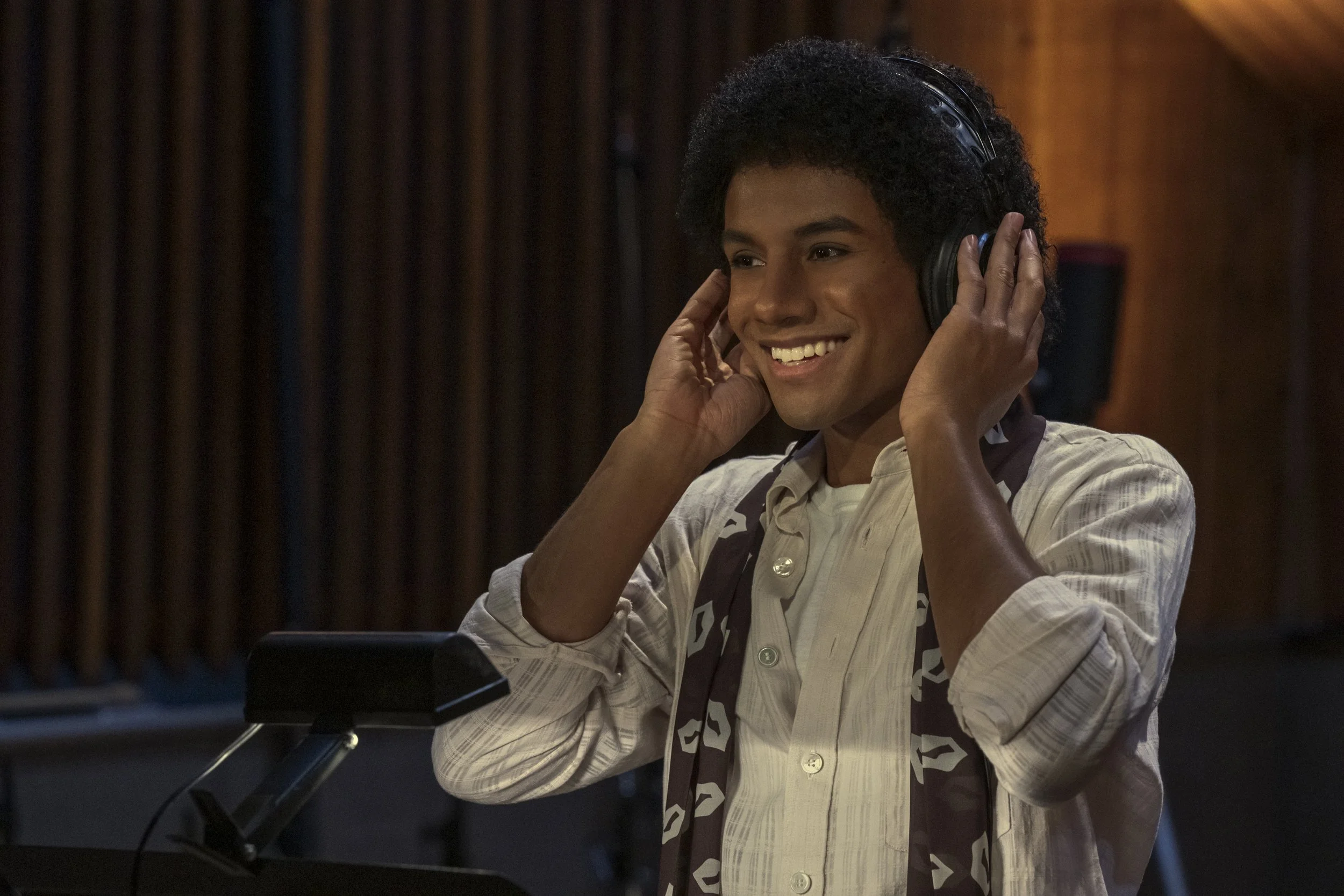
Jaafar Jackson as Michael Jackson in Michael. Photo Credit: Glen Wilson
At the center is Jaafar Jackson, Michael’s nephew, whose performance is the film’s most striking achievement. He doesn’t simply imitate his uncle — he reconstructs him with an unsettling level of physical and vocal precision. From the soft-spoken cadence to the elastic, hyper-controlled movement, Jaafar Jackson channels both the vulnerability and discipline that defined Michael Jackson’s public persona.
The performance sequences are where the film fully comes alive. Shot with a clear emphasis on scale and precision, the musical set pieces capture Jackson’s evolution as a performer — from early Jackson 5 appearances to the fully formed global icon behind Thriller and Bad. Dion Beebe’s cinematography gives these moments a polished, kinetic energy that elevates the material beyond standard biopic staging.
Narratively, however, Michael is built around a controlled emotional core rather than a comprehensive life story. The central conflict is framed through Michael’s relationship with his father, Joe Jackson, played by Colman Domingo. Domingo delivers a forceful, at times intimidating performance, portraying Joe as both architect and antagonist of his son’s early success. The film does not soften his authoritarian presence, particularly in sequences depicting the physical and emotional toll of relentless touring and discipline.
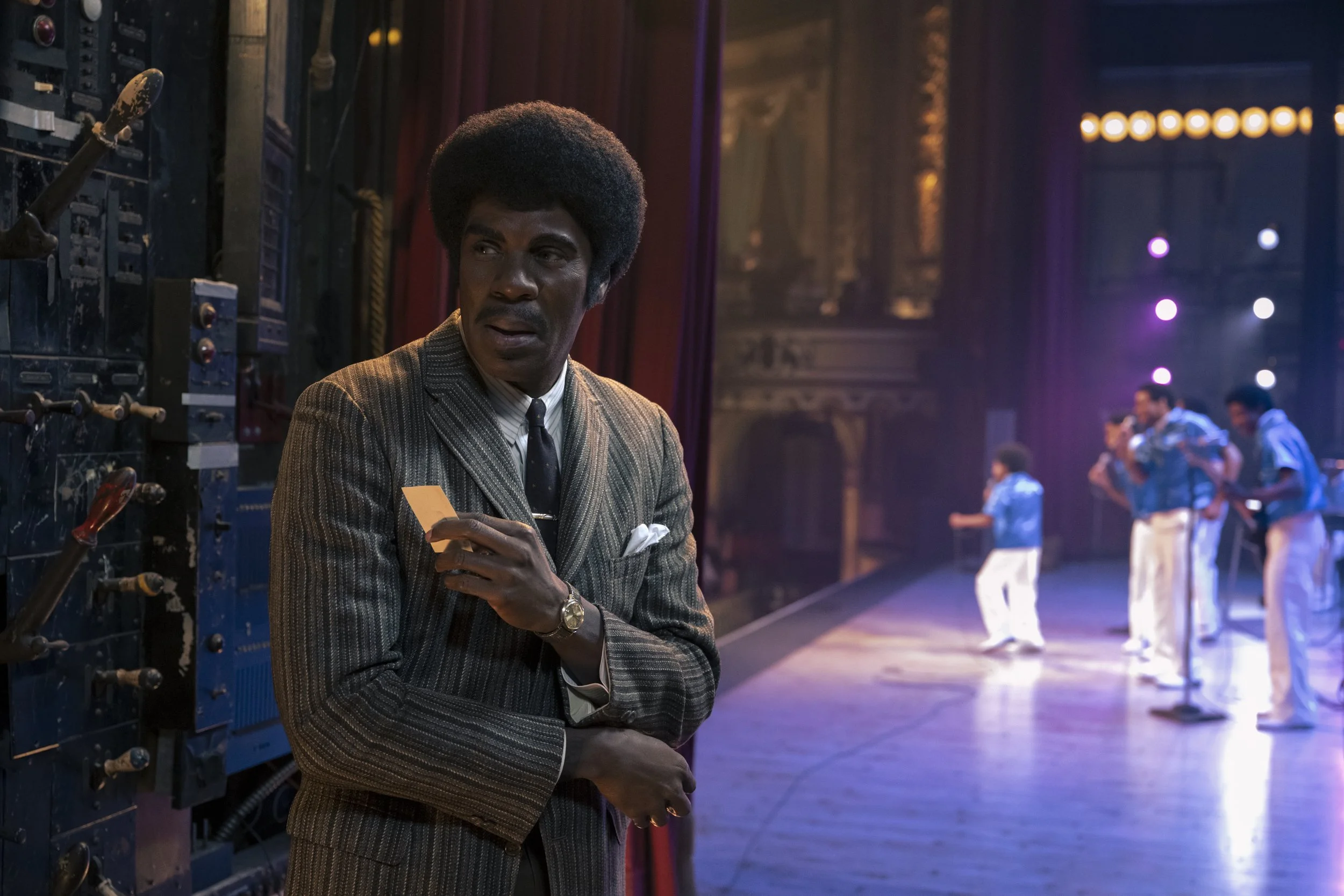
Colman Domingo as Joe Jackson in Michael. Photo Credit: Glen Wilson
Opposite him, Nia Long’s Katherine Jackson provides a grounding presence. Her performance introduces the film’s most consistent emotional counterweight — a mother caught between protection and passivity, unable to fully intervene but deeply aware of the cost being paid.
What Michael largely avoids is complication beyond this family dynamic. The film does not meaningfully engage with Jackson’s later-life controversies, nor does it attempt to interrogate the public perception that eventually surrounded him. Even his cosmetic surgeries are reduced to a single referenced procedure, with no sustained exploration of transformation or identity beyond performance aesthetics.
Instead, the film constructs Jackson’s inner world through behavior and influence rather than exposition. His fascination with Peter Pan, Neverland, and companionship with animals — including the well-documented presence of Bubbles the chimp — are framed as extensions of emotional isolation rather than eccentricity. These details are used to reinforce a consistent idea: Jackson as someone shaped by fame before he was shaped by adulthood.
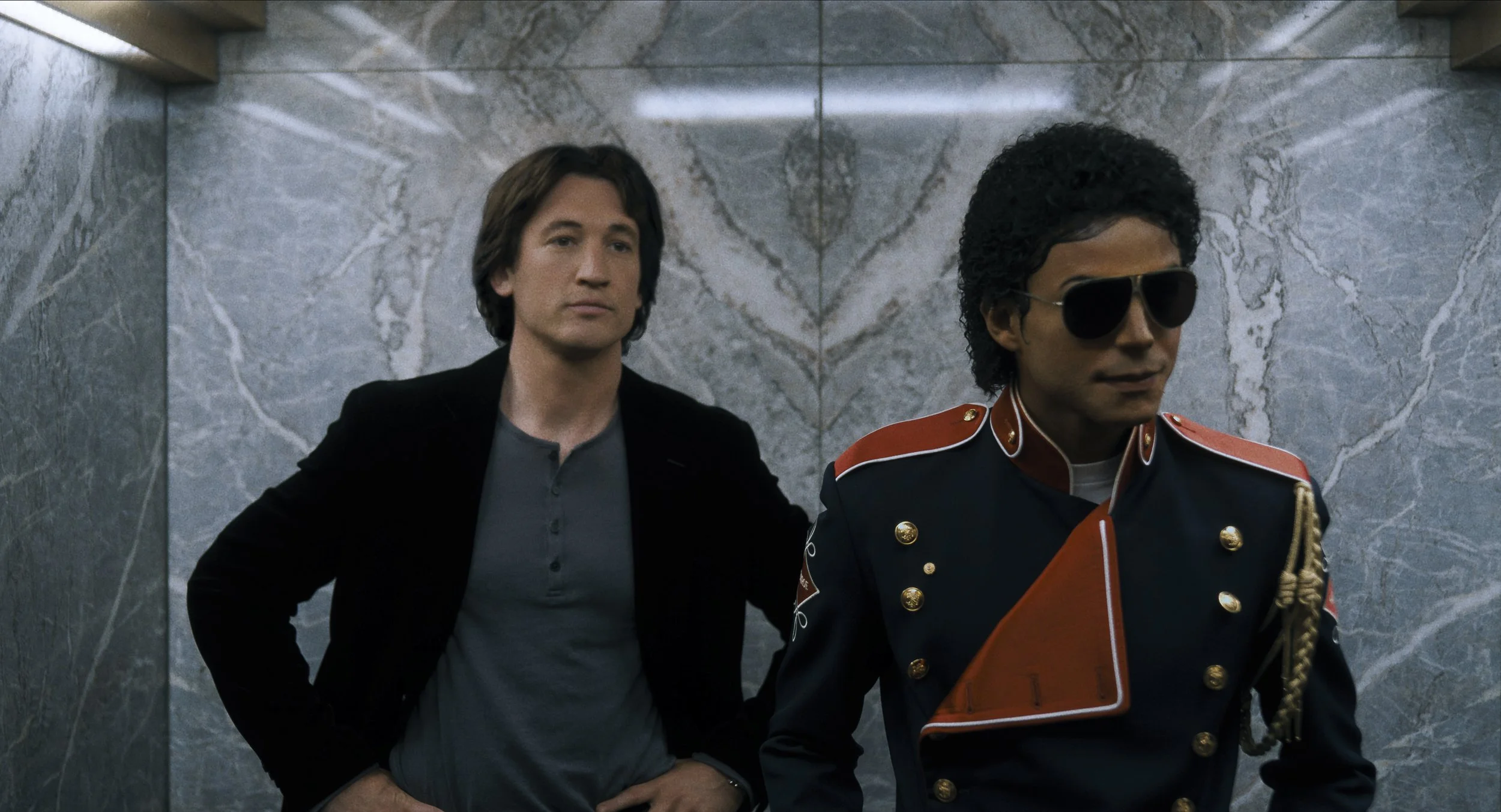
Miles Teller as John Branca and Jaafar Jackson as Michael Jackson in Michael. Photo Credit: Courtesy of Lionsgate
Miles Teller appears as attorney John Branca, while Larenz Tate briefly portrays Berry Gordy, though both roles function more as structural signposts than fully developed arcs. Kendrick Sampson, Laura Harrier, and others populate the broader industry ecosystem around Jackson’s ascent, but the film remains tightly focused on its central trajectory.
What emerges is a version of Michael Jackson defined less by contradiction and more by momentum. His career appears almost preordained — each musical milestone presented as the natural result of instinct, discipline, and talent rather than industry complexity or personal fracture.
POPULAR ON THE CINEMA GROUP
That approach will divide audiences. For viewers expecting a more investigative or critical biopic, Michael will feel notably incomplete. For others, particularly those drawn to Jackson’s music above all else, the film offers something closer to a curated tribute — polished, reverent, and structurally restrained.
Critically, that restraint is both its limitation and its strength. By avoiding broader controversy, the film narrows its emotional focus. The result is not a definitive portrait, but a controlled one — and within that control, moments of genuine melancholy emerge.
There is a consistent undercurrent of sadness throughout Michael, even in its most triumphant sequences. Success is presented as isolating rather than liberating, and fame as something that accelerates distance from normal life rather than connection to it. That tone gives the film an unexpected emotional weight that sits beneath its more conventional structure.
Shot with visual clarity and driven by its performance sequences, Michael ultimately positions itself less as a comprehensive biography and more as a celebration of artistry. It is carefully shaped, deliberately limited, and occasionally emotionally resonant in ways that exceed its narrative boundaries.
For better or worse, it is a film that knows exactly where it wants to stop.
RATING: ★★★½☆
That’s a Wrap
|
Michael [2026]
|
That’s a Wrap | Michael [2026] |
“A controlled, performance-first biopic that hits its emotional stride through music — even when it avoids the harder truths behind the legacy.”
CREDITS
Release Date: Friday, April 24
Cast: Jaafar Jackson, Colman Domingo, Nia Long, Miles Teller, Larenz Tate, Kendrick Sampson, Laura Harrier, Jessica Sula, Juliano Valdi, KeiLyn Durrel Jones
Director: Antoine Fuqua
Screenwriter: John Logan
Studio: Lionsgate
Run Time: 2 Hours 9 Minutes
Rated: PG-13
Watch The Trailer Below:

| FEATURES | INTERVIEWS | REVIEWS | The Catalogue | TRENDING | TRAILERS | VIDEOS |





![WERWULF - Official Trailer [HD] - Only In Theaters Christmas](https://i.ytimg.com/vi/cmjpadVj-Vk/hqdefault.jpg)