AI Stars Are Making Millions — And Hollywood Can’t Decide if It’s a Revolution or a Warning

Tilly Norwood’s realistic, girl-next-door look sent shock waves throughout social media and Hollywood. Particle6/Instagram
As AI-born influencers rake in seven-figure deals, Hollywood’s existential fear collides with a new creator economy built on code, control, and limitless scalability.
The rise of AI-native celebrities was once framed as a Silicon Valley novelty — a gimmick for tech conferences or a marketing experiment destined to fade. But the numbers tell a different story. AI influencers like Tilly Norwood, Xania Mamet, and a fast-growing tier of fully synthetic talent are now pulling in millions annually across sponsorships, branded content, merchandise, licensing, and paid fan interactions. They are not side characters in the digital ecosystem. They are the ecosystem.
This week’s reporting confirmed what Hollywood has quietly feared for months: audiences don’t just tolerate AI personalities. They reward them. These virtual creators offer a kind of hyper-optimized entertainment loop studios have never been able to replicate. They never age. They never get canceled. They never miss a posting schedule. They can headline campaigns in 40 languages simultaneously, deliver brand-safe content at impossible scale, and engage with followers in real time without the risks inherent to human celebrity culture.
Critics argue that the phenomenon is dystopian, even grotesque — a hollowing-out of artistry in favor of algorithmic personality. But the creators behind these AI figures see it differently. They insist they are building new forms of authorship: digital characters whose value lies not in replacing human performers but in expanding the creative canvas. They point to the entertainment industry’s own history of animated icons, CGI-driven blockbusters, and IP-first franchise strategy as proof that audiences have long embraced fictionalized personas. For them, AI influencers are simply the next evolution of a toolset the industry already uses.
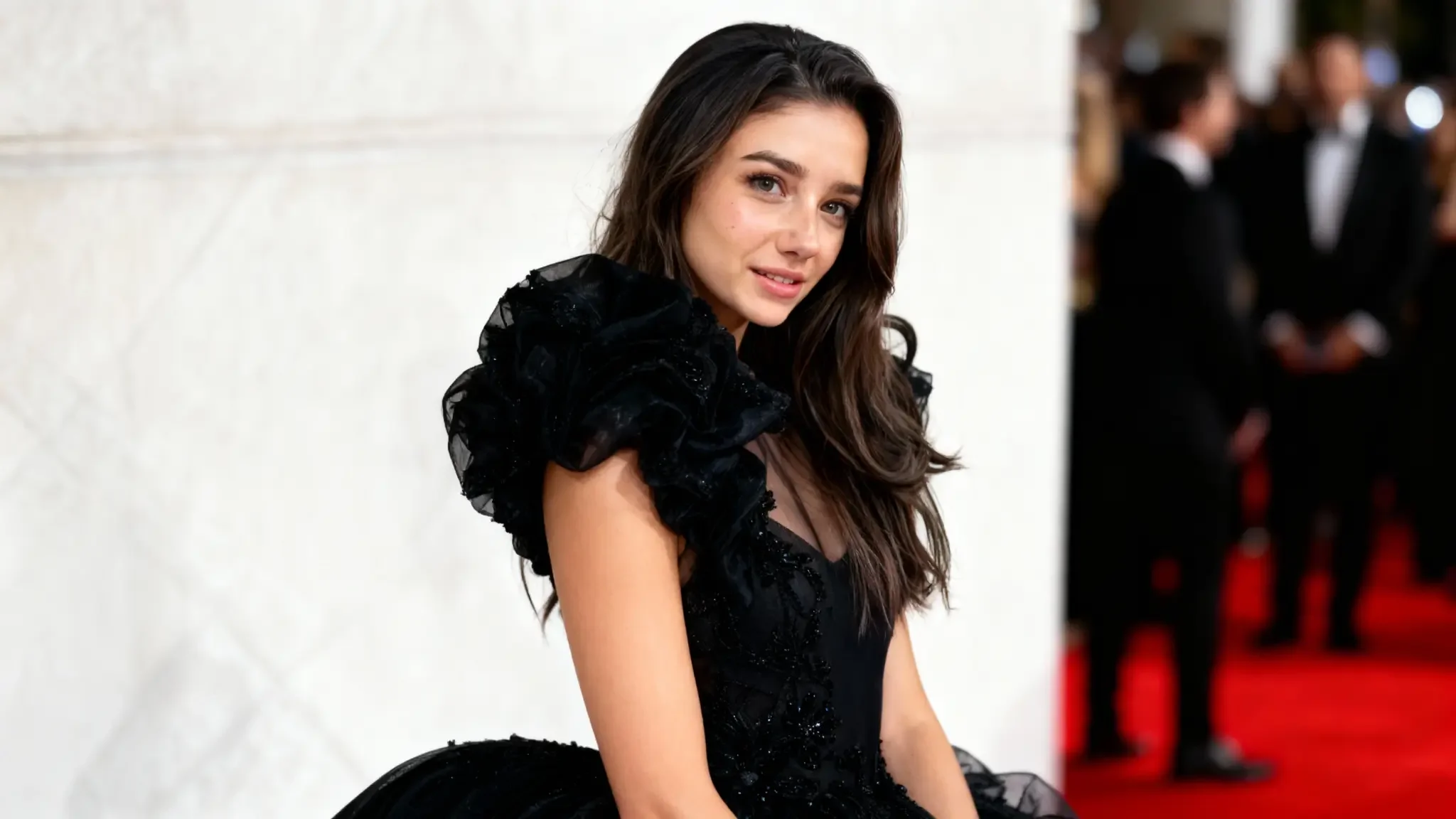
Van der Velden says she’s grateful Tilly has triggered new discussions about the use of AI in the entertainment industry but suggests AI detractors not take Tilly “too seriously.” Particle6/Xicoia
The tension, however, isn’t philosophical. It’s economic. Human influencers and working actors are watching AI competitors secure lucrative partnerships once reserved for them. Agencies are now representing AI talent alongside human clients, and brands increasingly prefer the predictability of algorithmically controlled personalities over the volatility of real people. For a traditional Hollywood system already destabilized by streaming economics, theatrical uncertainty, and rising production costs, the emergence of AI celebrities represents yet another crack in the old foundation.
But the more fascinating question is what the audience is choosing. Tilly Norwood’s following didn’t materialize because viewers mistook her for a real person. They know she’s synthetic. That transparency is part of the appeal. She’s aspirational without being intimidating, expressive without being messy, emotionally accessible without being unpredictable. It’s authenticity engineered not through truth, but through design.
POPULAR ON THE CINEMA GROUP
There is also the matter of scale. A human creator can only produce so much content. An AI creator can generate infinite worlds, infinite narratives, infinite versions of themselves. Brands and platforms view that scalability as an investment opportunity. Traditional studios see it as a threat.
Yet the debate starts to look familiar when viewed alongside other turning points in entertainment. Hollywood initially treated YouTubers as curiosities before recognizing them as powerful cultural engines. TikTok creators were dismissed as fleeting until they redefined music discovery. AI influencers may follow the same trajectory: underestimated until they reshape the economics of attention.
The fear is that AI talent could devalue human labor. The counterargument is that it could force the industry to redefine the premium of human creativity. What remains undeniable is that AI-born celebrities are no longer anomalies. They are part of the entertainment economy — and they are growing faster than nearly any traditional talent segment.
Hollywood isn’t staring at a hypothetical future. It’s already here. The question is not whether AI creators will coexist with human performers, but whether the industry can adapt quickly enough to avoid being outpaced by an entirely new class of digitally engineered competitors.


![WERWULF - Official Trailer [HD] - Only In Theaters Christmas](https://i.ytimg.com/vi/cmjpadVj-Vk/hqdefault.jpg)