Industry Season 4: The New Cast, Where We Left Off, What to Expect Next — Everything We Know So Far

(Image credit: Simon Ridgway/HBO)
A new cast, new power structures, and a sharper, more dangerous world for HBO’s most volatile drama.
Season 4 of Industry arrives at a moment of total rupture — the kind of seismic shift that doesn’t just move the story forward but rewrites the rules of the show entirely. Pierpoint, once the defining arena of every betrayal and breakthrough, has collapsed as both a workplace and a narrative gravitational pull. What replaces it is a world that’s broader, sharper, and far less forgiving. We’re beyond the shock of Harper’s banishment, Yasmin’s engagement, and the institutional implosion that reshaped everyone’s future. Now the series returns with a deeper, more dangerous recalibration of ambition.
The world of Industry has always been brutal, but it has also been contained — desk politics, office hierarchies, and the power dynamics of young analysts trying to beat the system before it beats them. Season 4 discards that containment. The show zooms out into a landscape where tech founders influence elections, politicians court billionaires, journalists manufacture narratives, and financial institutions operate like shadow governments. It is no longer about who wins on a trading floor. It’s about who controls information, who controls access, and who controls the future.
Harper Stern, freed from the corporate leash of Pierpoint, moves like someone who has survived the fire and learned how to walk through it without flinching. Her self-awareness is sharper. Her instincts are more lethal. She’s not trying to belong — she’s maneuvering to dominate. Season 4 gives her a wider field and fewer rules, which is precisely the version of Harper the series has been building toward.
Yasmin Kara-Hanani enters the season in a rarefied orbit defined by the ultra-rich, where the stakes are no longer quarterly bonuses but political influence and public scrutiny. Her engagement to tech founder Henry Muck places her squarely in the center of a world where legacy is weaponized, loyalty is suspect, and every interaction is a performance. Yasmin’s arc this season is less about reinvention and more about survival — learning how to function in a universe that doesn’t want her to understand the rules.
This is the foundation Season 4 stands on: the collapse of one world, the rise of another, and two women trying to navigate the shift without losing themselves. And it’s into this expanded universe that the new cast enters — each one holding the potential to destabilize Harper, Yasmin, Henry, and the systems surrounding them.
Below, a detailed breakdown of where we left off, who steps into the arena next, and what this new chapter of Industry promises to deliver.
Where We Left Off

(Image credit: Simon Ridgway/HBO)
Harper’s exile was framed as punishment, but it turned out to be liberation. Being stripped of institutional identity forced her to realize she was never meant to succeed within the limits of a system designed to consume her. Her true power emerges when she no longer has to abide by Pierpoint’s expectations or hide her motives behind team-building presentations. Season 4 positions her as an independent operator — still volatile, still brilliant, but newly untethered.
Yasmin’s turn toward Henry Muck was one of Season 3’s most polarizing developments. It wasn’t love, not entirely. It was access. During her most destabilized moments, she found refuge in someone who operates above the structures she was constantly crushed by. Season 4 tests what that decision really cost her. For the first time, she’s not a junior employee trying to be taken seriously. She’s part of a machine that uses image, influence, and hidden alliances as currency. And she has no idea what she’s walked into.
Meanwhile, the supporting cast — Eric, Rishi, Sweetpea, and the remaining Pierpoint orbit — fractures into new roles defined by shifting allegiances. The aftermath of Season 3 doesn’t just scatter characters physically; it rearranges their identities, ambitions, and survival strategies. The show’s world is now one where every character has more to lose — because they finally have more to gain.
Some big changes are in store when the soapy finance drama Industry returns to HBO for Season 4.
From first-time creators Mickey Down and Konrad Kay, the series follows a group of drug- and sex-fueled financiers as they navigate the intensely stressful world at a leading international bank in London. The pressure-cooker environment provides an insider’s view of the black box of high finance, while examining issues of gender, race, class, and privilege in the workplace.
Industry stars Myha’la, Ken Leung, Marisa Abela, Harry Lawtey, Conor MacNeill, Sagar Radia, Sarah Goldberg, and Kit Harington. The series was renewed for Season 4 back in September of 2024, three days before Season 3’s penultimate episode aired.
The upcoming season has added several intriguing names to its cast list — while one major player has exited for good. Here’s everything we know.
Who’s Leaving Ahead of Season 4

(Image credit: Simon Ridgway/HBO)
Harry Lawtey’s departure marks the end of Robert’s storyline after three seasons. Lawtey exits due to scheduling conflicts, leaving fans without closure on whether Robert’s new start-up might have taken off. Robert spent the series oscillating between ambition and heartbreak — most notably when Yasmin shattered him with her engagement to Henry Muck — but Season 3 left him on an upswing as he pivoted into the psychedelic wellness space. His absence creates a vacuum in the show’s interpersonal dynamics and confirms that Industry is moving decisively away from the Pierpoint-centric cast structure of its early years.
How Season 3 Ended

(Image credit: Simon Ridgway/HBO)
Season 3 ended with Pierpoint’s London office effectively imploding. Eric, after sacrificing Bill and courting Al-Mi’raj behind the scenes, was ousted. The new ownership began cutting deeper than expected, closing London entirely to shift resources into private wealth operations. Rishi, drowning in gambling debt attempted to seek alignment with Harper only to be humiliated in front of Sweetpea but the final blow Arrives on his birthday as he witnesses his wife’s murder, Well have to wait to see the Fallout from That. Otto Mostyn revealed he was searching for a successor, someone who understood trading as a philosophy rather than a profession. Harper entertained the idea but ultimately doubled down on her partnership with Petra.
The final twist came when Harper pitched Mostyn on a short-only fund targeting fraud — a high-risk, high-reward play rooted in her own skewed moral compass. She made it clear it would only be illegal if they got caught. And she wanted to run it from New York. The question now is whether the show follows her there — and if Industry’s next phase leaves London behind entirely.
Who’s Joining Industry Season 4

L-R: Max Minghella, Toheeb Jimoh, Charlie Heaton, Amy James-Kelly, Kiernan Shipka, and Kal Penn. (Image credit: Simon Ridgway/HBO)
Season 4 brings in a wave of new cast members who immediately widen the show’s scope and push it further beyond the traditional Pierpoint storyline. Kiernan Shipka joins the ensemble as Hayley Clay, an executive assistant at Tender whose ambition and unpredictability position her as one of the season’s most disruptive new forces. Kal Penn steps in as Jay Jonah Atterburry, the charismatic and chaotic co-founder of Tender, whose volatility deepens the show’s exploration of tech culture colliding with financial power.
Charlie Heaton enters as Jim Dyker, a disgraced journalist determined to claw back relevance in a world where information is a weapon. Claire Forlani appears as Cordelia Hanani-Spyrka, a corporate PR strategist brought in to manage Tender’s expanding crises. Max Minghella plays Whitney Halberstram, the enigmatic CFO and co-founder of Tender, whose dynamic with Henry Muck forms one of the season’s most combustible interactions.
The season continues to build out its ensemble with Toheeb Jimoh as Kwabena Bannerman, a confident trader at Mostyn Asset Management whose upbringing and charm make him an immediate foil to Harper. Jack Farthing joins as Edward Smith, a long-time friend of Henry Muck whose arrival blurs personal and strategic boundaries. And Amy James-Kelly steps in as Jennifer Bevan, a newly promoted Labour Minister whose political rise intersects directly with the season’s broader themes of power, access, and institutional influence.
The New Cast — And the Power They Bring
Each new cast member functions as a strategic disruption to the established Industry ecosystem. They aren’t replacements. They’re catalysts. And every one of them pulls the series into a different thematic lane — journalism, tech, politics, government — expanding the show into a much larger, more culturally relevant arena.
Max Minghella as Whitney Halberstram

(Image credit: Simon Ridgway/HBO)
Whitney Halberstram is the kind of character Industry has been circling around for seasons: a founder who understands power not as something earned but something engineered. His relationship with Henry Muck forms one of the season’s most combustible partnerships — two men who built an empire, now trying to keep the walls from closing in. Whitney’s presence adds a new level of tension to Harper’s arc, pulling her into a corporate world driven by secrecy, optics, and public perception.
Kiernan Shipka as Hayley Clay

(Image credit: Simon Ridgway/HBO)
Hayley is a crucial addition because she represents a new type of operator — someone who moves laterally, not vertically, in search of advantage. Shipka’s description of Hayley as “fearless” and “mask-wearing” suggests she’s one of the season’s most unpredictable players. Her proximity to the founders and her interactions with Yasmin, Max Minghella, Kit Harington, and Charlie Heaton position her as the character most likely to expose what Tender really is beneath the branding.
Charlie Heaton as Jim Dyker

(Image credit: Simon Ridgway/HBO)
Jim Dyker introduces journalism to the heart of Industry, a sector the show has skirted but never fully embraced. He’s the link between private influence and public fallout. A disgraced journalist with something to prove is a narrative time bomb, and Heaton plays him as someone willing to cross the moral event horizon if it means relevance. Jim’s storyline ensures that Season 4 isn’t just about what happens in boardrooms — it’s about who gets to tell the story.
Toheeb Jimoh as Kwabena Bannerman

(Image credit: Simon Ridgway/HBO)
Kwabena brings an entirely new tone to the series: someone confident enough to be unbothered but ambitious enough to be dangerous. He’s Harper’s philosophical opposite — charming, easygoing, comfortable within the system — which makes his scenes with her some of the season’s most compelling. Jimoh’s comment about Season 4 being “genuinely unpredictable” feels less like hype and more like foreshadowing.
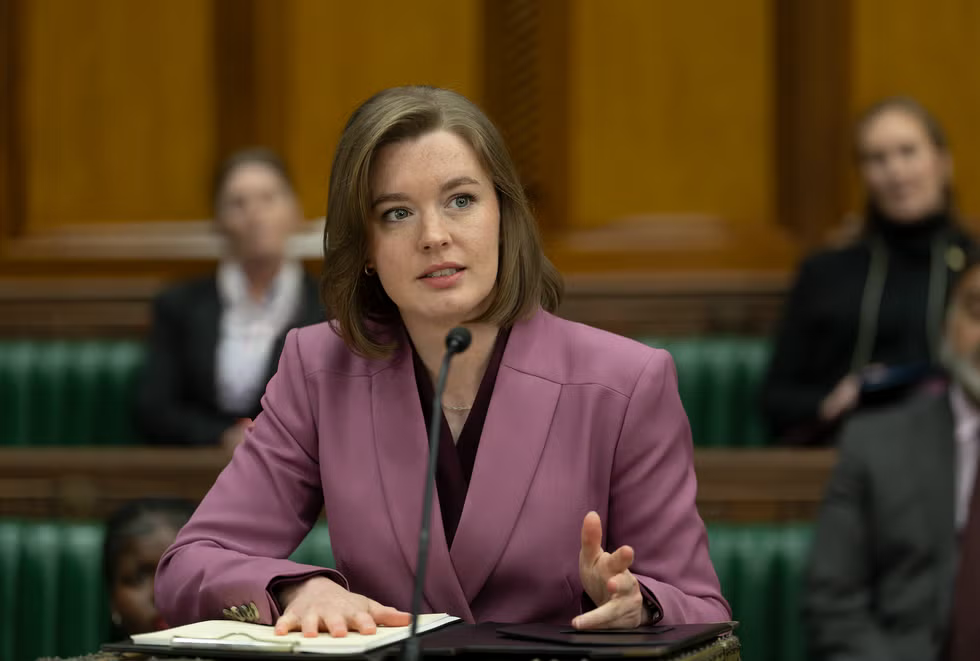
Amy James-Kelly as Jennifer “Jenni” Bevan
(Image credit: Simon Ridgway/HBO)
Jenni Bevan pulls the political thread the show has been teasing through Henry Muck’s storyline. A young, newly promoted Labour Minister going head-to-head with a controversial founder injects real-world stakes into the narrative. Yasmin aligning with Jenni becomes one of the season’s most fascinating dynamics: two women navigating patriarchal systems with entirely different strategies.
Kal Penn as Jay Jonah Atterburry

(Image credit: Simon Ridgway/HBO)
Jay Jonah Atterburry is the volatility of Tender personified — brash, brilliant, chaotic, and loyal to a fault. Penn’s description of the character as both frat boy and business savant positions him as one of the season’s wild cards. His scenes with Max Minghella promise to deepen Tender’s internal mythology and push the series further into the psychology of founders under pressure.
What to Expect in Season 4

(Image credit: Simon Ridgway/HBO)
Season 4 pushes Industry into its boldest, widest thematic territory yet — a series no longer bound by trading floors or corporate corridors, but by a global network of ambition, surveillance, and power plays that bleed into every corner of modern life. When HBO announced the premiere date, it also released an official logline framing the season as a cat-and-mouse thriller built around a flashy new fintech disruptor crashing into the London scene. Harper and Yasmin, now operating far from the Pierpoint roles that once defined them, are pulled into a world where money is not simply traded, but weaponized.
That expansion sets the tone for everything ahead. The dissolution of Pierpoint at the end of Season 3 — the sale, the rebranding, the mass firings — does more than scatter the ensemble. It effectively burns down the narrative architecture of the show’s first three seasons and forces each character into uncharted terrain. Harper’s plan to launch a New York–based all-shorts fund with Otto Mostyn’s backing places her in direct proximity to the kind of American financial ecosystem she has been avoiding since the pilot. Whether she can finally move beyond her bitterness toward Pierpoint or if she’ll angle for a new, more destructive form of revenge remains one of the season’s central questions.

(Image credit: Simon Ridgway/HBO)
Eric’s future is equally undefined. Ousted from the institution he treated like an extension of himself, granted a compensation package substantial enough to start over anywhere, he enters Season 4 as Industry’s most unpredictable variable. His relationship with Harper — that Don and Peggy push-pull the series has always threaded quietly beneath the chaos — lingers unresolved. Whether they cross paths again in the U.S. or battle for influence on separate continents, his arc signals the show’s willingness to rewire its own hierarchy.
The shift to America also places Harper’s personal history at the forefront for the first time. Co-creator Mickey Down previously hinted that the show has “not yet shown what is so awful about America for Harper,” implying that Season 4 will finally unpack the trauma, secrets, or failures she’s been running from. If London allowed her to reinvent herself, New York may force her to confront the self she abandoned.
(Image credit: Simon Ridgway/HBO)
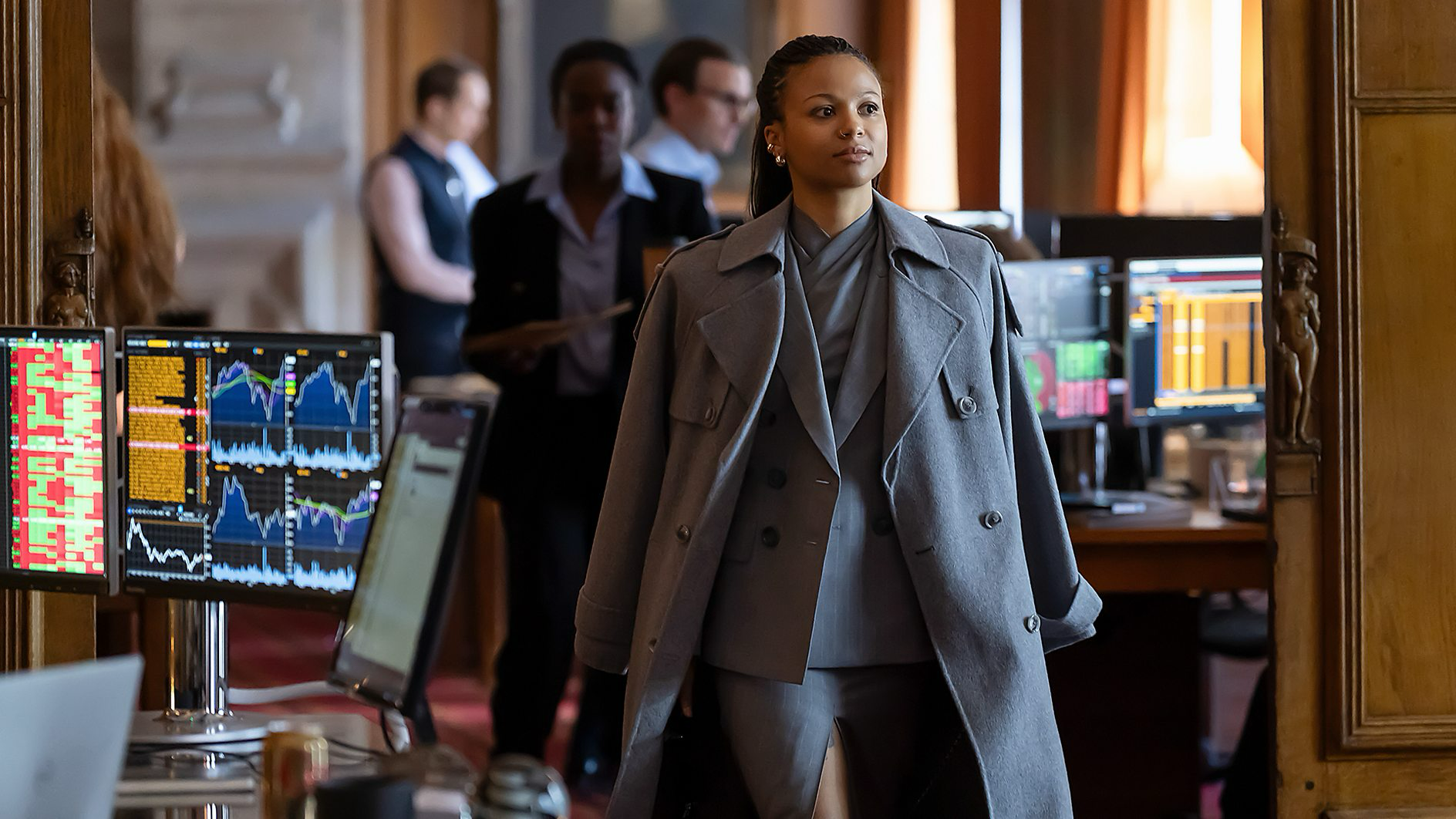
Meanwhile, Yasmin’s storyline accelerates into full political and media territory. Her engagement to Henry Muck, initially a strategic alignment disguised as romance, now folds her into the orbit of his family’s legacy — including a vast media conglomerate with its own dynastic expectations, legal liabilities, and ideological battles. Her decision to marry into power as a way of stabilizing her own collapsing reputation creates a narrative runway filled with land mines: the unresolved aftermath of the Hanani Publishing lawsuit, her father’s imploded public image, and the emotional residue she refuses to name. Season 4 positions her in a world where optics matter more than truth, and where her proximity to Tender’s founders puts her under scrutiny she has never experienced before.
Down and Kay have acknowledged that the show remains, at its core, a British drama shaped by American influences rather than an American series wearing a British accent. They’ve spoken about their desire to maintain London’s role as a character — its high society, its financial underbelly, its uniquely stratified social structures — even as the narrative stretches across borders. That tension between continents mirrors the characters themselves: Harper pulled stateside to chase a future she may not be ready for, Yasmin anchored in London by a marriage that feels more like a merger, and Henry Muck navigating the fallout of being both tech royalty and a liability.

(Image credit: Simon Ridgway/HBO)
Across the pond, Yasmin’s impending wedding is less a love story and more a political arrangement. Her alignment with Henry’s family places her in rooms she was never meant to enter — shaping narratives, defending reputations, and leveraging her own. The emotional wreckage left by her father still shadows every decision she makes, and whether she can withstand the weight of that legacy while entering a dynasty built on secrecy remains one of the season’s most compelling arcs. If Harper’s storyline is about danger, Yasmin’s is about exposure.
POPULAR ON THE CINEMA GROUP
Together, these threads form a season that shifts Industry from a workplace drama into a geopolitical, psychological, and deeply personal thriller. Every character steps onto a board where the stakes are higher, the players are sharper, and the consequences reach far beyond the glass offices of Pierpoint. Season 4 isn’t just about surviving the job — it’s about surviving the world that created it.
Is There a Trailer for Season 4?
HBO has released a teaser trailer set to Nina Simone’s “Lilac Wine,” giving viewers their first glimpse of the shifting dynamics between Harper, Yasmin, and the new Tender players. The footage suggests a season driven by heightened drama, shifting alliances, and the unmistakable sense that no one is prepared for what’s coming.
When Does Industry Season 4 Premiere?

(Image credit: Simon Ridgway/HBO)
Industry returns to HBO’s prime Sunday-night slot on January 11 at 9 p.m. ET/PT, with new episodes streaming weekly on HBO Max. The upcoming season features eight episodes, continuing the show’s evolution into a larger, more politically charged world while keeping its signature intensity intact.
The series is created, written, and executive produced by Mickey Down and Konrad Kay, whose creative vision has shaped the show’s rise from a finance drama into a multilayered examination of power, identity, and global influence. Industry is produced by Bad Wolf for HBO and the BBC, with executive producers Jane Tranter, Kate Crowther, and Ryan Rasmussen for Bad Wolf; Kathleen McCaffrey for Little Gems; and Rebecca Ferguson for the BBC. Season 4’s directing slate includes Down, Kay, Michelle Savill, and Luke Snellin.
With its return, the series reclaims its place as one of HBO’s most electrifying dramas — sharper, riskier, and more global than ever.







![WERWULF - Official Trailer [HD] - Only In Theaters Christmas](https://i.ytimg.com/vi/cmjpadVj-Vk/hqdefault.jpg)