‘Avatar: Fire and Ash’ Review: James Cameron’s Spectacle Expands, but the Saga Starts to Circle Itself
20th Century Studios.
James Cameron’s third trip to Pandora is visually overpowering and technically peerless, but Avatar: Fire and Ash finds the saga circling familiar terrain instead of charting bold new ground.
By the time Avatar: Fire and Ash arrives in theaters, James Cameron has nothing left to prove. The Avatar franchise has already rewritten box office history, redefined large-format 3D filmmaking, and established Pandora as one of the most fully realized fictional worlds ever committed to screen. With that legacy firmly intact, the third installment enters a different phase of expectation — not whether it will impress technically, but whether it still has something new to say.
In many ways, Fire and Ash is a triumph of craft. Cameron’s command of scale, motion, and visual storytelling remains unmatched in contemporary cinema. The film is enormous in every sense: its environments are richer, its action louder, its mythology denser, and its runtime more imposing than ever. And yet, for the first time in the saga, a sense of diminishing narrative returns begins to creep in — not because the filmmaking falters, but because the story feels increasingly familiar.
20th Century Studios.
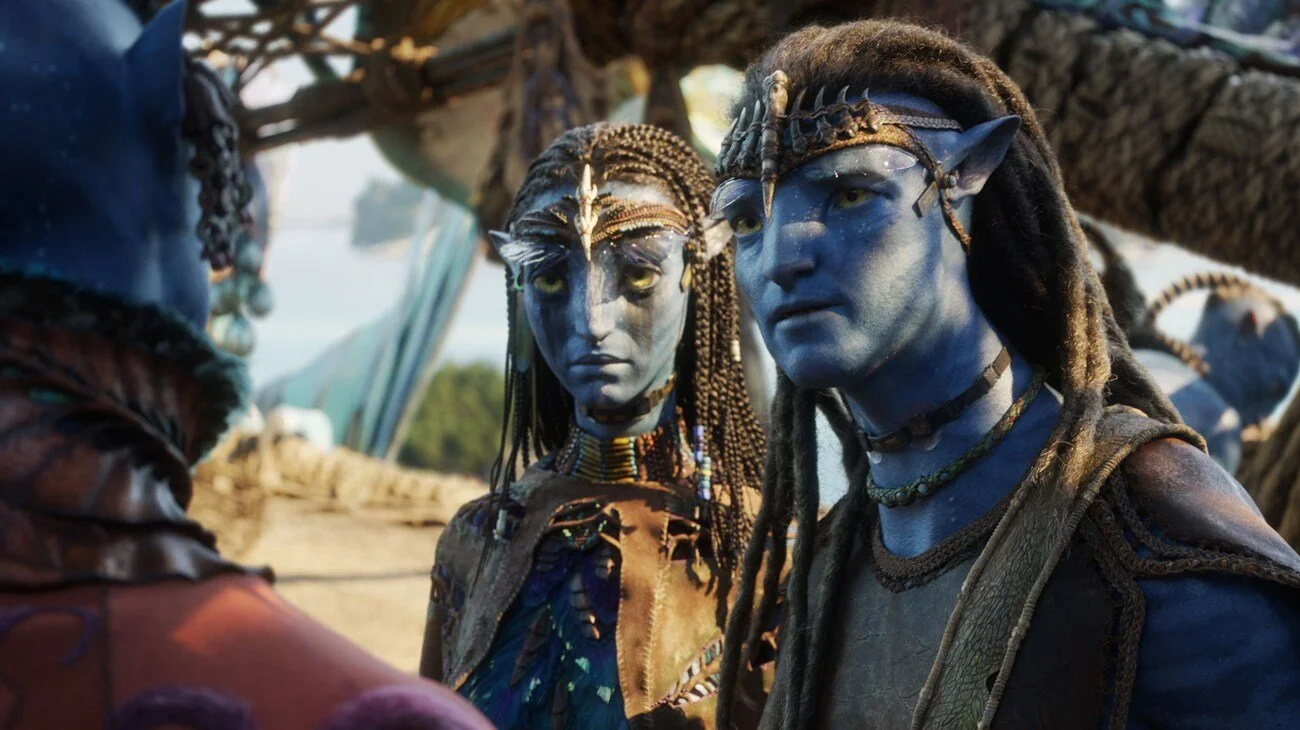
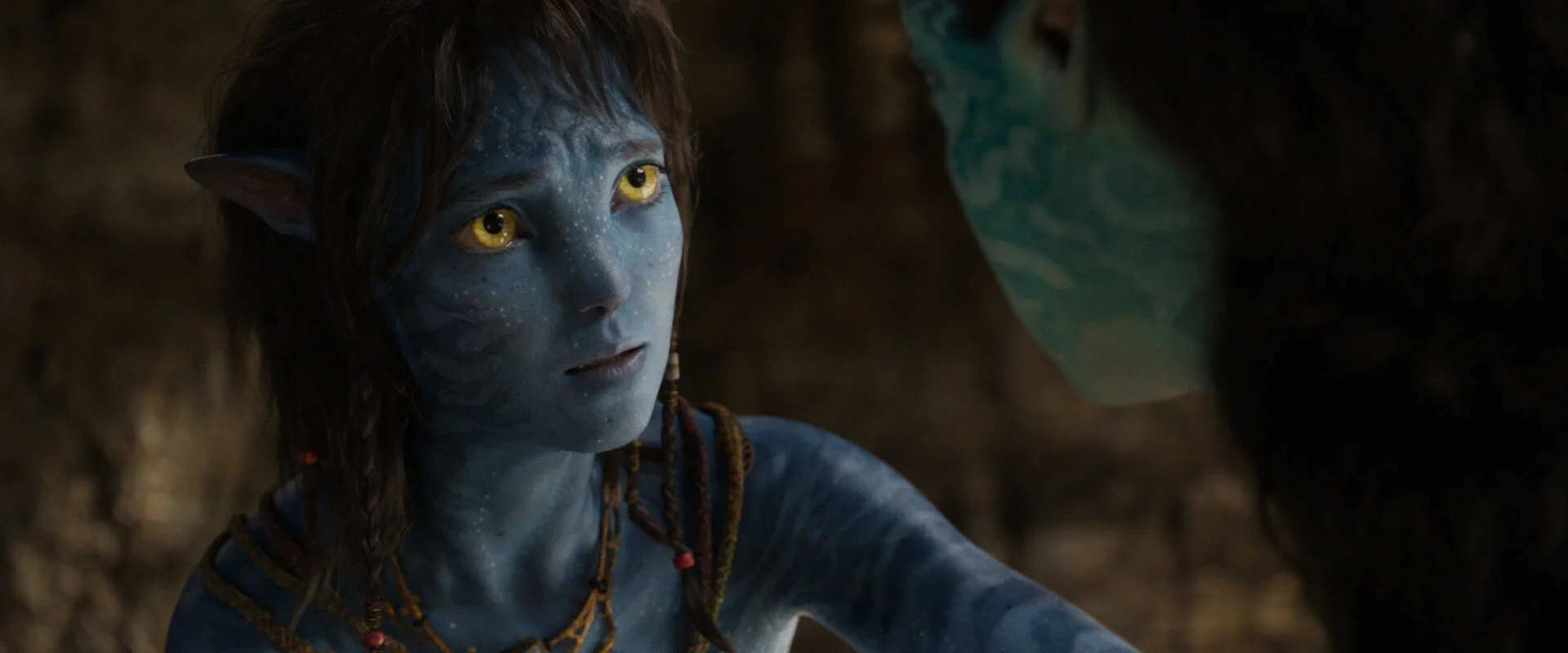
Set only weeks after the events of The Way of Water, the film resumes with Jake Sully and Neytiri still living among the Metkayina clan, having fled their forest home to protect their family. The grief over the death of their son Neteyam hangs heavily over the household, especially for Lo’ak, whose impulsiveness continues to drive emotional conflict. Jake, meanwhile, grows more militarized, increasingly willing to bend Na’vi tradition in favor of tactical survival. It’s a logical evolution for the character, but one that reinforces themes the franchise has already explored at length.
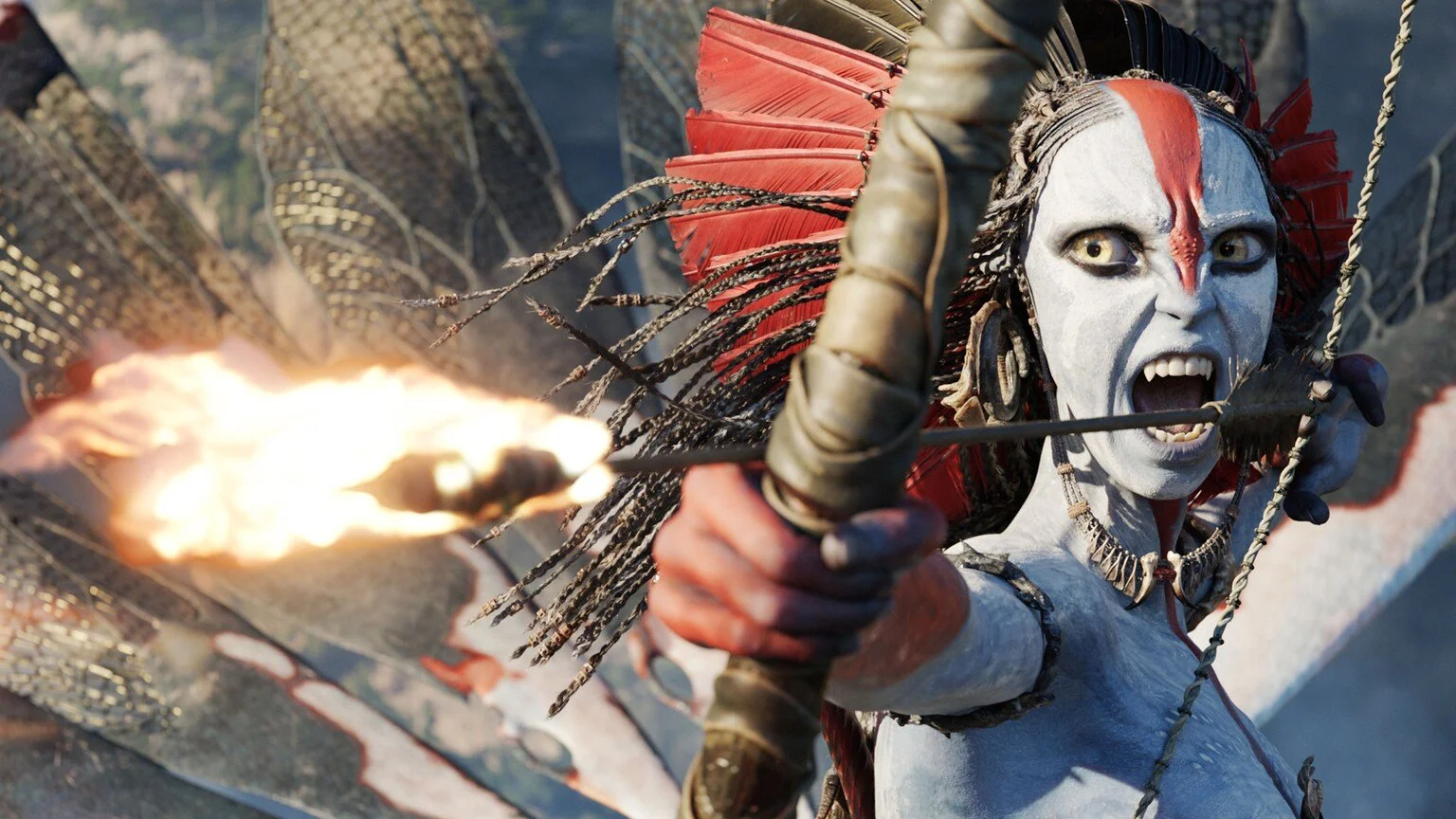
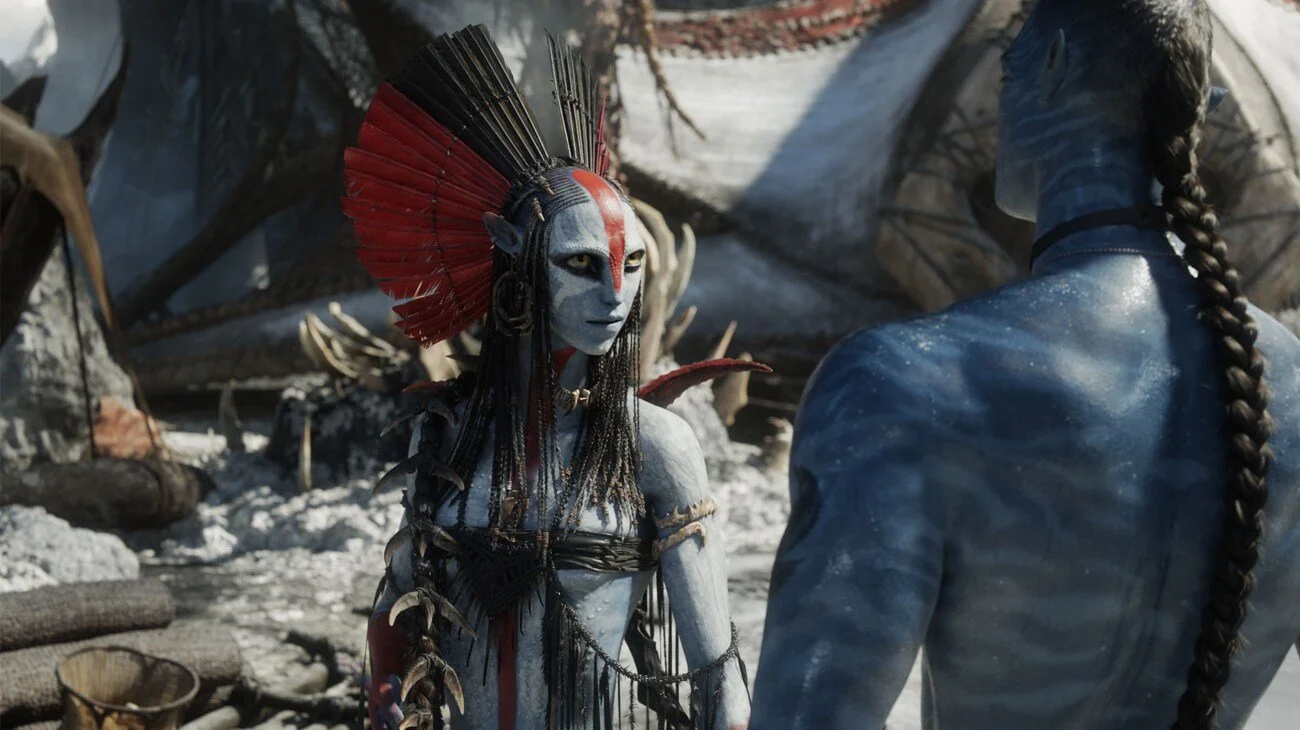
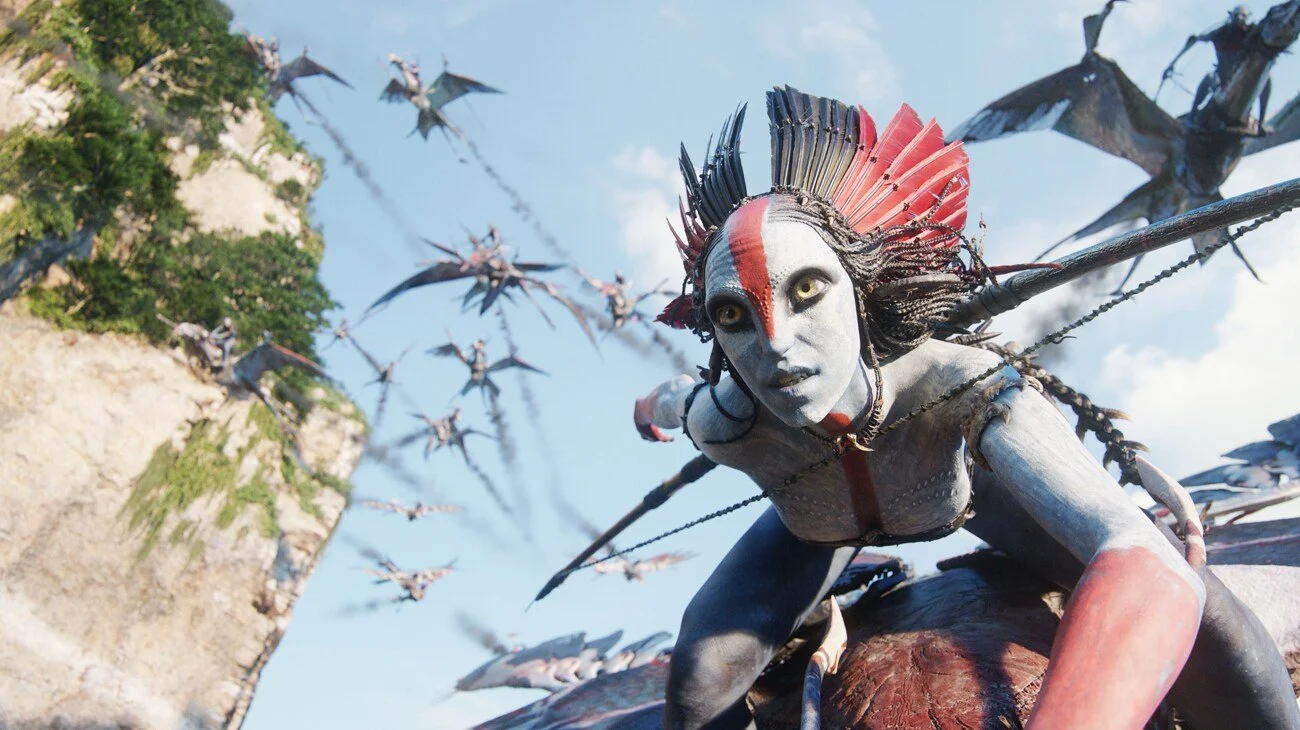
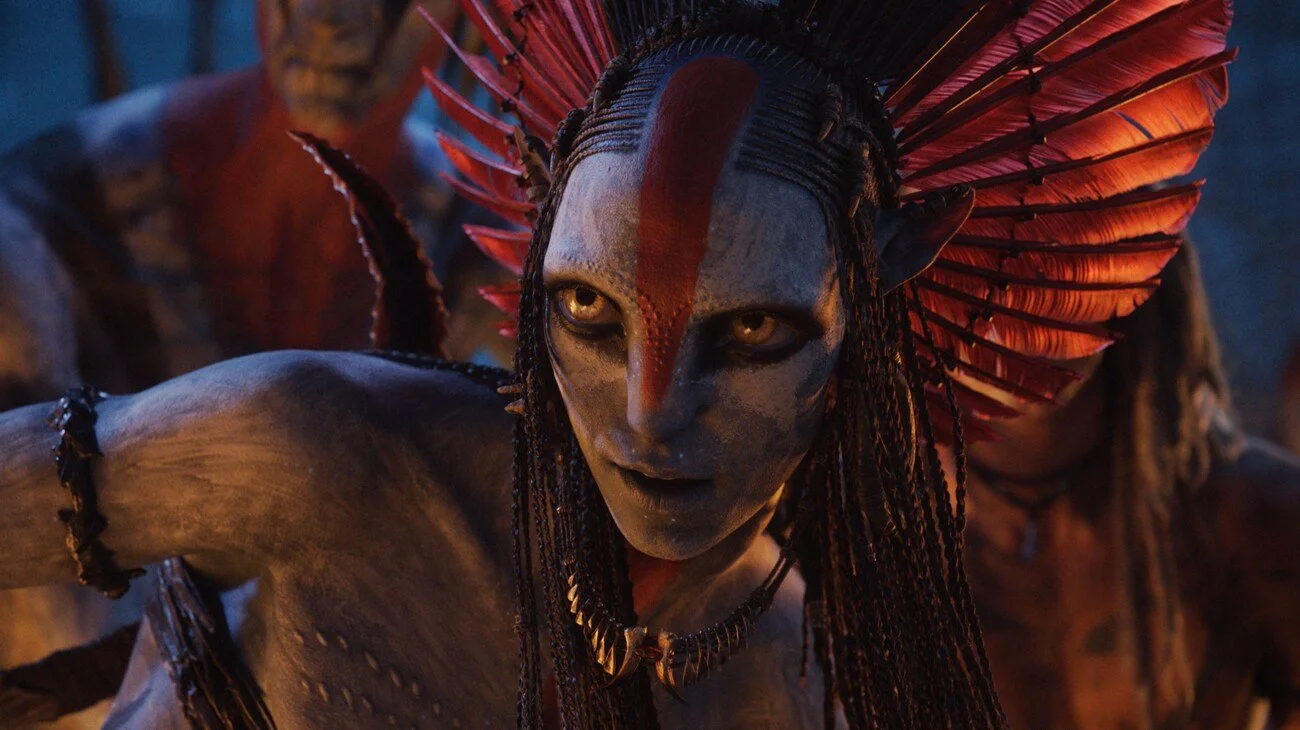
Cameron introduces a new faction to escalate the conflict: the Mangkwan Clan, also known as the Ash People. Once aligned with Eywa, they turned their backs on the planetary deity after volcanic devastation reduced their homeland to ash and ruin. Their leader, Varang, portrayed with ferocity by Oona Chaplin, is a visually striking and tonally darker antagonist than those that came before. Draped in scorched regalia and war paint, Varang embodies rage, survivalism, and nihilism — a Na’vi who has lost faith not only in humans, but in the spiritual balance that defines her species.
Chaplin’s performance is the film’s most invigorating addition. She plays Varang not as a mustache-twirling villain, but as a figure hardened by catastrophe, someone who believes annihilation is preferable to submission. Her alliance with Colonel Quaritch — once again embodied by Stephen Lang with grim, relentless intensity — gives the conflict a new texture: oppression not only imposed from outside Pandora, but fueled from within.
20th Century Studios.
And yet, despite this promising setup, Fire and Ash rarely allows Varang to become more than an instrument of destruction. Her motivations are clear but static, her cruelty relentless but unshaded. The film hints at ideological complexity — a Na’vi who rejects Eywa as fervently as humans exploit her — but stops short of exploring the moral ambiguity that could have elevated the conflict beyond spectacle.
That limitation extends to much of the film’s narrative architecture. Cameron and his co-writers pile on lore, terminology, and subplots with a density that occasionally overwhelms emotional momentum. The mythology, once elegant in its simplicity, now risks becoming self-referential. The Na’vi spiritual framework remains central, but repeated invocations of destiny, balance, and ancestral guidance begin to feel less revelatory and more procedural.
20th Century Studios.
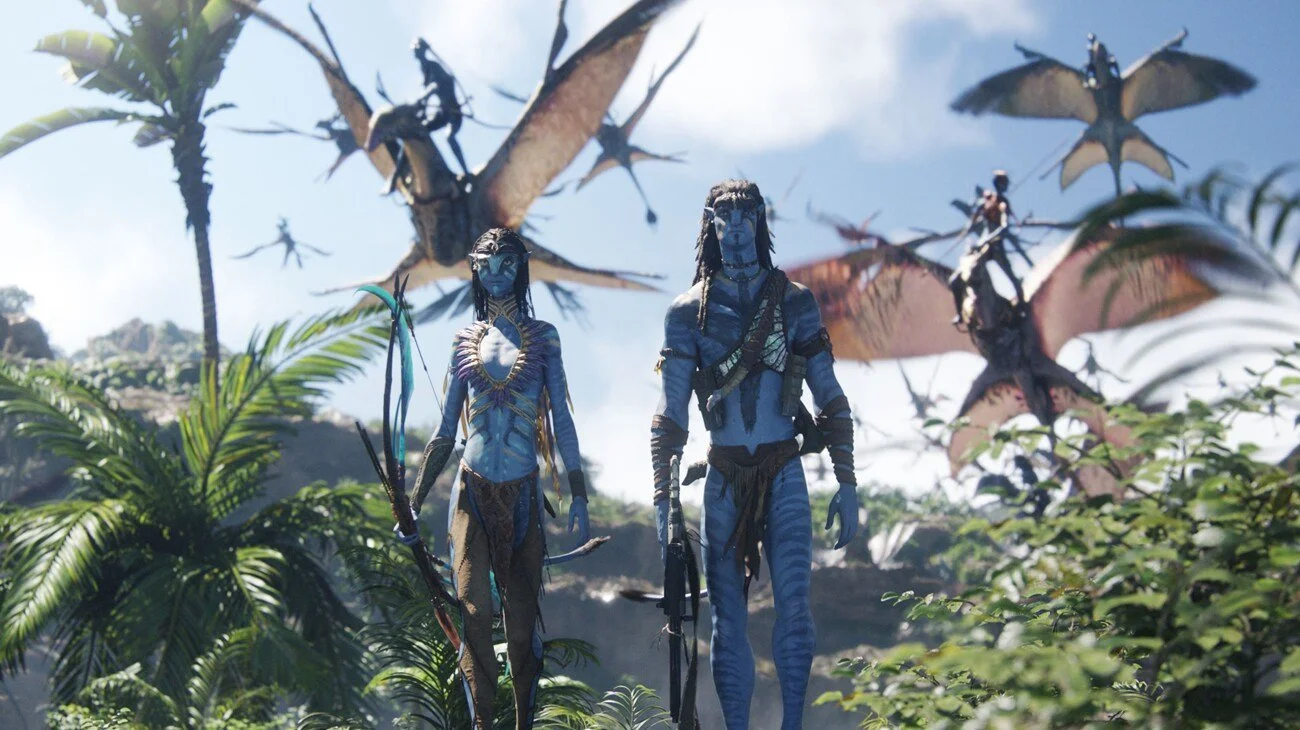
The returning cast remains committed. Sam Worthington’s Jake continues his evolution from reluctant outsider to hardened protector, increasingly willing to adopt the tactics of his former enemies. Zoe Saldaña’s Neytiri remains the franchise’s most visceral emotional force, though her grief and fury are deployed in ways that feel familiar rather than transformative. Sigourney Weaver’s Kiri continues to be the saga’s most intriguing mystery, her deepening connection to Eywa suggesting future narrative turns that this installment teases more than it delivers.
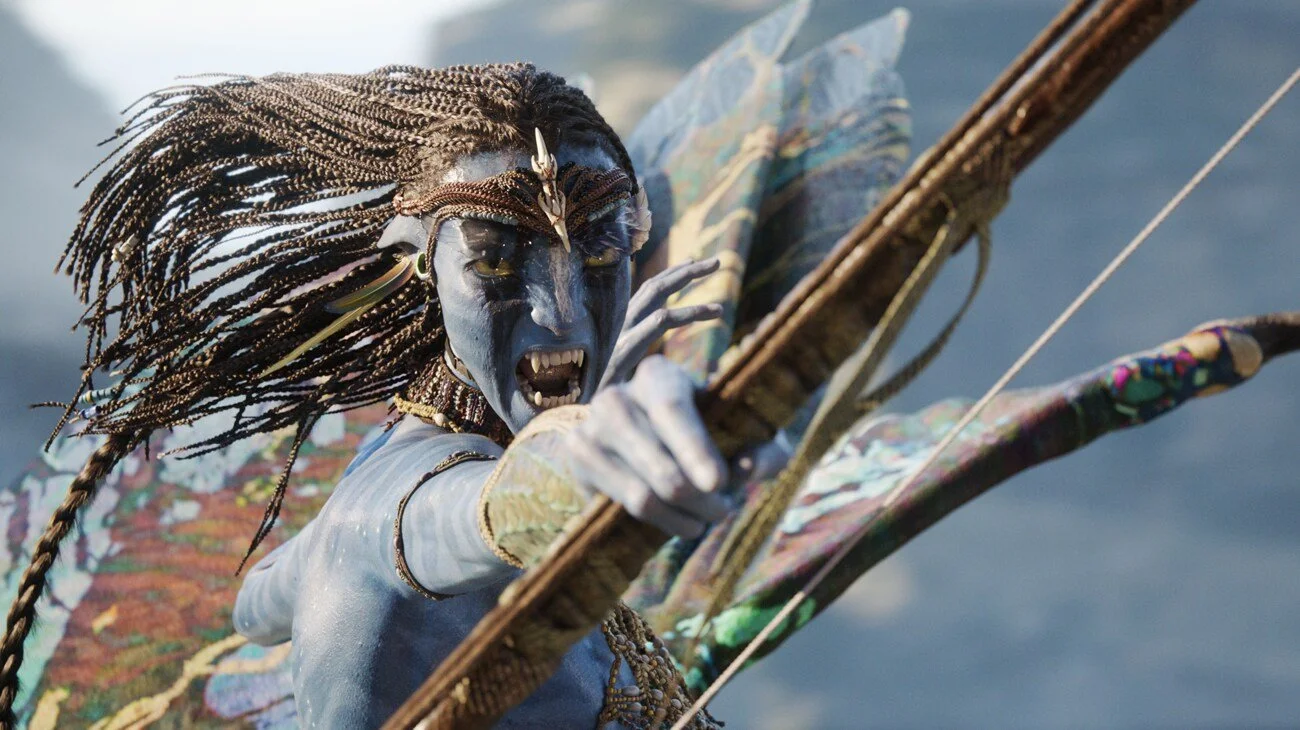
Visually, the film is staggering. Cameron’s volcanic landscapes, ash-filled skies, and airborne combat sequences push digital filmmaking to astonishing heights. The Mangkwan territory, scorched and unstable, offers a striking contrast to the lush forests and shimmering oceans of previous films. Cameron’s attention to physicality — how bodies move, collide, and strain within these environments — grounds even the most fantastical imagery in tactile realism.
20th Century Studios.
But scale comes at a cost. At over three hours, Fire and Ash struggles with pacing. Action sequences bleed into one another, and emotional beats are often undercut by the sheer volume of information being processed. Where The Way of Water felt expansive yet immersive, this installment occasionally feels overextended, its narrative propulsion slowed by the need to service future chapters.
Dialogue remains a persistent weakness. Cameron’s earnestness, once endearing, now sometimes borders on clumsiness. Modern colloquialisms clash awkwardly with the film’s mythic tone, and moments intended to humanize characters occasionally pull viewers out of the illusion. These issues are not new to the franchise, but they become more pronounced as repetition sets in.
20th Century Studios.
The central allegory — colonial exploitation versus Indigenous stewardship — remains powerful and relevant, especially in a global landscape increasingly defined by environmental collapse. But Fire and Ash reiterates this message rather than reframing it. The film is less interested in challenging its thesis than in amplifying it through larger battles and higher stakes. As a result, the story feels more like an escalation of conflict than an evolution of ideas.
POPULAR ON THE CINEMA GROUP
None of this will likely matter to audiences in search of spectacle. Avatar: Fire and Ash will dominate premium screens, sell out IMAX auditoriums, and reinforce Cameron’s status as one of cinema’s great showmen. The action is relentless, the imagery overwhelming, and the emotional cues unmistakable. For many viewers, that will be more than enough.
20th Century Studios.
But for a franchise that once felt revolutionary, the absence of surprise is notable. Fire and Ash is not a misstep — it’s a reminder that even the most meticulously crafted worlds need narrative reinvention to remain vital. Cameron’s ambition remains colossal, but ambition alone cannot indefinitely substitute for invention.
As the saga marches toward its planned conclusion, Avatar: Fire and Ash stands as both a testament to Cameron’s unparalleled technical mastery and a cautionary signal. Pandora is still breathtaking. The question now is whether future installments can make it feel unknown again.
RATING: ★★★½☆
That’s a Wrap
|
Avatar: Fire & Ash [2025]
|
That’s a Wrap | Avatar: Fire & Ash [2025] |
“James Cameron still commands spectacle like no one else, but ‘Avatar: Fire & Ash’ reveals a franchise beginning to echo itself — thunderous, technically immaculate, and increasingly hollow beneath the noise.”
CREDITS
Release Date: Friday, December 19, 2025 | 20th Century Studios
Director: James Cameron
Writers: James Cameron, Rick Jaffa, Amanda Silver
Story By: James Cameron, Rick Jaffa, Amanda Silver, Josh Friedman, Shane Salerno
Cast: Sam Worthington, Zoe Saldaña, Sigourney Weaver, Stephen Lang, Oona Chaplin, Kate Winslet, Cliff Curtis, Edie Falco, David Thewlis
Runtime: 3 hours 17 minutes
Rating: PG-13
Out Now: In Theaters
Watch the Trailer Below:









![WERWULF - Official Trailer [HD] - Only In Theaters Christmas](https://i.ytimg.com/vi/cmjpadVj-Vk/hqdefault.jpg)