‘The Devil Wears Prada 2’ Box Office Surge Signals a Structural Shift in Summer Movie Economics
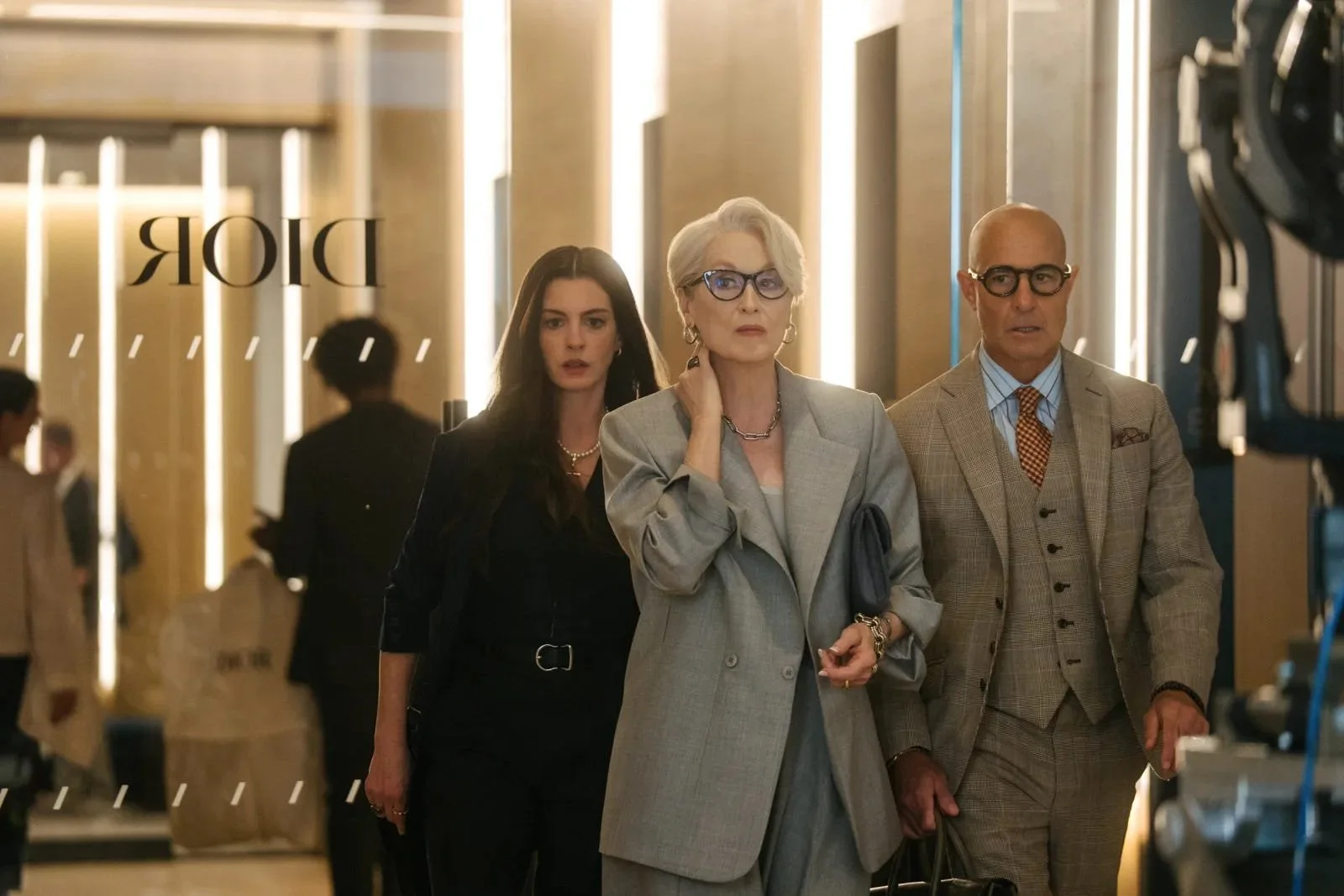
Anne Hathaway, Meryl Streep and Stanley Tucci in 'The Devil Wears Prada 2.' MACALL POLAY/WALT DISNEY STUDIOS MOTION PICTURES/COURTESY EVERETT COLLECTION
The massive debut of The Devil Wears Prada 2 points to a widening definition of summer tentpoles, where legacy-driven, performance-focused films can now compete with traditional action franchises.
The box office performance of The Devil Wears Prada 2 is beginning to register as more than a strong franchise revival — it is emerging as a case study in how audience behavior is reshaping the economics of summer theatrical releases.
The film is currently tracking toward a $75 million to $80 million domestic opening, supported by a $32.5 million Friday start and $10 million in previews, with an early global total already surpassing $180 million. While the numbers themselves are impressive, the more significant development is what kind of film is generating them.
Unlike traditional summer tentpoles built around action spectacle or visual effects-driven scale, The Devil Wears Prada 2is operating almost entirely on legacy familiarity and performance-driven appeal. Its commercial engine is not expansion of world-building or escalation of stakes, but the return of established characters audiences already recognize.
That distinction is becoming increasingly important in a fragmented theatrical market where new intellectual property carries higher risk and audience attention is more selective. The reunion of Meryl Streep, Anne Hathaway, Emily Blunt, and Stanley Tucci functions less as nostalgia marketing and more as a trust signal — a guarantee of tonal continuity in a release environment defined by volatility.
POPULAR ON THE CINEMA GROUP
The film’s positioning as a summer season opener is also notable. Historically, this release window has been dominated by franchise action films or superhero properties designed for global scale. Prada 2 breaks that pattern, suggesting that studios are beginning to reconsider what qualifies as a viable tentpole — particularly when legacy IP carries built-in audience recognition and cross-demographic appeal.
International performance reinforces that shift. Strong openings across multiple territories indicate that the Prada brand has evolved beyond its original cultural context into a globally understood framework for fashion, ambition, and media dynamics. That level of portability is typically reserved for action franchises, not character-driven sequels.
At the same time, the film’s success raises a broader strategic question: whether this performance is an anomaly driven by nostalgia, or part of a longer-term recalibration in theatrical demand. Early indicators suggest the latter may be closer to reality, particularly as audiences continue to prioritize familiarity and emotional continuity over novelty alone.
If that trend holds, The Devil Wears Prada 2 may ultimately function as more than a successful sequel — it may represent an early marker in how studios redefine the boundaries of summer box office strategy.
| FEATURES | INTERVIEWS | REVIEWS | The Catalogue | TRENDING | TRAILERS | VIDEOS |




![WERWULF - Official Trailer [HD] - Only In Theaters Christmas](https://i.ytimg.com/vi/cmjpadVj-Vk/hqdefault.jpg)