Euphoria Season 3 Episode 5 Recap: Cassie’s OnlyFans Boom, Maddy’s Management Empire, and “This Little Piggy” Ends With WHICH Main Character Buried Alive?

Photograph by Eddy Chen/HBO
Maddy’s line about outrage becoming profit lands as the episode’s quiet thesis, framing Euphoria as a system where attention, instability, and collapse are no longer side effects of fame, but its primary fuel source.
Euphoria Season 3 Episode 5 continues to escalate its overlapping storylines, pulling each character further into a world where fame, control, and instability are increasingly indistinguishable from one another. What once felt like separate narrative threads now operate as a shared system, where every decision carries consequences that ripple far beyond individual relationships.
As Cassie’s rise accelerates, Maddy’s role shifts into something more calculated, and Rue finds herself pulled deeper into increasingly dangerous territory, the episode frames its chaos less as isolated drama and more as a connected ecosystem. Across every storyline, the show continues tightening its focus on visibility, leverage, and survival as the forces shaping its characters’ lives.
The Thesis of Attention

Photograph by Eddy Chen/HBO
If there is a single line that captures the logic of Euphoria Season 3, it comes early in the episode, delivered almost offhand by Maddy: “You know it’s funny, the angrier these idiots get, the more money you make.” What makes it land is not the shock of the line itself, but how cleanly it reframes everything that follows. It doesn’t read like dialogue so much as diagnosis, a moment where the show briefly exposes the machinery it has been building toward all season. Rage is no longer reaction in this world, it is currency.
At this stage, Euphoria Has Fully Drifted Away From Anything Resembling The Original Structure And Audiences Are Torn, Even Disgusted, Appalled However No One Can Stop Watching And It's All Anyone Can Talk About. The Direction We Got Used To In The First Two Season Might Be Gone But What Remains Is Something Closer To A Distortion Field Of Internet Logic, Where Characters Are Shaped Less By Emotional Arcs Than By Visibility Cycles. Narrative Coherence Bends Under The Weight Of Engagement, And The Result Is A World Where Being Seen Is Functionally More Important Than Being Understood. The Conversation Around The Show Is No Longer Separate From The Show Itself; It Is Part Of Its Ecosystem.
This episode pushes that idea further by collapsing the boundary between performance and infrastructure. Cassie’s rise is not framed as personal transformation but as operational scaling, while Maddy’s role evolves into something closer to systems design than management. Even the violence and paranoia threaded through Rue and Alamo’s storyline feel less like plot escalation and more like competing control structures reacting to the same unstable environment. Everything is being measured, monetized, or weaponized.
What holds the episode together is not tone or realism, but consistency of logic. Absurdity is no longer an exception, it is the language the world operates in. Emotional instability, surveillance, sexual performance, and institutional violence all begin to function as interchangeable outputs within the same system. The show is not trying to resolve chaos anymore. It is documenting what happens when chaos becomes structurally profitable.
Cassie and Maddy: Monetization as Identity

Photograph by Eddy Chen/HBO
Cassie’s storyline in this episode is where the system becomes fully visible. What begins as an explosion of attention quickly stabilizes into something more industrial, as her OnlyFans growth moves from sudden virality into structured output. The jump in subscribers is not treated as luck or shock value, but as acceleration, a metric of momentum that validates the system around her. Cassie is no longer simply participating in attention economy logic; she is being absorbed by it.
Maddy exists at the center of that absorption, not as a moral counterweight but as an architect. Her approach to Cassie is increasingly procedural, treating content creation, subscriber engagement, and audience behavior as inputs to be optimized rather than expressions of identity. The emotional stakes of their relationship flatten under this logic. Even Cassie’s connection to Nate is reframed not as romance or dependency, but as financial friction, a variable that disrupts system efficiency.
Brandon Fontaine enters this space like a competing operating model. Where Maddy represents controlled scaling, Brandon represents industrial expansion, influencer networks, content houses, and platformized identity. The tension between them is not personal but structural, a conflict between two different models of monetization competing for the same subject.
As Cassie begins transitioning into podcasts and performative media appearances, the distinction between character development and media rollout begins to dissolve entirely. Her identity becomes modular, adjusted depending on audience, platform, and context. The show never pauses to moralize this shift, because within its logic, morality itself has become secondary to distribution.
The giant Cassie sequence from the Opening is where this idea becomes literal. Her expansion across Los Angeles is not framed as metaphor in the traditional sense, but as the visual endpoint of attention without containment. Fame stops being symbolic and becomes spatial. The city reacts to her presence rather than observing it, and the scale distortion reflects the show’s underlying argument: virality is not growth, it is transformation into something unrecognizable.
Rue, Alamo, Bishop, and the Collapse of Control Systems

Photograph by Eddy Chen/HBO
Rue’s storyline operates in a different register, but it is structurally connected to the same logic of containment and escalation. Her position between institutional forces and criminal ecosystems makes her less of a participant and more of a pressure point where systems overlap. The DEA thread does not function as a separate narrative lane anymore; it collapses into Alamo’s world of surveillance, retaliation, and paranoia.
Alamo’s operation has become less about criminal enterprise and more about system maintenance. Every decision is filtered through suspicion, and every interaction is evaluated for potential betrayal. Laurie’s network, the Silver Slipper, and the farm all begin to merge into a single ecosystem defined by missing money, unstable alliances, and informational leverage rather than physical currency.
POPULAR ON THE CINEMA GROUP
Bishop intensifies this logic by turning paranoia into procedure. His belief that Rue is a contaminating presence is not treated as irrational fear but as operational theory. The Tyvek suit, the tools, the preparation—all of it reflects a system where violence is pre-structured rather than reactive. Even Big Eddy’s implied fate becomes part of that administrative logic, where disappearance is not emotional consequence but functional removal.

Photograph by Eddy Chen/HBO
The Riehl/Laurie thread anchors this section of the episode by shifting the value system entirely. Money is no longer the primary object of pursuit. What matters instead is access, knowledge, and control over the mechanisms that generate money. Alamo’s assertion that Laurie is holding something “more valuable than money” reframes the entire conflict into something closer to infrastructure warfare than crime drama.
Lexi, Maddy, and the TV Show Breakthrough
The shift from online virality to mainstream visibility arrives through Lexi’s storyline, where Cassie’s trajectory collides with traditional entertainment infrastructure in a way that feels both inevitable and slightly chaotic. There is no formal audition process in the conventional sense, just pressure, leverage, and Maddy stepping in to force access where it would not normally exist. Lexi becomes the unwilling gatekeeper in a system that no longer really respects gates.

Photograph by Eddy Chen/HBO
What unfolds at the studio is less a performance in the traditional sense and more a demonstration of adaptability under contradictory expectations. Cassie appears in a hyper-stylized, almost caricatured version of herself, leaning into the “bubbly, blonde, engineered personality” that the industry expects on first glance. The measurements, performance gestures, and surface-level charm function like a preloaded algorithm of marketable identity—readable, consumable, and intentionally shallow.
But the shift happens when that constructed version of Cassie fractures mid-audition. The performance slips into something unexpected as she pivots into Shakespeare’s Antony & Cleopatra, delivering Cleopatra’s monologue of defiance with a seriousness that interrupts the tone of the room entirely. What was initially framed as novelty begins to register differently—not as parody or accident, but as competence in a space that didn’t account for it.
Lexi, watching from the control room, becomes the closest thing the sequence has to an emotional anchor, though even her reaction splits between recognition and frustration. On the monitors, Cassie is evaluated in real time by industry figures who begin to recalibrate what they are seeing. The laughter doesn’t fully disappear, but it starts to coexist with interest, which in this world reads as validation.
When the decision finally lands, it doesn’t feel like resolution so much as absorption. Cassie is told she has the part, and her reaction is immediate and overwhelming, collapsing the moment into pure forward momentum. Fame is no longer abstract to her—it becomes immediate, physical, and self-reinforcing. She speaks about being on television, recognition, inevitability, as if the outcome has already expanded beyond the room they are standing in.
Lexi’s response cuts against that energy entirely. Her frustration is not just about Cassie’s ambition, but about the way she has weaponized proximity, used names, and navigated systems through emotional shortcuts rather than process. Her rejection lands as clarity rather than cruelty, a final attempt to reintroduce consequence into a space that has stopped acknowledging it.
But Cassie is already past that point. Even as Lexi walks away, the system continues. The show does not pause to resolve their conflict because, within its structure, resolution is no longer the objective. Cassie’s trajectory is already accelerating elsewhere, folding conflict into momentum and transforming every rupture into material for the next stage of visibility.
Nate: Cycles of Damage as Structure

Photograph by Eddy Chen/HBO
Nate continues to function as a closed loop of instability, where recovery and destruction operate in immediate succession. Any moment of apparent calm is interrupted by renewed violence, reinforcing the show’s structural refusal to allow permanence.
His injuries become repetitive markers of narrative reset rather than progression. The fragmentation of his body is not symbolic escalation so much as structural reinforcement of a central idea: identity in this world does not accumulate experience, it cycles through damage. Nate does not evolve. He resets under pressure.
Jules: Emotional Misalignment

Photograph by Eddy Chen/HBO
Jules continues to exist in a state of emotional translation failure, where intimacy is constantly present but never fully resolved into meaning. Her interactions with Rue never reach clarity because the system they exist within no longer supports stable emotional exchange.
Even moments of vulnerability are reframed as performance stress tests, where the question is not what is felt, but what can be sustained without destabilizing the surrounding system. Emotional language loses its function not because characters stop expressing themselves, but because expression no longer produces consistent interpretation.
Rue: The Burial Cliffhanger
Photograph by Eddy Chen/HBO
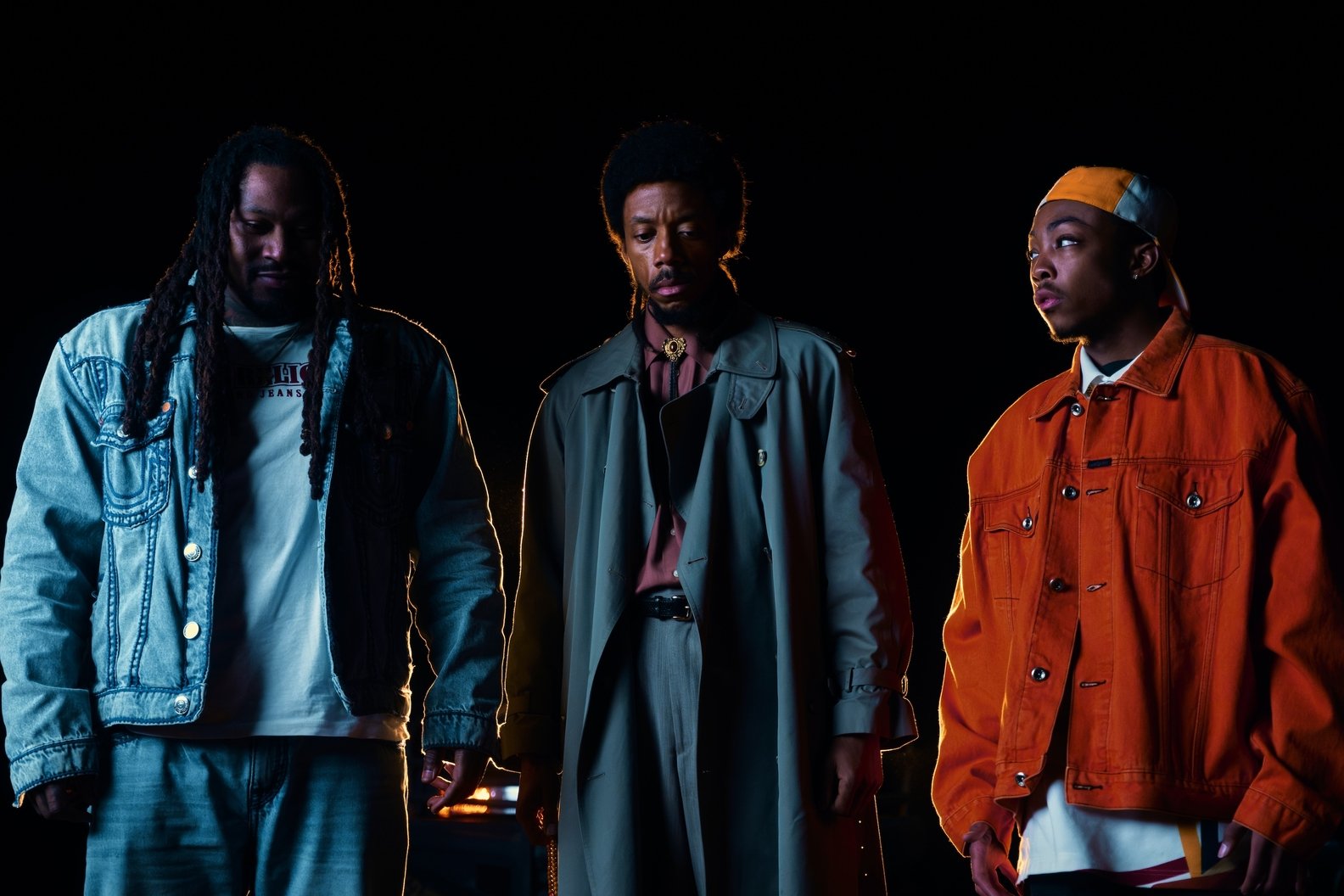
The final movement of the episode removes any remaining illusion of narrative safety. Rue’s trajectory collapses into a controlled containment scenario where agency is stripped away incrementally rather than abruptly. The forced digging, the partial entombment, and Alamo’s approach on horseback are not structured as climax in the traditional sense, but as system enforcement.
By the time Rue is buried, she is no longer being negotiated with or observed. She is being processed. The system around her has fully transitioned from surveillance to execution logic, where outcomes are predetermined by structural pressure rather than narrative choice.
The cut to black does not function as resolution or suspense in the conventional sense. It functions as suspension of operational certainty. Rue is no longer in a liminal narrative space. She is in a suspended state inside a system that has temporarily stopped confirming outcomes.

Photograph by Eddy Chen/HBO
This episode of Euphoria does not escalate so much as converge. Cassie’s monetized visibility, Maddy’s structural control, Rue’s systemic entrapment, and Alamo’s paranoid enforcement all begin to function as parts of a single integrated machine.
The defining idea of the episode is not chaos, but coherence within chaos. Attention becomes currency, currency becomes control, and control becomes the only remaining form of survival.
By the final frame, the show is no longer asking what happens next. It is demonstrating what a world looks like when nothing inside it can remain stable long enough to matter.

| FEATURES | INTERVIEWS | REVIEWS | The Catalogue | TRENDING | TRAILERS | VIDEOS |






![WERWULF - Official Trailer [HD] - Only In Theaters Christmas](https://i.ytimg.com/vi/cmjpadVj-Vk/hqdefault.jpg)