‘Michael’: What Critics Are Saying About the King of Pop Biopic Starring Jaafar Jackson
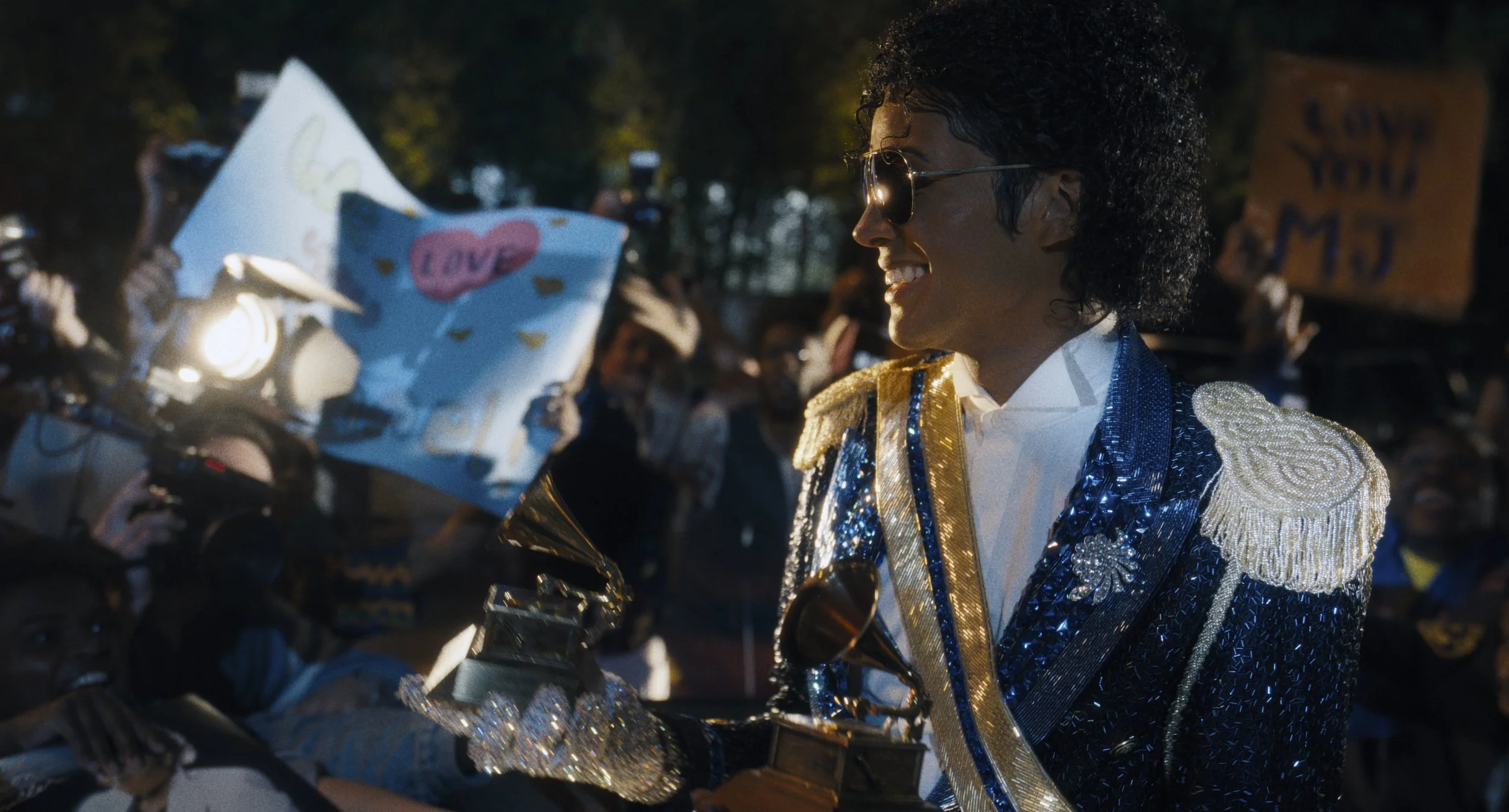
LIONSGATE
Critics are divided on Michael, Antoine Fuqua’s ambitious King of Pop biopic led by Jaafar Jackson in his debut performance.
Michael is heading into theaters this Friday, and the critical response following its world premiere is already shaping a sharply divided conversation around the film’s approach to Michael Jackson’s legacy.
Directed by Antoine Fuqua, the biopic follows Jackson’s rise from his early days in the Jackson 5 through his evolution into one of the most globally influential entertainers in music history. The film stars Jaafar Jackson — Michael’s nephew and Jermaine Jackson’s son — in the title role, with Miles Teller, Colman Domingo, Kat Graham, Nia Long, Laura Harrier, Kendrick Sampson, and Amaya Mendoza rounding out the ensemble.
Early reactions suggest a film that is musically driven but narratively cautious, particularly in how it engages with the more complex and controversial aspects of Jackson’s life. While the Jackson family has largely supported the project — with La Toya Jackson praising Jaafar’s performance as indistinguishable from her brother — critics have pointed to what the film leaves out as much as what it includes.
POPULAR ON THE CINEMA GROUP
David Rooney of The Hollywood Reporter praised Jaafar Jackson’s performance, writing that he “nails the sweet, soft-spoken voice with which Michael projected a childlike innocence and vulnerability,” while also noting the film’s strong focus on performance recreation and stage energy. He described it as a celebration of Jackson’s artistry, emphasizing that the musical sequences are “shot with visual electricity” and that the sound design elevates the concert recreations.
Other critics, however, were less receptive to the film’s tonal choices.
Writing for The Guardian, Peter Bradshaw called the film “a frustratingly shallow, inert picture,” arguing that it avoids engaging with the darker dimensions of Jackson’s life. He noted that while childhood trauma is acknowledged through depictions of Joe Jackson’s controlling behavior, the film largely avoids exploring how that history connects to later allegations and controversies.
The New York Times’ Alissa Wilkinson echoed similar concerns, pointing out that the film “omits the really hard stuff that plagued Jackson,” including addiction and the more difficult aspects of his adult life. She also highlighted the broader context surrounding the Jackson estate and its role in shaping how the story is told.
Kevin Maher of The Times UK focused more on structure than omission, describing the narrative as anchored by a single recurring tension — Jackson’s relationship with his father — which he felt limited the film’s dramatic range. While he praised Jaafar Jackson’s physical performance and accuracy in recreating iconic moments, he suggested the film ultimately struggles to expand beyond surface-level dramatization.
Others were more mixed. Melissa Ruggieri of USA Today praised Jaafar’s performance as “studied to perfection,” particularly in recreating Jackson’s movement and stage presence, but criticized certain visual choices, including CGI animals, as distracting from the emotional core of the story.
Rolling Stone’s David Fear took a more stylistic approach in his critique, writing that the film functions as a kind of “Passion of St. Michael,” focused heavily on mythologizing Jackson through performance recreation. While acknowledging Jaafar Jackson’s uncanny resemblance and physical precision, he noted that the film’s emphasis on recreating iconic moments can feel more reverential than revealing.
Watch The Trailer Below:
Across reviews, a consistent divide emerges: Michael is being recognized for its performance craft and musical staging, but questioned for its reluctance to fully engage with the complexity of its subject.
The film arrives in theaters Friday.

| FEATURES | INTERVIEWS | REVIEWS | The Catalogue | TRENDING | TRAILERS | VIDEOS |







![WERWULF - Official Trailer [HD] - Only In Theaters Christmas](https://i.ytimg.com/vi/cmjpadVj-Vk/hqdefault.jpg)