Stephen Colbert Is Co-Writing a New ‘Lord of the Rings’ Movie — And It Might Be the Most Faithful Yet
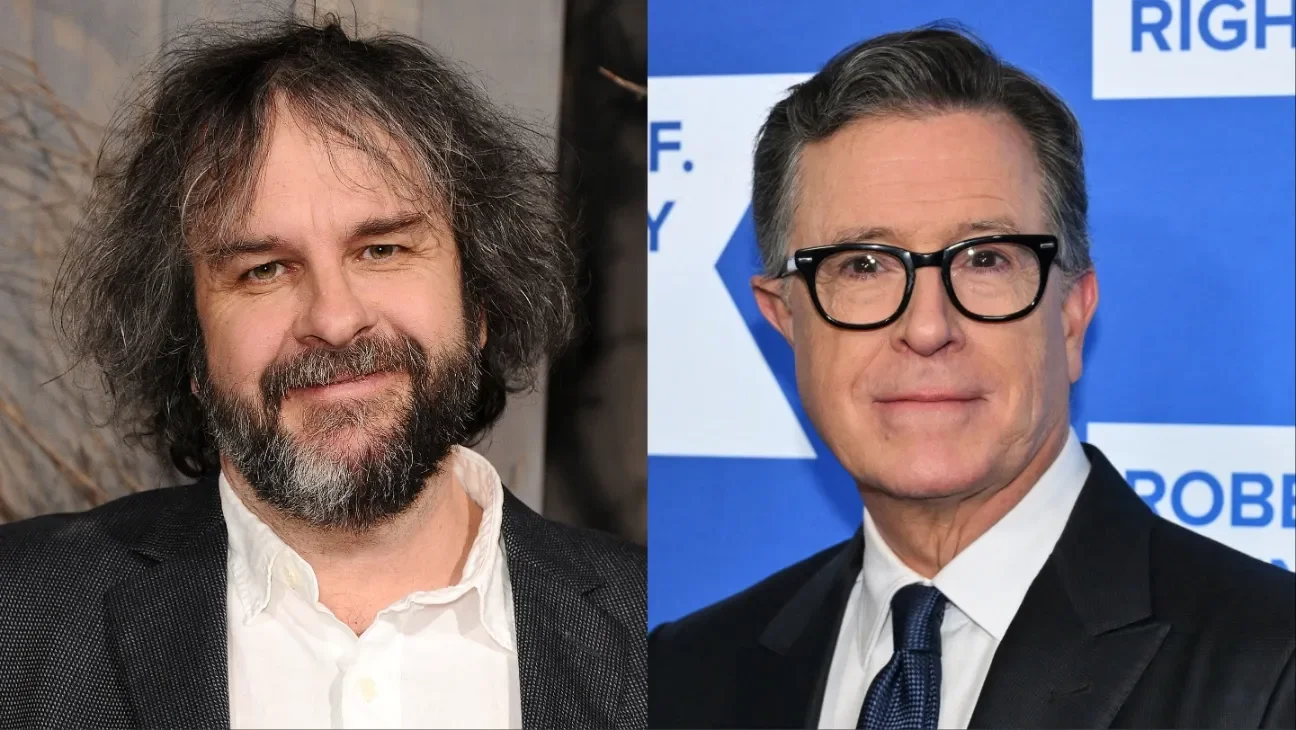
Peter Jackson and Stephen Colbert. JASON LAVERIS/FILMMAGIC; ANGELA WEISS / AFP VIA GETTY IMAGES
A lifelong Tolkien obsessive steps behind the curtain, and suddenly Middle-earth feels personal again.
In a move that feels both unexpected and oddly inevitable, Stephen Colbert is officially stepping into Middle-earth — not as a host, not as a fan, but as a writer.
The late-night mainstay has been tapped to co-write a new installment in the Lord of the Rings franchise, working alongside Philippa Boyens and Peter McGee, with Peter Jackson returning to help shape the next chapter of the cinematic universe he helped define. The film, currently operating under the working title The Lord of the Rings: Shadow of the Past, will follow The Lord of the Rings: Hunt for Gollum, which is already in development with Andy Serkis directing.
On paper, it reads like a surprising pivot. In reality, it makes perfect sense.
Colbert has spent years publicly positioning himself as one of the most devoted readers of J.R.R. Tolkien’s work in modern media. This isn’t a celebrity cameo in a beloved franchise. This is someone who has been studying the material for decades finally getting a chance to interpret it at scale. And more importantly, it’s someone who understands both the books and the films — and the tension between staying faithful to each.
That tension is exactly where this project lives.
Colbert revealed that the story draws from early chapters of The Fellowship of the Ring that were never fully explored in The Lord of the Rings trilogy — specifically the stretch between “Three Is Company” and “Fog on the Barrow-downs.” It’s the kind of deep-cut source material that only a true fan would prioritize, but also the kind that offers something the franchise hasn’t had in years: room to expand without rewriting what already works.
What’s emerging is not a reboot, not a spin-off in the traditional sense, but something closer to a narrative expansion — a story designed to sit inside the mythology rather than reshape it.
That alone is enough to separate it from most modern franchise extensions.
There’s also something quietly compelling about the timing. Colbert is preparing to exit The Late Show with Stephen Colbert, which is set to end its run this May. For years, he’s operated within a format built on reaction — commentary, satire, nightly cycles. This project represents the opposite: long-form storytelling, legacy-building, something designed to last.
It’s a transition from reacting to culture to helping shape it.
And he’s not doing it alone.
The return of Jackson, along with longtime collaborators Fran Walsh and Boyens, anchors the project in continuity. These are the architects of the original trilogy, the people who translated Tolkien’s work into one of the most successful and culturally defining film franchises of all time. Their involvement signals that this isn’t a detached experiment. It’s an extension of a world they’ve already built.
Warner Bros., led by executives Pam Abdy and Mike De Luca, reportedly backed the concept early — another sign that the studio sees this as more than just another installment.
POPULAR ON THE CINEMA GROUP
Narratively, the film is set to follow familiar characters in unfamiliar territory. Fourteen years after the events that defined the original journey, Sam, Merry, and Pippin retrace the first steps of their adventure, while a new thread emerges through Sam’s daughter, Elanor, who uncovers a hidden truth about how close Middle-earth came to falling long before the War of the Ring reached its peak.
It’s both forward-looking and retrospective. A continuation and a reexamination.
Meanwhile, The Hunt for Gollum continues to build momentum ahead of its planned 2027 release, with a cast that includes Ian McKellen returning as Gandalf and Serkis reprising his role as Gollum. Elijah Wood has also hinted at a possible return, suggesting that Warner Bros. is leaning heavily into continuity as it reopens the world of Middle-earth for a new generation.
That strategy isn’t subtle.
But what makes this next phase of Lord of the Rings feel different is who’s guiding it.
Colbert isn’t approaching this as an outsider trying to modernize a legacy franchise. He’s approaching it as someone who already understands why it worked in the first place — and why that matters. His central question, as he described it, wasn’t how to reinvent Tolkien, but how to remain faithful to both the source material and the films that introduced it to a global audience.
That’s a difficult balance. It always has been.
But if there’s one thing this announcement makes clear, it’s that the next chapter of Middle-earth isn’t being built from a place of obligation. It’s being built from a place of obsession.
And in a franchise defined by devotion, that might be the most important starting point of all.
| FEATURES | INTERVIEWS | REVIEWS | The Catalogue | TRENDING | TRAILERS | VIDEOS |






![WERWULF - Official Trailer [HD] - Only In Theaters Christmas](https://i.ytimg.com/vi/cmjpadVj-Vk/hqdefault.jpg)