‘DTF St. Louis’ Review: HBO’s Suburban Murder Mystery Is Smarter — and Stranger — Than It Lets On
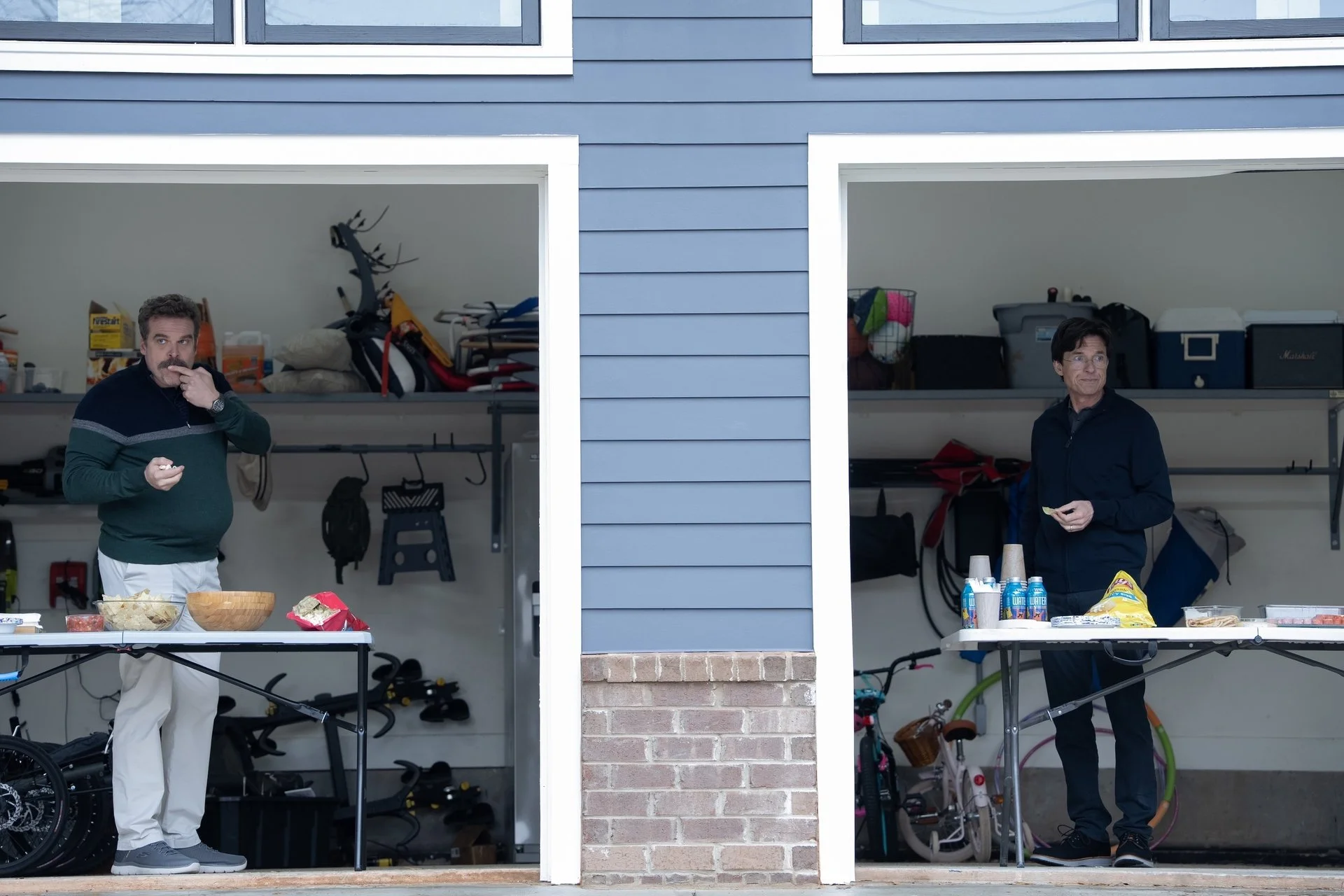
Photograph by Tina Rowden/HBO
Jason Bateman, David Harbour, and Linda Cardellini anchor a slippery Steven Conrad drama that keeps shifting the ground beneath you.
Steven Conrad has never been particularly interested in making television that behaves. From Patriot to Perpetual Grace, LTD, his work thrives in tonal dissonance — cynical but sincere, ridiculous but wounded. With HBO’s seven-part limited series DTF St. Louis, Conrad may have crafted his most accessible project on paper. In execution, though, it’s something far trickier.
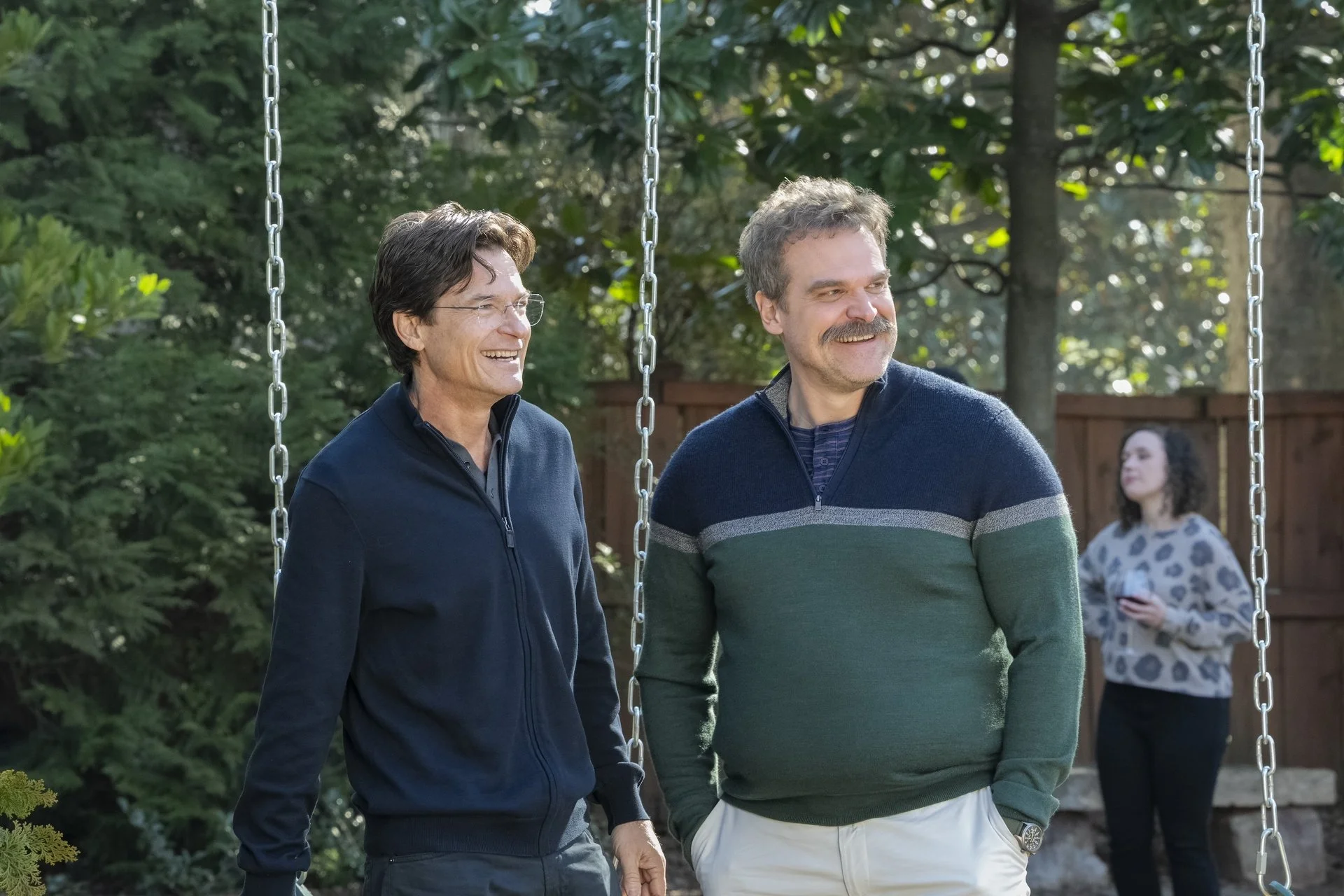
On the surface, this is a Midwestern murder mystery wrapped in suburban scandal. Jason Bateman plays Clark Forrest, a St. Louis weatherman whose billboard smile masks something colder. David Harbour plays Floyd, the station’s new ASL interpreter and a man radiating awkward warmth. Linda Cardellini plays Carol, Floyd’s wife, navigating financial stress and emotional dissatisfaction in a marriage that feels like it’s slipping through her fingers.
There’s an affair. There’s an app. There’s a death.
And that all happens fast.
But what DTF St. Louis actually is — at least across the four episodes made available for review — is less about the mechanics of a crime and more about the mechanics of relationships. Conrad isn’t asking “Who did it?” so much as “Why do people do what they do to each other?”

The show begins in a coarse, almost adolescent register that matches its eyebrow-raising title. It leans into sexual farce and brittle sarcasm, presenting marriage as a transactional arrangement in which everybody is quietly dissatisfied. Bateman, weaponizing his natural detachment, initially plays Clark as a man who treats emotional intimacy like a punchline. Cardellini’s Carol appears both complicit and quietly resentful. Harbour’s Floyd, meanwhile, seems almost too tender for this world — overeager, exposed, slightly tragic.
Then the tone begins to tilt.
Conrad fractures time and perspective with deliberate opacity. Scenes jump backward and sideways without obvious signposts. Certain moments feel colored by unreliable narration. Information introduced early demands reevaluation later. It becomes clear that we are not watching a straightforward mystery — we are watching a study in misinterpretation.
DTF St. Louis is fascinated by perception. Who appears guilty? Who appears sympathetic? And how much of that is shaped by our biases toward charm, beauty, or self-awareness?
Bateman and Cardellini are both effectively playing dual roles: the version of their characters as first presented, and the version revealed as more context arrives. Bateman’s performance, in particular, is built around subtle recalibrations. His Clark is sometimes smug, sometimes brittle, sometimes unexpectedly fragile — though Conrad keeps him just distant enough that we are never entirely sure what is authentic and what is performance.
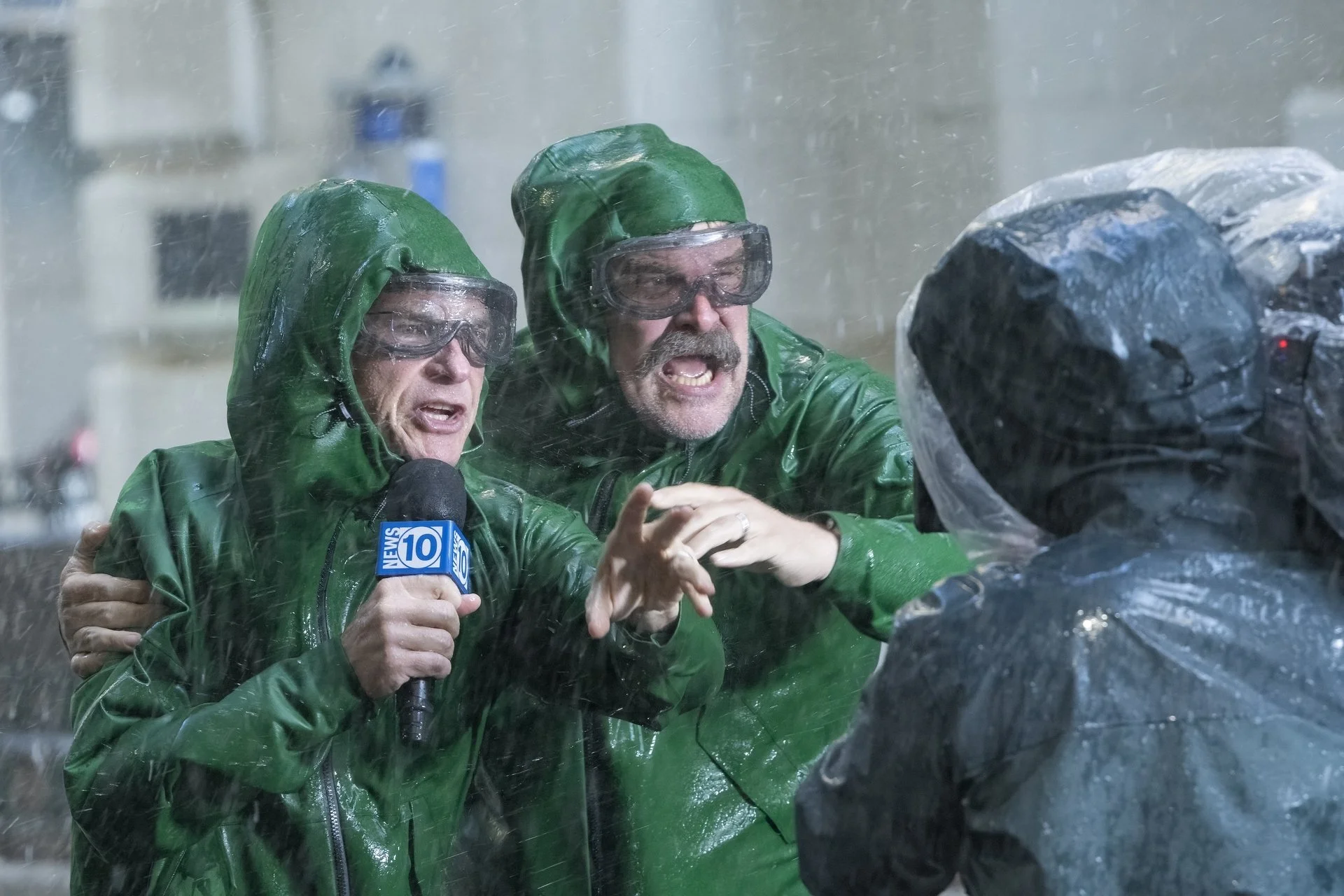
Photograph by Tina Rowden/HBO
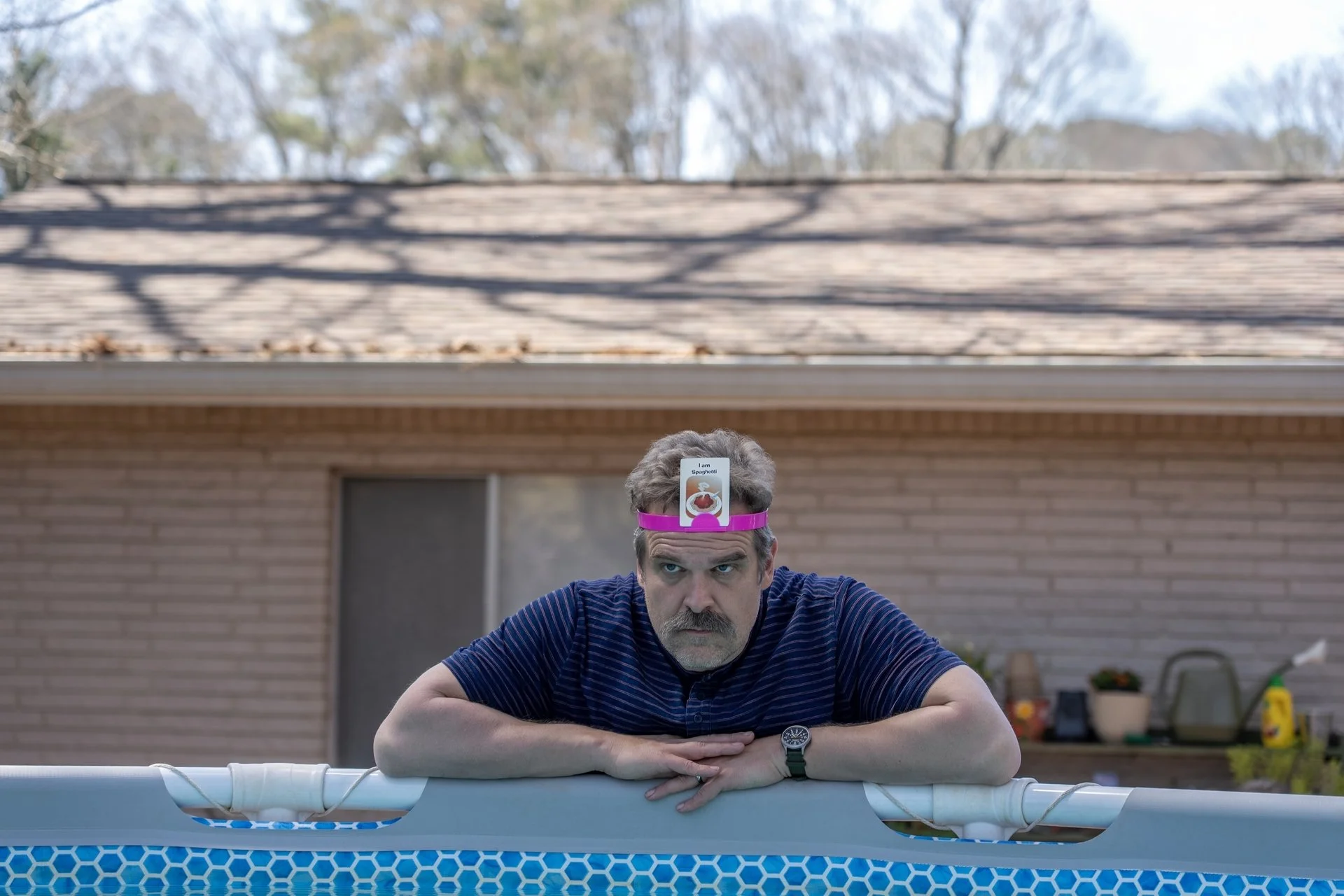
Harbour, however, is the series’ emotional center of gravity. Floyd is written with ambiguity — part man-child, part wounded romantic — and Harbour leans into that uncertainty rather than smoothing it over. His physical presence, his halting warmth, even the awkward cadence of his speech all contribute to a portrait that is at once sympathetic and unsettling. The character resists diagnosis, which feels intentional.
Richard Jenkins, as a local detective navigating jurisdictional tension, adds Conrad’s signature authority-figure friction. Joy Sunday brings sharp intelligence to her investigator role, grounding scenes that might otherwise float into abstraction.
POPULAR ON THE CINEMA GROUP
Tonally, the series contains what Conrad himself might describe as “two wolves.” One wolf is cynical and sardonic, convinced that human connection is mostly self-interest dressed up as love. The other wolf believes in redemption and emotional sincerity. Through four episodes, neither has won.
That tension is both the show’s greatest strength and its greatest risk.
There are stretches where the humor lands with dry precision — particularly in conversational digressions that spiral into absurdity. There are other stretches where the emotional pivot feels almost too naked, as if the series is daring you to drop your guard. The fourth episode, in particular, edges toward something quietly resonant.
Photograph by Tina Rowden/HBO
But with three episodes unseen, the question remains whether Conrad can reconcile the wolves without tipping into manipulation or nihilism. The mystery itself feels less central than the emotional architecture surrounding it. If the finale leans too heavily into twist mechanics, it may feel hollow. If it leans too heavily into sentiment, it risks feeling unearned.
Still, what’s here is undeniably intriguing.
DTF St. Louis may not be as immediately cohesive as Patriot, but it feels intentionally elusive rather than confused. It wants you slightly off-balance. It wants you rethinking assumptions. It wants you aware that you are watching a constructed story about construction itself.
The evidence, so far, is promising — but not conclusive.
RATING: ★★★★☆
That's a Wrap
|
DTF St. Louis
|
That's a Wrap | DTF St. Louis |
“An evasive suburban noir that dares you to question who deserves your empathy — and whether you’ve been wrong the whole time.”
CREDITS
Release Date: Sunday, March 1
Cast: Jason Bateman, David Harbour, Linda Cardellini, Richard Jenkins
Director-Screenwriter: Steven Conrad
Studio: HBO
Run Time: Seven Episodes
Rated TV-MA
Watch The Trailer Below:






![WERWULF - Official Trailer [HD] - Only In Theaters Christmas](https://i.ytimg.com/vi/cmjpadVj-Vk/hqdefault.jpg)