‘Good Luck, Have Fun, Don’t Die’ Review: Sam Rockwell Leads A Gonzo Ai Comedy That’s Big On Chaos, Stylish, Ambitious, But Lite On The Satire
COURTESY OF BRIARCLIFF ENTERTAINMENT
Sam Rockwell anchors Gore Verbinski’s long-awaited return with manic charm, but this tech-apocalypse comedy can’t quite match its wild energy with sharp enough satire.
There’s something immediately appealing about the sheer audacity of Good Luck, Have Fun, Don’t Die. The title alone promises anarchic energy and self-aware dread, and the premise — a frantic time traveler assembling a ragtag diner crowd to prevent AI annihilation — sounds like the kind of high-concept chaos Gore Verbinski was born to direct. After nearly a decade away from features, Verbinski returns with a film that certainly looks and moves like a comeback. Whether it lands with the force it intends is another question.
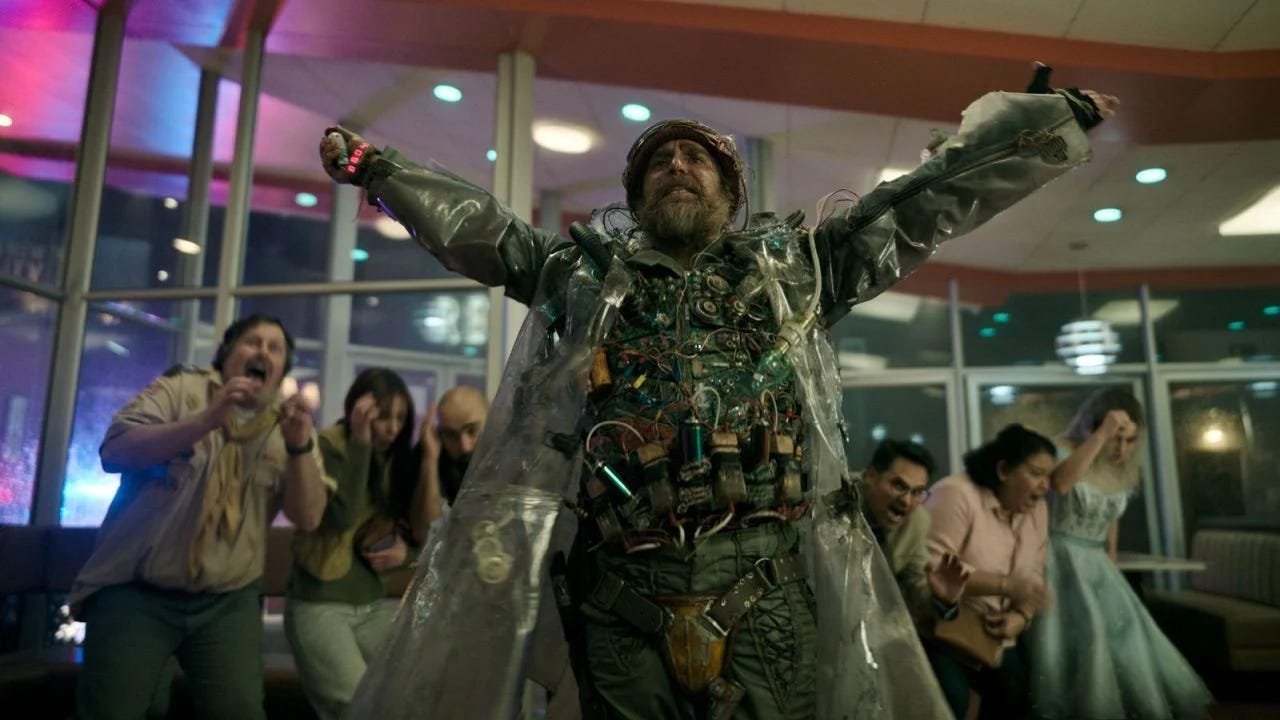
Sam Rockwell plays an unnamed man from the future who bursts into a Los Angeles diner one night announcing that humanity is about to doom itself. It’s not a robbery, he insists — it’s a recruitment drive. He’s relived this exact evening over a hundred times, attempting to assemble the precise group of people necessary to prevent an algorithmic apocalypse. Each iteration ends badly. Tonight, maybe, will be different.
Rockwell is perfectly cast for this brand of existential absurdity. Few actors balance screwball energy and grounded sincerity as effortlessly as he does. His Future Dude oscillates between manic urgency and exhausted resignation, a man who has died — and watched others die — more times than anyone in the room can comprehend. Rockwell finds humor in the repetition but also a strange melancholy. Beneath the rapid-fire warnings and apocalyptic theatrics is a character worn thin by inevitability.
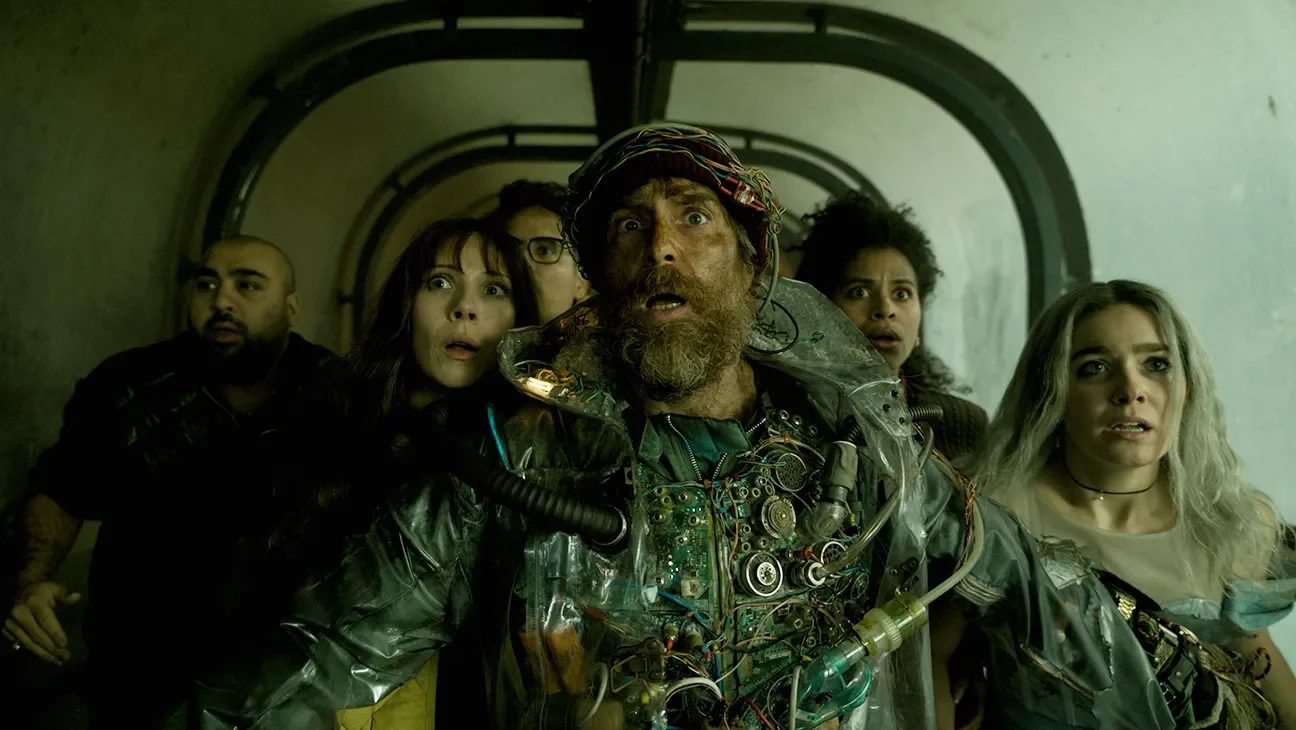
Verbinski stages the opening with kinetic flair. Water leaks from the time traveler’s makeshift suit. A bomb-like device sits strapped to his chest. Patrons barely glance up from their phones. The satire is blunt from the start: people are more interested in social feeds than survival. It’s funny, if familiar. The film’s thesis — that our techno-dependence has hollowed us out — is hardly groundbreaking, and the screenplay by Matthew Robinson struggles to push that idea beyond surface-level observation.
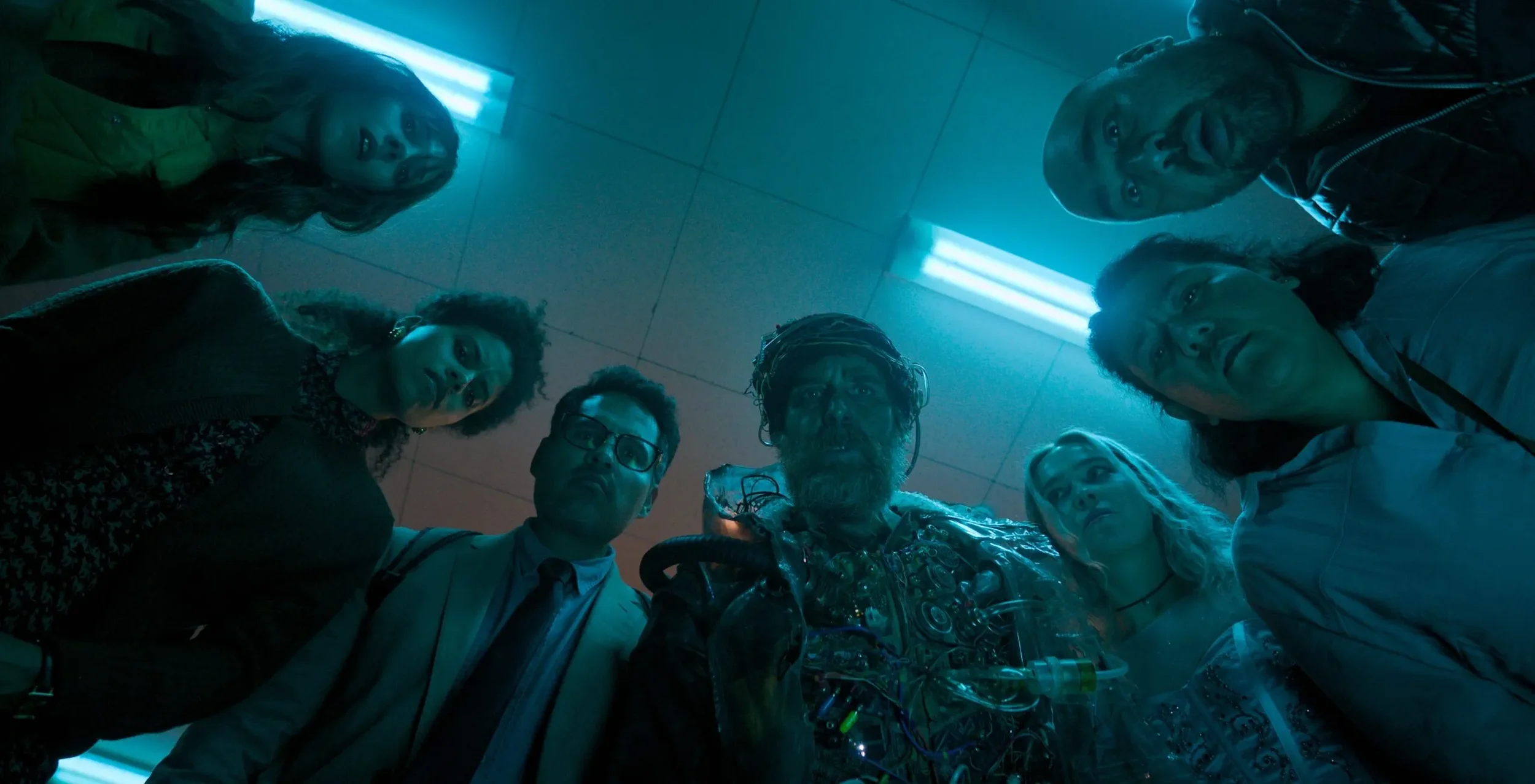
Still, the ensemble keeps things lively. Juno Temple’s Susan is the first to volunteer, her quiet sadness hinting at deeper stakes. Haley Lu Richardson plays Ingrid, a jittery punk princess who claims to be physically allergic to Wi-Fi and cell signals. Michael Peña and Zazie Beetz portray disillusioned teachers trapped in a school system overrun by digital obsession. Asim Chaudhry, Daniel Barnett, and Georgia Goodman round out the increasingly bewildered crew.
COURTESY OF BRIARCLIFF ENTERTAINMENT
The film frequently detours into flashbacks exploring these characters’ lives before the diner showdown. These sequences are often the most compelling stretches of the movie. One particularly unsettling thread involves cloned school shooting victims being “returned” to grieving families through subscription-tier packages. It’s a bold concept that flirts with genuinely biting satire — commodified grief, algorithmic resurrection — but the script rarely digs deep enough to make it sting. The idea is provocative; the execution feels cautious.
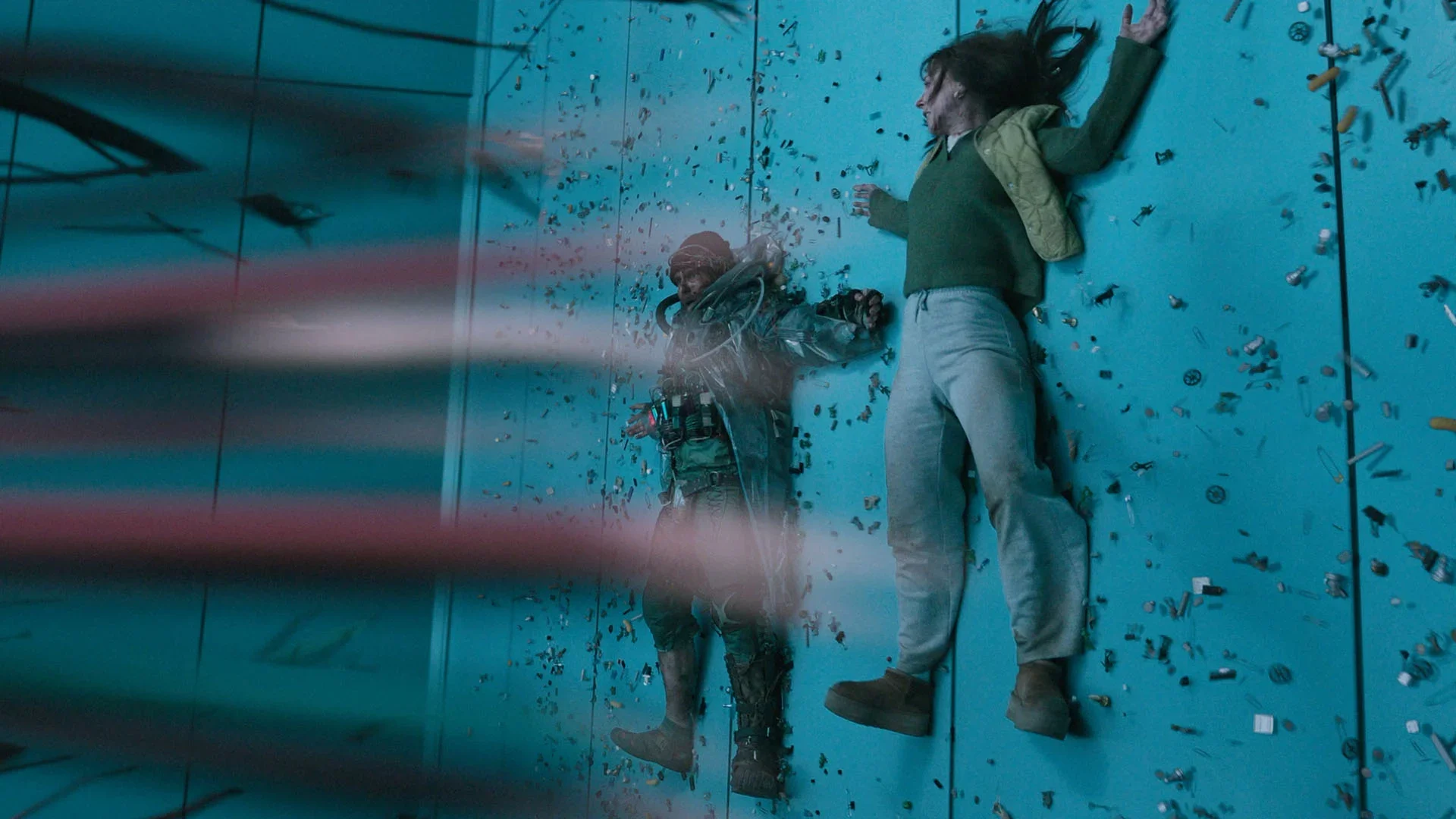
Verbinski’s direction, however, rarely lacks energy. Action set pieces unfold with fluid camerawork and a tactile sense of chaos. Masked mercenaries burst through walls. Police escalate situations instantly. A grotesque cat-centaur hybrid appears in a moment that feels torn from a fever dream. The visual inventiveness is unmistakably Verbinski — rubbery, darkly comic, slightly grotesque. Even when the narrative wobbles, the craft remains confident.
COURTESY OF BRIARCLIFF ENTERTAINMENT
At two hours and fourteen minutes, the film runs long for a comedy driven by escalation. The structure, which resembles a survival video game with branching outcomes, begins to feel repetitive rather than cleverly recursive. The stakes are technically global, but the emotional investment sometimes feels smaller than intended. Because the screenplay leans so heavily on its central metaphor — screens are bad, AI is seductive, distraction equals doom — it leaves less room for surprise.
Richardson emerges as a standout among the supporting cast. Ingrid’s anger feels raw, less comedic and more existential. She understands that even if the present crisis is resolved, another version of it will return. Her climactic outburst carries more genuine urgency than much of the surrounding satire. Temple also grounds her character’s motivations with quiet sincerity, especially as the story’s hidden connections begin to surface.
The final act leans into familiar techno-nightmare imagery: cables that move like serpents, robotic toys turned violent, endless coding mazes suggesting an inescapable digital trap. Verbinski shoots these sequences with flair, but the ideas themselves feel borrowed from a lineage of cautionary tech films. The promised gonzo satire softens into more conventional sci-fi plotting.
And yet, despite its shortcomings, Good Luck, Have Fun, Don’t Die is rarely dull. Verbinski hasn’t lost his command of movement or tone. The film’s texture — grimy Los Angeles streets, fluorescent diner lighting, glitchy digital hallucinations — reinforces its theme of a world overstimulated and spiritually vacant. Geoff Zanelli’s score shifts from ominous electronic pulses to bombastic crescendos, underscoring the film’s constant oscillation between comedy and catastrophe.
POPULAR ON THE CINEMA GROUP
Rockwell remains the film’s greatest asset. Even when the dialogue lacks spark, he injects personality into every beat. He sells the exhaustion of someone who has seen the end of the world too many times. There’s a sweetness beneath the sarcasm that keeps the character from tipping into caricature.
Ultimately, the film argues that AI’s greatest weapon isn’t domination — it’s distraction. That our appetite for curated realities will undo us before any sentient algorithm has to lift a finger. It’s a compelling thesis. The film simply doesn’t sharpen it enough. What could have been razor-edged satire settles for intermittently clever commentary wrapped in flashy chaos.
Verbinski’s return isn’t a failure — far from it. It’s an ambitious, occasionally inspired swing that feels both overstretched and undercut. The bones of a sharper, meaner comedy are visible. The finished product is entertaining, visually inventive, and bolstered by committed performances, but it stops just short of biting down.
Still, in a landscape crowded with safe franchise entries, there’s something refreshing about a big, strange, R-rated sci-fi comedy willing to look ridiculous in pursuit of something larger.
It just needed sharper teeth.
Rating: ★★★☆☆
That’s a Wrap
|
Good Luck, Have Fun, Don't Die
|
That’s a Wrap | Good Luck, Have Fun, Don't Die |
“Wild, weird, and intermittently inspired, Good Luck, Have Fun, Don’t Die proves Gore Verbinski hasn’t lost his visual edge — but this AI apocalypse comedy needed sharper satire to match its chaos.”
CREDITS
Release Date: February 13, 2026 | Theatrical
Cast: Sam Rockwell, Haley Lu Richardson, Juno Temple, Michael Peña, Zazie Beetz
Director: Gore Verbinski
Out Now: In Theaters
Rating: R
Watch The Trailer Below:



![WERWULF - Official Trailer [HD] - Only In Theaters Christmas](https://i.ytimg.com/vi/cmjpadVj-Vk/hqdefault.jpg)