Oh. What. Fun. Review: Michelle Pfeiffer Shines in a Warm, Compassionate Holiday Tale About Invisible Labor and Unseen Love

Michelle Pfeiffer in 'Oh. What. Fun.' Alisha Wetherill/Prime
A charming, heartfelt ode to the women who hold the holidays together — lifted by Michelle Pfeiffer in a performance full of grace, humor, and emotional clarity.
There’s a particular kind of Christmas movie that doesn’t exist nearly as often as it should — one that centers not on the men saving the day, not on the kids learning a lesson, and not on the grand romantic gestures that have defined holiday cinema for decades, but on the person who quietly keeps the entire season alive. The person who plans the meals, buys the gifts, remembers the traditions, carries the emotional weight, and receives far too little credit for doing so. With Oh. What. Fun., Amazon and director Michael Showalter finally make space for that story, and while the film isn’t perfect, its emotional intent resonates: mothers deserve their own holiday movie because mothers make the holiday work in the first place.
Michelle Pfeiffer is the film’s heartbeat, and there is something instantly compelling in watching an actor of her caliber — elegant, sharp, deeply intuitive — anchor a story built around exhaustion and devotion. Her character, Claire Clauster, is the quiet architect of her family’s Christmas, the unseen hands behind every detail. Pfeiffer plays her without vanity, leaning into the small cracks, the suppressed sighs, the practiced smiles, the disappointments swallowed before they become conflict. It’s a performance that understands the psychology of women who work endlessly out of love but feel themselves fading into the background. Pfeiffer gives Claire inner life where the script sometimes leaves gaps, filling the film with a warmth that cannot be faked.
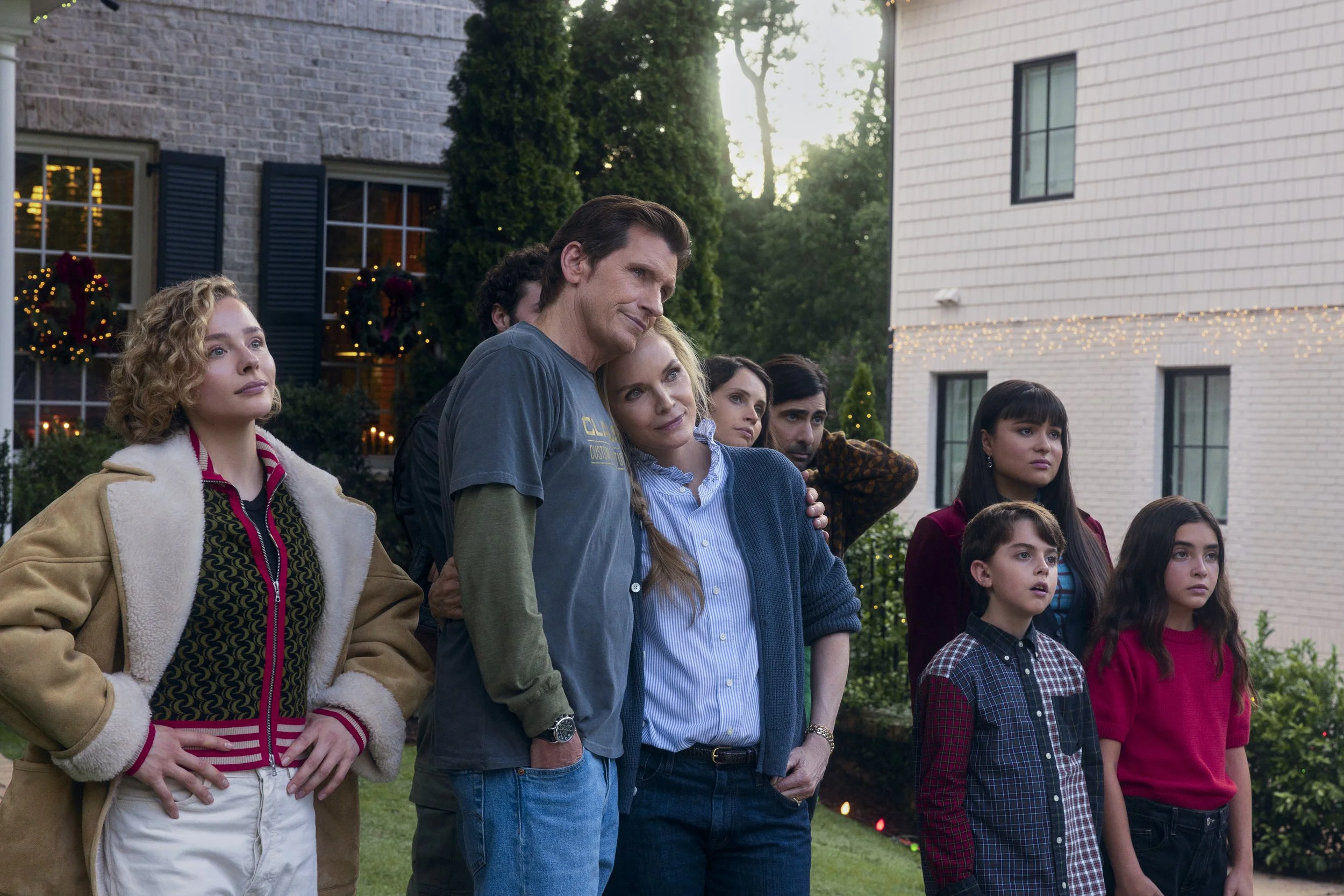
Alisha Wetherill/Prime
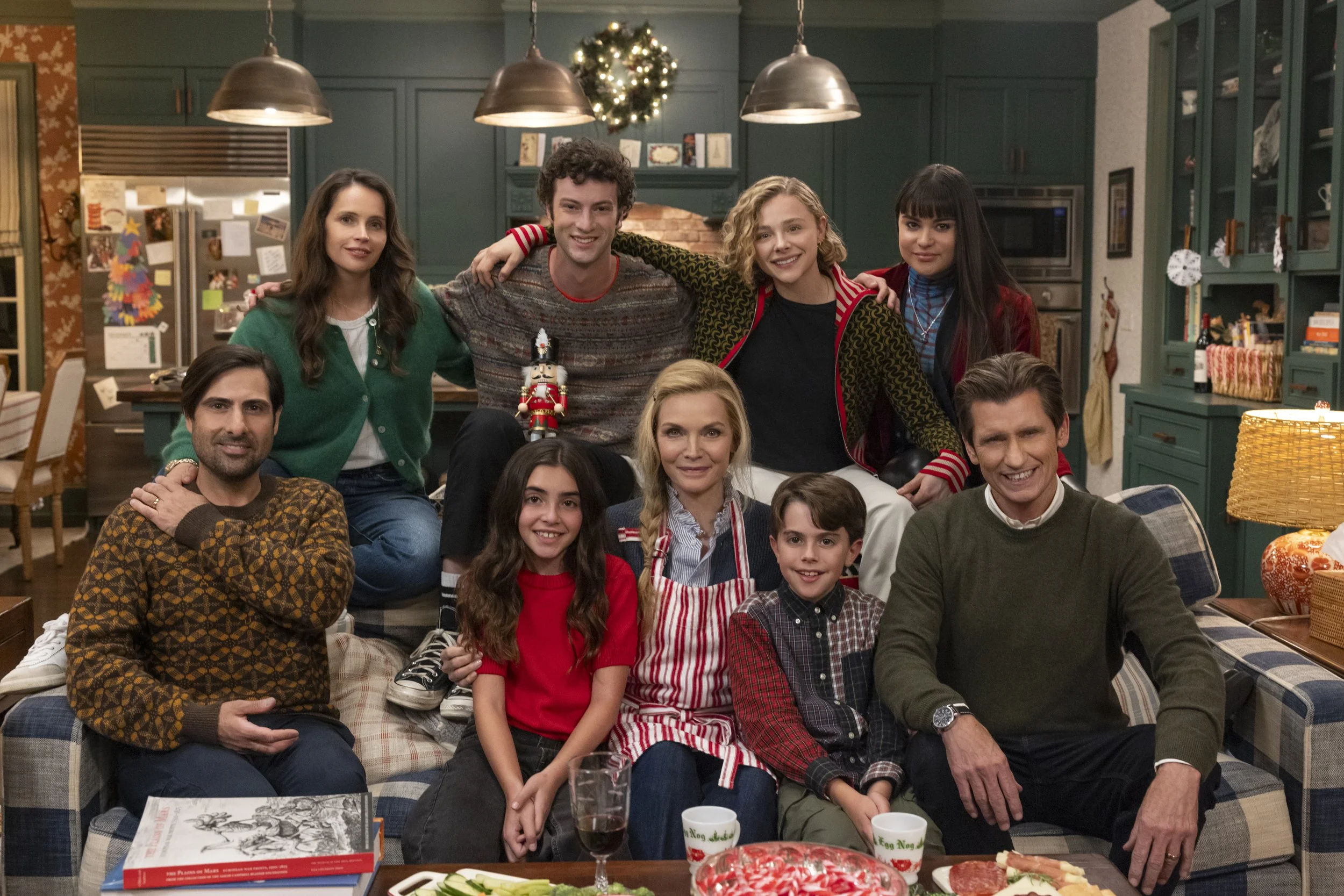
The film’s premise is almost deceptively simple: Claire reaches her limit. Three grown children — played by Felicity Jones, Chloë Grace Moretz, and Dominic Sessa — drift through the holidays without recognizing the invisible labor that props up their comfort. Her husband (a well-cast Denis Leary) operates like a man in a perpetual sitcom loop, offering support only when reminded. For a woman who spends all her time anticipating the needs of others, indifference hurts more than outright conflict. And when a small but painful oversight pushes Claire past her emotional threshold, she does something radical in its mundanity: she leaves.
Not forever. Not dramatically. Not as a cautionary tale. She simply steps away and lets the family confront what she has been holding together for years.
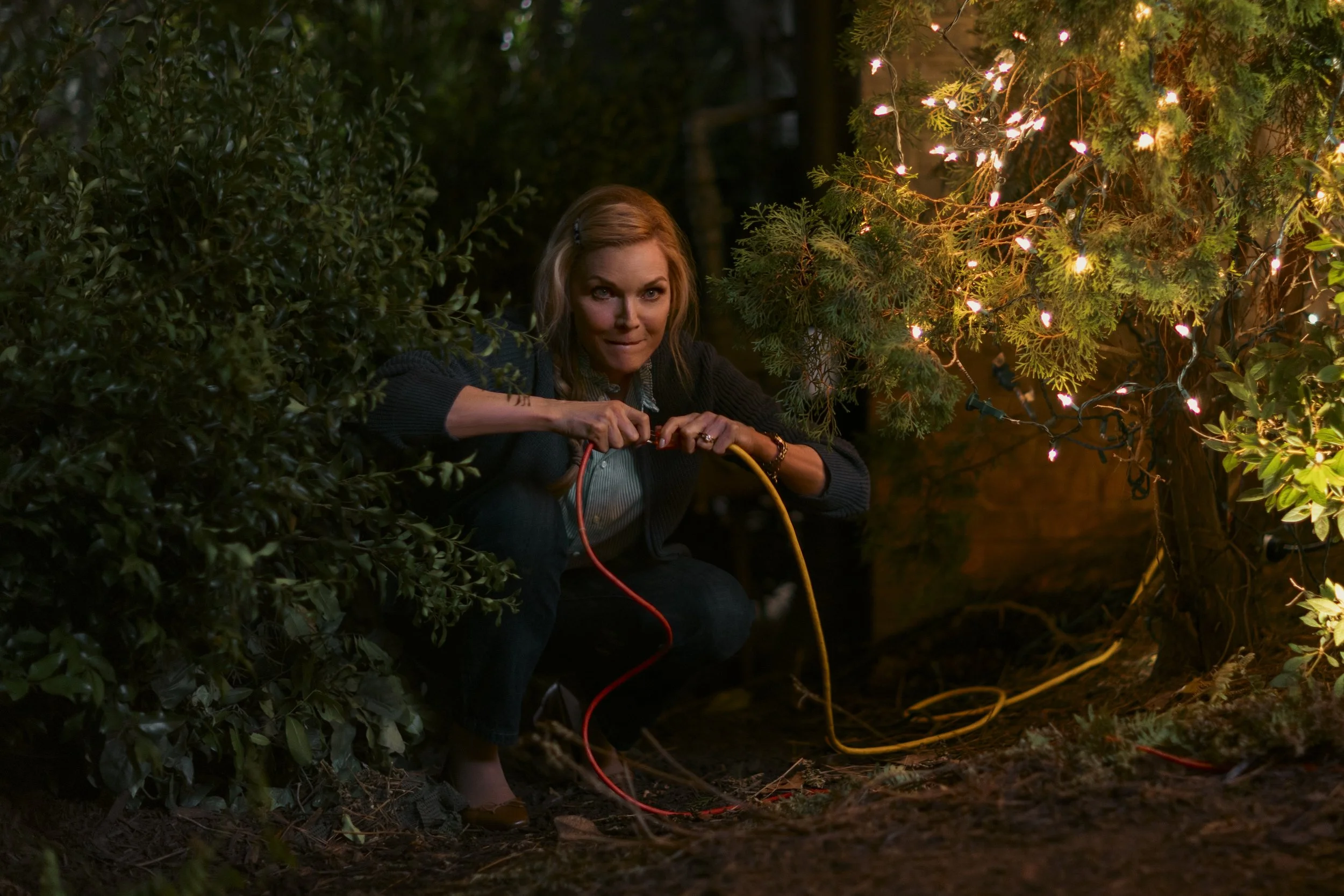
Michelle Pfeiffer in 'Oh. What. Fun.' Alisha Wetherill/Prime
What follows is less a plot engine and more a gentle rebalancing — a holiday story that replaces spectacle with recognition. The Clauster family, suddenly leaderless, begins unraveling in hilarious but grounded ways, discovering the depth of Claire’s contributions only through absence. The film’s biggest success lies here: Showalter isn’t scolding the family, and he isn’t sanctifying Claire. Instead, he’s making the invisible visible. He’s articulating something millions of viewers — particularly women — have felt during the holidays but rarely see honored on screen.
There’s a generosity to the storytelling that makes even the film’s imperfections feel forgivable. The script, co-written by Showalter and Chandler Baker, doesn’t always trust itself enough to dig into complexity; occasionally it leans too hard into broad comedy or tidy resolutions. But at its best, the film offers glimmers of lived experience: a mother hesitating before admitting hurt, an adult daughter trying to be helpful but not knowing how, a son who realizes too late how little he understands his mother, a husband confronting the quiet erosion of a marriage built on unspoken routines.
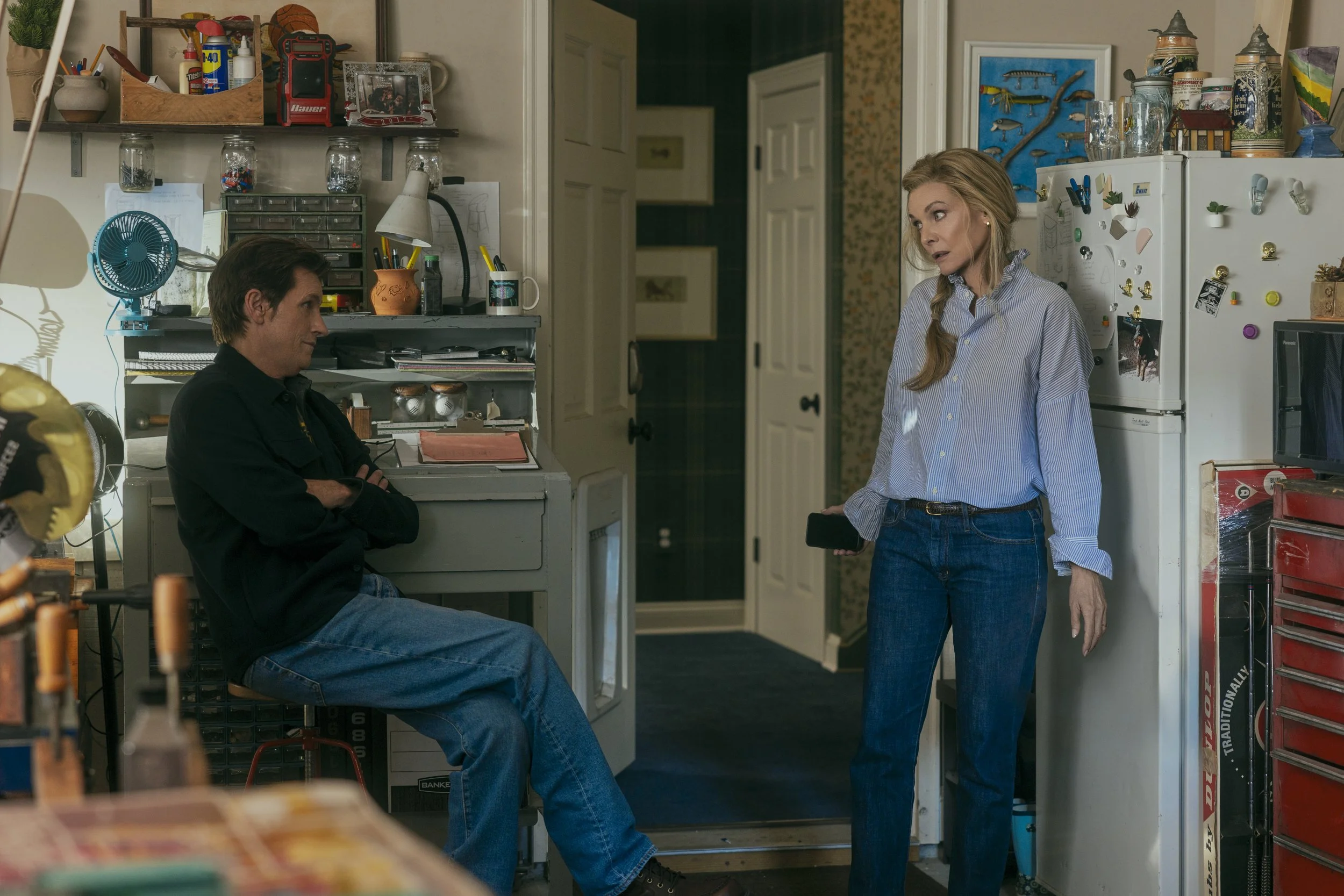
L-R: Denis Leary And Michelle Pfeiffer in 'Oh. What. Fun.' Alisha Wetherill/Prime
What elevates the material, time and again, is Pfeiffer. She knows how to play disappointment as something almost physical, tightening her breath, letting her shoulders fall, allowing tiny fractures to appear in the space between lines. When Claire decides to embark on her brief, self-styled getaway — not a glamorous reinvention, but a necessary exhale — Pfeiffer plays it with a mixture of liberation and melancholy. She’s not running away from her family; she’s running toward herself. And in that shift, the film finds a sincerity that distinguishes it from the more formulaic holiday movies cluttering the streaming landscape.
Felicity Jones brings a grounded humanity to Channing, the eldest daughter forced to confront her own perfectionism. Moretz finds charm in the flakier middle sibling. Dominic Sessa, as the youngest, delivers a believable portrait of arrested development. And the ensemble — including Jason Schwartzman, Eva Longoria, Danielle Brooks, Havana Rose Liu, and Joan Chen — fills the film with texture. The family dynamic doesn’t always feel fully formed, but the actors bring enough distinct tone and energy to make the relationships emotionally legible.
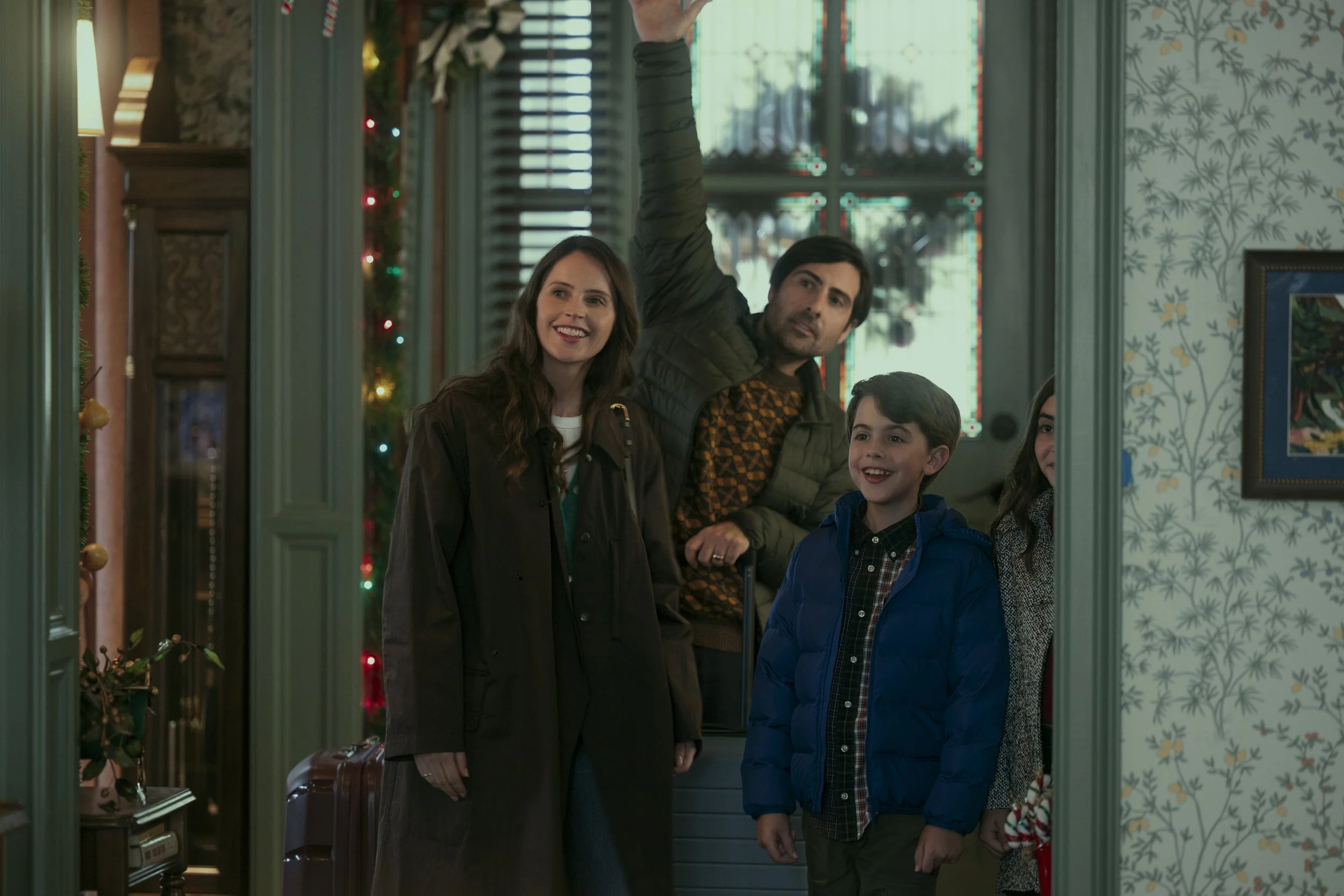
Felicity Jones and Jason Schwartzman in 'Oh. What. Fun.' Alisha Wetherill/Prime
Showalter’s direction leans into warmth: candlelit dinners, soft-focus décor, the familiar glow of a home that has hosted dozens of Christmases. The aesthetic is closer to a prestige dramedy than a Hallmark confection, with sets that feel lived in rather than theatrically festive. There’s a gentleness to the pacing, a willingness to linger in the small details — a mother’s footsteps down the hallway, a child noticing the absence of a favorite snack, a husband standing in a kitchen he hasn’t fully realized he has taken for granted.
What works most powerfully is the film’s quiet thesis: appreciation is a form of love, and neglect — even unintentional — is its own kind of wound. Oh. What. Fun. argues that families don’t fall apart because of one big crisis; they decay through a thousand small assumptions. Claire’s disappearance serves as a reset, a chance for her family to rewrite their roles, acknowledge their failings, and recognize that love cannot survive without attention.
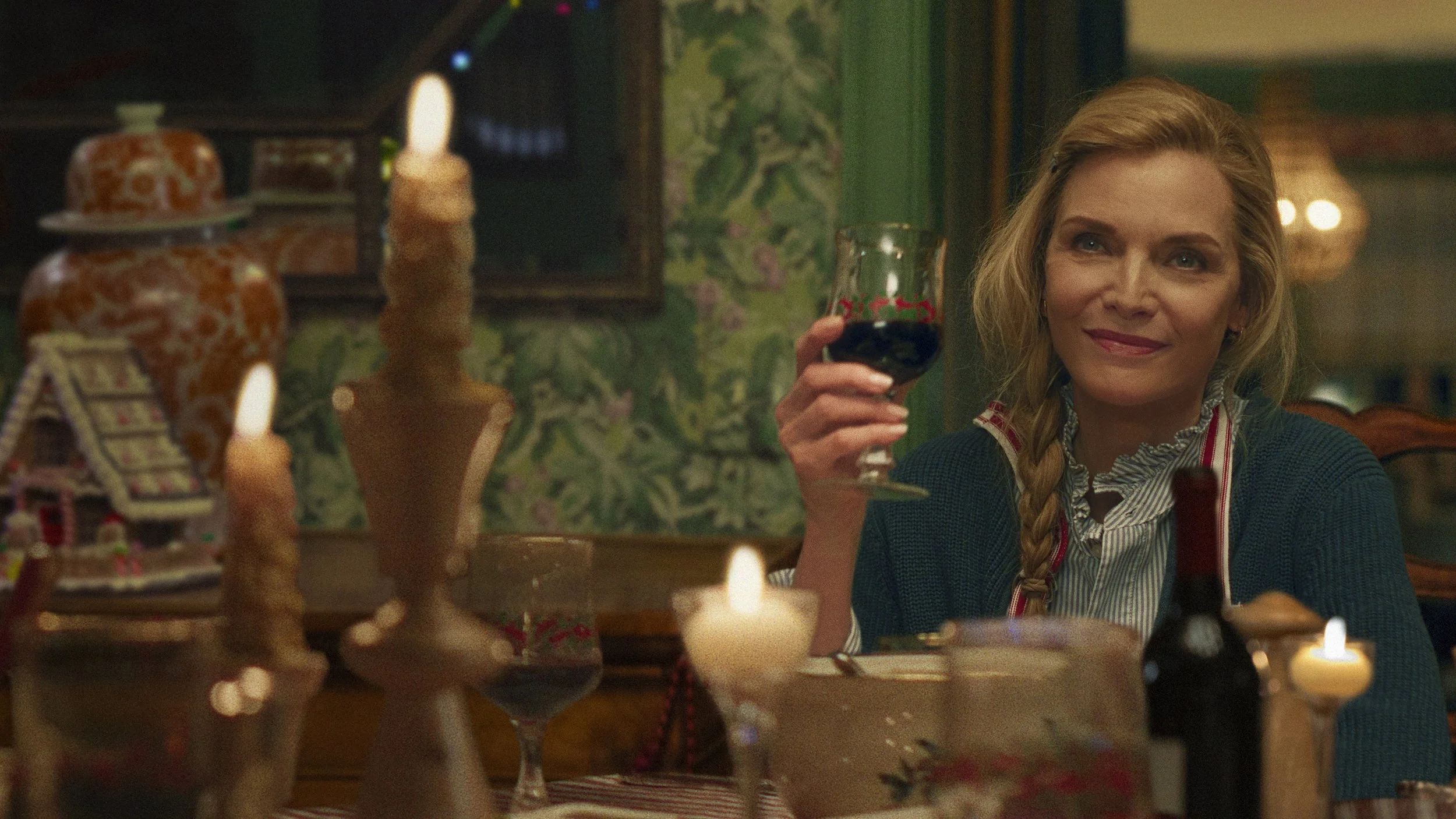
Michelle Pfeiffer in 'Oh. What. Fun.' Alisha Wetherill/Prime
And yet the film refuses to punish anyone. This is where the polished-positive spin is earned rather than manufactured — Showalter believes in repair. He believes in the capacity for people to disappoint each other and still choose one another. He believes Christmas still matters, even when stripped of spectacle. In a culture increasingly defined by cynicism, that sincerity is disarming.
Some viewers may wish for sharper edges. Others may want more interrogation of Claire’s martyrdom or a deeper dive into why her family behaves so thoughtlessly. But the film isn’t trying to dissect the institution of motherhood. It’s trying to celebrate the women who make joy possible. It’s trying to give a face and name to the person behind the perfect holiday photo, the immaculate meal, the traditions that feel effortless even though they are anything but.
POPULAR ON THE CINEMA GROUP
By the time Claire and her family find their way to Claire, the film’s soft heart has earned its sentimentality. The reconciliation is predictable — but predictability isn’t a flaw in a holiday movie. It’s a promise. And Pfeiffer delivers the emotional payoff with a performance rooted not in melodrama but in clarity. She lets Claire accept love without diminishing the hurt that came before it. She lets the family grow without requiring them to transform into idealized versions of themselves while growing herelf in the process too. Reconnection, not reinvention, is the movie’s quiet victory.
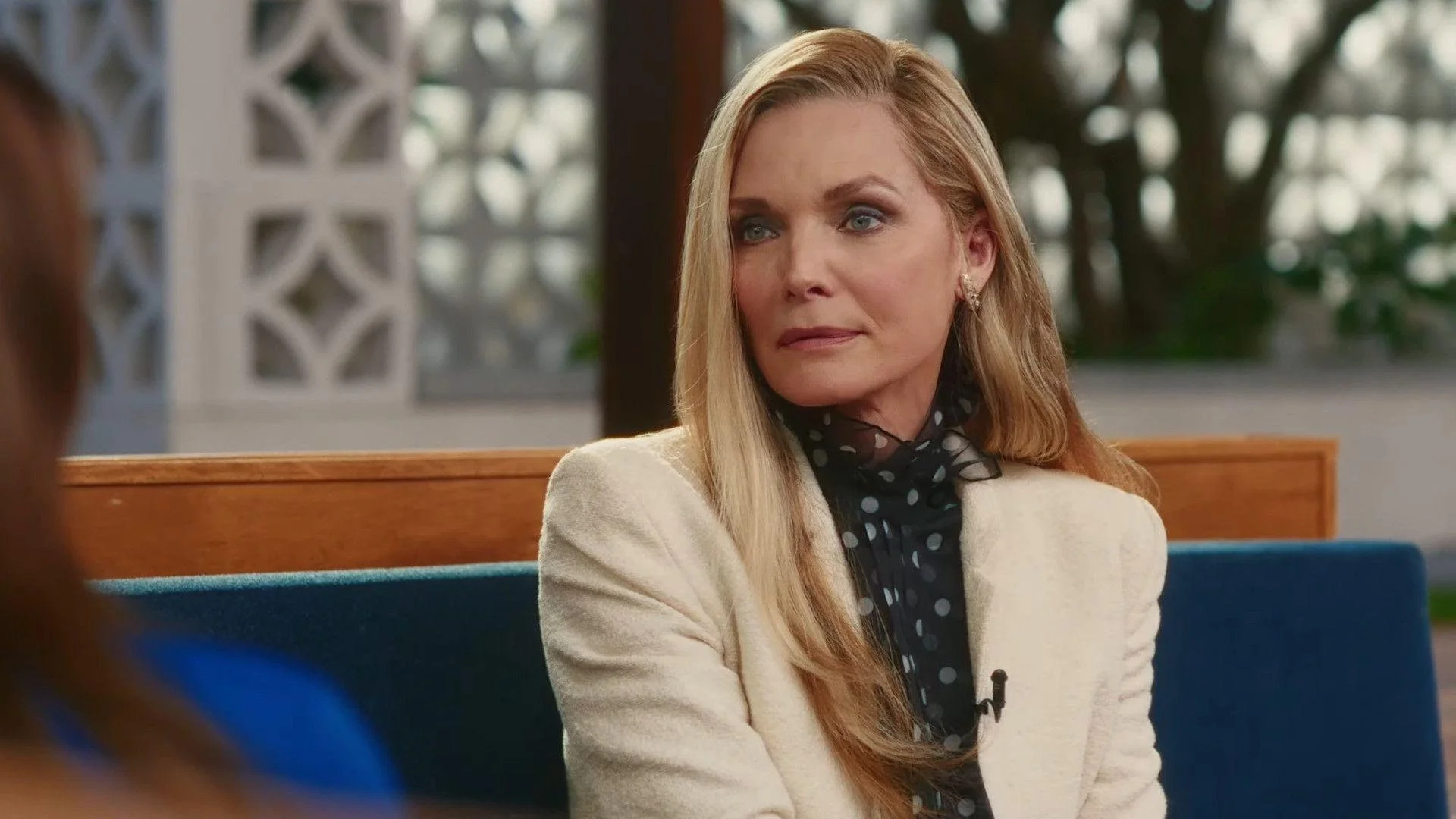
Michelle Pfeiffer in 'Oh. What. Fun.' Alisha Wetherill/Prime
The final moments land with a sweetness that feels earned, and as the credits roll, the film reveals its truest aspiration: to honor the people whose work holds families together even when that work goes unseen. Oh. What. Fun. may not reinvent the holiday genre, but it fulfills a need that has long gone unanswered — and it does so with sincerity, warmth, and a performance from Michelle Pfeiffer that deepens every beat.
For holiday audiences, for exhausted parents, for anyone who has ever wondered whether the work they do matters, this movie offers a simple but resonant answer: it does. It always has.
Rating: ★★★☆☆
That’s a Wrap
|
Oh. What. Fun.
|
That’s a Wrap | Oh. What. Fun. |
“Michelle Pfeiffer delivers a tender, quietly devastating performance that transforms a holiday comedy into something soulful — a warm, heartfelt tribute to the unseen work mothers carry every day, especially during the holidays.”
CREDITS
Airdate: December 2025 | Amazon
Cast: Michelle Pfeiffer, (additional cast from THR info)
Director: (Insert Director — I can update when you confirm)
Writers: (Insert Writers)
Out Now: Amazon Prime Video
Rating: PG-13
Watch The Trailer Below:








![WERWULF - Official Trailer [HD] - Only In Theaters Christmas](https://i.ytimg.com/vi/cmjpadVj-Vk/hqdefault.jpg)